


1,200 Miles Across Alaska to Prove a Point (1960)
Trail Relics, part 4 of 12. The moments that built snowmobiling, fact-checked against museum archives, manufacturer records, and 50 years of sled press.
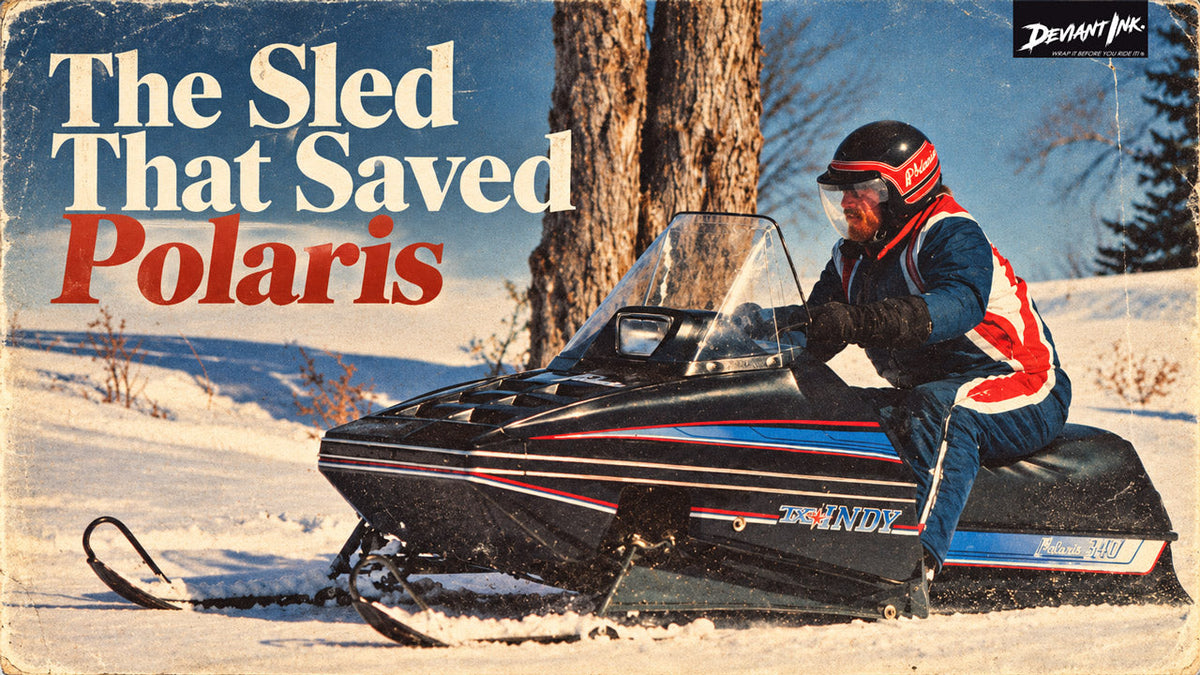
Every Polaris versus Arctic Cat argument every post and online thread, every brand-loyalty jab between buddies, every "my Cat walks your Poo" sticker, all of it traces back to one man. He built both houses. And the second one, he built out of spite.
If you read Relic 3, you already met Edgar Hetteen: the Roseau shop boss who thought snow machines were a distraction, right up until the first one covered payroll. By 1960 he had come all the way around. Polaris was selling Sno-Travelers, and Edgar had become the machine's loudest believer.

The problem was, almost nobody else believed.
Doubters
To the public in 1960, a motorized snow machine was a gimmick at best and a death trap at worst. Dealers heard the same objections on repeat: it will break down, it will strand you in the cold, it is a toy for a country with real winters. Banks were skeptical. Buyers were skeptical. The whole category was one hard winter from being dismissed.
Edgar Hetteen did not write a rebuttal. He picked the hardest proving ground on the continent.
The mission
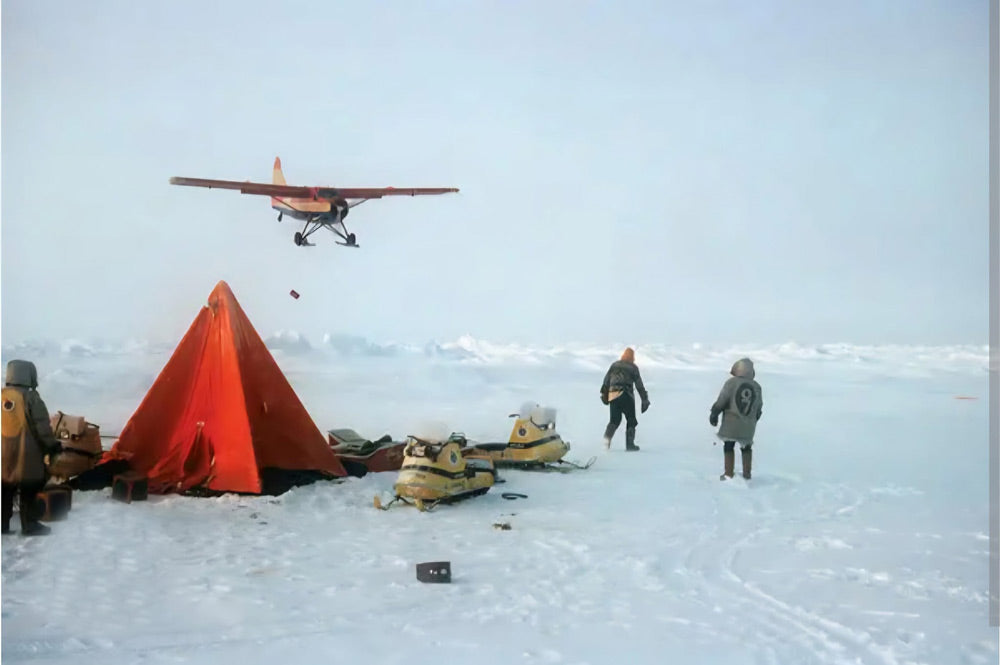
On March 4, 1960, Hetteen set out from Bethel, Alaska with three companions: Rudy Billberg, Bessie Billberg, and Polaris employee Erling Falk. Three Sno-Travelers, loaded with gear, pointed at Fairbanks, 1,200 miles away.
And notice the crew, because most people miss it: Bessie Billberg made that ride too, and she made it the hard way. Photos from the expedition show her riding the entire 1,200 miles standing on the back of a freight sleigh. In 1960, one of the four people who crossed Alaska to prove the snowmobile was real was a woman standing on a sled runner the whole way. That detail belongs in the story more often than it gets told.

Twenty-one days. Blizzards. River ice nobody could vouch for. Terrain no motorized machine had crossed. Nine hundred pounds of supplies in tow, nights in tents and borrowed cabins, and at one point an engine rebuilt right on the trail. On March 24, they rolled into Fairbanks, where the town gave them a hero's welcome.
The machines made it. The argument was over, or should have been.
The homecoming
Fairbanks understood what had just happened. Minnesota did not. When Edgar got home, the board scolded him for showboating, for burning company time and dollars on a stunt while the business ran without him.
There was history behind the cold reception. A year or so earlier, to land a $40,000 investment the company needed, Edgar had agreed to seat two board members of the investors' choosing, and those two wanted nothing to do with snow machines. They wanted straw choppers and farm equipment. So the man who had just handed Polaris the greatest proof-of-toughness story the young industry would ever get came home to a boardroom where the product itself was considered the mistake.
Shortly after returning, Edgar concluded he could not work with them. He handed the presidency of Polaris to his brother Allan and walked out of the company he built.
The grudge that built a competitor
He landed in Thief River Falls, Minnesota, about 70 miles from Roseau, and in January 1961, starting over with a borrowed $10,000, opened the doors of Polar Manufacturing. The name changed to Arctic Enterprises in 1962, and the sleds it built became Arctic Cat.
Read that family tree again: one man, standing in two different Minnesota towns, founded both Polaris and Arctic Cat. The two brands that have spent sixty years competing over snowmobile innovation share a founder, and the second company exists because the first one would not say thank you.
Roseau and Thief River Falls still build sleds today, 70 miles apart, staring at each other across one of the best rivalries in powersports.
The proof was in the pudding
Hetteen understood something in 1960 that the marketing textbooks would not catch up to for decades: nobody believes claims, everybody believes proof. He did not argue that snowmobiles were reliable. He rode one across Alaska and let the map do the talking.
Every great piece of content this industry has ever produced runs on the same fuel. Not adjectives. Receipts. The install video beats the promise. The machine on the trail beats the brochure. Show the thing.
And if your machine happens to be a Polaris or an Arctic Cat, take a second to appreciate that both logos trace to the same stubborn Norwegian-blooded Minnesotan who answered every doubter the same way: watch me.
AT A GLANCE
- Date: departed Bethel, Alaska, March 4, 1960; arrived Fairbanks, March 24, 1960
- Distance: 1,200 miles in 21 days, with 900 pounds of supplies in tow
- The crew: Edgar Hetteen, Rudy Billberg, Bessie Billberg (who rode the whole way standing on a freight sleigh), Erling Falk
- The machines: three Polaris Sno-Travelers, one engine rebuilt on the trail
- The reward: a hero's welcome in Fairbanks, then a scolding from the Polaris board back home (two of whom had been seated by investors and opposed snowmobiles entirely)
- The result: Hetteen left Polaris shortly after returning, handed the presidency to his brother Allan, and with a borrowed $10,000 opened Polar Manufacturing in Thief River Falls in January 1961, renamed Arctic Enterprises in 1962, the company that became Arctic Cat
- The legacy: one man founded both Polaris and Arctic Cat
Next relic: a resort in Eagle River, Wisconsin throws a snowmobile race to sell some winter rooms, an eighth grader takes top honors, and the sport accidentally gets its Daytona.
Share:
Trail Relic 3: Built While the Boss Was Out of Town (1956)
An Eighth Grader Took Top Honors at the First World Championship (1964)