

Trail Relics, part 5 of 12. The moments that built snowmobiling, fact-checked against museum archives, manufacturer records, and 50 years of sled press.
World championships are supposed to start with sanctioning bodies, federations, and committees arguing about rulebooks.
Snowmobiling's started with empty hotel rooms.
This was the problem
Eagle River, Wisconsin is resort country, and in the early 1960s resort country had a seasonal math problem. Summer paid the bills. Winter emptied the towns. John Alward, who ran the Chanticleer Inn with his wife Betty, needed a reason for people to drive north after the lakes froze.
The reason turned out to be the strange new machines showing up in barns and backyards across the north woods. Alward, Betty, and Walt Goldsworthy of nearby Three Lakes organized a race for them, and on February 9, 1964, on frozen Dollar Lake, they held it.
They called it the World Championship Snowmobile Derby. The sport was barely five years old. There was no world body, no circuit, no rankings, nothing but the nerve to put the words World Championship on a poster for a race on a frozen lake in northern Wisconsin.

The kid
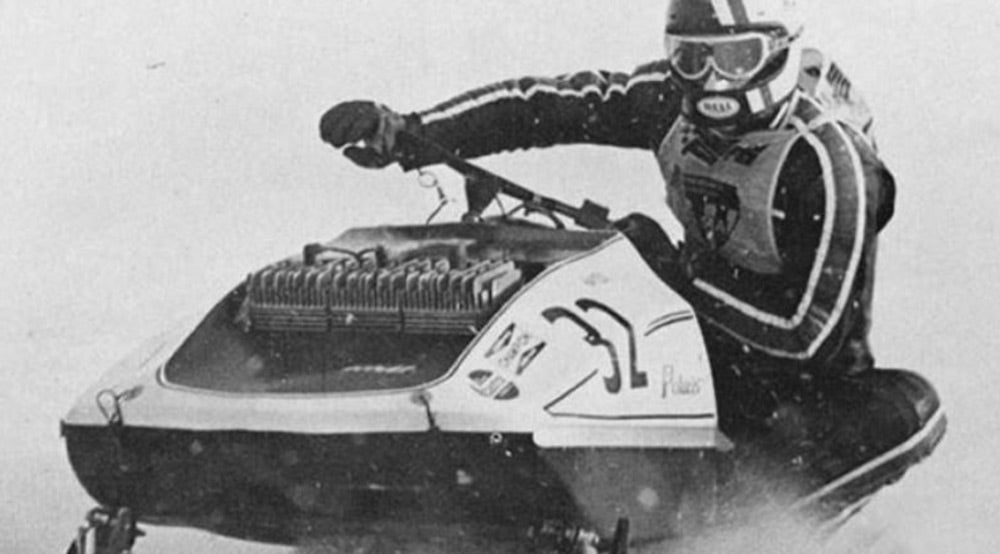
Top honors on the day went to Stan Hayes, an eighth grader from Crandon, Wisconsin, who won the class for machines over 9 horsepower on a Polaris. And the organizers, no fools about publicity, named the kid the overall winner of their brand new World Championship, knowing full well the press would eat the story alive.
They were right. A school kid had shown up to the World Championship and left with the biggest honor of the day, and everybody in attendance understood they had watched something worth coming back for.

Think about what that says about the sport in 1964. The machines were young enough, and the racing raw enough, that the field could be beaten by a kid who probably had homework due Monday. No factory teams. Just machines, ice, and some guts.
What happened next
The bet paid off beyond anything Alward could have drawn up. The Derby became an annual January institution, moved to its own track, and grew into exactly what its audacious name claimed: the race everyone in the sport measures themselves against, snowmobiling's Daytona. It has run every winter for over six decades, the longest-running race in snowmobiling.
And Eagle River, the resort town with the empty winter rooms, became the self-proclaimed and universally conceded Snowmobile Capital of the World. Nobody disputes the title. Sixty-plus years of world championships on the same ground settles arguments.
What happened to the kid
Here is the epilogue that makes the story perfect: Stan Hayes was not a one-day wonder.
He kept racing, and he became the only driver in history to win the Big Three, Eagle River in 1964, the Soo 500 in 1972 and again in 1976, and the Winnipeg to St. Paul I-500 in 1973, then spent years as a respected development engineer making sleds better for everybody.

The Snowmobile Hall of Fame inducted him, and when he passed in April 2020 at age 69, the whole sport mourned a legend whose legend began as a 13-year-old on a frozen lake.
The kid did not just win once. The kid turned out to be the real thing.
At a glance:
- Date: February 9, 1964
- Place: Dollar Lake, Eagle River, Wisconsin
- The organizers: John and Betty Alward of the Chanticleer Inn, with Walt Goldsworthy of Three Lakes
- Top honors: Stan Hayes, an eighth grader from Crandon, won the over-9-horsepower class on a Polaris and was named overall winner, the organizers knew the press would love the kid
- The epilogue: Hayes became the only driver ever to win the Big Three (Eagle River 1964, Soo 500 1972 and 1976, I-500 1973), a Snowmobile Hall of Famer, passed in 2020 at 69
- What it became: the World Championship Snowmobile Derby, run every winter for over 60 years, the longest-running race in the sport
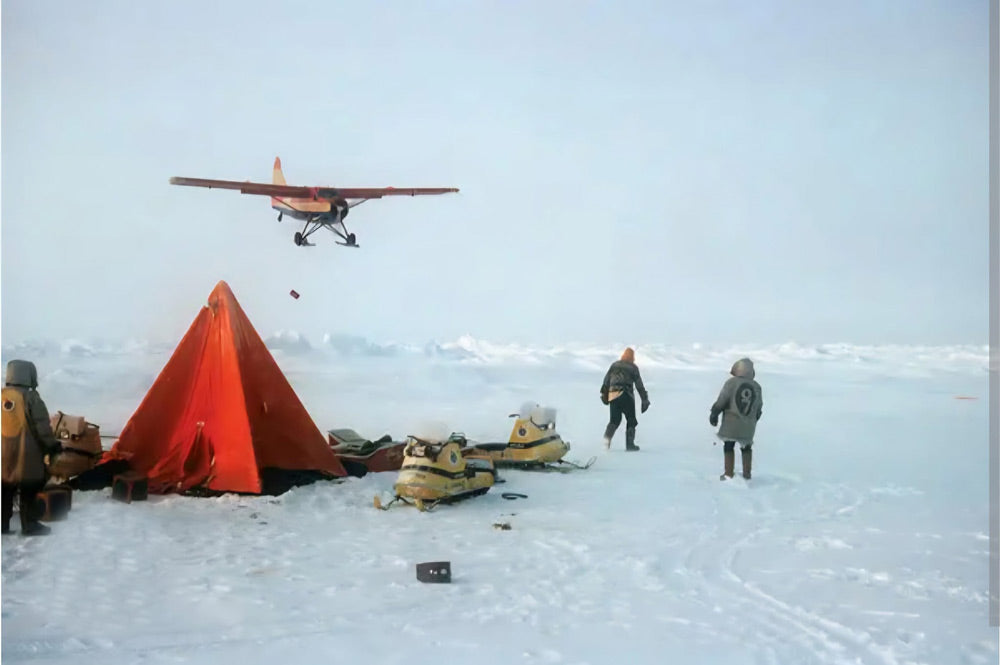
Next relic: an insurance salesman from Minnesota, a dare thrown at him over drinks in Duluth, and the expedition that made four regular guys on snowmobiles the first confirmed humans to reach the North Pole over the ice. No explorer in history had done it. They did.
Share:
Trail Relic 4: 1,200 Miles Across Alaska to Prove a Point
First to the North Pole...On Snowmobiles