
In this episode we travel across the state to the SnoWest Idaho Snowmobile Show in Boise and sit down with Garrett Kerr and Kody Kirkland, backcountry adventure seekers and members of the Jackalopes riding group.
They cover how to create an epic riding group, how to leverage your group to get smoking deals, mastering creative content with a mobile phone, common rookie mistakes to avoid when creating content, and tips for buying and selling your gear on Facebook Marketplace. Plus a lot more.
Guests
Garrett Kerr
Garrett is a videographer from the Boise, Idaho area who owns his own media company and has shot work for powersports brands including Klim, Timbersled and Polaris. He started on snowmobiles and switched to snow biking early in the snow bike kit era, then got his friend Kody Kirkland into it. He's a member of the Jackalopes, a Boise riding group that also mountain bikes, dirt bikes and surfs together year-round.
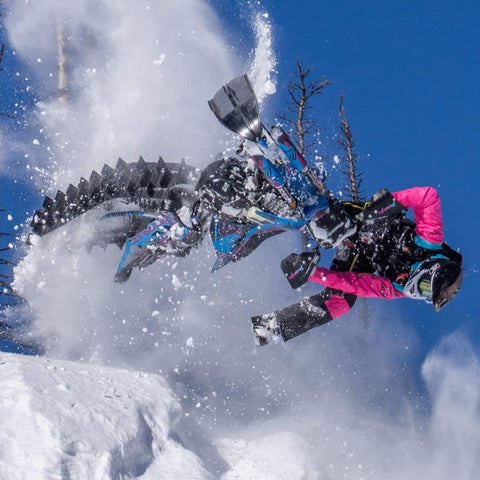
Kody Kirkland
Kody is a snow biker from the Boise, Idaho area who grew up on a ski mountain, where his father was a ski patroller, and started backcountry skiing at 12. He got his riding group together to take Avalanche Science's three-day motorized avalanche course, and says it showed him he knew far less than he thought. Since then his group runs full beacon checks at the trailhead and teaches what they learned to riders who haven't taken a course yet. This was his second time on the Sledder Cast.
Show notes
- 6:31What a Jackalope is, and how a group text name turned into a crew
- 9:55Getting in: a member vote, year-round activities, and no Droids on the text
- 15:22The Kody Factor: from flipping ski swap goggles to trading a Harley for a snow bike
- 20:32Learn used market values first, then ask: are you open to offers?
- 23:44Why a sponsored racer's shred photos are a warning sign on a used listing
- 26:00Group buying: 11 snow bike kits through one salesman and five KTMs at once
- 30:29Give brands more than you take, and recruit someone who can shoot
- 38:34iPhone lenses: use 0.5, 1, 2 and 3 instead of pinch-to-zoom
- 41:12Shoot 4K so you can crop in without losing resolution
- 44:1660 frames per second for smooth half-speed slow-mo
- 49:31Quick phone photo edits: saturation, shadows, contrast, presets
- 55:57Must-have snow bike mods: front suspension, engine heat, airbox, helmet lights
If you want to have a group, there is exclusivity. You've got to have exclusivity. People can be like, well, isn't everyone invited? No. If that happens, then it won't be a group.
Win a free custom wrap
Drop your email and what you ride. We draw winners all season and announce them on the show.
Hey, this is what I have to spend. Are you open to this? And you'd be surprised at how many people are like, you know what, yeah, let's make it happen.
Questions answered in this episode
How do you build a snowmobile or snow bike riding group that lasts?
The Jackalopes keep it exclusive and keep it year-round. New members are voted in, and they have to fit what the group loves to do: snow biking in winter, plus mountain biking, dirt biking and river surfing the rest of the year. Garrett says groups that only meet in winter tend to fade, while shared activities across the seasons turn riding partners into real friends. 10:28
How do you get good deals on used snow bikes and kits on Facebook Marketplace?
Kody says to learn the market first: search brands and see what they sell for new and used. Then ask sellers about issues, ask if they are open to offers, and state what you have to spend. Be willing to jump on a deal and drive for it. Garrett adds a filter: a bike sold by an older, low-hour owner is often a better buy than one from a sponsored rider posting shred photos. 20:50
How can a riding group get a discount on snow bike kits?
Buy as a group and build a relationship with one dealer. Kody contacted several dealers, offered large group purchases and pushed every sale through one salesman. The group, plus friends and family who tagged on, bought 11 snow bike kits that season, and in the spring they bought five KTMs at once. Both guests stress giving the business real value in return, not just asking what you can get. 27:48
What iPhone settings make better snowmobile and snow bike video?
Garrett, a videographer, says to use the optical lenses (0.5, 1, 2, 3) instead of pinch-to-zoom, shoot 4K when you plan to crop in, and shoot 60 frames per second for smooth half-speed slow motion. Try cinematic mode for close shots, shoot horizontal if the clip might go to YouTube, and change angles every couple of seconds in your edit. 38:34
What are the must-have mods for a new snow bike?
Kody's top three are front-end suspension (a third shock or built forks to stop the dive), keeping the engine warm with an engine blanket or jacket and a thermostat, and a snow-specific airbox or at least a pre-filter. Garrett adds helmet lights for riding or repairs after dark and a lift stand for swapping between summer and winter setups. 56:40
As many times as I blink when I'm out and about looking at something, that's how many times you need to switch the camera angle.
Full transcript78 minutes · 19 sections
Read it
Lightly edited for readability. Click any timestamp to jump the video to that moment.
0:00 Welcome from the SnoWest show in Boise
All right, hey, welcome back to another episode of the Sledder Cast podcast. We're in Boise, Idaho, at the SnoWest Idaho Snowmobile Show. This is kind of the last show of the season. They hold it right before Thanksgiving and it kicks things off for the season. So we've got all of our Boise friends over here who we ride with and keep in contact with on a year-round basis, and we've got a couple of these guys here. I'll let them introduce themselves in a second.
Before we jump in, I'm Trevor Erikson, one of the hosts here at the Sledder Cast podcast. Make sure you like, subscribe, do all those things, especially on YouTube. Obviously the content goes all over, on all the audio podcast stuff, but on YouTube the full episode gets dropped there, and then we're going to chop up all the nitty-gritty topics and make it really easy for people to find exactly the stuff they really like, as well as posting the full thing.
So we've got Garrett and Kody with us today, and they're part of a riding crew called the Jackalopes. If that word is new to you, you're going to learn all about it today. But why don't you guys, in like 60 to 90 seconds, give us a brief overview of who Garrett is and who Kody is?
Sure. As it pertains to the snowmobile and snow bike industry, right?
Yeah.
I'll start with me and my background as it pertains to the industry. I've known you several years and worked with you guys a little bit, but my trade is I'm a videographer. I own a media company, and I've worked with several different snowmobile industry companies. I've worked for Klim, Timbersled, Polaris, and a number of different powersports companies that cross over in their parts and stuff. So I've had a background in that, and then I'm just a weekend warrior whenever I get a chance.
I started in snowmobiling and then made the switch years ago, when snow bikes and snow bike kits were pretty early on. I made the switch to snow biking and I haven't really looked back. And Kody, I got him into it. He was a sledder before, and then he made the switch as well, and he's not been on a sled for quite a while now.
Yeah, it's been quite a few years. My background is not near what Garrett's is. I am a weekend warrior. I'm a dude that likes to have fun and get out as much as I can. I kind of get obsessed with things that I like, so I've just come to be obsessed with snow biking. I love the industry, I love where it's going. We're literally at the beginning of something so awesome, and I just love being a part of that any way I can, and getting as many people as I can out to enjoy what we get to do. That's my biggest background, I guess, in regards to the whole snow biking world.
Kody's a little modest, though, because Kody's background, he was a professional athlete.
We've got a professional athlete.
He's signing autographs after this. So he definitely has this whole different pedigree of stuff that leaks into what he does and what he brings to our group. I just want to make sure he doesn't sell himself too short.
Yeah, you're more than just a weekend warrior, man.
I get to ride on the weekends. I'm an old guy trying to be young. That's what I'm doing.
We all are. There's a lot of people here like that.
4:14 Island Park weekends and what's on the list
So we know these guys. We typically hold an annual weekend get-together up in Island Park. The last couple years we've actually planned it around the same weekend as the Frozen Cow event up at Island Park. Last year it straight nuked on everyone. It was a fantastic weekend.
I know on the podcast I've talked about losing my phone a few times. These are the guys I lost my phone with. Haven't retrieved it yet. But I had a great time on a snow bike for the first time with the Jackalopes crew.
Today we've got some goodies we're going to chat about, and I'll sum it up in a few points. First, creating an epic riding group. We see a lot of riding groups come through who order wraps through us, but there's literally none like the Jackalopes, like the dedication. Groups come and go. You see them one year and then you never hear from them again. You guys have been strong and steady, so we're going to talk about how you built that.
We're going to talk about mastering creative content with your mobile phone, because not all of us have the skill set to pack a big camera, nor do we know how to use one. But all of us have a phone, so how do we leverage that little tool we all carry to create epic content? And the last is how you guys leverage your group to buy, sell, trade, and get really favorable prices on kits.
I think it's going to be a pretty epic conversation. I'm going to pick you guys' brains. I've got a list of questions, you guys already did the homework hopefully, and we're going to go through the list and have a good conversation.
6:31 What is a Jackalope?
So let's start off with Jackalope. What the crap is a Jackalope?
Well, at its heart it's a mystical creature, right? It's a mix between a rabbit and a deer. A rabbit with horns. It could be made up, it could be real, no one knows. It's mystic. But where it came about was, we had this riding group and we had a group text, and we were trying to think of a cool group name we could come up with. Jackalopes was then created as the group name. I could go on with the rest, but that answers your question.
Yeah, that's something that is stickable. It is very stickable. Anything with branding, if it's something memorable that has something physical, like a logo you can easily create with it, that's just marketing 101, or branding 101.
The funny thing is it didn't start like that. It was just, let's have a cool name. What are we going to call our group text? That was exactly what it started as. Even with what it is today, we never thought it would continue to go. It was just, hey, let's name our group text.
So it started with the group text. Is that how the group started? Did you guys just go out and do your thing?
I will say, I was a part of a group before, the Ida Bros, and it was a dirt bike group I would go out and ride with prior to meeting Kody and some of these guys.
The cool guys.
The cool guys, right. And we had stickers made and a little logo and stuff like that. So once this group formed organically, I know I was stoked to try to create something similar. That group had kernels of some great stuff in there, so that was a motivation, and I saw the benefit at a much smaller level. But like Kody said, it just started as this group text. Honestly it was more convenient just to say the group name, because otherwise you're listing off names. Who's going? Jackalopes weekend.
How long have you guys been doing this?
So we met, when was our meeting story? 2016?
So it would have been the 2017 winter.
Okay, that would have been you and I.
So we're going on like six years now.
Almost seven years.
I think that's pretty impressive. Your anniversary is coming up. What do you guys have planned?
Well, I think we're going to do a nice ride, an Island Park trip.
I like it.
We'll make it enjoyable.
9:55 How you get into the Jackalopes
Okay, so one question that Mack and I have is, this is a pretty tight-knit group. You don't just get to throw a Jackalopes logo on a hat and say you're a part of it.
You've got to be initiated, dude. It's a whole process.
So how does one get into the group? What do you have to do? Because there's probably a lot of people out here who want to start a group. Who do you invite? How do you get into the Jack Club?
Just to start, if you want to have a group, there is exclusivity. You've got to have exclusivity. People can be like, well, isn't everyone invited? No. If that happens, then it won't be a group.
It's not.
But Kody, what are some of the things we've done?
Do you guys have a rule book? Is it written out? Is there a PDF somewhere to download?
There definitely should be. When we initiate somebody into the group, we always talk about all the horrible things we're going to do to him. But no, it really is just, hey, if you're a good fit for what we love to do. At the end of the day it's more about a community of dudes that are passionate about something. There's not one person that does just one thing, right? We mountain bike together, we dirt bike together, we snow bike together, we surf. We do all kinds of things, and we're just genuinely all good friends. That's the foundation of it.
Pause right there, because I want to make sure that's a big sticking point. A lot of these groups, it's just, hey, in the wintertime we get together. But you guys are year-round, so you have other activities you can do. I was thinking about that earlier, like, what is the secret sauce? Well, that's part of it.
We have these things that are cyclical. Once the snow's gone, what's next? We have mountain biking that we're heavy into, dirt biking that we're heavy into, and we also surf the river in Boise. And through that you also just become friends, and your wives become friends, so there's some crossover there. Now we're having kids, and I'm sure the kids are going to start hanging out. There are all these little connections that are made.
But when you bring somebody new in, it's just a matter of whether they jive with it. There have been members that have come and gone, and some that have stayed.
That was my next question. Is there ever an awkward moment where you have to be like, hey, give me back the hat?
There was only one time where there was some beef, and it was a member that wasn't really participating anyway. So all it is is you just remove him from the text.
And they can't have a Droid. That's the other prerequisite right there.
We've got one guy that has a Droid, and he's not in our text group, so I have to text him afterwards. He's like, am I going to earn my spot? I'm like, I don't know.
Have two phone plans, dude. One for the Jackalopes, one for every day.
Exactly.
Okay, so if you do get kicked out, you just get silently removed from the text group.
When we invite someone in, it's like, hey, we've got Joe Blow over here, we're going to invite him into the group, what do you guys think?
We actually do. It's a vote thing.
It is a vote thing. I think he'd be great, let's invite him in, he's been riding with us and kind of doing our thing. And not everybody snow bikes in the group. I think everybody rides dirt bikes.
Well, not everybody. Caleb doesn't.
So not everybody, but everybody does one of these things, typically multiple of them. So there is that element where it's exclusive. If they're just a friend because they make you laugh, great, but we're a friend group that gets together to go do stuff.
I think the other thing is, Kody and I have talked about this. I love Kody, he's great, and it's fun to hang out with him, but when I have free time I want to recreate. So I find buddies that I can jive with on our personalities, but who also want to do the same thing, because I know how I want to spend my free time.
Yeah, 100%.
What's the count up to? Are you guys a dozen or less, or are you over a dozen?
I think we're almost around a dozen.
For the full group, because you have a few that are kind of members but they're not part of the text.
Yeah, probably.
15:22 The Kody Factor: always on new gear
So you guys ride exclusively on snow bikes in the winter. And maybe this is just me thinking incorrectly, but I feel like you guys have kind of mastered the technique of always buying new kits, always selling your kits, always having the nice new stuff. Is there some sort of technique? Are you guys just eating it every spring or fall when you're selling your old and buying your new, or have you figured something out?
You're talking about the Kody Factor.
The Kody Factor. Have you guys mastered the technique of being able to recreate on these machines without it costing you?
Kody's the only guy I know that makes money doing the sport.
So are you willing to share your secrets here?
Yeah. I mean, it's just time, and I'm a nerd. It actually started a long time ago when I just didn't really have money. I was a big ski bum. I spent a lot of time skiing. It actually started in high school. I had a buddy whose parents were doctors, so he would get a credit card. I didn't grow up with a lot of money, so we would go to ski swaps and he would buy, it started out with goggles. He would buy all these goggles, and I would take them to school and flip them, and we'd share the profit.
There you go.
So that's kind of how it started. Then it moved into skis. I would work ski swaps, buy all this stuff, flip it, buy what I wanted. I'd usually be in the green, but I'd also get what I wanted.
Did you ever buy from Steep and Cheap? Back when daily deal sites were a thing?
I have, yeah.
No, Kody goes another way. His is the Craigslist, Facebook Marketplace thing.
Yeah, so now it's all used, right? Buy used and find good deals. You never know what people are willing to get rid of. When I got into it, I'd always just done that through the ski industry. I'd flip stuff, buy and sell, buy and sell, and make money in certain areas to where I got what I wanted. And I just continued to do it.
I work in sales for a living now, so it was a natural transition. Then once I started making a little bit more money, it started with bigger things. It actually started with snowmobiles. My first snowmobile I bought, I turned around and traded it for an '05 Banshee four-wheeler that was less than a year old. I turned around and traded that into a dealer for more than I paid for my snowmobile. It just kind of escalated, snowballed, and that's how it started for me.
And then I do a lot of used. When I got into this, I bought a Harley and traded the Harley for a snow bike. Once I got into this, it's been nonstop. I've flipped a lot of bikes. Now I've got it pretty good to where I'm able to work good deals and find different ways to make it affordable, to where I'm always in newer stuff. My dollar amounts are just higher. I'm doing the same thing, just with a higher dollar amount. That's really all it is.
One thing I would add to this: Kody does have a gift, and not everybody's going to have that. He can communicate really well. He also knows how to make connections and network on a level that I've not seen anybody do, and not everybody's going to be that extroverted or capable. However, to share with the audience what you can do to improve that, I'll say this is one of the X factors.
I don't think Kody takes a crap without pulling open Facebook Marketplace and browsing through it. When he's done, he gets up with his dead leg, because he's just good at it. Okay, where's the market? I'm going to save this, I'm going to look at that, I'm going to ask this guy, hey, would you lower your price on that? So he's got some irons in the fire, and he doesn't waste his time.
I joke about the whole toilet seat thing, but the point is, everybody can be trying to educate themselves on what the market's doing for stuff like that, and also communicate some, throw some messages out there, and see what people are willing to sell their things for. That helps. And then it's on a whole other level with the leveraging of the group, and that's where Kody's really found some opportunities.
20:32 How to work Facebook Marketplace
We'll get into that in just a second. But is there something specific that you're looking for on the marketplace? If I'm new, can I just download real quick from you one or two things that are going to set me on the right trajectory?
I don't care what industry you're in, learn it. I learn it, I know it, I know what the market value is of used stuff. If you're trying to get into snow stuff, new stuff, whatever it is, learn where those markets are. I'll search certain brands and see what they're going for, sold and used.
And honestly, on the used stuff, I'll find vulnerable people. It sounds bad, but you never know who wants to sell what, who needs to sell something fast, and I find there's enough of it out there, especially with Facebook these days. This started back when there were forums. I used to be on SnoWest all the time. I used to do it in forums. Now you can just open your phone and scroll through a few things.
He's not shady with it. All it is is seeing where their limit is. He's not pressing them in an inappropriate way, like, you're an idiot if you don't give me a better deal. It's not like that. It's just a matter of, what's your price? Okay, here's what I'm comfortable with, and then you find that happy medium. You can do it tactfully.
Honestly, I'll use this as an example. I help a lot of people. Almost everybody in our group right now, I have probably got their bikes and got their kits for them.
1,000%. Everyone. He's like the library. Oh, hey, go check with Kody if you want a good deal.
Just because I pay attention to it enough. So we'll have, hey, what's the budget? And we'll go out, find a bunch, and just ask questions. My biggest thing is, I find out, one, are you open to offers? Ask the typical questions. Say with a bike: hey, any issues? Just find out information. Are you open to offers? Well, I already know where we want to be, and I may go below it. Hey, this is what I have to spend. Are you open to this? If you're not, I totally get it, this is just what I have to spend.
And you'd be surprised at how many people are like, you know what, yeah, let's make it happen. Or they're at least going to counter and come down a little bit. You figure out you've found a good deal, and you just have to be able to jump on it when they come.
There are little things you learn. One of the things that was funny that I remember learning way back in the day: if somebody posts a photo of their snow bike or snowmobile, and it's of them shredding, and they're sponsored and maybe a racer or something like that, don't translate that in your head as, oh, this is a great buy. It's actually the opposite. They're probably pretty hard on it. The old guy in his 70s that's selling it with low hours, who's just not the rider type that was hard on it, those are the little things you pick up, and Kody's definitely mastered that.
That's a filter you've got there.
Kind of a filter, yeah. And we talk about these things. When we go to buy stuff, we'll throw it out: hey, what do you think? Oh, I've got this guy. Oh, do you know this person? So again, the network helps with that as well. Having the riding group kind of kicks stuff off. We've even done stuff where I'll call and then he'll call. We'll have multiple people call the same guy.
That's a very common thing. One of our other guys, Travis, and I do a lot with bikes. Hey, will you do 2,000? He'll talk him down to a certain point, so at least we know they'll go to there, and then he'll pull out. So we're strategic sometimes.
But if you guys see a Kody message you on Marketplace, don't work with these guys. We should have done a different name for you guys.
It's super funny. But when it comes down to it, you're not forcing them to hand over their machine. That person has come to the conclusion, I'm going to sell this. It sells, right? I work in sales. People talk me down all the time. It's just how bad do you want to get rid of it.
And the other piece of finding really good deals: you have to be willing to drop everything at the drop of a hat and go travel sometimes, or sacrifice some of that. Some of the best deals we've come up with, it's like, yeah, I can be there tomorrow, and you're driving five hours. So that's happened as well.
26:00 Group buying: 11 kits and five bikes
Okay, so you guys are buying and selling, you're building kits. It seems like you guys have also mastered putting together your snow bike kits at pretty favorable prices. Does that seem right? Like super fair. You've put it all together and you've got a kit at a cheaper price than most people get it. How do you do that? Is it Marketplace, or is it calling someone?
On the kit and the whole build side of things, I think that comes back to more of the group.
Because I guess this could lead into the fun question. You guys are packing 10, 12 people. If you've got a pretty solid group and you're all on the same page, I think you just did this with your group this season. You're all on the same...
Both kits and bikes.
Kits and bikes. You leveraged your group and you got some pretty slick deals. Why don't you talk about how you leveraged your group to get that?
Well, if I'm the dealer and Kody comes to me and he's like, I've got eight guys wanting to buy the brand-new '23 KTM, I'm going to poop my pants with that sale. I've got to make this happen. So Kody's figured that out. Speak to that a little bit.
I think a lot of it for me is, I love the industry. If I'm working with somebody, I always want to feel like I'm giving back more than I'm getting. I want there to be value in what we have. So I actually reach out to businesses, or whoever it may be, and say, hey, one, I would love to build a relationship with myself. And then I'll talk about the group. Hey, we have this big riding group that we've formed throughout the years, and we do large group purchasing. We'd love to be able to work with you. Is that something you guys would be interested in?
And the nice part is we have a group of guys that all have good jobs and make good money, because this sport, as we know it, is not cheap. When you're buying new stuff, it's still expensive. But we did it with our kits this year. I reached out to multiple dealers and found out who ultimately wants to work with us and build that relationship. I've actually sold, I think they only have one kit left, and every other kit I actually sold for the salesman. I push it all through him, just because I love getting people into the sport. So he's able to work with us, and he's going to work with us again next year.
It's going to be like, his sales quota, bam, just Kody right there.
They ended up going through 11 kits through the Jackalopes group. They ordered 11 kits.
Wow.
Because it's not just our group. It could be my dad who buys.
You could get your group and say, hey, we're placing a bulk order here, you want to tag on?
Exactly. That's kind of how it's done. We'll work with them. And then this spring I did the same thing with bikes. I knew there were some good discounts on KTMs, so I started reaching out to multiple dealerships, hey, this is what I'm doing, and we literally showed up and bought five bikes all at once.
And you guys have done the same thing with us too, at Deviant Ink. Every year we're getting more and more of your group who are wrapping their entire kit through us.
30:29 Bring value back to the brands
Now, when you guys go ride, if someone's pulling out a phone, it's almost a guarantee we're going to get content captured and filmed with our product on it, because everyone is rocking Deviant Ink.
But that's because there's a value to you as a company. I think that's what Kody does. Kody's not going to places and going, what can you give me? It's, hey, how do we make a relationship where you get more? If the goal is I give you more than you normally ever would through whatever I can do, then it's a no-brainer.
For the whole audience, it's really important to recognize there are a lot of guys out there that are just like, what can I get, what can I get? Even with our own group, we've had to say, guys, Deviant Ink isn't just handing stuff out for free. This is a business for them. How do we make this work if you're going to get a discount or whatever?
And for me, I've leveraged my media company. Having something of value, for me it was media. I could make a video, and I got a free kit from Timbersled, and I got all my Klim gear from Klim. Those are things I leveraged, but it's because it had value. There was a trade there.
So I would say pro tip, if we want to talk pro tips: if you're recruiting for your group, it is very beneficial to get someone who knows their stuff with content, camera, phone, videography, photography. If you can recruit that person who can also ride and hang with you guys, now you're not sending mediocre stuff back to your companies. You're getting A-plus material.
Yeah. And social media is king now for marketing. It's just the most organic, perfect way to say, I use this, I like it, I'm a real person, I'm not some hired actor. People love that.
So having a group where multiple people are doing this, pulling out their phones. You're probably thinking, get multiple people who can run the camera, so you're not the only one sitting there with the camera.
There are times where I love that as the hobby. But if my regular day job is pulling out the camera and doing this for clients, it's nice as a weekend warrior to get the camera away sometimes. So there's a balance there. As a weekend warrior, I don't want to spend all of my time worrying about the 30 different companies I promised I was going to capture content for. But you get some choice good ones that you're really passionate about, like Deviant Ink.
I absolutely drool over all the different designs you guys have, what you're coming out with, what you're doing to innovate, and your whole business culture. Whether I get paid or something in return, I just want that to continue to grow. So when there's something like that you're passionate about, then great, do it. But otherwise, also recognize, hey, you've got your weekend, go have fun. You don't have to make it all about your sponsors.
I feel like it comes from a genuine place. For me, I want to be an ambassador of the sport. That's where it comes from. I love being able to get all of our group together and get more of them. If they can't afford a brand-new bike, well, let's find a way to make it affordable. Let's go build a kit out, let's do a budget build, and eventually it can get there. That's where we all started. When Garrett got me into it, I started on a very budget build, and that same year I had two different kits, just changing out and finding what I liked.
I feel like a true ambassador of the sport in general, and I love sharing that with people. The more people I can get into the sport, the better. And I feel like any company we have the opportunity to work with can see that value. They might not be buying a brand-new Timbersled kit this year, but who knows, two or three years down the road, we might get these people. They've got the itch already.
They've got to get hooked somehow. You can't get hooked if you're not on a bike in the first place. So that's great.
35:30 Turning your phone into a content tool
I'm trying to figure out how we're going to do this, because you've got your phone.
I can just talk about a few things.
So here's what we're going to talk about. I've texted and called Garrett a few times, like, hey, how do I make this video or photo look like this on my phone? And Garrett can just real quickly spout out, hey, change the setting to this, this, this. So what I'm hoping is we can go through a few of those quick and easy wins with recording on a phone. You're going to screen record what you're doing on your phone as you're talking about it, and we'll overlay your phone screen over top.
Sure. Some of the techniques that I go over, I'll shoot those after our podcast. I could just shoot the booth and the show. For example, one of the techniques is having some ground in the shot. It gives some depth. So I could do a shot like that, and then you could overlay that.
Yeah, that'd be great, and all of it with the phone. And the reason we're doing this is, as an owner of a company in the space, I want all of our sponsored riders and ambassadors to deliver A-plus content. That would be great for any company here, if all of their ambassadors were delivering A-plus content. What we're trying to do here is, hey, let's turn this tool into a weapon, so we can shoot stuff really quick and easy and start delivering better content for companies. Because that's your win-win right there.
100%. That's been my biggest thing. I used to just want to ride. Let's just go have fun, I just want to ride. I think it was maybe two years ago I was like, I just want to try to create some content. I'm not going to go anywhere in the sport, I'm still trying to work my way into something, just because I love it. But it's just 10 minutes here, 15 minutes here, little clips, and all of a sudden you have a lot of content you can create multiple pieces out of. If you're efficient with it, you can go on one or two rides a year and get a ton of content on those rides, and the rest of the time go have fun.
Yeah. And the nice thing is, I've brought out my camera, my drone, a tripod, all this gear that I try to bring out to the backcountry. If you do that, you're dedicated to just filming. You're really not able to ride hard and get that kind of riding in. And that's what, five, six, seven, eight grand? Most of us aren't going to carry that type of stuff in our backpack, but we're all going to have this.
38:34 Lenses, zoom and shooting in 4K
So knowing that, with your phone there's so much you can do to create a lot of the same effects. It's just a matter of knowing the technique. If I were to give a few of the top things to do: say you've got the classic situation, there's this wind lip, and Kody has been learning to do re-entries on the snow bike, which is a pretty new thing in the industry. Making that look cool from a video standpoint, let's say I'm 100, 200 feet back.
With most iPhones, and this is the Pro 14, you're going to have three lenses on there. I can shoot at 0.5, 1, 2 or 3. Your 0.5 translates to something like a 7 millimeter. Very fish-eyed, very wide lens. The 1 is like a 70-ish millimeter, I think, I'd have to look that up. And then you have one that's like a 140 millimeter, which is your zoom lens.
So something to know is, if the only option I've got is to shoot from far away, use your zoom lens. Crop that in. By doing that, you make things look, and the term is cinematic. You're trying to make things look more like they were shot professionally.
A lot of that can also be angle. If I'm filming you straight on, or filming you from down here to up here, that's going to cause distortion. Depending on the effect you're going for, at least try to look and have an eye for what that little change of angle is doing to it.
We know there are different formats. There's vertical format and horizontal format. Most people like to watch things on Reels and scroll that way. So honestly, even though it's not the best cinematic view, if it's just going to social media as a Reel, filming vertical isn't bad. However, if it's something you want to make sure could be used for a YouTube video or a YouTube cut, there's no reason not to shoot horizontal, and maybe shoot a little bit wider, and then you can crop in. You can get rid of the sides and crop right in on the subject.
So then cropping. We know they shoot in 4K, right? Very seldom do people shoot in 4K.
Oh, there's a 4K option on there? I'm just learning all this stuff. Thanks. He never tells us. We don't get these tutorials.
So by shooting in 4K, I can crop in and I don't lose that resolution. Most of the resolution I'm going to be watching is like 1080p. So by cropping in, I still get to see very good resolution, but I've actually zoomed in, by shooting at 4K. So if you are set on, I've got to zoom in on this shot, you'd better make sure you swap that into 4K. By doing that, you're actually allowing yourself to shoot even further in, because you can crop in. I'm throwing out numbers here, but let's say I'm zooming in three times. If I'm shooting in 4K, let's say I can zoom in another three times. So that's six times that you're shooting in.
When you say zoom in, you mean zoom in and not have it be garbage.
Correct. Digital zoom is where you're taking it and pinching it. All that is is a digital zoom. It's not an actual zoom. Actual zooms are when you go from 0.5 to 1 to 2 to 3. Once you start pinching, you're going digital, and you're going to destroy the image. Basically, let's say I'm looking at this portrait right here. All I'm doing is putting my head closer to it. That doesn't actually make it a higher resolution. That doesn't actually zoom it in. Does that make sense?
42:57 Cinematic mode, slow-mo and switching angles
Other things I would say: shooting in cinematic mode, and understanding cinematic mode.
You've got to be close for cinematic mode, but it gives you that super clean, crisp, snappy up-close look.
I don't know what it's doing. It blurs the background?
It's a bokeh effect. A lot of people are doing that, and what it does is make the subject look a little more in focus, a little crispy. It's actually a digital effect. It's not an actual bokeh effect like you would get with a zoom lens with a low f-stop. You're essentially getting this little effect that's being applied. And again, we're watching these things on our phones, so you don't have very many critics that are like, oh, you just shot that in cinematic, it's not real. Doesn't matter. It looks good. So I would say try to find ways to use cinematic. A lot of people have it on their phone, they've never used it, and they don't really know what it would be for. Play around with those things.
Then the other thing I'd say I do is slow-mo. When you shoot stuff in slow-mo, it really just makes things look awesome. And I think the new iPhone 15 has different frame rates you can shoot in. So understand that if I shoot in 60 frames a second, I can slow that down to half speed, and it doesn't make it jittery. If I took 24 frames a second, which is mostly what it defaults to when you pull up your phone, and then people try to slow that down, it gets jittery.
So what you're saying is, if I want buttery slow-mo on my phone, I've got to make sure I'm at 60 frames per second.
Correct.
Does 4K matter? Do I need to be 4K 60?
If it allows for it. The 4K is only important if you're wanting to be able to crop in. 4K is going to be the zoom stuff, because our final product should generally be 1080p, unless you're trying to make it go to some festival. But this is for the weekend warrior. I would never say this to anybody else, but for the audience of the weekend warrior, that works.
Then the actual slow-motion effect on the phone, that's not the 60 frames. That's like 120, maybe 240 frames a second. That's ultra slow-mo. You get some drawbacks there. It's not as clean of an image. So depending on what you need, just know, okay, I have this, it can do all these things, what do I want to do for the situation?
There are people that will get stuck on, well, slow-mo looks so cool. Well, don't do it in everything. Here's the reason why: people want variety with whatever they're seeing. If it's the same thing over and over again, the same focal length or whatever, it starts to get boring. It could be really cool shots, but it gets boring.
Think of it like this. As many times as I blink when I'm out and about looking at something, that's how many times you need to switch the camera angle. It's like a refresh. When we blink, our brains are refreshing, so do that for the video. Refresh it, get a different angle in there, and play around with that. And then naturally you start creating those little edits. All of it's on the phone now. They have great editing tools for phone video, even inside of Instagram now, native right there. And with AI doing what it's doing, you're going to start seeing crazy stuff where you're able to throw it at AI and it spits out something that looks good.
Give me this effect.
So that just puts him out of a job.
That's right. No, but again, somebody's got to have the skill to hold the thing. You've got to know how to capture the angles. AI isn't going to be able to go out in the mountains and trees and do that for you. You've got to start with good footage.
47:22 Learning angles and compression
Kody's a good example. He didn't know what the hell he was doing. He was just point and shoot. And he started to really try to learn, and dude, he was making some stuff where he was putting stuff in the foreground and getting artistic with it. It was really cool, because I finally had somebody shooting stuff of me. I was like, oh, this is what I was hoping for. This is what I wanted.
It's actually been kind of fun. I enjoy that side of it. It's been fun getting to learn those angles, because I'd always see anything that I ever got shot from other people, and I can tell when Garrett shot it. I'm like, okay, yeah, that's what Garrett just did. And what I've noticed is the zoomed-in shots. They might not be completely centered, but sometimes there's just a creativity side that's really cool. We've had some really fun mountain biking ones.
There's also compression that happens. Let's say the moon was in the background and you're in the foreground. A bigger zoom makes it so those things look like they're almost the same size, and there's a little bit of that happening even with the iPhones and their zoom lens. So there are those little things where you're like, I don't know why it looks better, but it does. And it's been fun to see him go from the classic, I'm going to shoot it on one times zoom from really wide out because I'm too lazy to move up to where the jump's at, to taking the time to set it up and make adjustments. You'll come up with some really cool stuff. Even if it's not that cool, it looks cool.
That whole three times zoom, I feel like I've started using it a lot more, and it makes really cool content.
Even if it's just a screen grab for a photo. We've stopped, for the most part, taking photos. I hardly ever do. Hey, just do a video, and I'll take a screenshot from that.
49:31 Quick photo edits on your phone
True. Garrett, I see you post a lot of really good content that's taken from your phone, and I've had conversations with you about minor tweaks I can make to a photo I've taken to give it a little pop and enhance it just a little bit. You go through your iPhone settings and play with some of the lighting things, and you do a few minor tweaks and it just makes that photo look a little more poppy, a little more polished. Maybe we can walk through some of those quick things you do on a phone. Boom, boom, boom, okay, now I've got a polished photo.
What I try to do is be quick about it. If I don't have a ton of time to go through and use software like Adobe Lightroom or Photoshop, a lot can really be done on your phone. It's just taking that little extra time. Some of the things I'll do commonly: you can bump saturation up just a little bit. You can take the contrast and play around with that. Again, these are things you want to play with, because every photo is going to have a different situation where the lighting might be different.
So you might have a photo that's backlit, and you need to bring up the shadow levels a little bit to get your subject, the rider, to have their exposure more balanced with the background. Those are all things you need to get yourself acclimated to. It's just about taking what's there. It's not trying to create something completely bonkers by taking that saturation slider and going to the nines with it. It's just a little bit, so it looks more like what our eyes probably see, and maybe a little bit better. It's fine if it's a little over-processed, but I've always said, don't go too hard with it. You want to find that good balance.
So the things I probably manipulate the most are a little bit of saturation and exposure levels, making sure that's balanced depending on the situation, and I might play with the contrast a little bit. Then you can also use what they call LUTs, which are like the presets on Instagram that give a certain effect. There are a couple out there I'll use.
The preset filters.
Yeah. That's a way to really enhance it, quickly put it out, and make it a little bit extra from what comes naturally out of the camera. That stuff can go a long way.
52:35 Common mistakes to avoid
Okay, are there some common mistakes you see, used way too much, where you're like, a quick this or a quick that would just eliminate that mistake?
The saturation thing. It does look cool, all the colors are just blowing up. But what you have to recognize, with video or photography, is that at some point it's going to look a little fake. Beauty's in the eye of the beholder. If that's what you love, then do what you love and what you're getting stoked about. But I think that's a common mistake, and amongst professionals it's kind of laughed at a little bit. The reason is that when you pass that level of going too much and too extra, it's too noticeable that it's been manipulated. Whereas something a little more natural, closer to what we see and experience in real life, that's what most people are after. We want the camera to look a lot more like what we experience in real life.
So that would be a common mistake. With video, other common mistakes are just shooting the same shot, and when you make an edit, getting the same shot over and over again where there's not something a little bit different. That's more on the production side, not the post-production side. If you've done your job on the production side, meaning you've gotten lots of different types of shots, maybe you shot with a GoPro, or let's say it's all with this camera but you're using the 0.5 lens, the 1, 2 and 3 on the iPhone 14 or 15, and you're creating lots of different angles and shots, then you edit together with that in mind.
It's like when we blink. As often as we blink in real life, that's how often you should have a new shot. So every couple of seconds, depending on the tempo of the edit you're going for, get a new shot in there, get a new perspective in there. And the riding doesn't even have to be amazing. It's amazing what you can do when you're just creating an edit with these different perspectives. So I'd say that's a big beginner mistake.
But the biggest thing is you've got to get out there and start playing with these things. By playing with all of them and making those mistakes, you're just going to get better and better. There's no wrong way of doing it. There's just maybe a more right way of doing it.
You should have a phone full of content.
Absolutely.
If you don't have a phone full of content, you're probably not doing it right.
There it is. The biggest mistake you could make is not hitting record.
55:57 Lightning round: Kody's three must-have mods
Cool. So that leads us to our last official lightning round here. We get down to the last two questions. They're the same questions we ask everybody at the end of the Sledder Cast podcast. The first question: in your guys' case you're running snow bikes, so you've got a brand-new one, and you're just getting ready to set things up on it. What are the first three must-have mods you are making to that machine? We've talked about this before, we've had JT on, and there are some things that aren't just luxury, they're kind of must-haves on a snow bike kit. What are those three? We'll start with Kody.
For me, especially the way I like to ride, I'm a big jumper. I want to have good suspension. Whether you're running a third shock, or having set-up, built forks, stiffening the front end, custom built, that direction is super important. All these companies will claim, oh, we're lighter on the front end, you don't need it. And I guess for the majority of people, you might not. But I'll tell you what, it's a lot better when you do have a better suspension setup on the front end. It's just a better feeling. You eliminate that diving factor. These forks weren't built for skis and that pressure. They were built for a wheel. It's just different.
And just to make sure everyone's clear, you guys are all on the Timbersled RIOT premium kits.
But this would be for me on every snow bike, because they're all front-end heavy.
And there's not as much surface area. You take a sled, it's got the two skis, and the way it's engineered and built, it's not going to be diving like you would see a snow bike do. That dive gets mitigated by what Kody said. A lot of companies say, oh, we're lighter on the front, and they may be right. But at the end of the day, the guys you see jumping or doing stuff on these bikes, they're doing something to their suspension.
And that to me is one of the biggest game changers in how that bike feels, the playfulness you get, and the comfortability. So that's number one.
Number two, I'm going with the engine. Whether it's some kind of engine cover or engine blanket, I'm going to bundle this into a package: keeping the motor warm. Temperatures. That comes with either an engine blanket or engine jacket, and a thermostat, just to control those temperatures. Bikes typically run colder. On a sled it's like, how do we cool this down? We're the opposite. How do we get it up to the correct temperatures and stay there? Because if you're running super low temperatures, the bikes are over-fueling and they're not running very well. Every bike's a little different, so it's an ongoing thing, nonstop.
And then the third, I'm going to go with: you have to set up your airbox. There's some luxury stuff, but this is an absolute must. I was thinking about this a lot. I run a certain airbox that's designed for snow biking. It's like a pod. We've done pre-filters. You have to at least run a pre-filter. You don't want to stick with a stock airbox with foam like you do in the summertime, because you'll just be sucking in moisture. So go that route and set it up. There are a ton of different options you can go with in that direction, but for me those are three must-haves that will really make the bike perform very well in the snow.
1:00:36 Garrett's picks: helmet lights and a bike stand
Okay.
So mine, I don't disagree at all. I don't run that same pod filter, though I see the benefits to it. I think the first two would definitely be the suspension and keeping your temps up with a couple of different things. There's more than one way to skin a cat there.
But I think honorable mentions would be, for some safety reasons and just for some fun reasons, I've really enjoyed having a good set of helmet lights. I don't particularly love running the LED bar fixed to the bike itself. It runs a little lower, and I think it makes sense to have it a little higher. There are a couple of companies that make some decent helmet lights, and I've used two of them. They're both great.
Just have that in your kit as a safety thing. I've had a couple of times where I've been out past dark doing a repair, and we would absolutely have been stuck on the mountain. A lot of our bikes don't come with a headlight, and when they do, they're often quite underpowered. And there's also this element of, I turn the handlebars left and I'm not seeing what's up ahead where I'm going. So it's actually better to have it on your helmet, on the person. That's a great honorable mention, I would say.
Another honorable mention, and this is kind of how it is in our group: when somebody finds something that alleviates a common problem we're having, or that just is the answer. I believe I was one of the first to get this bike stand. We convert our bikes often, from summer to winter modes and back, and using the stand eliminated a lot of the issues we were having trying to get this heavy kit on and needing help with it.
You do it by yourself.
By yourself. I think Tusk makes it. It's a bike stand that you just jack up, and it can even go up to chest height. So more than me saying those are the top things, what's helpful to the audience is recognizing: use that group to find out who's using what to solve these problems, and where you're getting the deal. That's been super helpful in our group.
In a sport that's still emerging, there is no company that manufactures a full snow bike. That's what's interesting. Even those that are trying, it's just not there yet. So you need to have a bit of mechanic knowledge, and friends who can say, this is what I've done, this is the benefit it's gotten. Those would be some things I'd say are cool.
1:03:52 Snow bike comfort mods and the mechanic side
The unique thing about snow bikes, other than a snowmobile, is that the snowmobile is made for the snow. There are a lot of things you can do to these snow bikes to make them more comfortable, set them up and ride premium. Heated handlebars. Seat Concepts, the seats are a huge difference. Having the right handguards makes a big difference. Your storage, your gas can, oversized footpegs. There are a lot of little knickknack things out there.
And when they build a new bike, it's people figuring it out. I was on a brand-new '23 YZ last year that had just come out. We had some of the first snow bikes that we know of, there were a handful out there, and we were all calling each other saying, hey, what are you doing for this, what are you doing for that, trying to figure out what works best. It's actually kind of fun, just figuring out what's working better, what you're having issues with, and what the easy fixes are.
For the most part, part of the sport is the mechanic side, figuring out ways to enhance a machine that was never engineered to do this. And I think anymore we've got it pretty figured out. There are so many different companies out there that are really providing a lot of the product. C3 does a really good job with a lot of their components. You can literally go to them and they pretty much have everything we talked about. There are companies doing that, and there's a lot of knowledge out there. People are awesome in all the forums. You can ask a question.
And wraps, actually. I've always been impressed with this, you guys. It adds like a couple of horsepower to the bike.
Yes. It's the ink. We use a special ink.
The fuel ink.
Yeah, love it. Hold on a second, we've got a cameo right here. We're doing a show. Say hi. Okay, can you go sit over there? We're almost done. Go sit over there for a second and daddy will buy you a pony. Can you sit down for a second? Sorry, guys.
1:06:37 Secret round: Jiu-Jitsu and wine tasting
So, last question on the lightning round is our fun little secret question. Typically we ask, hey, what is something the industry, the community, the social sphere doesn't know about you? I think we're flipping it with you guys, because you know each other so well. Kody, you tell us something about Garrett that we don't know, and Garrett, you tell us something about Kody.
This sounds like it could get us in trouble.
Keep it as clean as we can here, but let's have some fun. What do you think is out there?
There are some really good secrets. I don't know if you've ever done this, or anybody out there, but just do a deep dive into Jiu-Jitsu memes and see what they say about people that do Jiu-Jitsu. Recently Garrett has taken a dive into learning Jiu-Jitsu.
Karate.
Glorified karate. He's getting older, he wanted to get rid of his man boobs and that dad bod. He's like, I need to do something.
No, I think it's actually, I want to protect myself and my family.
And with that voice. Take a roundhouse kick to the face with these bad boys. No, he's a Jiu-Jitsu master. And you have to find the memes, because if you see it, they're always on their backs, grabbing a bunch of guys and wanting to hug and get all close, and they talk about it all the time.
Can't deny it.
Sounds about right. There's a little bit of suspect in the Jiu-Jitsu world. So that's a dark secret that is worthy to know about.
Because he's never posted about that online, so we would have no idea.
I'm a karate kid.
Now our group is always sending him all these memes. There are some really funny ones out there.
Okay, well, let me tell you about Kody. What we've got for Kody Kirkland here. Kody Kirkland has this background of being a pro ball player for several years, and also just a burly man, muscular, well built, that does all these recreational sports now. An amazing skier, snow bikes like crazy doing all these tricks. Well, what you didn't know about Kody Kirkland: some weekends we're like, hey, what are we going to go do, some rad sport? And he'd be like, no, guys, this weekend I'm out. And he wouldn't really divulge why. We would find out through the grapevine that Kody was going off and doing these wine tastings with his wife.
Spending time with my wife. Who can blame me for that?
This guy's going and doing wine tasting and trying to hide it from us. Why would you? So he's a little bit of a Ken doll. As much as he's a manly man, we're going to call you Kenny instead of Kody.
Kenny.
I've heard worse.
Okay, nice. So we'll go with Kenny Kirkland right here.
1:10:20 Where to follow, and Trevor's first snow bike weekend
So okay, there you have it, there's the lightning round, guys. Jackalopes crew, where can we go to follow you guys? Just your personal accounts, mostly?
We do have an Instagram and a Facebook. We just need to do better this season at posting more of our group stuff to it. But for right now it's just the Instagram and Facebook page.
Instagram, Kody R Kirkland. K-O-D-Y, baby.
TheGarrettKerr is my Instagram. And also check out my media company if you want to see some of my more professional work.
Okay. All right, hey, thanks for tuning in to another...
Hey, you can't get off that easy. We have questions for you.
We'll keep it short. We'll just do one today. You've spent some time with the Jackalopes, we've had some epic trips and epic times. What is your favorite moment with the Jackalopes?
So our Jackalopes weekend, as we call it, is a delight. We never really know what we're going to get with you guys coming over from Boise. Last year we had epic snow. It was nuking the whole weekend. We were getting stuck. You guys came over to the cabin.
I've told this story a few times, maybe once on the podcast before, but these guys were the first guys who introduced me to snow biking. I ride dirt bikes a little bit, not much. I'm mostly on a sled or a side-by-side. And these guys had me in some gnarly stuff, what I thought was gnarly, because I'm used to a snowmobile, and they didn't care. My first time.
Baptism by fire, baby.
Yes. And there was a moment where you guys went down this fairly steep, narrow little cliff drainage, and I was having the darnedest time. I'd get up, like, no, I don't want to do this, guys, someone come up here and walk the bike down for me. I'd get up, tip over, roll down the hill, climb back up, try again. They're like, just push yourself and let your momentum take you down. And it just felt so unnatural for me. There were some rocks and some trees, and I didn't want to tip the bike over on these things and scrape it up. It wasn't my bike. Finally we got her done. And one of those rolls down that hill was when I lost the phone. That's the moment. But that was a pretty epic weekend.
You did phenomenal. Very good for being your first time ever.
I will say one of the coolest things about snow biking is that simple fact. You haven't spent a whole lot of time on a bike. You have that snowmobile background, dirt bike a little bit, but we were able to take you. That's the cool part about snow biking. You can take your buddies that have no experience and go straight into the backcountry trees, into some gnarly stuff, and they will do very well, just like you did. I've seen grown men cry learning how to snowmobile.
That's the thing. Vice versa, there's no way you can do that.
No, absolutely not.
So I feel like that's a really cool thing about snow biking. Let's be real, they're easier to ride. But there's a different factor. It's just a different style of riding when it comes down to it.
Cool. Well, thanks for flipping the script and asking a toughie.
It wasn't bad.
All right, hey, the Boise show is still going on and we're going to get back to it, but thanks for stopping by and hanging out with us today, the Jackalopes.
Thank you.
Thanks.