
A real-world look at a hands-on, 3-day avalanche training course from both sides. Certified instructor Jack Simonds of Avalanche Science breaks down the essentials of avalanche education, and his student Kody Kirkland shares firsthand what it was like to take the course with his riding group.
We walk through each day: the rescue drills, the snow analysis, and the lessons learned as a first-time course taker. Plus the biggest surprises, mistakes and mindset shifts from the course, and how to react fast and avoid common mistakes when the pressure is on.
Guests
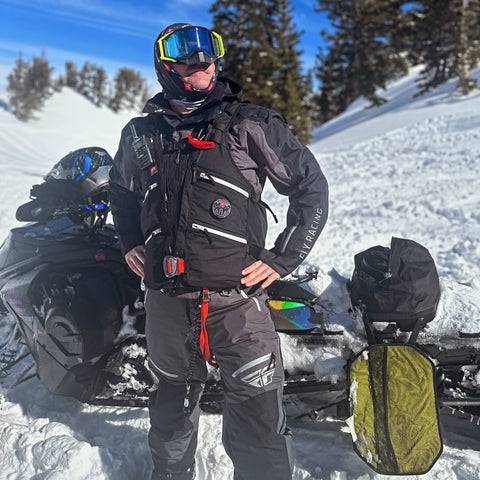
Jack Simonds
Jack guides for Avalanche Science, an avalanche education and guiding company working out of Idaho City and Brundage in McCall, Idaho. After coming home from a military deployment around 2020, he started teaching himself snow science and filming snow pit videos for his local snowmobile club, because the zone he rides isn't covered by an avalanche forecast. Avalanche Science brought him on to turn its ski program into a motorized one, and he ran his first full on-snow courses for snowmobilers and snow bikers in the 2023-24 season. He grew up riding in Maine and now rides a Ski-Doo turbo.
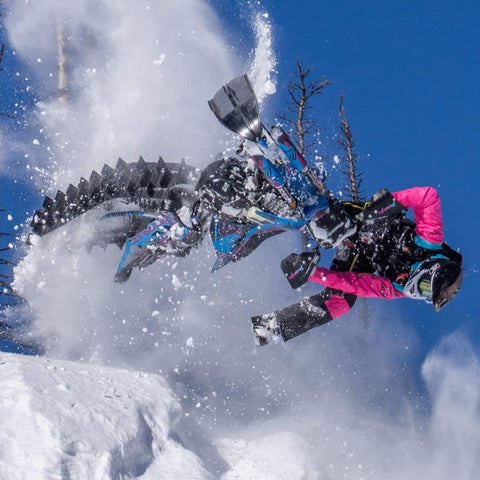
Kody Kirkland
Kody is a snow biker from the Boise, Idaho area who grew up on a ski mountain, where his father was a ski patroller, and started backcountry skiing at 12. He got his riding group together to take Avalanche Science's three-day motorized avalanche course, and says it showed him he knew far less than he thought. Since then his group runs full beacon checks at the trailhead and teaches what they learned to riders who haven't taken a course yet. This was his second time on the Sledder Cast.
Show notes
- 2:31Why Avalanche Science built a motorized version of its ski avalanche program
- 5:00Class size: six students per guide, and Kody's class ran one to four
- 5:27Why Kody, the most educated rider in his group, wanted his whole crew trained
- 10:37The 3-day course is really three and a half: a four-hour classroom night comes first
- 12:50How the course keeps you riding while the guides dig pits
- 16:08Day 2 is the aha moment, when students run their own beacon checks and pits
- 20:37The slope angle game: most riders guess about 10 degrees too steep
- 25:02Shovel tilt and column tests, and what a full collapse tells you
- 27:23Timed rescues with targets buried a meter deep, and the gear yard sale
- 35:37Day 3: students plan the day, dig solo pits and draw the snowpack
- 42:02Trailhead beacon checks, and the riders who forgot to turn theirs on
- 46:47Jack's case for rider-locating screens that work across every brand
I learned way more than I had ever anticipated, and knew way less than what I thought I knew.
Win a free custom wrap
Drop your email and what you ride. We draw winners all season and announce them on the show.
More snow above a nasty layer means more snow that's going to break with you or on top of you.
Questions answered in this episode
What happens in a 3-day snowmobile avalanche course?
In Avalanche Science's course, it starts with about four hours of classroom work the evening before. Day 1 is instructor led: guides walk through the forecast and trip planner, run transceiver checks and demonstrate snow pit tests while students ride nearby. On day 2 students run the beacon checks, dig their own pits in pairs and do timed rescue scenarios. On day 3 they plan the day themselves, dig and read pits on their own, and get a look at next-level tests like the extended column test. 10:37
How many students are in a snowmobile avalanche course?
Jack Simonds says Avalanche Science caps classes at six students per guide, so everyone gets plenty of reps in the snow pits and rescue drills. Once a class goes over six, he brings in another guide. Kody's class ran at one guide to four students. 5:00
Do you still get to ride during an avalanche course?
Yes. Jack says while guides dig pits or set up rescue scenarios, students are out riding nearby with guides keeping eyes on them. Kody says the group rode quite a bit across all three days, with the first day being the lightest on riding because of the longer start. 13:22
Why are avalanche rescue drills timed?
A timer adds pressure, which is the closest a class can get to the adrenaline of a real burial. Targets are buried about a meter deep, and first attempts often turn into gear yard sales, with gloves off and packs dumped. Kody says the mistakes he made under the clock, like a beacon he didn't know well enough, are the lessons that stuck. 27:23
Are snowmobilers good at judging slope angle?
Not usually. Jack has students guess slope angles from the groomer and then check them with onX, and says on average people guess about 10 degrees too steep. Riders who think they ride 40 degree slopes all day are often looking at something closer to 28 degrees. 20:37
It's not a one or two hour deal. It's a 20 minute pause, let's check things out, get back riding.
Full transcript55 minutes · 14 sections
Read it
Lightly edited for readability. Click any timestamp to jump the video to that moment.
0:00 Intro
All right, ladies and gentlemen, welcome back to another episode of the Sledder Cast podcast. We're in Boise, Idaho. Just like that, time flies. Twelve months later we're back. Seems like we were just here.
Last show of the year, and then it's under the snow. All right, so I got a question for you guys. For that person who is swiping and they stumble across our episode, the thumbnail, the video, whatever it is, and they're deciding if they should stop and invest time into this episode, what's the thing we can say to that individual that's going to get them to stop and dedicate some time to this episode?
For me, it's information that might save your life or your buddy's. There's nothing more special than your life, right? So that's what's going to change it.
And along the same lines, if you're riding in the backcountry, you are in avalanche terrain. Get the education, get to understand the snow, and know how to rescue if something goes the wrong way.
Great. For those of you who are new to the program or just tuning in, I appreciate the likes, the subscribes, the shares, anything you can do to help us get the word out about the Sledder Cast. We're not a podcast company. This is kind of a fun thing we do on the side. We get to sit down and have awesome conversations with friends and people who we partner with and work with, and it's just a fun thing to do at the shows.
We also have a lot of discounts down in the description of the video, or the podcast if you're listening on Spotify or any of the podcast apps. So do those things, and then come back to this and we'll get going. I've got Jack Simonds and Kody Kirkland. Not your first time, bud.
It is not. Second time around.
Second time around, many more to come. More mature. You look more manly now, a little bit older.
We've been working with Jack for a little while to figure out what topic. We knew we wanted to talk about avalanches and avalanche safety, right? But that topic has definitely been talked about a lot. So what could we bring to the table that would put a little spin or a little tweak on that topic and make it interesting for everyone involved?
2:31 Inside the 3-day course and Avalanche Science
So today we're going to center our conversation around a three-day program that you put on. And the reason Kody is here is because Kody was an actual student of this three-day avalanche safety training program. So we're going to noodle off of that experience, and hopefully we paint a pretty clear picture. I've heard people talk about these one, two, three-day courses. What am I actually getting myself into? What should I prepare for, and what am I going to look like coming out the other side of this course? That's where we're going to spend most of our time.
But Jack, why don't you give a brief introduction as far as your skill set, why you're the one putting on the course, what company you work for, and share with us more about the program that you do.
Yeah, perfect. So I guide for a company called Avalanche Science. We're local here in Idaho, out of Idaho City and out of Brundage up in McCall, and we also go international to Iceland, Greenland, Europe and South America.
I got brought on to the business back around 2020. I'd come back from a military deployment, and the zone we ride in is not forecasted. So I wanted to get involved with that. I self-taught myself quite a bit of stuff, and I was going out and shooting videos on the snow for the snowmobile club at the time, digging snow pits.
There's a ski guide company up there, Avalanche Science, and they reached out to me about partnering and brought me on board. They said, hey, we want you to do what you're doing. We want you to take our program and convert it into a motorized program. So that set off the next few years of formal education, completing my pro training. Last year was our first year offering the full classes. So it's been a cool ride. Getting those classes on the snow last year was great, and this class that we're talking about today was a fantastic class.
So if I want to put a group together, what's that sweet spot? What's too many, what's too few?
We cap our classes at six. We typically keep the guide ratio at one to six when we're on the snow, digging snow pits and doing rescue sims. If the classes get too big, then people aren't getting the experience. We want them to get a lot of reps doing everything. So once we get over six, I'll bring in another guide.
Your class had a ratio of one to four, which was fantastic. My tail guide, Josh, comes from the ski side, but I've got him spun up on a turbo snowmobile and he's doing all right.
5:27 Why Kody's group signed up
Nice. So Kody, last season wasn't your first season thinking about avalanche safety. What was the trigger that actually got your group to take three days of not going out and shredding, and instead go get education and training?
I think a lot of it is, in past years it's always obviously a topic of conversation. We do small get-togethers every year. We talk preseason, show some videos, go over some basic stuff, usage of equipment. We always have more guys coming in that aren't so familiar with their equipment and how it functions. So a lot of those conversations, and then we try to do some on-hill stuff.
For a couple years with our group, I've been trying to get more formal education. I've spent a lot of time in the backcountry. I come from a skiing background and started backcountry skiing when I was 12, so hiking and doing that, I've been around it for a very long time. I grew up on a ski mountain where my father was a ski patrolman, so I got a lot of education through that, and on the backcountry side of things, backcountry skiing with my uncles.
I've gone to classes, but not anything like this before, actually on the snow. It's been more one-on-one with people and getting educated that way. But I really thought it was super important to get my riding group together and get some formal education, because I felt at the time, of who I ride with, I was the most educated. Well, I want to be saved as well, right? So that was a big thing, just saying, hey, it's worth the cost. Let's get a large portion of our group together and go out and do a course together.
Cool. So before we get into what this course entailed, what were your expectations going into it? You knew it was a three-day course.
I knew it was a three-day course. Truthfully, I thought I was going to learn a little bit more in depth of my current knowledge. A little bit more reading snow conditions, things like that, proper ways to dig pits, and a little bit more education on the rescue side of things. Those were my expectations of what I was going to get.
So without spilling the beans as far as what the course entails, how did that compare to what you actually walked away with when you were done with it?
Pretty mind blown. It was very eye-opening for myself and for our group. We've talked a lot about it, just getting to experience certain parts, and as we walk through what the days look like we can break those down. But very eye-opening. I learned way more than I had ever anticipated, and knew way less than what I thought I knew. For me that's the biggest takeaway, just how important these classes are.
One of the cool things about your group is I had done an avalanche awareness presentation at Ridgeline Bike and Ski, and Justin was at the presentation. He reached out to me about a week later and said, hey man, my riding group's getting together, we're going to go through our avalanche gear and talk this stuff before the season, would you want to come over and talk about it? I'm like, heck yeah, absolutely. I thought that was fantastic. I think every group should do that.
So I came over, and that's where I met you and your whole group. I'm like, hey, I'm doing these on-snow classes, would love to get you guys into it, and gave them a synopsis of what it looks like. And the story is there. You made it happen.
9:49 Day 1: the classroom night and an instructor-led first day
Cool. So let's get into this three-day course. Did you stay on site somewhere, or were you close enough that you could drive to and from?
We drove to and from.
So you guys are down in Boise, and you can drive up to...
Ours is out of Idaho City.
Okay.
I stayed up there local, just got a hotel room in town.
It's about a 45 minute to an hour drive. It wasn't too bad.
Okay. So day one. I'm going to walk through this as if I know nothing and I want to know everything. My crew and I show up on site. Jack meets us in the parking lot, or on the hill, or wherever. What is the first thing that goes on on day one?
So we call it a three-day course, but it's really like a three and a half day. The day before, like on Thursday night, we usually try to get together here in town around 5 or 6 o'clock, and we do schoolwork type stuff. It's also a chance for me as a guide to meet who's in the class and figure out what we can and can't do on the snow for the weekend, because the experience level dictates some of the places we can go. So we take that four hours, go through some of our classroom stuff and get that squared away.
Then in the morning we usually go to a restaurant. I think we met at a restaurant for breakfast that morning. But we've already all met each other at that point, so it helps that first day go a lot smoother.
That first day we take a little bit longer getting on the snow. We go through our day planner. We call it the Bakarina, it's just the name we have for it. We order some food and start going through that. That first day, us as guides already have it completely filled out. We have an operational forecast for probably six of the seven days a week, on average, for the area. It's not a forecasted zone, like I said, but operationally we do that for ourselves.
So we'll share all that information with the class. Hey, here's the snowpack for the entire year, this is what we've seen, this is what we're tracking. A lot of them, it's like, that's a lot of information, until we get on the snow and start showing them in the snow what we showed them on paper.
That first day is a lot of instructor showing, a lot of demonstration. We spend a lot of time in the snow pit. We'll dig the snow pit out, I'll get in there and run these tests and talk about the different tests. We'll do the shovel tilt test and the column test and really start explaining the mechanics of that and what we're looking for.
And typically while I'm digging, they're out ripping somewhere. We have that forecast plan, so we can say, hey, you guys can go tear up this hill, I'll start digging. We want to mix in as much riding as we can.
That was a question I was going to get at. I feel like three days is a hard sell, because if we have three days, we want to go ride, right? It's a hard sell if it's, hey, we're just going to do education stuff for three days, which there's nothing wrong with. But I like what you're saying here. If we can sprinkle it in and make sure we're having fun while we're also getting educated, I think that's a good thing.
For sure. That's a huge part of what we do. Anytime I'm setting up a rescue sim or setting up something, they're ripping somewhere, usually in that vicinity, and we have eyes on them the whole time. For us that's important. When you go to the backcountry, you want to have fun. If you're not having fun, why be there? So there's a lot of that the first day.
The transceiver check in the morning is a pretty long, entailed process. We go through really explaining the transceivers, explaining everybody's individual transceivers, because everyone has different stuff when they show up, and making sure they understand what they're using. That's all instructor led that first day. As we progress through the weekend, the instructor starts taking a step back, overseeing some of that stuff and seeing who in the group is going to be the one that steps up and starts calling the shots.
14:08 Day 1 from the student side
Okay. So day one is more setting the tone and building the foundation of what the next couple days are going to look like. From the student side, what was day one like for you?
We played a lot, and Jack did all the work digging. We watched him from afar, made sure he was okay digging.
No, honestly, throughout the entire course we got to ride quite a bit. It's not just days that you're sitting there watching things. Day one is more of an observing type of day. They're doing the pits and showing the examples, and we're still getting to get in and feel the snow and do a lot. So it's not like we're just sitting there watching. It's still very interactive, but they're doing it rather than us. It's more of that show and tell type of experience.
And like I said, we were getting to rip around quite a bit for what it was. I know the first day did take a little longer to actually get on the snow. I think the first day was probably the day we rode the least.
I would say that's a safe bet.
But just because we were out there the least amount of time. It was more of that show and tell side of things, so a lot more explanation and walk-through, like you said, setting the tone for everything we're going to go through and experience and learn along the way.
15:45 Day 2: students start running the plan
Okay. So day one ends. We get the learning side stuff out of the way, and day two kicks off. We're back on the hill, back on the mountain. From the instructor's side, what's the win, the experience you want students to have on day two?
As the guide, as the instructor, I look for that aha moment. A lot of times day two is the first time they're digging their own pits and doing rescue sims, and you see that eye-opening moment. Everyone in the class experiences that on day two. As a guide that's a cool moment to have, because then you can really start focusing. That person's like, oh man, I thought I knew this and I definitely don't. That's a great spot to learn from. So that's what I look for on day two.
We get the students in there. On the second day, the transceiver check is run by the students. We're obviously right there the whole time, but we want them to start doing the complete check. Also, with our day planner, they all have a stack of those day planners for every day. That first night, we want them to start filling some of that out. Fill out what you feel comfortable filling out after yesterday, and then we'll talk about it in the morning.
As a guide I'll still have the day planned, but we'll look at what they did and what they took from that first day, getting in the weather forecast. We send out all the links so they have access to all of our data, so they can start pulling that stuff for the area too, and start putting that on the piece of paper on that day too.
Having ridden with snowmobilers who aren't so much in the know of the preparation it takes to scout out an area before you go ride, and then riding with individuals who are deep into that, Duncan Lee for example, we spent a few days with him last year. It's not shocking, but it's interesting to watch his preparation. Instead of dinking around in the morning and then just hopping on the sleds and going, you have the phone or the computer up, you're looking at things, you're checking this report, and you're getting a pretty good understanding of, hey, has anything changed drastically from yesterday?
And we see that in the Boise Mountains. Things will change overnight. We got some precip, I think either the second day or the third day, because I woke up to it. I stay in Idaho City. It gives me more time to do the computer work in the morning so I'm not driving out. But we woke up to some precip one of those mornings, so things definitely change.
Deviant Ink: If you love the show and want to support us, head on over to deviantink.com, use the code SLEDDERCAST and save some money on your next premium custom wrap. If you've spent any time on deviantink.com, you already know it is the best, easiest custom wrap builder tool out there. With its new interactive design tools, designing and customizing a wrap is super slick. We're big fans of the new color mixer tool. It randomizes colors until you land on the perfect combo. The design mixer tool is a game changer when you already know what colors you want and you want to see all of our designs in just your preselected colors.
19:22 Day 2 on the snow: terrain, slope angles and first pits
All right, so day two. The students are more in charge. They're starting the morning off and doing the checks before you head out. What does day two look like on the snow?
We'll typically start out talking more terrain on the way to wherever we're headed, especially if we get the clouds to rise up so we can see the terrain a little bit more. We fit that into whatever day the weather works with us, so we can actually see the avalanche terrain a little better. I think on yours, day two was pretty good for that. We'd stop on the groomer and say, hey, we're looking out here into the north side of Freeman, and this is all avalanche terrain. We're talking slope angles. We have the students guess, hey, what do you think that is, and then pull up onX.
That is such a good game, if you want to call it that, to play out there. It's kind of like when you're archery hunting and you're trying to test your range. With my eyes I think that's 40 yards, then you pull up the rangefinder and it's 60 yards. I've got to recalibrate the way I'm thinking here. It's similar.
It's a good thing to get yourself dialed in. On average, everyone's roughly about 10 degrees off.
Ten degrees which way? Either way, or are they usually 10 degrees not as steep?
Not as steep. Like, oh yeah man, I ride 40 degree stuff all day. And it's like, man, that's 28 degrees.
So doing that game is great. And having those apps on our phones now, you can download all of it and have access on the mountain. The industry's come so far, having technology at our hands. So utilizing that technology and taking those opportunities to do it.
Then we'll have a spot picked out, and we'll have the students start, usually pairing them up in twos. These are your pits. We want them to start digging their own snow pits and running their own tests. What I want the student to get out of it is, I want to come over to your pit, like on day three after they've done this a little bit, and say, show me the snowpack. In layman's terms, tell me what you have, and is it reactive? That's what I'm looking for in these classes. If you can identify that there's a weak layer and you can tell me that it's reactive, that just gave us a bunch of information. And then, did our snow pits confirm what we forecasted that morning? Comparing that information.
So it sounds like on day two we're still working on identifying conditions, and it's students doing most of the work.
I would say day two is their first time really getting in there and doing it themselves. The instructors are bouncing around helping with this and that. A lot of it is getting a nice clean pit, nice clean walls to test on. That second day is a learning curve. And it's always going to happen in one of those pits, someone's going to dig into a tree or dig into a rock. It doesn't matter how much you probe your area, it's going to happen. So what are you going to do about that? Talking about that stuff.
If I haven't ever done a course like this and I'm hearing you say we're digging pits here, we're digging pits there, how quickly were you guys able to get your pits dug? Are you able to spin those up pretty quickly?
Yeah, I think being a visual learner, being able to see exactly what they're doing, digging the pit itself for the most part is pretty easy. You can do it pretty fast. It's that knowledge of, okay, I've got a pit, now what do I do with that pit? Seeing, like you said, how the snow's reacting, where those layers are, and knowing the depth of those layers. You get a little more into understanding that on day three.
For a lot of the guys, that was their first time ever digging a pit. So it's learning, hey, this is the process, actually getting to touch and feel and start seeing how things are reacting. And then, like you said, being able to correlate what we were forecasting in the morning to what we're actually finding out on the snow.
Yes, and I think that's the key thing. We probably shouldn't be digging a pit without knowing beforehand what we're expecting to find. We're digging that pit to confirm what we were led to believe the conditions are right now.
We're always looking for signs of instability all day, and that starts on day one. As soon as you leave the trail on the first morning and you dip that first ski off, everyone's felt it. They dip off the trail and go, oh man, there's a little crust down there. It's taking that and asking, what does that now mean? We've all felt it, oh, it's crusty down here. Okay, now take that. What's that going to lead to up top? You start that right from the trailhead at the beginning of the day. So we're always looking for signs of instability all day.
24:37 Reading a snow pit
Okay. So maybe let's rewind back to that pit. We get that pit dug. From instructor to student, what are you teaching? I have my pit dug, I'm looking at this wall right here. What's the next immediate action I'm taking?
On that second day, one of the guys or myself will come up and say, show me your sidewall, explain what you're seeing in the snow. They'll walk through it, oh, we have a layer here and a layer here, and they can start explaining it pretty well. Then I'll say, all right, run your column test, do your shovel tilt test, and I'll watch them go through that process.
If we have some good instability, you get big results. Everyone likes to see those big results in the pits when you're doing classes, because that's another eye-opening experience. When you're doing a compression test and the whole thing just collapses, it's like, we predicted the instability was here, and here it is. It's the first time they're actually doing that with their hands and doing those tests on that second day. We just want them to start being able to explain what they're seeing.
Okay. So we're starting to learn more about the snowpack, the good layers, the bad layers, how deep the bad layers are underneath the snow, which would affect the potential magnitude of a triggered avalanche. If we're seeing that layer down deep and there's a lot of heavy snow on top of it, that's probably going to extend the risk for the day, right?
Yeah. More snow above a nasty layer means more snow that's going to break with you or on top of you. If it breaks, it's going to go big. So we've got to keep an eye on that.
And our day plan can change. On the snowmobile side of things, which is separate from the skier world, the skiers park at the trailhead, they skin up a mountain for a couple hours, and they're committed to skiing that. On the snowmobile side, we're going to go ride this area today, but we get up there and go, hey man, the snow is so much better over here. Well, let's look at the forecast we just did, see if it might be okay, and go see if it's stable for us to be able to ride on. So the day can change in that aspect too.
27:11 Day 2 afternoon: rescue scenarios on the clock
Okay, so day three. Walk us through this last day. We're almost seasoned veterans in this three-day course.
Actually, if I can hit the end of day two real quick.
Absolutely.
In the afternoons we start hitting the rescue stuff, which is huge, because we incorporate rescue into these classes. It's not a separate class, so we do three days of rescue at the same time. The first day they watch us go through it, and we let them probe around and do some transceiver stuff. The second day it's, okay, here you go, let's see if you can use your gear like you think you might be able to.
We have targets, about a foot by a foot, 30 centimeters by 30, and we bury them about a meter deep and let them go at it. And we put them against the clock. We want to add some pressure to it, because in the real world, in a real avalanche, there's a ton of pressure. Adrenaline's going to be rushing. So we try to simulate that the best we can, and the best way we can do it is by adding a timer.
That's another big aha moment for a lot of people. A lot of times those first couple, there's yard sales of gear. People are ripping stuff out of their bags and stuff's going everywhere. They get it done, and then we start talking about how we can get it done better. Efficiencies.
So day two rescue is running a bunch of those rescue sims. I've done this a few times, and we had some pretty good instructors who were yelling, applying a lot of pressure, obviously on purpose. In the real world you don't know what it's actually going to be like, but there's going to be a lot of pressure. The stakes are extremely high. What was that first time like for you guys? Can you recall it?
Oh, 100%. For myself and for others, because we'd sit and talk about it. We did it in different groups, breaking up and getting to run through it, and then also getting to watch it. It's crazy how much you think you know your gear and know the processes. We literally watch a demonstration, then we go out and do exactly what was just demonstrated, and so much stuff is just gone, right out the window, when you're thrown into it. A lot of common sense just leaves.
It was a very big eye-opener for me. I've worked with my gear, I've messed with it, I've played with it a lot, but not near as much as I should. Especially once you start putting that pressure on. I think the biggest eye-opener was little functional things within your gear. Oh no, why isn't this working how I think it's supposed to be working?
I had an issue with my beacon. It was a new beacon that year, and I didn't know it well enough to understand exactly what I was doing, and I ran into an issue. So we had to pivot. I don't remember if that was day one or day two.
That was day two. And I wasn't too familiar with your transceiver either. So, industry support. I reached out to the rep that next morning and said, hey man, give me a five-second rundown on your beacon so I can pass that information on to my student. And day three, no issue.
And it was strictly user error, a simple thing. But it's those types of little things. If I was in a real scenario, I think we pivoted and recovered decent because we swapped out. But in the real world, when someone's buried, that's time.
That was a big eye-opener for myself. And like you said, gloves off, helmets all over the place, yard sales. If you don't know how many people are buried, those can be signs. Those are learning curves that we would see. People taking off their gloves, and then all of a sudden they're without gloves trying to dig in the snow. That's not a good scenario either.
So a lot of those little things you don't really think about, and if you make that mistake in the course, it really sticks in your brain and stays there. So in the unfortunate event it were to ever happen in real life, I think that sticks. My gloves aren't coming off, so I can dig.
I think that's one of the cool things. We were talking about this before the show. Here we are, roughly 10 months after your class. For me as a guide, it's cool to sit down with you and hear what you still remember, what experiences stuck with you. That gives me some feedback. All right, cool, that's working, and here are some of the other areas I can focus on too. It's super valuable information.
Was there a natural leader? I'm sure you see this. When we did it, the instructors didn't appoint anyone. I think they were like, let's just see what happens. The first time, when they started the clock, everyone just looked around to see who was going to take charge. In your group, did a similar thing happen, or was someone like, I'm going to take charge here, direct orders and get order going?
I think the first time around it was that same unknown. But I think it progressed pretty naturally. Hey, first person out, whoever gets a ping on their beacon, that first person is going and directing. I thought it actually flowed pretty nicely. It did seem that certain people in the groups were definitely those people, whether they were quicker to react or whatever, finding, getting their beacons out, getting their stuff ready and being able to take control of what they're finding.
Cool. It also comes down to rider capability too. We're trying to simulate rescue, and it's hard to simulate a rescue on a 28 degree slope. So riders being able to get to the spot can also dictate that role. Throughout the sims, as instructors, we try to game the system a little bit to make sure people are getting their reps doing different things too.
And naturally, it seems like if there's ever a female in the group, they're some of the best leaders in a situation like that. They take the overall picture in. Us guys are in there, hands in it. The girls kind of take a step back, and if you want to set up an incident command for an emergency, they're that person in a lot of those situations. So it's interesting to see that dynamic.
34:38 Day 3: the students run the day
That's cool. All right, so we're into day three now, last day on the snow. Walk us through how we end this course.
By day three, the students come in that morning with their Bakarina pretty well filled out. They have a pretty good understanding of what we're looking for, how to get that information and what to do with that information by that third day.
And you made that word up, right?
I didn't make it up.
What is that word? The first time you said it, I'd never heard that word come out of anyone's mouth before.
It's the name of our trip planner. The guy who started Avalanche Science, I guess the original word means something like a map, something to do with sailing in the early days, in another language. Total side note, he's going to watch this podcast and give me a hard time for that story. But that's where it came from. Bakarina is the shorter version. It has a nice little flow to it once you figure it out. You're going to remember it.
I will remember Bakarina.
So it's a five-page pamphlet. I have a bigger, full version of it, which is once you get to a higher level. There's a lot of information in there.
So on the third day they have that all filled out that morning. The night after day two, we're like, hey, we want to go to this spot tomorrow, trip plan it, and we let them run through that process that night of planning it out. If what I have in the morning matches what they have, that's what we're going to go do.
We try to get on the snow a little faster. Students do the beacon checks again, the full check, and the instructors really take a step back. We oversee from a distance to make sure it's being done the correct way, but it's full on the students doing it. When you have a group like yours, where you brought a lot of your riding group, not only did you get the education, your group dynamic got more educated, which is super valuable.
Then we get on the snow and start asking students, hey, what are you seeing, right from the get-go. Are you feeling a crust layer? What are you feeling on the way up the trail? We'll stop and communicate. And I ride with a helmet comm system, so if anyone talks on the radio I hear it while I'm riding, which is fantastic.
Then it's right back to pits again. The students are in the pits and the instructors are hands off. They do the whole thing. It's about an hour to do the full pit deal. I'll come up and say, tell me what you found. After the second day, they're like, okay, this is the weak layer, this is what I'm looking for, these are my test results, and we have instability here. By day three they're pretty good at doing that. How'd you feel on day three in those pits?
I think on day three you're much more comfortable. Even in our class, we got to get a little into the science of the snow and the crystallization and all that, which I thought was pretty cool.
So while they're doing those pits, myself and the other guide are digging another pit off to the side. We don't want to leave them with, here's your avalanche education. We want to give them, this is what you got, this is the next step. We want to start painting that roadmap of what the next level looks like.
So when they're done with their stuff, we bring them all over. Okay, here's an extended column test, here's a saw test. You identified the weak layers, so let's look at the crystals and start identifying what we're actually dealing with. That way when they get to that next level, they've been exposed to it a little bit and they're ready to keep on going. We want to leave them wanting more. We can only cover so much in three days. Avalanche education should never be ending. Even when you get to the pro level, you should always be doing something else.
So when you brought that up, that's cool, on day three to be able to do that.
Yeah. And we did a progression with the pits. It was more of you guys digging them, then we were digging with partners, and then we dug them ourselves on that third day. So you're completely by yourself. You don't have the support of a buddy doing it. It was a good progression, being able to see how it's done. And not everybody's done at the same time, so you're going over and seeing what others are finding and comparing. Getting to see that is pretty educational for sure.
And they're drawing the snowpack. In the Bakarina there's a spot to draw it out. So we come over and say, show us what the snowpack looks like for your meter deep. Here's a hard layer right here, here's a super soft layer underneath it. They're able to do that come day three, which is cool to see, all on paper.
TREYL: TREYL is one of our newest program supporters here at the Sledder Cast podcast. You can find them at treyl.com. They are coming in hot with all the goodies, all the backcountry essentials. A few of our favorite must-haves are the Grizzly folding saw, with razor sharp teeth that plow through those pesky branches with ease. Also the lightweight ski pole strap, a real back saver when your buddy needs that seventh pull of the day. And of course the TREYL Hot Pot exhaust cooker, because hot meals are way better than cold meals in the backcountry. Head on over to treyl.com, that's T-R-E-Y-L dot com. Grab your exclusive Sledder Cast promo code in the description below.
40:18 Kody's biggest takeaways
So Kody, pre three-day class versus post three-day class. What are a couple noticeable changes you've seen in your group overall? Riding habits, decisions, or just conversation.
I'll start with where we start, which is that planning side of it. I'm always watching weather and paying attention to layers and snowpacks. I've always known about that stuff, but really diving into it was a really cool experience. Getting to see, oh hey, we've got avalanche danger, and what does that mean? Getting an understanding of what the conditions actually are, being able to read the weather, the wind, how it's changing, temperatures. All of that was a pretty cool part that I learned a lot on.
So that's something our group started to do, more of that pre-planning. We start talking about it while we're driving up. We're not typically driving solo. My guy sitting next to me is in there writing it up and planning it, and we're talking about it along the way. We've got a little bit of a drive to where we ride, so being able to do that and plan that day was a big thing that I think we incorporated.
At the trailhead, our beacon checks. I'd never done it that way. It was always a lot more nonchalant. So many times we just assumed everyone was doing it. Oh, we're good. And I've run into scenarios where someone comes back and goes, I forgot to turn my beacon on. It happens. I can count many times that has happened throughout my years riding with people. So that whole check process and a lot of the pre-planning is a big portion of what has changed.
The one thing I took away is, it's not, hey, don't ride in these zones. We're going to be in avalanche danger. Let's be real, especially me on a snow bike. We're like a bunch of ants, we're all over the place. But being more aware of the terrain angles and the conditions, creating a really good buddy system, and just trying to be smarter. I think those are the biggest takeaways and the things we've done differently.
Another thing is, there are guys that couldn't make the trip out there and go through the course yet. So we've taken it into our own hands. Hey, let's go out and teach what we've learned. Some education is better than no education. Obviously we're not going to be able to do it to the level of Jack and Josh and those guys. So it's being able to educate and be an ambassador of safety and riding smart. I think that was my biggest thing.
And on the rescue side, it's knowing your gear and putting yourself and your group into those scenarios, because it doesn't take much time. Have someone bury a pack. A lot of us have an older extra beacon. Put it in something, throw it in a pack, and take a few minutes, especially if the snow conditions aren't great.
It doesn't have to be, I've got to dig an hour pit. It doesn't have to be that long, extensive thing. Obviously it's better if it is, but I know my group, I know snowmobilers and snow bikers, how we are and how we think. Big powder day, what are we thinking? We want to get on the hill. So a lot of it is, as you're riding, being able to cut little pieces and see the snow, get in and feel it, just with your track, seeing how the snow reacts, and being able to do a lot of the stuff on the fly. That was a really big eye-opener for myself.
And the more you do it, the quicker and the more efficient you're going to get. It's not a one or two hour deal. It's a 20 minute pause, let's check things out, get back riding. I'll just step off my sled and put my boot in the snow. What did I feel with my feet? That's a lot of information right there. What did I feel with my ski? And we try to explain what that information means.
44:52 Lightning round: first three mods on a new sled
Cool. Well, we're getting close to the end of this bad boy. We typically ask a few questions here at the end, and Kody's already been through the program, so he's already answered the questions. Maybe we'll pick on Jack a little bit. Kody's a snow biker, you're a snowmobiler. You're riding a Ski-Doo Turbo over there.
I've got two of them, so shout out to Ski-Doo for hooking up the second one.
So if you've got a brand new sled, what are the first three modifications you're going to make on that machine to get it dialed, primo for you?
The first one is going to be protecting it. Bumpers. The factory bumpers don't offer a lot of protection on these turbo sleds. They go over backwards very, very easily, and I've bent many factory bumpers. So Backwoods bumpers, first thing on the sled.
After that, I'm going to start looking at rider comfort. How do I want the sled to feel? Start playing around with bar setup on the sled.
And the third one, for me coming from the guide side, is going to be storage. There's not a whole lot of storage on these snowmobiles, so how am I going to utilize the space the best I can? This is something I like to focus on in the class too. I ride with an Arva vest, but the only thing I carry in my vest is rescue gear. I don't carry food and water. That's all on the sled. If I take my vest off, it's for one reason only, and that's because I'm doing a rescue. I don't want to be fighting through extra gloves or whatever else is in that bag. We try to focus on that in the class too, because it gets rid of some of that yard sale effect. So a good storage system, whatever that would be, would be my third thing.
46:47 Making rider-locating tech work across every brand
Okay. We were talking before we started rolling about some standardization of snowmobiling, winter recreation and equipment. Why don't you share a few of your thoughts on that?
Yeah, I'm thankful for the opportunity to talk about it. I've talked about it in the avalanche community for a while. We have so much technology in these snowmobiles now. Polaris with their screen, Ski-Doo with their screen, Arctic Cat with Garmin now. We have the technology. We need to make the technology work together, and the industry really needs to step up.
We all have backcountry radios. It doesn't matter, BCA, Ortovox, whatever it is, they all work together. We all have different transceivers, and they all work together. To me, the screen locating riders on the mountain should be standard across the industry. That's going to have to come from the industry down. I know everyone likes to keep their technology to themselves, but when it comes down to rider safety in the backcountry, that needs to become an industry standard. We all need to be speaking the same language.
Right. I know the... oh my gosh, it just left my brain. What's the one you can purchase now, basically plug and play? I know a lot of Ski-Doo guys and gals use it. What is the GPS unit on there?
I'm not sure. Ski-Doo came out this year with GPS in their system now, in their gauge.
This one allows you to connect. Is it Trail Tech?
Trail Tech, yeah, that's what it is.
It seems like we didn't have that technology at first. Now the manufacturers are slowly starting to incorporate that technology within their own language. So now it's, okay, what needs to change so that Cats are talking to Polarises, and Ski-Doos are talking to Cats, and everything's going around?
It's getting all of them on that same page, where all the systems are talking that same language. It doesn't matter who's in your group. Especially from the guide side, I ride with different people and different manufacturers all the time. The snow bike guys, you guys really don't have the GPS screen, so we've got to figure out something for you guys. But on the snowmobile side, we just have to get that to work together. I don't know what that looks like coming from the industry, and it's probably a big ask, but that's something I think we should shoot for.
With the whole VR sets and the smart glasses and whatnot, it seems like if we snapped our fingers five years from now, that's going to be in our goggles, in our headset. That type of stuff's going to be right there in our goggles, and we're going to be able to say, show me where Kody is, and it's just right there.
We're going to see onX slope angles on our goggles. The technology is there. You're looking and you see the color, and you know, okay, I shouldn't hit that, or I can hit that today with what we're dealing with. We have that information. It's just how do we get better access to it. Let's get it going.
50:21 Jack's first mountain sled, and wrap-up
That's cool. Okay, Jack, what's one thing that no one knows about you?
Man, I don't like to admit it. My first mountain sled was a Yamaha Phazer.
That's dope, dude.
It was a cool sled, the Phazer. Man, I tore up so many meadows.
I bet there are so many people here who spent a lot of time on Phazers. Are you talking like the 2007 Phazer, the Star Wars version?
Yeah, that one. Not the old, old ones.
Yeah, the old, old ones are way cool, man.
But when I moved out here from Maine, we brought those snowmobiles with us, and I had a great time for a couple years. Well, I know the trail is groomed here, and I know it's groomed over there, so I can kind of cut across. That's where the backcountry experience started for me, on that Phazer.
Cool. Well, we'll close this episode out. It's been a pretty busy morning here so far at the Idaho show put on by SnoWest. We've had a lot of traffic flow through as we've been going. Thanks for tuning in once again. Like, subscribe, share, do all those things. We appreciate the support here with the podcast. It's a fun thing for us to do, and we'll see you on the next episode. Thanks, guys.