
Tomas Berntsson built one of the most iconic brands in snowmobile outerwear, TOBE. He didn't just help start the monosuit movement, he made it a culture. But in 2025 it all came crashing down, and Tomas was forced out of the company he founded.
In this episode, recorded from his old office in a barn on his property in Sweden, Tomas tells the story in his own words: how TOBE started, what went right, what went wrong, how investors came in, and how it all unraveled. Then he shares what's coming next, the company that became Mountain Grit, and why he's hungrier than ever.
Guest
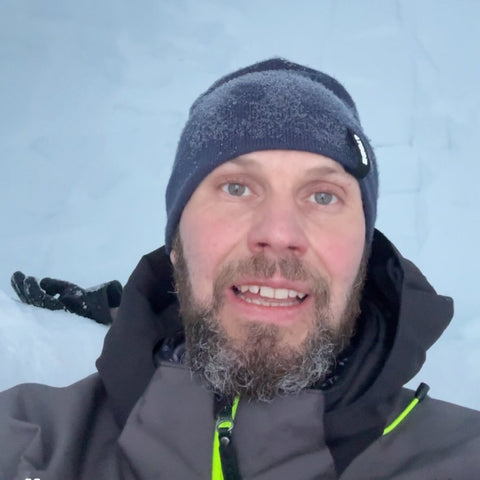
Tomas Berntsson
Tomas founded TOBE Outerwear in Sweden, showing the first pants and jackets at a Swedish snowmobile show in spring 2000, and helped bring the one-piece monosuit into snowmobiling. He ran TOBE for 25 years until May 2025, when, in his words, he was forced out after his stake had been diluted to a minority. He's now building Mountain Grit with members of the original TOBE team: technical snow gear, workwear and lifestyle apparel, with shares offered to the snowmobile community through equity crowdfunding.
Show notes
- 3:03The real first problem TOBE solved: paying for Tomas' sled with company money
- 6:35A color-blind founder, a ski village full of designers, and the yellow pages
- 10:15Coming to Idaho in 2004 and realizing North America was the market
- 15:38People called the first monosuits fart bags in 2015, then came back to try them on in 2016
- 22:10The 2010-2012 quality failure and the total reset
- 25:202015: the bank says no, and TOBE takes on its first investor
- 36:12How Tomas was diluted to a minority stake
- 39:09What went wrong, and what TOBE always got right
- 41:39May 1, 2025: forced out of the company that carries his name
- 49:20His relationship with TOBE today
- 53:23A new brand with the old TOBE team
- 56:33The four cornerstones, including community ownership
In 2015 we had all these people walking by, just staring at our one-piece suits, like, stupid fart bags. But in 2016, the same people came back and tried them on.
Win a free custom wrap
Drop your email and what you ride. We draw winners all season and announce them on the show.
Yes, I was pushed out of the company, but they had every right to do so, and it was, in their mind, a smart business decision.
Questions answered in this episode
Who founded TOBE Outerwear?
Tomas Berntsson. He started TOBE in Sweden out of his snowmobile parts and mechanical shop, and dates the official launch to spring 2000, when he showed the first pants and jackets at a Swedish snowmobile show. TOBE began selling in the United States around 2004. 5:35
Why did Tomas Berntsson leave TOBE?
In Tomas' account, the majority owners decided in 2025 that the company no longer needed a founder involved. TOBE needed a cash injection, he was invited to invest and couldn't, and he was diluted to the point where his shares were worthless. He announced it on May 1, 2025, and says it was a legal business decision they had every right to make. 43:56
When did TOBE take on investors?
In 2015, when the bank wouldn't extend enough credit to finance production orders. The first investor was a government-funded small business investment group. Over time those shares moved to private equity, and Tomas was gradually diluted to a minority stake. 25:30
Does Tomas Berntsson still have a relationship with TOBE?
No. Tomas describes it as a hard cut, with no communication since the day he left. The two TOBE staff who worked with him at the original office left with him. 49:20
What is Tomas Berntsson's new company?
Mountain Grit, built with members of the original TOBE team as partners. The name wasn't public when this was recorded, but Tomas laid out its four cornerstones: a business built as an ecosystem, honest products at fair prices, socially responsible marketing, and ownership by the snowmobile community through equity crowdfunding, with small investments only, around $500 minimum. 53:23
We're going to invite our customers to own shares in our new brand. For me, this is a way of protecting the original values.
Full transcript73 minutes · 16 sections
Read it
Lightly edited for readability. Click any timestamp to jump the video to that moment.
0:00 Intro
All right, ladies and gentlemen, welcome back to another episode of the Sledder Cast podcast. I'm here with Tomas, founder of TOBE. We've had a little bit of a challenge getting this audio and live recording dialed in. I've had to change offices a couple times and I think we found the sweet spot. What do you think, Tomas? Think we're good?
I think we're good. We had some challenges here, but challenges are meant to be overcome, right?
Yep. I think we've overcome them. So, we got a fun episode. I was just telling Tomas before we went live, Tomas and I didn't know each other. This is actually our first direct one-on-one communication. And I was telling him I was kind of a fan from afar.
I remember towards kind of the end of this thing, you started producing these little miniseries where you were in, I believe, Canada, going on site with some of these other founders of companies, doing these little behind the scenes pieces explaining how you met the founder and got in contact with the business. And when I was watching that I thought, man, Tomas is doing this right. This is really good consumable content.
And then a few months later you were like, I got kicked out of my company, essentially. And I was like, what is going on? At that point I thought, I really hope I can get Tomas on a Sledder Cast episode sometime in the near future, to tell the story. Because you can read through comments, you can hear this or hear that. I just wanted to go right to the source. And I love a good entrepreneurship story.
So we're going to start with the foundation of TOBE getting built and created, and I'm going to ask questions that hopefully walk us along the journey of bringing on investors, the good and the bad, what changed, some challenges that happened, and how we got to where we are today. And there'll be a little bit of a tease at the end as far as what you've got cooking going forward. How does that sound, Tomas?
That sounds perfect to me. Excited.
3:03 The problem TOBE set out to solve
Awesome. So, take us back to the very beginning and paint the picture. What did the landscape look like as you were starting TOBE? What was the main problem you were trying to solve with the company you were creating?
The first problem that I was trying to solve was honestly figuring out a way of paying for my snowmobile with company money instead of out of my pocket. That's the real truth. So, in the beginning, I was running a mechanical shop and I was building parts for snowmobiles. Everything from brake levers to running board reinforcements. This is back in the late 90s, beginning of 2000, so snowmobiles weren't as decked out as they are today.
As for how we went into apparel: in this era, everyone was super influenced by the snowmobile videos that just started to come out, like the Slednecks one, two, three, four, five, and all these other videos. The stars of these movies were riding mostly in dirt bike gear, which looked phenomenal considering what snowmobile apparel looked like back then. Snowmobile fashion was practically nonexistent outside of whatever the OEMs were offering. So the idea was basically to create waterproof gear that looked more like what we saw people wearing in the sled videos, which was essentially dirt bike gear.
And then that changed into, let's make it more like ski wear and snowboard wear, but make it durable and waterproof and have all the practical features you need as a snowmobiler. Let's borrow the fashion, but bring in the functionality from snowmobiling and cross that. That was the idea.
Give me a time frame. It was late 90s, early 2000s. Is that right?
Yeah. We talk about the official launch of TOBE as the spring of 2000.
Okay.
That is when I showed the first pants and jackets at a snowmobile show over here in Sweden. That would have been the official start. Before that, I worked on the idea for one or two years, trying to figure out a way of turning it into reality. The landscape for snowmobiling back then was, I don't know, it was an action sport that just turned into an action sport. In my world at least it was either racing, or utility snowmobiles, or touring snowmobiles. There was nothing in between.
6:35 From idea to the first jacket
So how did you go from, hey, I want to create something that has a little more personality in the gear, to actually having a physical product you could show off at a show?
Well, I live not far from a big ski resort, and this ski village was home to a lot of outdoor brands back in the day. So there were all these independent designers and pattern makers, basically the entire infrastructure you need to create an apparel brand, right in this village. I was introduced to a designer and that opened up a network of people I could learn from. I mean, I'm color blind. I don't have a background in designing or anything like that. I wasn't even particularly interested in fashion, at least not back then.
You're actually color blind?
I'm actually color blind. Yeah.
That's amazing.
Well, I had a lot of really good people around me helping me along the way. I'm still trying to stay away from anything that has to do with colors. I was actually going through the yellow pages to try and find a pattern maker. That's how long ago this is.
Yeah, there were actual yellow pages back then. A lot of kids listening to this probably have no idea what the yellow pages even are. That gives us a time stamp right there. So you got hooked up with a designer and started throwing designs on some material. How long was the testing before you had something where you thought, I can get someone to pay me money for this?
When you do it the way I did it, starting from scratch, you really have to teach yourself every little step of the process. Okay, so I have this sketch of a product. How do I turn that into a pattern that I can turn into an actual sample? How do I make that sample look like my vision? And how do I make it perform the way we want it to perform? Each step has its own little challenges. You got to find a fabric supplier. You got to figure out a factory. You got to teach yourself how to make something have a certain amount of quality versus just throwing it together.
You got to find the right factory. You got to find the right people. And I really started with nothing. So for me it was a pretty long process of going back and forth and asking people for advice. But again, I was so lucky having this network of super skilled people living not far from where I am. It opened up the network I needed much quicker than if I had started from scratch with no connections.
10:15 Going to North America
You're at TOBE HQ right now, right? The headquarters of where it was?
Yeah. This is my old office. This is actually a barn on my property.
How many people would come to work here? Was it a one-man operation with some family helping out, or were you bringing people in?
We were always spread out a little bit. This was the head office, where we designed everything, developed the samples and did most of the marketing. That was my little in-house team of trusted people. But a couple of years after we started growing, we had to open an office in Denver, and filled that with a lot of good people. And eventually we had an office in a city not far from here. So we were basically in three different locations, which was challenging, but we made it work.
Did you nail the product and find some success locally first? Or was it immediately, I've got to get this product over to North America?
Obviously we started locally, cuz that's what you do. But the Scandinavian market is, I think, still around 10 to 15% of the total snowmobile market. So if you want to grow beyond a certain point, you have to find a way of distributing your products in the United States and Canada. Out of coincidence I got introduced to some amazing people from Idaho who ran a snowmobile video company, and they invited me over. I went for the snowmobiling, but while I was there I started realizing the market opportunity was much bigger over there, and made new connections that opened up new opportunities.
So we actually started selling TOBE quite early in the United States. It wasn't supposed to be that way, things just happened. I think that was already back in 2004.
So within a few years you were already expanding distribution across the ocean to North America.
Well, we were trying, at least. I'm not going to say it was instant success. It wasn't. I didn't understand the market, the customers, the customer mentality. There were so many new things that I had no idea about.
And honestly, the products weren't for that time and era. What I did was a little too much, I think, for the average snowmobiler. The way we were trying to progress snowmobile fashion was just a little too early. The whole snowboard and ski fashion we were trying to bring in hadn't been seen before, the race type of fashion was still super popular, and the average snowmobiler was older than what I was used to.
Casual snowmobiling in Scandinavia didn't really exist. Utility sleds have been here since snowmobiles were invented, and racing of course, but casually going riding with your friends was a young thing that happened in the late 90s, beginning of the 2000s. While your dad and grandpa have probably been riding sleds for 20, 30, 40 years, that didn't really exist here. So when we started, we built products for 20-year-olds.
But when I came to Idaho that first time and I saw the people in the parking lot in the morning, I was like, “Wow, these guys are 20 years older than I am, and I don't understand why they're dressing the way they do.” So it was a little weird.
No, that's true. When I think back to the early days, just a lot of black, right? Solid black snowmobile gear that I can remember grandpa wearing, as I was on a little Kitty Cat trying not to run over his legs following him around the trail.
15:38 The first shows, and the monosuit catching on
Talk to me about your first trade show, where you built up enough courage to go show this off to the world. When was this and what show was it?
My very first show was back in 2000 or 2001. That was a miserable outdoor snowcross race. It was raining in January.
Nice.
And I was standing there in the pouring rain with a makeshift tent. I borrowed a tent, borrowed a van to get there, friends helping out. That show kind of ended okay. But fast forward, I think the first time I really felt we were on to something was in 2015 or 2016. We went through different phases, from being something that would pay for my beer drinking and my snowmobiling, to an actual business in 2009, 2010. But then we totally reinvented ourselves in 2013, and finally the TOBE that I wanted to build came to, how do you say
Fruition.
Fruition. There you go. In 2015 and 2016. That was when we had high quality, nice looking, super waterproof apparel, really what I wanted it to become.
So 2016 was when you nailed your vision for what TOBE was. What was the first trade show where you brought TOBE to North America? Was it Hay Days? A local western show?
I did quite a few trade shows back in 2005 and 2006, and we picked up a lot of early adopters back then. But then we kind of disappeared for a couple of years because of business changes and the economy crashing in 2008. We came back to the United States and Canada in 2015.
Okay.
And the difference between 2015 and 2016 is probably when I realized we were on the right path. In 2015 we had what we called back then TOBE 2.0, all the clean looking, waterproof, super high quality products that we'd been working on for a couple of years. We displayed those for the first time in 2015, probably at the snowmobile show in Denver. And we had all these people walking by, just staring at our one-piece suits, like, stupid fart bags. And then they kept walking.
But in 2016, the same people came back and stopped and actually looked at our suits, and they came in and tried them on and said they'd heard good things about them. The difference that was building up between 2015, 16, 17, 18 and 19, when we started feeling really established, that was a pretty amazing feeling, seeing that difference from year to year.
Those first people walking by were probably the grandpas, the dads of the industry, thinking, what's with all these colors and patterns? I could totally see how that would be pretty frustrating in 2015, all this work going in and the reception not being what you were anticipating. But coming back and showing up again and again is where the magic happens, right? So that transition into 2016 and 2017 is where you thought, we've nailed the quality, the aesthetic and the colors?
Deviant Ink: If you love the show and want to support us, head on over to deviantink.com and use the code SLEDDERCAST to save some money on your next premium custom wrap. If you've spent any time on deviantink.com, you already know it is the best, easiest custom wrap builder tool out there with its new interactive design tools. We're big fans of the new color mixer tool. It randomizes colors until you land on the perfect combo. The design mixer tool is a game changer when you already know what colors you want and want to see all of our designs in just your pre-selected colors.
Yeah, during those years is when I really felt that we were on track, and that the vision we had been working towards for a couple of years was actually going to work.
22:10 The total reset
And the reason we came up with that vision was the complete failure that TOBE turned into in 2010, 11, 12, sometime there. I was sick and tired of the whole thing. The jackets that came out of the factory didn't hold up. I couldn't figure out how to actually create quality products that wouldn't fall apart. I was sick and tired of walking into dealerships and having to defend myself, and every time come up with explanations for why things were late, why the arms fell off, why customers were unhappy with the waterproofing. I was completely fed up.
So the idea became to just clean out everything and start from scratch.
So this was a full reset, almost.
Complete reset. We stopped doing what we were doing and basically went back to finding new factories, new fabric suppliers, new people to work with, different designers, different product managers, different everything. And that takes a long time. It took us two or three years to figure that out and establish a proper supply chain where we had complete control of every step in the process. It also meant we brought a lot more in-house. We didn't outsource anything anymore.
I sat on a chair in the factories in Asia, just watching people seam seal the crotch on the suits and the pants, to make sure that I understood how that was done and that they understood how I wanted it to perform.
So, why didn't you quit back then?
Because I really like doing this. Snowmobiling is this poisonous passion, and I really enjoy working with apparel and coming up with better solutions to problems that I see. Again, I'm not a fashion designer. I didn't know anything about stitches and fabrics to begin with, but I always had this passion for inventing things. So I wasn't going to let go. I wanted to continue.
25:20 Bringing on investors
So you do a full reset and you're getting into 2016, 17 and 18. When did the first thought come in where you were like, I should look at some financing or investment money to help spur or sustain the growth? Give us the mental frame you were in during that time.
I reached a point where I simply couldn't finance the orders on my own. That actually happened in 2015, just when we were about to launch everything we'd been working on for such a long time. The bank said, “No, we can't give you that big of a credit. It's beyond what you as a person can back.” And that's a hard stop. I couldn't find a way around it. I exhausted every alternative way of securing financing for the company. I'm not a rich guy.
I don't come from big money or anything, and I just didn't have a way of buying products in Asia, shipping them across the world, and then waiting another 10 months before getting paid, because that's the timeline.
The cash flow in a company like this is terrible. It is one of the worst kinds of businesses you can get yourself into unless you have a lot of money to begin with. So I was basically given the choice of either giving up and discontinuing everything, or taking a chance and bringing on board an investor, which I did.
This was in 2015. So you bring on an investor that helps fund inventory and operations. What was the size of TOBE back then? Less than five people? 10 plus?
Honestly, in 2015 the company consisted of me plus two more people. So it was a very small company, and we were struggling with running product development, production, marketing, customer service and sales, while at the same time trying to pretend that we were as big as everybody else in this industry, on three people. It became impossible. A couple years earlier I also made the decision to focus on just TOBE. In the beginning I also had a mechanical shop, a welding business.
We had between five and 15 people, depending on the time of the year, out working on sawmills, fixing machines, working in the shop. That gave us a cash flow that could support TOBE in the summertime. But once I sold that business to focus, it became evident that TOBE needed to be profitable, otherwise we just couldn't continue.
But that proved very difficult. At the same time, you see this growth opportunity, we are growing, and we also have a need to invest in things that we simply can't afford. So this is how the decision was made to bring on those investors.
So was this an investment group or an individual? How did you meet them?
30:06 Who the investors were
The investors actually changed a little bit over the years. In the beginning, it was a government-funded investment group that was put in place to invest in small growing businesses. So my first investor didn't really feel like a real investor in that sense. They didn't come in to change the company. They didn't really have an opinion on what we were doing as long as we were growing, which we did. But then gradually the investors changed, and at the end we basically had private equity backing the company.
When you brought on the private equity group, what was the arrangement? Were they just there for financial support, or did they also provide structure or manpower to help TOBE grow?
We had a board. It gave us the opportunity to hire more people and start building it into, well, the vision. And I have to say I shared that vision in the beginning: to go from being an entrepreneur company to an actual company that someday would be valuable enough to sell off and make a profit. That was all made possible by investors. It would have been next to impossible otherwise.
And that's kind of the point with private equity. Their main concern is, I'm going to give you a dollar, so that hopefully in X amount of years I'm going to get $5 or $10 back. It's hard to find a private equity group that's just going to give you money to give you money.
They're not going to.
They're not going to do that. They want to see growth and they want a return at some point. That's the carrot that's dangling out in front of them. And that can present some challenges when you're a founder with the passion within the industry, the one building all the connections with real people in the industry. On one hand you've got people who are there to turn a profit, and then you're trying to build real relationships to hopefully spark that growth, right?
Yeah. What you're saying is completely true, and there's got to be a business case for me as a founder as well as for the investor. Otherwise it's all pointless. I can do this just for the fun of it, but only for as long as I can afford it, and at that point I couldn't afford it anymore. There are different ways of doing it, and there are good examples of companies that have been able to keep the passion and keep the founders involved, but at the same time turn the company into a profitable business.
With TOBE we were never able to do either. It didn't become profitable, and we lost a lot of the things that made TOBE unique and made it valuable in the eyes of the consumers. Keep in mind, a lot of our customers were buying a brand and a vision and an idea. They saw something more than just a waterproof pair of pants. And when you start losing that, all of a sudden you're just one of many different options out there with a different price tag on them.
Did you say a time frame of when this new group came in?
It happened gradually, from 2015 up until basically recently.
When you say changing, is that a private equity group buying in and then selling their shares to another private equity group?
No, more that in the beginning it was government money backing a small business development organization, and when that was shut down, the shares were basically transitioned to private equity. But it all happened gradually. It wasn't overnight.
36:12 Getting diluted to a minority
Did you end up selling off majority ownership, or are you able to talk about the shares that were left after all this?
In the beginning I had the majority of the company, obviously, and my intention was that it would stay that way. But gradually you get convinced that we need to invest a little bit more. If we only do this, the company will grow faster and become more valuable. And it's better to own a tiny bit of Apple than all of TOBE. So that's how I gradually got, what's the word, diluted.
Down to the point where I actually didn't have the majority anymore, which didn't bother me that much, honestly. Once you take in investors and there's an exit plan, there's no return after that. I bought into the idea that we were going to build a large company, it was going to be profitable, and someday we were probably going to sell it.
Yep.
And I supported that idea. So I'm as guilty as everybody else in the changes that we started making. I can't blame anyone else.
What were some of those changes?
I think the biggest change was the mentality change. The way we started thinking about the company, not as a passion project but as a business. And that's not a bad thing. You've got to think about your business as a business, but you also can't stop thinking about it as your passion. We started getting a lot of people that don't share the passion, people that are only here because of a monthly salary. They have a background from some completely different industry. They don't understand. They don't know. They don't care.
And once you start adding these people, you change all the fundamental things in a company. And again, everything happens so gradually and over such a long period of time that I don't think anyone really thought about it that way. The things I didn't like, I was convincing myself it was for a good cause. But looking back at it, it's easier to see where we started going wrong.
39:09 What went wrong
Correct me if I'm assuming anything wrong here. As the time spent with your private equity group builds, you guys are still struggling to turn a profit, but you're pumping more money in because you've got this plan, and it's a plan full of growth and opportunity, and you're chasing that year after year. Maybe there's a few levers. You pull this one down and see if that works. You push this one up and see if one of these levers is going to be the lever, right?
Yeah.
But you never got there. You never found that lever. Is that a fair assumption?
Yeah. And I think that's the mistake that happens when you start chasing something that is going to be in the future. You stop worrying about how much money it costs right now. Because if we only had a little bit more revenue, it's going to pay the costs of running the company, and a little bit more on top of that, that's where our profit is. I know that's the completely wrong way of looking at it. But once you're in this mindset that you're working towards an end, you stop worrying about that. To sum it up, we did all the wrong things.
The one thing we did right was still the products. It's funny, the products we launched in 2015, the materials, the factories, the details, everything we built into it back then stayed intact the entire time. We didn't change any of that. It was everything around it that started changing. The way we marketed the products, the way we sold the products, the way we pushed more products on dealers, the way we expected growth. It was the business side that failed. It wasn't the products, which I'm really proud of.
41:39 May 1, 2025: forced out
That's evident in the support and the community that showed up. I believe the date was May 1st, 2025. Tomas, you jumped on and kind of shocked the snowmobile industry with a single post. You turned your phone on, started recording, and said something along the lines of: I just got forced out of TOBE. Today is not a good day. My 25-year-long journey with TOBE, the company that I founded that carries my name, is over.
I'm feeling angry, but probably most of all sad. This is my personal account if you want to know what happened or follow my struggles to get back on my feet again. I want to say a huge thank you to all our team riders, all the customers, all the amazing people that I met through TOBE over the years. It's been a pleasure. And the amount of support in the comments was crazy. I was more or less a bystander. I didn't have any connection to TOBE or the investors.
And I was amazed at how your loyal fans showed up for you in support. So, May 1, how did you get to that point, where you flipped that camera on and decided to record that message? What led you to that point?
That was obviously, business-wise, the worst day of my life. It was a process that started in 2015 with bringing in people to grow the company, and it ended right there. I've been asked so many times, can you ask a lawyer? Don't you have any legal rights? It was all fair game. I think that has to be clear. Yes, I was pushed out of the company, but they had every right to do so, and it was, in their mind, a smart business decision.
They felt that they had come to a point where they didn't need a founder involved anymore, and they had the majority of the shares in the company. The company needed an injection of cash, and the reason I brought on investors in the first place is because I didn't have that kind of money. So I was invited to invest, which I couldn't do, and by not doing that I was basically bought out of the company, diluted to the point where my shares were worthless. But technically nothing wrong with it. It was a business decision that they made, and I can't say anything about it.
It is their decision to make. But for me personally, that was a rough day for sure. I didn't ever think that day would come.
How does it feel? 2025, Tomas, you're 25 years into this, probably a little bit more. That feeling of going home, sitting down before bed, and being like, “Holy cow, this is over.”
I've been lucky. I've been with my wife for 26 years. She's been with me this entire time. So I can't say that I know what it feels like to be in a terrible breakup. But
Pretty close?
Close as you want to get. Pretty close. It felt empty, to be honest. I didn't really know what to do. It was my entire identity. I've been growing up with this company. I started when I was 21. I've been doing this basically my entire adult life. So losing all of that, yeah, that was rough.
47:22 The first 48 hours, and the hard cut
Talk to me about the next 24 to 48 hours. What did that look like for you? What did you do? Where did you go?
I don't know. It's a little fuzzy. I was angry, obviously, upset, sad. Went through every stage of emotions, from being super upset to being completely numb. When I recorded the video, I think that was mostly a way of letting people know that whatever happens after this, I don't have anything to do with it. You've got to talk to someone else, basically.
Were there still TOBE employees operating out of your barn, TOBE HQ, or was that empty at that point?
There was me and two more people, our product designer and my wife, who managed finance. So it was the three of us working from here, and the rest of the crew was spread out between the nearby city and Denver, Colorado. It was a bit weird, to be honest.
So did they keep showing up to work out of your barn?
No, they both quit soon after. So they left with me.
What's your relationship like with the brand TOBE now?
It was a hard cut. We haven't had any communication since that day. I had a couple of days of cleaning out my computer and going through my inbox, making sure whatever private contacts I had in there, I was able to copy. But other than that, we just made a hard cut. It's going to take them some time before they're able to change the company.
TREYL: TREYL is one of our newest program supporters here at the Sledder Cast podcast. You can find them at treyl.com. They are coming in hot with all the goodies, all the backcountry essentials. A few of our favorite must-haves are the Grizzly folding saw with razor sharp teeth that plow through those pesky branches with ease. Also, the lightweight ski pole strap, a real back saver when your buddy needs that seventh pole of the day. And of course the TREYL Hot Pot exhaust cooker, because hot meals are way better than cold meals in the backcountry. Grab your exclusive Sledder Cast promo code in the description below.
The products primarily. It takes about a year to develop a new product and bring it to market. So they're going to have to live with some of the ideas and visions about the company, the brand and the products that the old team had before they took it over. But eventually they'll change it into something else.
So, the question I've got to ask is, do you think TOBE can survive without you? Without Tomas?
It would be wrong of me to say. Technically, the company can definitely survive, for sure. Are they going to have a passion for snowmobiling the way we had? I don't think so. The people that are running it now are not snowmobilers. But they have the cash to keep the company alive, for sure. You can always put new people in place. If I'm really needed for the company, someone else would have to answer that. I don't know.
52:14 What comes next
Let me make sure I get my dates right. That was May 1st when you made that post. Fast forward to August, I believe it was August 8th, you pull out your phone again and start hinting at some other things.
They kicked me out of TOBE and they eventually put out a statement about what happened. Turns out the problem was me this whole time, plus our expensive office there, which I'm going to assume is our barn there in the background. Anyway, I'm kind of fed up with this whole thing and I really have better things to do than worry about their dumpster fire. Keep your eyes open for what happens at the end of September, beginning of October. It's going to be exciting, I promise you. Meanwhile, I wish you guys a great weekend.
You may or may not have said you're launching a new brand, or that you've got something in the works. So the first question is, do you, or is this all just a tease? And then we'll get into what you do have cooking.
Yes. There's a new brand coming out, and we're bringing the same soul and values that we originally had in TOBE with us. It's built around a team of ex-TOBE co-workers. The old backbone of TOBE joined me as partners in this company. I'm not the sole owner, and I'm really happy about not being the sole owner anymore. So that's going to be exciting.
At first I didn't even consider doing this, but the amount of people that reached out, the amazing emails, letters, text messages, phone calls, DMs, comments, the support from the snow community has been amazing and so encouraging. I'm so grateful for them helping me get through what was a really tough time. And eventually that grew into the idea that we can do this again. We haven't lost the passion. We haven't lost the knowledge. We know how to do this, and we'll do something similar.
That's exciting. You can go back to the comments and see so many people wishing you success in starting something over again. How long did it take before you were like, I've seen the comments, I'm planting my flag again, I'm ready to rock and roll?
A couple of weeks after, I mean, I've got to do something, right? The idea came up, we thought about it, we talked about it, we investigated what the options were and what the timeline would have to look like, and decided that it's doable. That decision happened gradually, but once we came into July and August, we had a timeline in place, and we were going to be able to pull it off the way we needed to and wanted to. That's when the decision was made.
56:33 The four cornerstones
You've got 25 years of doing this. You've made some really good decisions, and probably some you wish you could go back and flip. What are you taking from the TOBE experience and changing as you bring it into this new venture?
I spent a lot of time thinking about the foundation, the cornerstones of this company, and also how I can establish these cornerstones and then protect them so they're not being changed. The original vision has to stay the vision. A lot of things you can change, but there's a lot of things you simply shouldn't be messing around with if you want to stay on track. Honestly, the majority of my time over the summer has been spent figuring out what's going to be important going into the new company.
And it turned into what I describe as four cornerstones. I talk about cornerstones because you don't tinker with cornerstones, or your building is going to collapse. And that's what we are going to try to avoid this time. The first cornerstone: we talk about our business as an ecosystem, where the things we put in at the beginning and the things we do throughout the cycle are what's going to create a sustainable and profitable business. That's important, because if you remove one of the things from the cycle, it's going to disrupt the cycle.
The second cornerstone is obviously the products. We're going to make good quality products that don't disappoint anyone. If we promise you they're going to be waterproof, they're going to be waterproof. If we promise you they're going to be durable, they're going to be durable. And they're going to have fair pricing. We're not going to inflate pricing only to discount everything two weeks later. That's not how we do this.
The idea with the cycle is to create loyalty between us and our customers. By not disappointing anyone, we hope our customers are going to come back, and if they come back, we can spend less money on marketing through Meta and Google and do other things with our marketing money. So the third cornerstone is what we call socially responsible marketing. Essentially, we're going to use our money to do good things for our snowmobile community and the people in it. It can be things like backing young entrepreneurs.
It can be supporting organizations and avalanche instructors. Things that benefit our community instead of simply giving the money away to the big corporations. The fourth cornerstone is going to be a little interesting. Again, a lot of this comes down to creating loyalty between us and our customers so we can make better products and do better things with our marketing money. The fourth cornerstone is actually the way we are going to be owned. We're going to invite our customers to own shares in our new brand.
Oh wow.
Yeah. And I'm pretty excited about this. For me, this is a way of protecting the original values. We're going to make sure that we don't have corporate investors that come in and start changing things in our products, diluting the quality to turn a bigger profit or to be able to sell the company quicker. We're also not building this company to make a quick exit. We're building a company that's going to stay here for as long as all the owners want it to exist.
That's how we come back to the start of the cycle: by creating good products, by not wasting our money on Google and Meta, and by making sure the snowmobile community has a stake in the company. That's how we can continue making products that we're not disappointed in.
Can I ask you a question, because I'm really intrigued. Do you have the formula for how customers will get equity in the business? Is it, the more they buy, the more equity they earn? Or is it, here's our target for how much we want to raise, and we're going to open it up to our customers first? Are you able to speak on how that might look?
1:01:00 Letting customers own the company
Yeah, absolutely. It's disconnected from buying products. We set aside a certain amount of shares that we are going to offer the snowmobile community to buy. You can't buy all of them. We're going to say no to large investors. We only want small investors, and I think the minimum is around $500. Basically, you can't buy the company. It's impossible. What we want is the little guy to put up a little bit of money to protect the company from being bought up, and to make sure we can continue making good products for them.
This is done through something called crowdfunding, and the process behind it is well established.
Will you be using one of the traditional crowdfunding apps out there, or is this something you're going to build out internally?
We're connected with one of the big equity crowdfunding apps.
Cool.
The plan is to start launching this at the end of October, beginning of November.
And those of you listening and watching are probably like, Trevor, why haven't you just asked Tomas what the name of this new company is? We've made a deal with Tomas and with SnoWest. Tomas is going to jump on a podcast with SnoWest later in the month and officially announce what this new company is, and obviously we're going to respect that. This is Tomas officially saying, yeah, I've been working on something and we've got a launch date in the next couple weeks. Is there a logo already finalized?
There's a name. There's a logo. We've got everything set up and ready.
It was funny. I was talking with one of your ex-employees, now new employees, who was helping us set this up, and she's like, you've got to use my personal email, because if I give you my new email, it'll be obvious what the new brand is. So I don't even know what the new brand is. Maybe I can get that out of Tomas after we go offline.
I didn't tell my kids until last week.
Oh wow. Okay, you're keeping that pretty close to the chest.
Yeah.
That's fun. You've done a really good job of keeping the community engaged, and the intrigue of what's Tomas working on keeps things light and exciting. Someone who built something for a long time, had an unfortunate situation happen, and is now learning from that and moving forward. That's a story worth sharing, and it'll be fun to follow along.
It's worth mentioning that it's not just me. I have an amazing team working together with me as partners. And that's perhaps one of the bigger changes from TOBE. TOBE was my name, and I was the face of it most of the time. But our new brand is very much about the community and the great people in it, and the amazing team that is building it together with me. That's another thing that's going to be different from TOBE.
That's exciting. I'm eager for the next couple weeks to go by so we can see what you guys announce.
I'm excited, too.
I can imagine. It's like the buildup to Christmas, when you've done a really good job getting things your kids really want, and not telling them can kind of kill you. You just want to share what you've been working on. It's probably a lot of that same feeling.
That's exactly the feeling.
So, Tomas, I wrote down a few fire round questions. I like to end with some of these.
1:08:03 Fire round
They're made to be quick, snappy, off-the-cuff questions and answers. First one: favorite TOBE piece you ever created?
That would have been the belt buckle we made that had a 21 mm socket and a beer opener.
So you could change your spark plugs and have a cold one. Love it. What's one TOBE feature that no other brand could ever seem to copy?
There's going to be a ton of people disagreeing with me, probably, but the one thing I always felt we nailed was the fit on our monosuits. I liked it, at least.
Who is one rider, one athlete you worked with throughout the years, that truly helped define the TOBE movement?
Oh, you want this to be quick and snappy. We worked with so many amazing people over the years, in different areas, and they've all been equally important. If I give you a name, mind you, the list of honorable mentions would be an hour long. The person that was very influential to me is Curtis, who runs a powersports shop in Revelstoke today. He showed me everything I know about mountain riding and being cautious. And someone else who really embodies a lot of the original passion and spirit of TOBE is Andrew with Monster Finger Throttles.
All-around great guy, down to earth, and has a lot of passion. But as I said, the list of people that have been equally important and amazing is very long.
The last question we like to hit our guests with: what's one thing that no one knows about you, that you're going to spill here on the Sledder Cast podcast?
Oops.
We've had a lot of interesting answers to this question over the last few years.
My old teddy bear was the most important thing in my life until I was probably 12. Then it sat in my window until I had a daughter, and I gave it to my daughter, and it is now her teddy bear and she loves it. That is one of the things that makes me the most happy.
That is awesome. Teddy bear till 12 years old, then passed it on to your daughter. Thanks for your thoughtful answers, Tomas. I know there are some rather difficult things to talk about throughout this story, and I feel like you were really fair and honest, sharing the successes with your team and not throwing all the blame at any one person. I think that's a sign of a really good leader.
We're super stoked for you and for whatever the new name of the company is. I really appreciate your time. I know it's late there for you and we had some technical difficulties, but I'm really pumped to kick off season 3 of Sledder Cast with you. So, thank you so much.
Thank you so much for having me, and thank you for the kind words.