
Ryan Thompson, you might know him as RLTPhotos on Instagram, is the guy behind one of the fastest-growing goggle brands in the snowmobile world: Tempest Optics. In this episode, recorded live at the SnoWest show in Utah, we unpack how Tempest came to life, what triggered the launch of their heated goggle, how it actually works, the tech inside it, proper UV protection, and how to pick the right lens color for your type of riding.
Ryan also breaks down the truth behind goggle pricing, how most people are overpaying, and what makes their structure so different. If you've ever fogged up mid-ride or fought with a lens change, this one is for you.
Guest
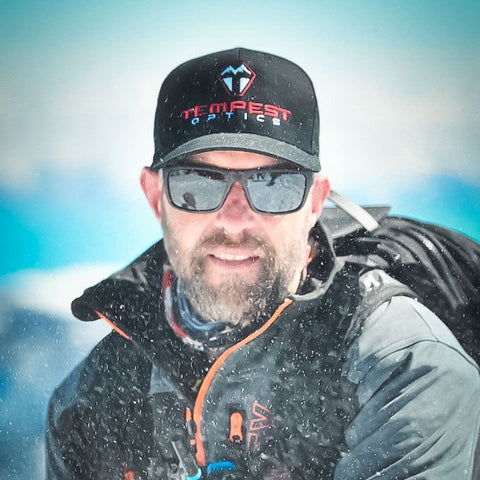
Ryan Thompson
Ryan is a snowmobile photographer who shoots as RLT Photos, including the Jackson Hole Hill Climb. He has worked with Tempest Optics, the heated goggle brand from the makers of ABOM, almost from the start, covering marketing, content, ambassadors and consulting on the snow side. He's a father of six and says he'd rather be behind the camera than in front of it.
Show notes
- 2:21Ryan's role at Tempest, and selling out two seasons in a row
- 5:36A fixed heated inner lens with cheap, swappable outer lenses
- 8:32A humidity and temperature sensor turns the heat on by itself, no switch
- 11:42Nine magnets hold the lens on
- 14:03Why search and rescue teams in Utah are wearing Tempest
- 16:33A heated goggle at a passive goggle price
- 26:20First announcement of an Asian fit goggle for smaller faces
- 27:17OG vs Infinity: same chassis, different outer lens
- 33:12Black light demo of the clear to smoke photochromic lens
- 34:48The new photochromic yellow to bronze for flat light and trees
- 54:22Ryan's idea: a summer view in your goggle to spot rocks and stumps
- 1:01:30Online only, no dealers, and a new Canadian distributor
It shouldn't fog up on you. Don't let fog ruin your day.
Win a free custom wrap
Drop your email and what you ride. We draw winners all season and announce them on the show.
Mike Tyson, if he punched you in the face, your lens would probably still stay on.
Questions answered in this episode
How does the Tempest Optics heated goggle work?
A sensor inside the goggle reads humidity and temperature, and when fog is about to form it automatically heats the fixed inner lens, which uses an electrically conductive tin oxide layer. The outer lens is interchangeable and not heated. There's no on-off switch, no app and no external battery pack or wires. 8:32
How long does a Tempest goggle battery last?
The battery is built into the goggle frame and charges by USB-C. Ryan says riders average two to five days of riding between charges, and a button on the frame shows how much charge is left. His one complaint is that it lasts so long he forgets to charge it. 7:54
How much do Tempest goggles cost compared to other heated goggles?
Tempest prices its heated goggle at what Ryan calls a passive goggle price, so more riders will try one. Trevor noted most heated goggles sell in the mid $300s while Tempest sits in the upper $200s, and Ryan says a Tempest dual lens kit runs $150 to $250 less than other options. 16:33
What Tempest lens color is best for snowmobiling?
If he could only have one lens, Ryan picks the photochromic clear to smoke, which tints darker as UV increases and was Tempest's best seller. The new photochromic yellow to bronze adds the contrast of a yellow lens for flat light and trees while still darkening in bright sun. Yellow and rose lenses add contrast in the snow. 36:30
Where can I buy Tempest Optics goggles, and do they ship to Canada?
Tempest sells online only at tempestoptics.com and has no dealers yet. Canadian orders now ship from a distributor in Vancouver, which cuts shipping costs, duties and tariffs for Canadian riders. 1:01:30
There's no on-off switch. The most insane feature is putting it on and it just works.
Full transcript69 minutes · 15 sections
Read it
Lightly edited for readability. Click any timestamp to jump the video to that moment.
0:00 Intro, live at SnoWest in Utah
All right, ladies and gentlemen, welcome back to another Sledder Cast podcast. We are in Farmington, Utah, new location for the SnoWest snowmobile show. I actually really like the new venue. It has it kind of reminds me of the Idaho snowmobile show. It's Saturday morning here and you can't see from where we're at, but there's quite a bit of people actually out here roaming around, so it's a good sign for Saturday morning. They were smart they teed this up and changed the date so it doesn't interfere with hunting down here in Utah.
Or Halloween.
And so yeah, we've it's been a good time here so far. I've got Ryan Thompson here. You probably know Ryan from his photography work, RLT Photos on Instagram. Jackson Hole Rimshot circuit. If you've seen some tasty looking photos, that's probably stemmed from this guy right here. And we're going to talk Tempest. So he works with Tempest Optics. Not the first podcast that Tempest has done, obviously. We've been you know, you guys have been on SnoWest a handful of times. You've been on the Sled Shed podcast. And but this is your first Is this your first time?
It is. Well, I was on the I was on the second SnoWest one, but
Over at Hay Days? Was it in Hay Days?
It was at Hay Days. But that was against my will. I really I hate being in front of the camera. I told you that before. It's not my thing. I'd prefer to be behind the camera, so.
Yeah, we've bribed him with donuts. I think we got donuts over there afterwards, so to get Ryan here, but we've got a cool lineup today. I've been able to listen to the SnoWest and the Sled Shed episodes with you guys, and so obviously we're going to try and cater this a little bit different, it's a different conversation to be had and it's different perspective with Ryan being here solo. And so, I'm excited. Let's jump right in. First off, you know, for those who you know, maybe aren't familiar with Tempest or you in general, like what's your what's your role at Tempest?
2:21 Ryan's role at Tempest
So, that's kind of a big question in some ways. My role at Tempest is always evolving. I've been on board with Tempest right from the get-go for the most part. And so, as a result, I help them out anywhere I can as far as snow is concerned. So, my job is pretty much wear the hat of marketing, content creation, ambassadors, consulting, and really trying to help them find the channels and the means to be able to really promote and get the word out there about Tempest. So, yeah.
And how long have you been doing this role for?
So, I'm going on my third year. Third year. Yep. Yep. First year, we sold out as everybody knows. We've heard from you. And we thought for sure And we did. We made a lot more the second year. Didn't think that we would sell out. And surprisingly enough, when we opened for sales on November 2nd last year, Vince, the CEO and owner, he's also the engineer behind them, called me and he's like, “At the rate we're selling these, cuz we had a second batch on standby that if we needed them, we'd bring them in.” And we didn't think we'd need them till maybe January.
And literally the first day we opened sales November 2nd, Vince called me and he said, “We need to get that second batch in and sure enough, we got it in and we were sold out in January last year. So, this year, for everybody who has been asking, yes, we have really stocked up. It'll be an absolutely amazing, busy year if we sell out, but at the rate we're going, we done a few things differently this year with Tempest. We had product at Hay Days and haven't had an overwhelming response from people. Here at the snow show for the first time and again, overwhelming response on a limited supply that we've had. We did get everything in house.
So we're geared up and ready to open sales on the website the end of this month. That's the plan.
There we go. So, when you say open up, you're just saying basically, adding quantity, available quantity to be purchased cuz the website is live and you guys have had the website live for a few years now.
Yeah, the website is live, but the product has not been available because we've been sold out. There's been some of the lenses that we've had available and stuff, but all the new product for 2026, the entire lineup, will go live the end of this month. Probably around the 30th, between the 30th and the 1st of November. That is when we plan on opening the doors for all the 2026 product that we have available.
5:36 How Tempest differs from other heated goggles
So, in a nutshell, so if someone who, you know, hasn't, you know, seen any of the podcasts with you guys before, we'll get into this a little bit deeper later on here, but what is like, this is how we're unique here at Tempest verse the other types of goggle, other types of heated lenses that you can get? In the industry.
So, there's two things to that question. You have the heated lineup like you were talking about. And the way we are different is night and day. I mean, our goggle, first off, the main difference, I don't know how well you'll be able to see this, but we have a fixed inner lens on our goggle.
Yeah, there is a lens right there.
And that lens does not come out. That is the heating element. So, ABOM, the predecessor to Tempest, all the heating element used to be in the lens. And so, it was fairly expensive because if you've got all the heating elements in the lens, that's a lot of money. And so, lenses were not cheap. We wanted a way to be able to have the heating fixed and then be able to have interchangeable lenses that are real quick and easy to change that are inexpensive and that people can buy without, you know, damaging a really expensive lens. So, the fixed inner piece here is the game changer and the big difference.
The other big difference, obviously, there's no wires.
Yeah, there's no battery pack.
Battery pack anywhere on it because everything is internal. It's all housed within the chassis of the goggle. And Vince, who is our CEO and engineer that behind this, has done a phenomenal job with packing all of that tech into these goggles. There's no on-off switch. This button right here is simply to show you how much charge is left on the goggle. That's it. It's not an on-off button. We've got a USB-C charging port right here that is a quick charge USB-C. So, every once in a while you have to remember to charge them. We have guys that are getting anywhere on average from two to five days of riding between charges.
So, it's easy when you don't have an on-off switch, you don't have anything no modes of operation. You simply put them on and ride. Just remember to charge them. There's nothing to think about, which is the idea. Our mantra is, you know, KISS, keep it simple, stupid. And so there's no modes of operation, no apps, no battery brick. You just every once in a while need to check the charge and remember to charge them. They'll automatically come on.
What's the trigger on that? What's the mechanism that levers
A sensor inside the goggles that detects humidity and temperature. It's a mathematical combination and it says fog's about to form and it'll turn on and heat this entire inner lens, which is a tin oxide. It's a material that is electrically conductive and the entire surface of this inner lens heats up to mitigate fog and get rid of it. I used to fog a ton, sweat a lot, hiking, skiing, doing different things, always getting unstuck. And I kind of get claustrophobic under the goggles and the helmet, rip them off and
I'm the same way.
Yeah, and then inevitably get it wet on the inside and then you're drying them out because you have fog issues after you put them on. And with these, you dry out the inner section of the lens here, put them back on and go and they'll dry out with that heat coming on. Obviously you don't want to get water between the two lenses. This is a very tight seal. And if you get water between them, you got to make sure that's really dry because the water will evaporate in between there, but then it re-condenses cuz it has nowhere to go. So, you need to make sure you dry out the inner part of the lens, but as far as fogging goes, they're unbelievable.
Sometimes you'll see it just start to build and all of a sudden it just disappears. Yeah.
So, may this might be a silly question, but you got two lenses here. The heat mechanism is on the inner lens. So, I guess the silly question is the fog, does that can that be on the outer and the inner or is it like I'm just trying to think, you know, how how it builds up, but if there's only heat on the inner does that protrude out to the outer two or
So, that's a great question. Obviously the outside lens, if you're in snow and sleet or whatever, you're going to have to clean this outer part of the lens off. It's not going to just automatically heat that off. And if it got hot enough to evaporate that, you'd melt the lens, obviously. So, this outer lens is not heated. Obviously this produces some heat. So, there is going to be a little bit of heat in between these lenses. So, it can obviously help mitigate some of that on the outside, but it's not there to solve the fog on the outside. The real issue that people have is on the inside.
Inside. The moisture in there. Yeah.
And with a dual pane lens, if you get moisture between that dual pane lens, there's nothing you can't reach in there with a rag and dry it out and take care of it. With this, you can. You literally take out It's like taking apart the dual pane, yep. Wiping it dry, and the only reason you'd get moisture in there is if you took them off and were changing them in a snowstorm or weren't really taking care to make sure that they were staying dry while you swapped out your lenses. Otherwise, as long as there's no moisture in there, you're not going to have issues on this outside either. So, and we use nine magnets instead of seven or five.
So, super tight fit. And people will ask, so how easy is it to pop this lens off? It's I mean, Mike Tyson, if he punched you in the face, your lens would probably still stay on. So, I mean, it's
We're now going to queue the AI generation to generate that. And we'll overlay the Instagram.
I've already replicated that.
Oh, heck yeah. Yeah, we'll go find that. Yep.
So, yeah.
12:02 Breaking into the snowmobile industry
Oh, cool. So, how we were kind of talking about this off camera, and I was like, how hard has it been to break into the snowmobile industry because Tempest stems from ABOM not like, born and raised snowmobile in the snowmobiling industry. How hard has it been to kind of jump in and say, “Hey, look, we're not, you know, this brand or this brand that you know from the snowmobile industry. We are Tempest and we're different.” How hard has that been for you guys to break in?
In the beginning I'll be honest, that was one of the things that kept me up at night was, you know, being entrusted to get the name out there in the snowmobile industry and not wanting to just disappoint. It actually went phenomenally well. Better than I could have ever expected. ABOM already had a reputation for years.
And so, when we started building off of that reputation, you know, with advertisements and different things from the makers of ABOM, the nerds that brought us, you know, the ABOM, people all automatically started gravitating towards Tempest because of that because there were we had a lot of diehard fans with ABOM even though there was a lot of problems with that goggle. And that are completely done away with Tempest, we still had a lot of very diehard fans who were still wearing their ABOMs and sad ABOM had gone away.
So, it was phenomenal how well we were received in the snowmobile community and I attribute that a lot to snowmobilers are very much function over fashion. The ski market's a little higher or a little harder to break into for the reason of A, it's saturated. And B, you have a lot of fashionistas in the ski industry, you know, and if they get fogging, they can go in the lodge, be on the gondola, clean them out. Whereas with the snowmobile industry, it can be a matter of, you know, life and death in some situations and I don't mean that lightly.
SAR, search and rescue, has gravitated to our goggle and a lot of it is for the mere fact that they don't have to deal with any fogging. And so, in fact, I think almost every SAR organization in the state of Utah now is in Tempest. And they see it as a safety thing. Yeah.
Good work.
So, yeah, so we have some great ambassadors that have really helped with that as well.
Carter right there for us, he's on search and rescue Madison County, Rexburg. So, we'll have to chat with him. I actually think he talked to you guys.
He might have talked to one of our ambassadors.
We'll see. Anyway, sorry. I pushed you off the roll right there.
You're good. So, breaking into the snowmobile community was it was fast and furious. I mean, once it happened, and you know how it is with the snowmobile industry, it's kind of like a brotherhood like you either love a product or you hate a product. And people like honesty. They don't they can, you know, they can smell you know, the snake oil scams a mile away. And the last thing you want to do is break the trust of the snowmobile community and the people that are in it. And what you present because frankly, you know, every industry has some snake oil in it.
And we absolutely wanted to make sure that the product filled the niche of functionality and that it performed. Vince is an amazing person when it comes to listening to feedback and integrating that feedback. This is such a dialed piece of tech. If people knew the tech in this and just how dialed it is, it would blow their minds. It's And for the price, it's all priced for a passive goggle price.
16:10 Tempest pricing
I was getting without going through like the checkout process on Tempest and I'm like well, you know, these guys if I do some price comparison they're probably going to be like quite a bit more. And it was actually the opposite. Yeah. Like I believe most of your heated, you know, lenses retail online you're seeing in like the mid 300s and I think you guys are what? Like upper twos? Somewhere around there?
When we originally talked about the pricing that was a very important discussion for the mere fact that we wanted to make sure So, Vince reiterated to me over and over that his goal is he wants to be able to get people who have never tried a heated goggle interested in it and in order to do that you've got to have them in a price range that's affordable to them. And so, the pricing that we came up with was very strategic in the sense of we wanted you don't want to price something so cheap that everybody's like, “Oh, it must be a piece of crap.” They're not. They're anything but that.
So, but we didn't want to price ourselves out of business either and the pricing structure we came up with was based on a lot of asking questions to your average everyday rider, what they expect, how much is too much, how much is not enough in their mind before something looks too cheap. And so, our pricing was very strategic and we feel like we came up with a very good pricing structure for the for what you're getting.
No, well done. I mean, I went into it assuming, well, yeah, they can have this cool new thing because they're charging for it. You know, but no, I was surprised that, you know, pricing is in a range where you know, you're not out selling or out pricing the market. So,
Well, you get Look at a lot of your passive goggles, high-end passive goggles, they're as much if not more than this goggle, but you're getting a heated goggle with this. You know, and so once people have realized that, we knew because of how well it worked in our preliminary tests that we did out here out west for Tempest. We were a little bit shocked cuz nobody fogged up. We thought something's wrong. There's something going on here. Either this is
A weird year or something.
And it's understated cuz Vince is always under promising and under stating. Or he doesn't want to over promise anything and so which is great. But you're getting a much better product than you realize yeah, for that price and on average especially if you get a dual lens kit that we offer you're anywhere from $150 to $250 less than anyone else out there, but you're getting 21st century technology. No wires, no battery bricks and a battery life on a charge that lasts days, not hours.
19:19 The most expensive mistake, and the most insane feature
Cool. So what's been the most expensive mistake the team has made on the goggle? Anything?
As far as like the actual product itself?
Yeah, like oh, you went down this rabbit hole. You thought it was going to be it and then nope, not really.
ABOM. Honestly, ABOM was the learning I didn't work for ABOM. Let's put that out there. I was familiar with ABOM. I came in at the end of ABOM as far as like a little bit of consulting and stuff, but Vince would tell you that ABOM was definitely the learning experience and the very expensive learning experience. And so years of I think five, seven years of learning through that brought us Tempest and he vowed not to make that mistake again and he's done that
Years will do that, yeah.
Yep. So
That's cool. What would you say is I mean, I know you kind of gave us a walk-through already, but is there If we wanted to like reiterate the most insane feature on this Tempest goggle, what is the like the most insane feature that that's in the makeup here?
That I can talk about?
Yeah. But now, even if you can't talk about it, what do you got?
Yeah. No, this thing, like I said earlier, it is packed with tech that would blow your mind. And it's proprietary. It's some very guarded information. But the technology, I would say, that is built in to the chip of this goggle is literally, when we say, you know, join the 21st century, I mean that. It's years ahead of anything. And the ability that Vince has to be able to go in and just things and change things is phenomenal. So, it's been future-proofed in a lot of ways with the future in mind. And so, yeah, I would say the tech that is under the hood of this is pretty mind-boggling.
Yeah, and it's got to be because really what you're going up against is you're going on the contrary, the tech is, “I'm foggy, let me hit a switch.” Verse, “I'm starting to get foggy,” and then it magically disappears. Right? Like you didn't have to You didn't have to do anything. It's just
Yeah, well,
Always there working.
And on that note, Vince, when he originally called me and was talking to me and, you know, running past me the goggle before I'd even seen it, and he was like, “So, here's the lowdown on it. There's no on-off switch.” And the first thing that went through my mind was
The answer right there. That was the most insane. There's no on-off switch.
Yeah. Exactly.
There you go.
Yep. The most insane feature is putting it on and it just works. But he said there's no on-off switch and I took me a second. I said, “Well, is there's There's no way to turn it on or off?” He's like, “No, it's all automatic.” And I had a hard time wrapping my mind around that until I got the goggle and tried it out. And the more that we have no on-off switch, the more feedback we get, it I mean, we hear we've heard yesterday and today people come by and say, “It's absolutely unbelievable how well your goggle works and I don't even have to think about it.” So, we thought of some ideas and I don't know if I'm getting ahead of myself here.
Sorry, Vince, if you don't want people knowing this, but it's all stuff we've discussed and it's part of the feedback. We've had people say, “Yeah, it'd be cool if there wasn't an on-off switch just in case.” but one of the ideas that is crossed the table that we've discussed is the option of a little chime inside. So, when the battery is low, when it gets to a certain level, there's an audible feedback just letting you know. It's not saying there's something wrong. It's just saying, “Hey, we know you've gone 4 days and you haven't charged these. This is just reminding you that I might need a little bit of juice before your next ride.”
23:52 The blueprint of a good snowmobile goggle
Like my little mower. When it gets full, makes that high-pitched sound I can't stand. Yeah. Awesome. Okay, well, the blueprint of a really good goggle. I mean, I think we've You've You know, you've kind of hit on a lot of those aspects of what a really good snowmobile goggle is, but maybe, you know, a really good snow snowmobile goggle can do this should do this, this, and this. So, how's Tempest like, look at that?
So, A, a really good goggle should not cost you an arm and a leg. The tech's out there and the framework has already been done. A lot of the work's already been done for a good all round goggle. So, it shouldn't cost you an arm and a leg. Your goggle should also and this comes back to a question that we get a lot. How does it fit in this helmet or on this face? And obviously, it's one goggle chassis and you're trying to fit every facial feature, you know, out there.
And so, obviously, some things are going to be a little bit different for every person and some people are more sensitive in other areas, but we believe that a goggle should definitely be comfortable and that it should do its job. It shouldn't fog up on you. We absolutely believe that for no reason you should not be having fogging issues. Don't let fog ruin your day. And that comes back to the pricing and have that for the pricing structure of a passive goggle without the heating. And we've been able to do that.
So, I would say definitely something that eliminates fog, something that's priced correctly and something that fits the majority of people. That's important. You want kids. I have six kids and I'll tell you there's nothing worse than going skiing or on a snowmobile ride with six kids and having all of them fogging up.
That doesn't sound fun.
No, and this has solved that. In fact, this year one of the new things and we haven't announced this, so first place you're hearing this
Okay. Here we go. Here we go.
Maybe you announced it on SnoWest. I don't remember. But if I'm pretty sure this is first announcement. We have what's called an Asian fit goggle. So, I didn't come up with that name. That was
Explain yourself here, right?
Came up with that. So, they have a smaller bridge on their nose. And they needed something that fit better around the bottom of the eyes and the nose. And so they packed more foam in around the nose. And the just over slightly under the eyes. And that allows it to fit much better on children, on women, on people in general who have smaller faces and that bridge of their nose is maybe smaller. And so the air flow isn't coming up through the bottom and causing problems. So we're going to have a limited supply of those this year, just try it out.
On Is it on both the OG and the Infinity?
So
Or
Something to clear up on that question, that is a common thing. The OG and the Infinity, the only difference between the two goggles, the only difference, is right here. The outer lens. Okay. The chassis on all of our goggles are the same chassis. So the OG refers to and I brought some but I left them over there. The OG lens, which has the rim, the frame on it. That's the only difference. And so we still offer the OG lenses. There's people that absolutely love that lens and want that lens.
I'm an Infinity guy though. Looks, I mean, looks-wise, but also like you said, the functionality of just no shelf. It's just flat, right? Like not going to hang up on anything.
Nope. Sheds the snow. Yeah, it's phenomenal. And Dave, who is kind of he is a very important figure in ABOM and Tempest. I don't want to understate that. The guy is pretty much, the reason they exist. Period. It was him originally that was fogging up on his reading not his goggles, but his glasses. And was like, I need to figure out a way to mitigate this. And the first thing came to his mind, you know your car windshield, the back has those wires run through it? That heats it up. That's what he thought about.
And he thought, what if there was some way to integrate that into glasses, and then that turned into goggles, and then that's turned into ABOM, and then that turned into Tempest. So, yeah. So, huge shout out to Dave for you know, what he's what he's brought to the industry. But on that small tangent, what were we talking about?
The blueprint of a really of a really good snowmobile goggle.
That's right. Lightweight, too.
Lightweight, okay. So, cuz let's just recap. We had it's got to be a price point that people can get into. It's just got to work. No questions asked. No fog.
You're going to pay that much money for a goggle, it needs to work and not fog.
And then the weight. It's got to be lightweight.
It's got to be lightweight. Surprisingly, you know, I never really thought of weight as an issue until I got into helmets, different riding helmets, and as you try different helmets, you realize just how much weight was on there. You didn't know how good it was until you tried something better. And that's what we're hearing with the goggle. People are like, we had no idea there was something this good out there for the price point that works so well. So, yeah.
30:03 Lens color and VLT guide
Awesome. Now, we went over this and for a lot of you out there, this could be common knowledge, but we're going to overlay on any goggle, I believe, all over your website, you have your VLT chart, which is showing you the lens colors with a little kind of slider bar that tells you, hey, on this kind of a day, you know, the here's the optimum lens color, right? I thought, you know, for one, that's that's easy for me to just look at and make my decision off of what how much I want to base my goggle purchase off of looks versus functionality. We'll overlay that. And I've got it here. I believe pulled up here.
What can you say like other than just like I don't understand how colors can make things, you know, giving more visibility in sunny in you know, foggy overcast days, whiteout days, like obviously I know a clear lens, there's nothing there, so you're just pretty much seeing straight, right? But like what can you say to
The VLT.
Yeah, the VLT.
Light transmission, so you know, there's a lot of different light bands out there that are not visible, you know, infrared, things like that you know, UV light that's coming through. You want something that's going to block the UV light cuz you don't want to get sunburned eyeballs, obviously. And in fact, you can simulate UV. This is a good example. This is a black light. And Oh, by the way, first time on line like this is our newest lens lineup. This isn't just a regular
Just brought it.
Lens. This isn't just a regular yellow lens. So, this is actually a photochromic lens.
And we've got the photochromic on there.
Yep, you do.
The one right there at the bottom.
At the bottom, and it has the widest
Range.
Range right there. So, that's our that's this one that's on our website, the clear one. We have two photo Oh, this is a new option, too, the sleeve. So, instead of just having it has a pouch for you to put the goggle in, too, but this year we also added the sleeve.
Just a quick little way to keep it
On your helmet, but then you can stretch this over the front so that you're not scratching the lenses. It's a great add-on. Comes with every goggle you order. So, this is the photochromic that we had last year. Photochromic that is clear to smoke, and that's the one that's on the chart. And all that's saying is that on low UV light day, so a flat light day or cloudy day, it's going to adjust its tint based on the UV. And this simulates the sun. So, if I just put a really small spot right there, I'll do a spot so you can see it easy.
Oh, hold on. Hold on. This is pretty cool, actually. We're going to just do a live recording right here.
Okay, so the
Okay, so we are on the Sledder Cast podcast with Tempest, and we are simulating UV sunlight on the photochromic lens right here. So, we're clear, and we go from clear to smoke gray.
Right there.
Look at that. So, you're using a black light?
Yeah, so this is just a black light. Bought it on Amazon for eight bucks, and
Look at that. Look how cool that is.
And it will change that
So, this is simulating, obviously, sunlight. So, on a clear sunny day, this lens is going to be smoke gray. Right? And then when it's foggy, overcast,
It's going to be
To be this side over here. Check that out.
So,
That's cool.
It will change depending on how much UV light there is. Obviously, some people will be like, “Yeah, you know, it's clear now. Well, we're inside, there's no UV light, so it is clear.” If you take it outside, even on a cloudy day, you're going to have UV light that gets through. Have you ever been sunburned out skiing or snowmobiling, and it was cloudy, and you're like, “How did I get sunburned?” It's because UV light can still get through. So, there's still going to be some tinting on a cloudy day because it's registering that UV light that changes it. So, that was our hottest seller, that photochromic lens last year.
And this year so far, too. We've added to the lineup for this year based on a lot of feedback.
34:48 The new yellow to bronze photochromic lens
New version?
So, this is our new photochromic yellow to bronze.
Yellow to bronze. Okay, we're popping back on here.
And
Okay, we're back. We're photochromic. That was clear to gray.
Clear to smoke.
To smoke, and now we're this is new.
Yep, this is just yellow.
Yellow to bronze. Let's see what happens here. Look at that. There's your change right there.
So, this one is a phenomenal lens for those We have a lot of riders that really like their yellow or rose lenses, and they like them because it gives you more contrast clarity on a flat light day. So, this not only gives you that clarity of a yellow the yellow tint, but if it's sunny, and you've kind of got those clouds going in and out where you're like, I don't want to switch lenses, or you're going into the trees, and you need something that's going to adjust, the new yellow to bronze is the key.
So, to clear it out for the average guy or gal out there, your clear to gray is going to get you that full coverage. Why you would go with a yellow to bronze is for terrain clarity on whiteout conditions.
Yeah, so your clear to smoke, you can see it's already changing.
Saying gray.
Oh, you're good. It's already kind of gone back. It changes. People ask all the time, how quickly does it change? Well, it just depends on the intensity. Temperature can have an effect on that as well. But, your best all around lens, like if I was buying one lens for every condition, it would be the photochromic lens because then it would adjust accordingly. And we've had people say, you know, I have a yellow lens and a rose lens, but I'm always just I just leave the photochromic on because it it does everything.
And so, this is a great lens for those days where it's in and out sunlight, you're not sure if you know, it's going to snow later, not snow. And you just want one lens, this is the go-to. The idea behind this one is not only it's the same characteristics, it gives you a darker color. So, it blocks out the really bright sunlight. Obviously, not as well as something as dark as this one.
But, it still darkens significantly so that it protects you from that those really bright rays on a sunny day, but then if it clears out and or clouds in and snows and it's flat light or you're in the trees, then you're going to have the beautiful contrast that the yellow gives you. And we put up polls like rose or yellow? Are you a rose person or a yellow person for contrast, you know, on the VLT scale? And
Yeah, cuz they're pretty much the same, right? Identical on that scale.
As far as like, their visible light transmission.
And I honestly, for me, there's days when I love the yellow. And there's other times where I absolutely love the rose. So,
Yeah, people ask, well, what's the purpose of a rose lens or a yellow lens? Is it just so everything looks brighter and cooler and gives you that happy vibe? And I guess that gives you a happy vibe, fantastic, but no, it's it literally does help with showing more contrast in the snow. So,
38:36 Why Tempest was the first to do it this way
Cool. No, that was helpful. I'm glad you brought that demonstration. That was cool to see. So, Ryan, I asked you kind of this question before to kind of to prep you cuz when I saw Tempest come in, I'm like, there's so many other competitors out here that have been doing snowmobile goggles for a while. And why did why is Tempest the one who you know, comes out with this style of goggle? How come it's not one of these other, you know, goggle snowmobile winter goggle makers that you know, got to this first? Yeah.
So, it goes back to what we were talking about earlier. I can't remember I don't think we were recording when we were discussing this, but the whole idea of the people that came up with this concept were not in the snowmobile world, period. Like, that didn't even cross their mind. So, they were A, they were thinking of it through a different a different paradigm. They had their paradigm of what a heated goggle should be, and that heated goggle that they had envisioned didn't include a battery pack or wires. It was all internal.
And if you think about that, that really makes sense in today's world with the tech that we have, why wouldn't you put everything inside? A, you keep it out of the elements. B, it's not being knocked off. Wires aren't being pulled out. You're not, you know, as some riders tell us, you know, having that neck kink. I don't know if it's that much weight that it makes that big of a difference, but apparently it is an issue. So, I think it's the fact that they were thinking about this through a completely different mindset without snowmobiling in mind.
Hadn't even crossed their mind, so they were looking at it, if you will, through the lens of just you know, your average Joe out there that wanted to mitigate fog and find a way to do it. And so
An out-of-the-box way to do it.
Yeah. And they did. And
It took 5 to 7 years of struggle and pain, but eventually figured it out, right?
Yeah, and you know what's amazing is they really pushed the goggle hard, the ABOM version. But what they didn't have was and I'm trying to pick my words carefully here. What they didn't have was the ability to get it in the hands of the right people. They didn't know I mean you only know what you know. That there was a whole the way the snowmobile market worked and when they finally thought of the snowmobile market after developing it had not even crossed their mind about the snowmobile market being kind of a tight-knit group and that word spreads quickly.
And so once word got out there and it started spreading quickly in the snowmobile community and things started to really go good for them in the sense of, you know, finally selling to a group of people and getting good feedback. Then they knew. But you only know what you know. And sometimes it takes years of, you know, even if everybody else knows it, sometimes it takes you years to figure that out.
And so I think from the get-go they had gone down the road of doing things differently and wanting to develop something that was functional, something that worked really well, didn't have a battery brick and wires, but was all internal cuz why not?
42:39 What goggles look like in the future
Yeah, why not? Yeah. Great. Well, this is kind of a fun part of our conversation. The future of goggle tech, okay? And I asked you this question. I don't know if it's changed since last night. What's the What's the snow gog- What is the snow goggle market look like in 3 to 5 years? Like the goggle and you're like it's like now. Like we're in it. Like this is it, you know?
No, and that's a great question and it's obviously one that is constantly on our minds, you know, where things headed because back to the previous question, too, you want to lead. You don't want to follow. I personally like my RLT photos, for example. I have always looked at doing things in life how I want to do them like following my Spidey senses, as I call them. And really doing the things not because I see somebody else doing something, but because it's what it's what I think will work and what I feel like will really work. It motivates me.
And so I think taking the passion of having a product that you know will work and developing it from the ground up and getting to this point, you you're leading out and you're not following you know, what everybody else is doing. And ABOM and Tempest have had the freedom to be able to do that because it's just a goggle company. There's no other product right now in the lineup.
Yeah, and I mean all brain power is dedicated to perfecting this one product SKU, right? Whereas you know, some other companies, the way that they've chosen to do it is it's one SKU of many. You know, you got to spread that time and attention out amongst an entire catalog.
Yeah. Well, and the decision makers a lot of times, too, aren't the ones in the know or necessarily, you know, they their end game isn't to come out with something new and unbelievable. It's to fill, you know, a small need or a need within the market that maybe they're getting requests for.
You know, but down the road, when I talked about future-proofing what Vince has done to this goggle, you know, the refinements that can be made and the things and one of our discussions last year, and it was a real concern, you know, it was funny, but at the same time it was a legitimate concern, was what do you do when you feel like you've perfected something and there's really not a lot more you can do because the feedback we're getting and it literally is, you know, 99.9% positive. It's phenomenal. You know, and even the people who are coming to us with complaints like, “Oh, there's not enough foam or the but I still use them.
I still push them, you know, I wouldn't use anything else.” And so, it's tough cuz you don't want to ruin something by trying to push the envelope.
Yeah, this version was great. You tweak this lever and now you're getting maybe some more negative feedback, right? And you're like, “Oh, what the crap did we just do?”
Yeah. So, so our goal is trying not to get ahead of ourselves, literally. Being patient and really listening to the feedback. If you really want to help, send us feedback. Something most people don't realize, Vince reads every email. So, when you email us through hello@tempestoptics.com, you're talking to the CEO of the company and the engineer, the guy that built these. Sorry, Vince, your inbox is about to blow up. So, but the feedback is what we absolutely need, love, and want. And you have to be willing to listen to the feedback. You have to be willing to look at it through their eyes and why they're telling you this.
Obviously, some people just want to bash and be mean and not, you know, really give any constructive feedback. Story along those lines, Vince had a guy that was doing that and it was really, really bothering him cuz he was like, I know they work. I You know, he had him send them back. He tested them and found out that didn't matter what he did, the guy was not going to be happy. So, he made him an ambassador. And it's been phenomenal. It's been one of our greatest ambassadors. So
Cool. That's a cool spin on it.
Yeah. So, Vince takes that stuff seriously. He wants to be able to innovate and grow, but we don't want to do it based on what we think is going to be the best thing as much as the feedback we're getting. And so, a lot of the changes you'll see, I think, over the next few years will be small tweaks based on feedback and information that we receive. And obviously, if we have an idea that we know is killer, you'll see it.
48:02 Feedback and customer service
Yeah. You know, that's an interesting thing and I don't want to noodle too far off of this, but we see the whole feedback thing a lot with Deviant Ink. Now, imagine you having to make this goggle from scratch every time someone places an order. That's our model. We hardly ever print the same graphics twice. It's so customizable. Different machine, make, year, model, tunnel size. Logo here, logo there, you know, color this, color that. There's a lot of margin there to for a human to mess up, right? So, if you're coming at it like you said, with hey, I'm coming at this and I want to provide feedback, right?
We need businesses need that feedback and if you come at it like as a jerk, you're going in the jerk folder, man. Like, I'm not dealing with you. Okay? If you come out of it as like, “Hey, I actually want to help you guys, you know, fix this.” That gets filed. That happens once, it catches your attention. Someone else comes and has a similar thing, okay. Okay. And you get a third person that does that, the quickness, the ability to jump on something and quick it fix it quicker. Skyrockets so much faster, right? You need that feedback. From your users.
So, I guess I don't know where we're going with that, but it's like we see the good feedback, we see the bad feedback. If you really want change, like don't be a jerk.
Yeah. Well, and feedback, as you know, from a business standpoint of view is critical, but customer service, in my opinion, customer service is the key. You really need to let the customers feel like they're being heard, and that they're being listened to. Obviously, as we grow, and we're growing very quickly, it's tough to respond to every single message, or, you know, whether it's from Facebook, Instagram, TikTok, whatever.
12 different ways, right?
Yeah. The 10,000 different ways to get a message from somebody, and then trying to remember where that message was, and then respond to it. But we do our absolute best to get back in a timely manner. And Dave, kind of on a side note, Dave, one of the founders of the company, he he answers a lot of those. He wanted to help out in some way, and so I put him on Instagram and Facebook Messenger, and said, “You know, you can help respond to some of
Front lines now, bud, right?
Loves it. He does a great job.
50:46 Cool goggle tech ideas
Well, cool. A few podcasts ago, earlier this year, actually at the Jackson Hole Hill Climb, we had Rory Edwards on from onX. And we talked about some goggle tech, and we were like, we were talking about you know terrain navigation slope angle where can we get you know cuz they cover that in their app but it's like imagine if instead of it being in an app but it's now in your goggle and it's POV
For you here.
Yeah, it's POV as you're you know riding through your terrain you can just point and shoot basically and your color codes are popping up on slopes, right? And you're and you're getting to see you know what your slope angle is in real time. That was a piece of tech that I hadn't thought of until Rory was like, yeah like this stuff is probably coming like if you think about
That you know?
So useful and then I know yes last night we were kind of chatting about this too. You're going to pull up the photo? Yeah, I probably should show it to you offline but it just is if I don't if I don't do it now I'll forget. Anyways, as far as goggle tech goes like there's the hardware and you guys have done a pretty good you know job to this point in creating something that's unique, cool and works but there's also the tech side and what you know, what kinds of what can you talk about as far as maybe fun conversations or hey let's throw this up on the board and see
What sticks
Sticks you know, how's Tempest view that?
So yeah, I mean obviously that's a fun rabbit hole to go down and we've done it multiple times I'm very ADHD and so I go down rabbit holes a lot and Vince and I sometimes will get on conversations about things and next thing you know we're like, what were we talking about to begin with because we go off on a tangent like that on tech and options and you know ABOM originally a lot don't know this some people who are very familiar with ABOM know this, but there was a time where they really catered to the military. And that was kind of the idea.
It was like, “Hey, let's you know, special forces, special ops, things like that, and see what we can come up with.” And they came up with some pretty rad tech. I saw it firsthand. I'm telling you, I was blown away. There's some There's some pretty amazing stuff. But it really didn't go anywhere because you know, obviously, anything with the military typically changes with every presidential election. And who's in power. And all the red tape that there is to go through to get a lot of that stuff out there. So, the cost versus, you know, what it's going to take to actually make it happen just isn't there.
In a lot of it, but I think And we talked about this last night. My idea that I've had that I And if anybody out there wants to do this, I guess knock yourselves out, but is that whole concept of having, if you're out riding in a meadow in a new area that you've never ridden before, and so you're not quite sure where the rocks, the stumps, or any of that stuff is at, have the ability to push a button on your goggle and see a split view of the summer view and the winter view of where you're riding.
So, you can literally turn your head and see in real time, so to speak, what that meadow looks like in the summer, where the rocks, the stumps, and different things are. And there's enough people out there with cameras
Yeah. They could go and film that. Like
Collect that data.
I mean, imagine, “Hey goggle, switch to summer mode.” Boom. Oh, take a little peek. “All right, hey goggle, switch back to winter mode.” Boom. I know I'm not going there, right? There's a stump sitting right there.
Yeah. Yeah, or you know, you're looking at a drop that you want to do in the winter and you're out there in your RZR and you're like, I wonder what that looks like in the winter, you know, if there'd be enough snow to make that drop and
Vice versa, yeah. Now, that's so cool.
Yeah. So, anyways, if any of you guys have the ability to make that happen, there you go. Yep. You know, cameras have come up, obviously, and there are cameras out there built into goggles. I mean, as far back as I think 2000 and 14 or 15, actually maybe even earlier than that was some of the I can't remember the goggle brand. My brother actually still has a pair from I think he bought them in 2015 that has an HD camera, which at the time was like 720p or, you know, 1080, I think, if you were lucky. So, but anymore, I mean, I'm a professional photographer and this is my camera 95% of the time now.
Yeah, that's so wild.
You know, so it's amazing.
Yeah, we were saying, you know, we're going to probably going to get to a point at some point in the near future where we're going to look back and say, that's really funny that we had this kind of thing dangling up on, you know, underneath our visor or on top of our helmet that captured video. It's all just sitting right here, you know, in our goggles, so.
Or like I was we mentioned, you know, we talked about last night, what if we had goggles that or not goggles, but tech that you didn't even have to carry camera with you. You just literally got on your phone and ordered a satellite video for 5 minutes of wherever you were at and have a satellite turn around, tone in, and zoom in on you and shoot a drone-like footage of you out in the meadow or a ripping up a hill or through the trees. I mean, there's no reason why that couldn't happen. Then you're not even carrying a camera.
That's That when that is an option, that is a wild time.
57:11 Fire round
Yeah, that's crazy. Well, we're getting close to here wrapping this up. Ryan, we got just kind of a quick little fire round for you. So, these are like quick snappy kind of quick snappy answers to some of these questions. First question is, what do you love most about the Tempest goggle? You probably have already said it
So,
Three times in this episode already, but
As my cousin Lonnie, who's also an ambassador, says, “Stupid easy. #stupideasy.” They're literally stupid easy.
Just stupid easy. Okay. Love it. Now, here's a hard one. What do you love the least about the Tempest goggle? Is this Vince approved?
No. I would honestly come back to the love-hate relationship with the charging. Where you literally forget, even me, I forget to charge or even check the charge sometimes on the goggle because they last so long. So, I would say that's probably
A double-edged sword right there, right?
Sword. It's like, how do you solve that without adding more features, but like we talked earlier, maybe a little LED light that just kind of
Ding.
You know, shows up to let you know, “Hey, charge me.” But, that's probably for me that's probably what it is.
Yeah. Great. Craziest real-world test that you've seen done or had done on a Tempest goggle.
So, there was one that last year and I have the video of this from Jackson Hole. So, Farren Gilbert was climbing Jackson Hole, maybe some of you will remember this. And he got just past the I think it was the second or third catwalk, and he was headed up. And he got in the rock garden right below the rock garden. Willied up, came over backwards, and the sled narrowly missed the tunnel like hitting him in the head. And then he slid down the hill face first with his goggles bouncing off the rocks and just going through the snow and at the time we'd had a few people ask us how well the magnetic lens stays attached.
And when Farren resurfaced his lens was still on and he busted off the visor on his helmet, everything and those goggles took a beating but lenses stayed on. So that was a real world test that we weren't
Wasn't planned but what is?
But then also riding through trees and taking branches to the face that are unexpected and still having your goggles handle it like a champ. Last year, this last spring up at one of our lakes that was semi froze over, I decided to walk out, bust a hole through the ice, and do a polar plunge. And then again this year I also took them up to the Pacific Northwest to Washington state on a family vacation. I took them out on the wave runner and absolutely loved wearing them on the wave runner. I wasn't getting the water in the face or in the eyes. I wasn't having to squint or you know, the wind.
I mean, so they actually worked phenomenal on the lake.
There you go. Cool. Well, we'll have to get We'll have to grab a couple of those videos. The Rimshot one will be a fun one to
Yeah, I've got it on my phone.
1:00:57 Where to buy, and Canada
Oh, cool. Cool. Well, Ryan, so where should people go? What's If I want to get into a Tempest If I want to guarantee myself a Tempest goggle for this season, what is my plan of action?
So if you're at the show, obviously come by the booth. We have a few left. Otherwise, and by the time this comes out, this will be over. But our website, so just and put this out there for the public, there's two things I want to make sure that is under are that is completely understood. We are online only. So, e-commerce, everything is through our website, tempestoptics.com. And we don't have dealers yet. We obviously get that question a lot. Canada is another issue where shipping across the border was a nightmare for us the last year when we did it. We've mitigated that this year. We actually have a distributor now in Canada this year.
What part of Canada?
Vancouver. So, all of our goggles that are ordered in Canada will be coming through our distributor up there. And so, everything's already assembled. They're simply fulfilling the order for us, sending it out the door. And so, we're excited about that. Just really kind of cut down on shipping prices for the Canadians that all their duties and tariffs and things that they have to pay. So, yeah, online sales and then also our Canada our distributor in Canada.
But also on our website, we have the ability for people to purchase from Canada still on the website, bring up the Canadian pricing if they want to for whatever reason get them through the website. Otherwise, whatever they order on the website on the Canadian site will ship out of Canada. Sure. So, yeah.
Cool. Well, there you go. There's Tempest Optics. Glad we were able to sit down and have a conversation. I learned a few new things. And I've like I said, I've listened to most of the podcasts you guys have done previously. And we've had some conversation yesterday and always fun to learn new things and see businesses doing cool stuff. Cuz that's what people talk about. They talk about cool new stuff.
Yeah, and that's what we want to do. You know, create a solution that people can get into, you know, a goggle that people have never tried a heated goggle. That's what you should ask. You should ask a poll and how many people have actually ever tried a heated goggle? And if they haven't, why? You know.
Okay. Well, there's your poll. Here we go. How many of you guys out there were on the Sledder Cast podcast with Tempest? And we have the question, how many of you have tried a heated goggle before? Boom.
Easy.
Okay. Well, anything else?
No.
All right. Rock and roll. Go finish out the day here at the SnoWest Utah snowmobile show.
Yeah, absolutely. And then talk to you about I need a wrap for my snowbike, so.
There we go. We may have a few options. Okay. All right. Thanks, guys. Thanks for tuning in. And I will see you on the next episode.
Thanks.