
We skip across the border up into Canada to spend the weekend at the Alberta Snowmobile Show in Edmonton. The snowmobile industry showed up for the event, and we were lucky enough to sneak Jeremy Hanke and Shena Thomas of Soul Rides away for a bit to record this episode.
Jeremy shares the avalanche that forever altered his life and became the catalyst for his commitment to changing the culture around avalanche safety and training. We also get into tips for recovering a lost phone in the backcountry, the Black Swan event that sparked avalanche awareness across Western Canada, why the US may have double the snowmobile avalanche fatalities of Canada, and what the Soul Rides online avalanche course is all about.
Guests
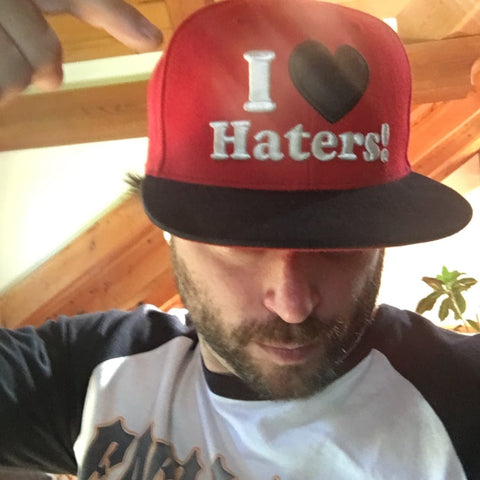
Jeremy Hanke
Jeremy runs Soul Rides, an avalanche education business for snowmobilers based outside Revelstoke, BC, where students train from his lodge and ride out the door to apply it. He was buried six feet deep in a 2004 avalanche that killed a rider in another group, and after years away he worked through the Canadian professional avalanche path to teach motorized-specific courses. He consulted on AIARE's motorized curriculum and spent three years building the Soul Rides online course.
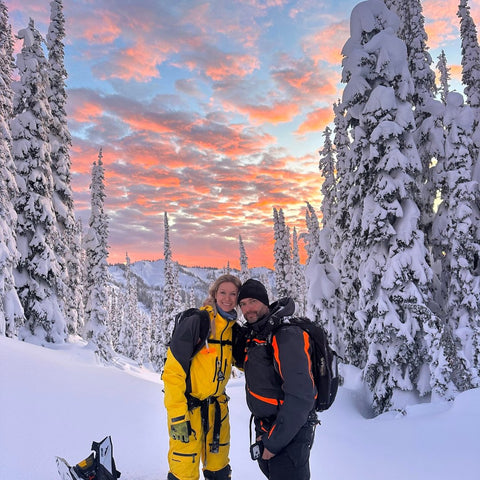
Shena Thomas
Shena grew up in Vernon, BC, lives in Sicamous and is a Ski-Doo ambassador. She first met Jeremy as a student in his avalanche course, and today helps him shape how Soul Rides teaches, from the online course structure to simple rescue habits like the probe and transceiver swap. She is also a former motocross racer.
Show notes
- 0:00Avalanche learning is graduated: a driving course is not a Ferrari in downtown Tokyo
- 4:38Teaching from a timber frame lodge outside Revelstoke and riding right out the door
- 9:15Jeremy's lost phone: 25 years of GPS tracks, found from a helicopter in a melt puddle
- 12:20When Find My pinged his phone 250 km away and it was still on the mountain
- 15:54US vs Canada snowmobile avalanche deaths, 2021 to 2023, and why user days matter
- 19:31The 2010 Big Iron Shootout avalanche and the culture shift it started in Canada
- 25:44Jeremy's 2004 burial, and why he never said the real year publicly until now
- 30:56The missing rider who left his transceiver in his hotel room
- 34:39Why BC argued for culture shift instead of sled licensing, and Throttle Decisions
- 41:19Awareness talk vs level one: what the Soul Rides online course covers
- 49:05Electrical interference and beep checks from a running sled
- 53:25Give your friend the new transceiver: the gear that looks for you is theirs
Learning about avalanches is a graduated process. You didn't learn how to drive overnight. And now we're riding Ferraris in downtown Tokyo.
Win a free custom wrap
Drop your email and what you ride. We draw winners all season and announce them on the show.
You don't buy the probe for yourself. The probe in your friend's backpack is the probe that looks for you.
Questions answered in this episode
What is Soul Rides?
Soul Rides (soulrides.ca) is Jeremy Hanke's avalanche education business for snowmobilers, based outside Revelstoke, British Columbia. Students can stay at his timber frame lodge, learn in a teaching space in the shop in the morning, then ride out the door to apply it in the field. He also built an online course with an intro and a level one. 4:38
How much is the Soul Rides online avalanche course?
At the time of recording (late 2023), Jeremy priced the intro at $25 and level one at $100, both in Canadian dollars, with access to rewatch for as long as you want. The intro runs about two and a half hours, and intro plus level one is about eight hours, in 10 to 15 minute modules. Check soulrides.ca for current pricing. 51:36
Why does the US have more snowmobile avalanche deaths than Canada?
Trevor's numbers showed at least twice as many US snowmobile avalanche fatalities from 2021 to 2023. Jeremy says a fair comparison needs user days, which nobody tracks well. In his view, Canada's riding is concentrated in British Columbia, it has a strong guiding community, and the 2010 Big Iron Shootout avalanche pushed a culture shift toward education for snowmobilers. 21:33
How do you find a phone lost in the snow while snowmobiling?
Jeremy starts from the last known location in Find My, searches a 50 meter pocket and then a 200 meter one, and grids the area. He found his own by waiting for the snow to melt just enough: a dark phone takes on sun and sits in a small blue puddle, which he spotted from a helicopter about 20 feet from the ping. 10:49
Is an avalanche awareness talk the same as avalanche training?
No. Jeremy and Shena say a three-hour awareness talk is useful, but it is not education. The next step is a level one course, and even the online classroom portion needs hands-on practice in the field, because application of knowledge is what makes it stick. 42:10
Straight awareness is not education. I still want to jump off a cliff, but I don't want to take unnecessary risk.
Full transcript67 minutes · 16 sections
Read it
Lightly edited for readability. Click any timestamp to jump the video to that moment.
0:00 Intro: avalanche learning is graduated
Well, we are back with another Sledder Cast episode. I'm Trevor Erikson, one of the hosts of the program. We are in Canada today, in Edmonton, Alberta, at the Alberta Snowmobile Show, and we've got Jeremy Hanke and Shena Thomas on the show. We've got a great show lined up. We're going to talk about these two and what they're doing up here in Canada, and talk a lot about the avalanche world: the avalanche safety training space, what's currently being done, and some ideas, tips and opinions on what can be done better to enhance that training.
And probably mostly just bring it more to the forefront that it's not a one-and-done type of thing. It's something you should be constantly learning, increasing your skill set and knowledge in that space. It's not a topic that's new by any means, but it's one that needs to be refreshed, and you guys are very much deep into that space.
Yeah, learning about avalanches is a graduated process. You didn't learn how to drive overnight. You had to learn the gas pedal and the brake, and then somebody taught you about a stop sign and a school sign and traffic lights. The avalanche world isn't just, hey, I did my driving course, I'm good. It's a graduated learning process, and as your riding skills increase, your avalanche knowledge needs to increase as well.
Historically for snowmobiling, people were okay with a three-hour awareness, and then maybe they did a level one that got them two days of education. But that really is just Dad taking you to the gravel road, driving up and down and practicing the brake pedal and what the stop sign means. It's not giving you a Ferrari and putting you in downtown Tokyo. So it's a graduated learning process, and people need to be open to that, because now we're riding Ferraris in downtown Tokyo.
Yeah, that's a great way to put it, actually.
2:09 How Jeremy and Shena met
We're going to jump into that, but first talk to me about you guys. You guys are brother and sister, right? Just kidding. You look pretty similar.
It's the teeth, I think. Well, not quite, she's got a little bit better teeth. I would say the whole package. But I'm from Canada, so that makes sense. Grow up playing hockey.
And you can ice skate, so you got to fight.
Yeah, that's why you got no teeth.
So we've both been snowmobiling our whole adult lives and really didn't know each other until a couple years before we started dating. I took an actual avalanche course first, so that's how I first ever met him. Took his course, it opened my eyes to what I needed to know, and then we didn't really hang out for a while.
Then fast forward a couple of years, 2018. I had an oopsy moment. Ran my sled through some water, got it stuck in the slush, spun my drivers, left it on the mountain and went home. And he's the only one that wasn't at a 9-to-5 job who could come help me get my sled. So I looked up the phone number of Jeremy Hanke: hey, can you come help me retrieve my broken-down sled?
Yeah, and that phone number doesn't need to be handed out to too many people, because when there's problems in the backcountry it seems to ring too much. And if they're friends of friends, it's like, I'll go get you from the backcountry in the middle of the night, or I'll come help you rescue your sled.
Like, call you Jeremy, Dog the Bounty Hunter.
Something like that. I'm working on the hair.
4:08 The Revelstoke lodge and the Sicamous condo
So 2018 is when you guys connected and the relationship started. Now you guys are a couple. Where do you reside, exactly, in Canada?
Well, we have two places. We're lucky. We have a condo in Sicamous, and then we have my place, which is 20 acres right outside of Revelstoke. We have a nice big timber frame house that we use as a lodge. So we jump back and forth. We have a condo on the water in Sicamous, and we rent that and live in the lodge, and then vice versa.
So what do you do on the 20 acres? That sounds like a lot of fun.
Well, it's Revelstoke. It's an interior rainforest, so it's a lot of forest.
And you guys rent the lodge out, is that what you do in the winter months?
Yeah. A lot of our avalanche clients will come stay in the lodge facility and train in. We have a teaching space in the shop, and we do it all in-house and give them more of an experience than just a classic structured course. We spend a lot of time hands-on in the field. So we load up, teach in the morning, go out for a ride and apply the knowledge that was taught. It's an efficient way to do it.
Yeah, we can ride right out the door, so that's also helpful.
Depending on what level of education we're delivering, we might ride out the door, or we might try to find more challenging avalanche terrain to manage and teach in. Application of knowledge is retention. If you can't teach them how to apply it, they'll never retain it. So the field is really where the retention happens.
Yeah, absolutely. So in the winter months you guys are at the lodge?
No, we're at my place and we rent out the lodge. And then we flip. Six months of the year we'll be at the lodge, all summer fixing it up, taking care of it, broken-down sleds, whatever he's working on, and we rent out my condo in Sicamous.
Nice. You've got it figured out.
Yeah, it doesn't really make us a lot of money, but it pays for them, so it works out pretty good. Mine's on Airbnb.
And ours is just word of mouth. We kind of treat it like a country club. If you know us, it's cool. All my family heirlooms are in it, all the nice beautiful paintings. It's my home. So we rent it out, and that's what I love about this sport. I can rent it out, and if somebody wrecks something, they take ownership of it.
In the 15 years I've been doing this, I've only ever been ripped off once. People will contact me for a $6,000 avalanche course with a lodge booking, and it's just leave the money on the table, no problem. Only ever been ripped off once.
Wow. Good people.
Good people. Relatively speaking, it's a small community.
It's a small community, so if you burn someone, it gets around real quick.
It gets around, totally. And that's North America, because I've been doing talks around North America for a while, and my whole friend group, Duncan and all that, is all from motorsports, or from this sport in particular.
6:54 Finding a lost phone in the backcountry
So before we get deep into the avalanche stuff, there's kind of a fun story. Maybe some of those who are listening to the Sledder Cast podcast remember it, because I remembered this and thought, what the heck, that is bizarre. We have a pretty epic phone recovery story.
It was interesting to me because, as I was telling these guys earlier, I'm in the same boat. I was snow biking for the first time just outside of Yellowstone, in Island Park, with the Jackalopes crew out of Boise, if they're watching. They took me out, and I was capturing all sorts of stuff on the phone. It was a hoot. My phone was at 10% on our way out, so I thought, I'm going to throw this into airplane mode.
I put it in my onesie pocket, right here, and didn't zip the darn pocket back up. I had a couple rolls off the bike, and next thing I know the phone's gone. I have no idea where it's at, and it's in airplane mode, so you can't ping it to tell you where it's at. I just have a general location. So it's lost, but I've got content on there that I want, and I want to go back in the summer, take some bikes in there and try to figure it out. But you've got a system for this. It's recoverable?
Yeah, because you were online at one point before you went into airplane mode, so it has a general location.
Mack, my partner here at Deviant Ink, had a torn ACL, so he was following us on Find My Friends. So we have my last known location of that thing.
It's an Apple phone, right? So you did Find My Phone?
Yeah, I did that, but it wouldn't tell me where. I could get to the last place it had, and then where Mack had pinged me last on Find My Friends.
So you just need to do a grid search. Go back in the summer, square out your 400-foot by 400-foot area and grid your way through the problem.
And look for it. Spend a day or something.
I was lucky. The way it went for us, we were teaching an avalanche course and I lost the phone. We had a bunch of stuff going on. I don't keep my phone on me, because I worry a little bit about transceiver interference, and I'm super hypersensitive to all the little particulars of it because of my own story. I keep it in a little waterproof box, and I'm very stringent about that, right on the front of the sled.
So I pinned it down and thought I'd closed it, and I hit a couple jumps and it must have popped. I recognized it was gone pretty quick and knew roughly where it was, but couldn't find it with the crew. Came back a few days later with a different group and fluffed up about a 200-square-foot area. Didn't win. Then I was headed to Roatán to go scuba diving and get engaged to this young lady here, so I just left. But I had a really good idea where it was, and like you, I had some stuff I wanted on it.
How important was the phone, actually?
It had the last 25 years of my GPS tracks. All of our riding tracks, all my secret zones.
That's worth some money right there. Those aren't uploaded somewhere?
No, those are secret. They're on the phone. So I wanted it back. In the summer I waited for the snow to melt a little bit, and my sister came through, so we went for a quick heli flight. If I'd brought that search team up another 20 feet, I would have fluffed it out.
Because the snow had just melted and it was dimpled out, and I kind of timed the snowmelt. That's the key. If it just melts enough, and the phone hasn't gone down, it creates a little puddle. So you've got this little blue puddle with your phone shining in it, and you can just see it. I could see it from the helicopter when I flew in.
That was the next move, right? You went up in a helicopter and flew over.
Yeah. I had family come in, and that's one thing you can do around Revelstoke, it's a cool experience. So I kind of hijacked the family flight, flew by and said, oh yeah, there it is, let's just put down here for a minute.
With your naked eyes, or did you have binoculars?
No, we flew pretty low. We had that general area where we thought it was, and I've spent a fair amount of time in a helicopter throughout my mountains, so I feel pretty comfortable getting nice and tight and getting the pilot to move in so I can see where I want to see. That takes its own communication strategy, getting the pilot to have the visual on the ground of what you want to look at. I was able to see the small little reflection in the dimple. I figured because it's black, it's going to take on sun and give me a little dimple to look for.
For your ping, or your last known location, there's two pockets. It's either a 50-meter pocket or a 200-meter pocket, depending on how your ping was, airplane mode or not. So we first started with the 50-meter pocket. We got all of our students to put their shovels into hoe mode and did the whole thing. Nothing. Expanded out to the 200 meters, did the whole thing. And then when we actually found it from the helicopter, it was 20 feet away from where it said.
So that thing is pretty accurate.
They're pretty close, yeah. But you've got to watch it. I've found drones that way, left them for a little while and recovered them. But this last year I had a chain case blow up, and I was just in a huff, so I decided to leave the machine and come back with parts to fix it. I forgot my phone in the dash, because I don't put it on me. I get to the bottom at the truck and my phone's gone. Okay, whatever, no big deal, nobody's going to grab my sled and drag it out of there.
We were going back the next day, and just for fun I woke up in the morning and checked Find My Phone from my other phone, and it showed it in a completely different town, 250 kilometers away. And I'd learned to trust these things, because I've found things. That thing's telling you the truth. So I wake up in the morning thinking somebody's grabbed my sled and dragged it out of there.
So we start creeping on properties, and we end up in kind of a sketchy area and run into another sled. Now we're thinking, okay, maybe somebody did grab the sled. Well, before we get too crazy here, let's just go back up and see if it's there. Phone, everything, was still on the mountain. It pinged 250 kilometers away, we have no idea why, and I drove to where that ping was. It totally lied to me. So you can trust it, but occasionally it might just pull a smooth one on you.
Yeah.
It definitely pulled a smooth one on me. I lost the whole day, then went back up and it was right there.
Way better outcome.
Yeah, I was much happier with that. The other way wasn't going to go great for anybody. So if it makes sense, go with it. If it doesn't make sense, you've got to wonder.
And your number for phone recovery, if people want to get a hold of you?
Yellow Pages.
Go to deviantink.com, scroll down to Contact.
Yeah. I can't wait until we get the first one of those. Forward that one right over.
14:22 Why the US has more snowmobile avalanche deaths
Let's transition. My first interaction with Jeremy was a couple years ago over the phone, or maybe it was a video call. I had a question for him, just out of my own curiosity. We're in southeast Idaho. You've got Utah, Idaho, Wyoming, Montana, Colorado, and it felt like there were a lot of avalanche fatalities with snowmobilers. I told Jeremy, I don't hear about as many snowmobile-triggered avalanche fatalities up there in Canada where you guys ride. Maybe that news just doesn't travel down.
What I remember is it was more about mindset and training. It's kind of years ahead up there compared to what's going on down here in the States, and that stuck with me. So I pulled some numbers and fact-checked them with these guys earlier today: snowmobile-related avalanche fatalities, Canada versus the US, over the last three years, from avalanche.org and avalanche.ca. Pretty reputable, trustworthy sources.
2023, this last season: Canada, two snowmobile fatalities, versus nine in the US. 2022: one snowmobile fatality in Canada versus six in the US. And 2021: four in Canada and nine in the US. So no matter which way you slice it, the US has at least twice as many avalanche fatalities among snowmobilers as Canada.
So the next two questions are why, or is it just a law of averages? Are there twice as many mountain snowmobilers in the Rocky Mountain states?
Well, you're going after user days. The conversation you've got to consider is how many user days to how many fatalities in an area. That could give you the base number, and that's a number that is really hard to get. Are there more user days in an area in Utah compared to an area in British Columbia?
When you say user days, just to be clear, that's the days snowmobilers are riding in an area.
Yes. So let's say you took one spot in Utah and said there's 300,000 user days here to every two fatalities. That's a number you could work with and learn from. And we don't really have that user day number, in Canada or the US, to fully understand the scope of mountain snowmobiling. If that was accurate and readily available, it's a super good number to know, so you could say, we're struggling here, we need to really step it up.
I did a comparison like that just in Canada for the 2000s versus the 2010s and now the 2020s. I didn't do it in the States, but I looked through the decades and got the user days versus fatalities for my own knowledge. So there's a trend there we can talk about, but I think what you're going after is the States versus Canada. I can theorize from my own experience, over 25 years of riding and probably 15 years of avalanche education, watching the numbers shift. But you want to go with solid data.
18:28 Canada's culture shift and the Big Iron Shootout
There's a large increase in fatalities in motorized use in the US, and in Canada we've done a good job at reducing that. But if you look at our numbers in the early 2000s, we had a real big uptick. In the early '90s in the British Columbia backcountry, we had a big influx of skiing and snowboarding and recreational activities, so that's where the first real avalanche rec courses originated. I was a part of that influx in the early '90s on the snowboard, and the death tolls were really up between '90 and '95.
So they developed a recreational avalanche course for skiers, and that started taking effect and helped. A nice comparison is 2000 to 2005, snowmobile fatalities in Canada: another huge uptick. We started losing a large number of people, so it was heavily on the public's radar and the government's radar, as well as all the news broadcasts.
And then we had a Black Swan event, what they called the Big Iron Shootout avalanche, where we had potentially 180 people in it and only two lost their lives. 2010. That's why they call it a Black Swan event. And it leaves the ether of a culture after about 10 years. There's a lot of smart people out there who understand that human mentality and culture, so in Canada we're trying to revamp with the idea that the Black Swan event at Boulder is gone from the ether of the culture. Okay, we need to re-educate and push our marketing and awareness before we have another major event.
But that's where our culture here shifted. That's where we realized we needed more awareness and education for snowmobilers specifically, and it took a shift there. I can't speak for the States, but I'm not aware of anything of that magnitude happening to the motorized community in the US.
There's also the population base and how it's spread out through your mountainous regions. You definitely have a spread-out avalanche culture, and avalanche organizations that do their best to message it to the motorized community, even though a lot of them are ski and snowboard based, and the two cultures have different approaches. So those organizations are trying to articulate themselves so they're reaching the motorized community.
And what you have is, in 2000 we got Ferraris. Instead of just driving an old Chevelle, we now have tracks, we have mountain-specific machines. We're not bolting plastic to them anymore. So does our education match the machine? No. Avalanches didn't really bother us until then, because we couldn't get anywhere when it stormed. Now sleds can take us there when it storms.
As to why the numbers you ran are different, why was Canada successful? We have a strong mountain guiding community that's quite big. The avalanche culture in the US is really based around the ski hill cultures that mitigate avalanches for recreational use. Here in Canada we have a bunch of recreational professional guides, so there was a big, strong avalanche understanding of how to mitigate the problem, which was a help. Those people started to develop that concept together, and since we had these big events happening and a lot of people dying, we started figuring out how awareness would work, how communication tactics would work and how we could reduce the fatalities.
It's a huge economic driver for our province, and since we're only one province, we have fewer government organizations to work with and less bureaucracy to get through. So we're able to shift and adjust the messaging and start morphing the culture, and I would say we've been successful with that.
But when you bring up numbers like that, there's a lot of variables. There's snowpack variation, and there's the user days that we can't really account for. Unless you have a good, solid user-based number, you can't really understand if your fatalities are increasing or not.
So maybe it's still the same percentage of fatalities, just more users.
Exactly. But either way, no fatalities is the goal. In my opinion, you can ride a snowmobile and extremely reduce your risks if you understand how to drive that snowmobile in Tokyo.
23:06 Why motorized avalanche education lags
But nobody taught you the rules of the road in Tokyo, and we're still missing that a little bit. A lot of the ski culture that's trying to transfer avalanche culture over isn't hitting with the sledders, because they don't know how to teach them to apply it, because they don't do the sport. We need more avalanche professionals who do the sport and understand how to instruct people to apply that knowledge. Without application there is no retention for the person learning. So I think there's a miss in the delivery and the content in motorized avalanche education in general, and hopefully that will upswing soon, helping shift the avalanche culture toward what needs to be developed for motorized use.
And our mountainous terrain, the avalanche terrain we ride, is condensed to the West Coast, British Columbia. We don't have a lot of mountain riders in the rest of Canada. In the States it's all over, in different areas. It's easier to shift a culture when it's condensed to a smaller area.
If I go out riding with someone new and I ask them if they have avalanche training, I'm not trying to demean them. They already know they should, and they're going to be honest and say, no, I don't, but I need to get it. And the likelihood of them going to get it is really high, because they don't want to say no again.
That conversation doesn't feel good.
Right, and that conversation's happening all the time in these little communities, because it's condensed and everyone knows everyone.
And because British Columbia is such a small community, everybody has a story. Everybody knows somebody who knows somebody. And most of those guys don't want to talk about that story, because it's traumatic, so they don't share it. Some people leave the sport after that, whole riding groups leave the sport. Or, like I did, like most men, you just stuff it in your back pocket and move on, and you don't really visit it because it brings out all the emotion. But that doesn't allow anybody to learn from the near miss.
And then a lot of people just think it's an inherent risk and it's unmanageable, and the chances are it won't happen to me. But it is extremely manageable.
I didn't ride in those zones. I had 10 years of riding with ignorance being bliss. No idea.
25:30 Jeremy's 2004 avalanche burial
And so Jeremy, you're so passionate about this because, and this is a story you have told before, you have your own experience that you draw from.
Yeah. It's funny, because it'll bring a tear to my eye. I was buried six feet deep, and another guy was buried above me. Another group put a line over our heads and cut out a large avalanche, and it took out four of us who were parked below. We had a lot of fault in this accident too, and same with the people who put a line over our heads.
Can you pause one second? You told me this was 2003, correct? So 20 years ago.
Hang on. I'm going to correct that, for once. For a long time I ran 2003, and it's because I didn't ever want anyone to find out. Still, 20 years later, for the guy who died, I didn't want them to have to relive the story. I always lied about the date.
I've corrected it a bunch of times lately, because I'm like, hey, it actually happened this year, and called him out. Why do you say it?
So I've actually never said that publicly. It's actually 2004.
2004. To protect the other parties involved.
Yeah. I've told this story I don't know how many times, but it's a different factor because he lost his life and I didn't. Give me a minute. I've told this story in front of thousands of people and gotten away with not crying. Sometimes when you allow yourself to go back to the reasons, it hits you.
If I can ask a question here, give us an idea of the equipment. Because we assume now there were probes, there were awesome beacons, we had airbags, because we have airbags now. But what type of equipment was that? There's some people watching this who may not have even been born in 2004, or they were just so small. What was normal as far as equipment back then?
And that's what kind of brings up the crying a little bit. It was old school stuff. To run that stuff, somebody had to spend four or five hours with you just to learn how to swedge it and swing it around. So if you had a multiple burial situation, it was a real problem to solve. You're not looking at numbers, you're not looking at arrows for direction. You're listening to a noise. You put on a little headset, or it's got audio, and you're listening to the beep and swedging it to make it louder as you move towards the victim. And you can't tell if there's two victims. You can if you're really trained and really good at what you're doing, but for a general person, a situation with four missing plus unaccounted people in the other group is a lot.
So, group one, call it my group, we're parked underneath the face, dealing with a broken-down sled from jumping off a cliff. Then group two comes into the area. Two riders ahead, one guy goes shooting up the slope above us with his best friend in tow. He gets up, crests over the classic trigger point of the convex, and triggers a very large slab avalanche onto my group below, and his friend in tow carries on with the climb.
The avalanche comes down and swoops up a bunch of us. I'd waited for a camera guy, and he's yelling, take me, take me. He throws a camera in the bag and I take him, and then we get hit. And the two guys I trust the most with my life, I watch get gobbled up right in front of me. I've relived the story, so all the images are very vivid for me. For me, I think I'm done. The two guys I trust the most in my group are buried with me.
We'd be here a long time getting into the whole in-depth of it, but what I think is interesting is what happens next. One of the younger members of our group self-rescues and organizes. But group number two, their friends are still driving around on the debris. They don't know what's happened. They were late into the bowl. So it almost gets to fisticuffs trying to get them to turn their transceivers off so they could look for the missing signals.
They managed that, and then they get to us. I was buried underneath another guy. They get him, and then they get me, and then they go looking for nobody. They're high-fiving. But the group that's sitting on the corner is like, hey, we're missing a guy still. And so they're like, oh, okay, well, that explains these weird signals.
So there was another person buried as well?
Yeah. The guy who crested and triggered it, the best friend in tow, he's the one who's missing. So they start another search, and they don't get a transceiver signal. Then the friends say, well, hey, he's not wearing one of those. Okay, those are the blue skis. And these guys had a decent rec course, back in the day, so they pull out a probe line and they get the guy at about 30 centimeters deep, laid out flat. He wasn't wearing a transceiver. He'd left it in his hotel room, and what makes me cry is, with his wife and baby. But if he had been wearing it, they would have found him first, and Jeremy wouldn't be here. Which is what I usually don't say. Sorry.
It's okay. That's a tough one, no matter how you cut it.
I've used the story to motivate for years, and I've never really allowed myself to go to this section of the story, because everybody knows everybody.
Yeah. I'll let you carry it.
You can tell that's where the passion is coming from now. When something hits that deep, holy cow, you either run away from it, or you fight as hard as you can to make sure that doesn't happen again.
32:33 Walking away, and coming back to teach
He tried for a while to just let it go and get back into it. Get back into sledding, life continues. But he's petrified of everything. It's a thing he thinks he has to get over. Fast forward a couple of years, and snowmobilers are dying. They're making the same mistakes that his group, or group two, made. And at this point outside cultures are saying we're the problem, we're the ones who aren't learning. And he's thinking in his head, well, you haven't given us a course or an opportunity to learn our way. We're a different culture. We're not skiers.
For me, after that I walked away, like most men do. I'm an oil and gas guy. Put it all in the back pocket and don't ever deal with it. Then oil and gas out here slowed down in '08. I've got a house in Revelstoke and I ride all the time. Luckily, I went and bought a snowmobile after the accident and went back out there, because mountains were my life, and I was fine.
But all my friends have really high risk tolerances, so to be back out there I had to be hyper-analytical about every risk. That's what made me good at it. I still wanted to go out there, push myself and take a lot of risk, but I had to become very structured about how to minimize that risk so I felt comfortable. I had a big snowboard background and a lot of mountaineering accomplishments under my belt, and it took quite a few years to feel comfortable in the backcountry again. How I did that was through education and good group riding habits, trusting your partners, understanding the problem and how to manage it.
Then in the avalanche world, all of a sudden a lot of people were dying, like Shena just said, and they didn't know how to reach out from the ski community to the snowmobile community to start reducing the fatality numbers. Because it was becoming such a problem in our small mountainous area, with the news broadcasts, government officials, people writing their MLAs, there was a lot of hoopla to try to solve the problem and throw some money at it.
At one point after the big Boulder situation, the government wanted to argue about licensing. We didn't believe in it. The boat license had happened and there wasn't a lot of uptake. So the avalanche world really argued for culture shift: let's put money into culture shift. So that's what we did. We jumped in. If you want to know more about my story, we did a production called Throttle Decisions, which was eight educational chapters and a 30-minute piece on my burial, because there was a bunch of footage of it. You can get all that on Avalanche Canada, free for anyone.
So we took the same sort of passion I gave you here a second ago. I put my heart on my sleeve, and hopefully it motivated people to entertain the idea, or prioritize it. But as I waved that flag for education, I started realizing they weren't really building motorized-specific content. When I looked at what I was doing every day to feel better about it, they weren't really teaching that. So I started getting on a soapbox about it.
And he decided if he needed to be understood and believed in, if he wanted to make change within the culture, he had to get the respect of the avalanche professionals too. So he went through all the steps the avalanche professionals went through. He already had some background, but he started with the rec courses, went into the professional courses, did the mentorship and worked his way to the top as an avalanche professional, so he could get peer buy-in from the avalanche professionals and then bring it over to the sled side.
Yeah. In the avalanche world, they're not going to listen to you until you're on their playing field, and their playing field's pretty high, especially in the Canadian system. It's a real in-depth system. And I agreed with that. I can't sit here and bark an opinion unless I have a right to one. So I went down that path, and that's where it's stuck in my life for 15 years.
36:45 Building the Soul Rides online course
So the last 15 years have led up to this moment where you're putting things together. You've seen the need in the motorized community for avalanche training, and you've done things publicly with the Soul Rides platform, right? That's your website. You were telling me a little bit about what you have cooking as far as motorized training, and what I got from you sounded very interesting. So tell me what's going on with the courses and the training you're putting together.
It's not just the one story. There's a lot of personal stories with avalanches I got from being in the mountains 150 days a season, every season, for as long as I can remember. Either they affect people I know or people I care about, so there's a lot of connection points that motivate me to continue to push and stand on a soapbox and say, hey, we need to change this, or we need to change that. And working inside the bureaucracy of all the organizations, which are all great, slows you down a little bit.
So the last three years we've worked heavily on developing an online educational program. It doesn't just cater to the Canadian curriculum. It also encompasses American curriculum. It's a North American online course. I worked with AIARE for a while and consulted on some of their development for their first true motorized curriculum. AIARE deserves it, I really fly their flag in the States. Not that they're the only flag you should fly, but they have a structured, true curriculum, even though it still needs work and growth. It's a nice stepping stone. Duncan's a good counterpart of mine in those adventures.
But even with that, there's still motorized-specific rescue and motorized terrain travel, stuff that helps the actual user defend themselves from that exposure, or minimize the risk. You'll never take it down to nothing. Just like driving around Tokyo, we're out there to take risk. It's an inherent risk, but it's a manageable risk if you're willing to learn how to drive in Tokyo. So it's about being aware of what those risks are. Normally they're like sleeping sharks out there, and a lot of people say, oh, it just happens sometimes. And the same goes with rescue.
So we developed an online learning tool, and I dislike that in so many ways, because it's so important to have hands-on education. I was a real naysayer about it originally. But trying to help develop curriculum has been slow going, so I just put my money where my mouth is, and my time, and said, fine, I'll put it all into an online course and then really promote that people take that experience and go get hands-on education with it.
So it's, here's the bare minimum level. Let's get as many people here as we can, show them what they don't know, and stress that this is just where you should be at, and you've got to go get the rest.
Well, and in our leadership culture as well, and I'll call the pot kettle black, there's a lot of very experienced, high-end snowmobilers with very limited avalanche knowledge. Those people are looked up to: hey, I want to be like that person. But when that person can't articulate or help mentor that next step into avalanche knowledge, because they're shy about it, or they don't know, or they're insecure about communicating what needs to be there, it doesn't help the next generation coming up. So we have to help shift that, to say this is worthwhile.
But in the snowmobiler's defense, going to sit in a classroom for seven hours and listen, there's not a lot of take-home there.
And they're probably weighing it: do I want to spend a day in the classroom, or do I want to go on the mountain?
41:13 Awareness is not education
So battling that too. He's done it in a couple great steps. It's online, but the first chunk is just awareness. Open your eyes, this is what you don't know, this is what you should know. Lots of laughs, little jokes, pokes at your buddies, that kind of thing. Then you back it up with your actual level one. But remember, that's not your hands-on, that's just your classroom component. So you do your awareness and your level one, and then you've got the bare minimum for your eight hours of classroom portion.
But the whole time we're reminding you: just because you can see it on here, and just because we're telling you, doesn't mean you can actually do it. You need to practice. Have you ever watched a YouTube video that shows you how to fix your truck, and then you walk outside and it doesn't make sense, and you have to watch the YouTube video 16 more times? You've got to get hands-on. You've got to practice it to make it work.
And I do wonder how many people go to an awareness, and it's just silly small words, but I think that's what we kind of corrected in Canada a little bit. There's avalanche awareness, that three-hour talk, and that's great. It brings awareness to it. But it's not a class. It's not education.
And it's the same every year, really. The same program on repeat, and you hope you get new people there every year. It's beneficial, but it's really just the same.
I think it's just the understanding that straight awareness is not education. I want to go out there and take risks, that's my whole gig. I'm not the naysayer. I still want to jump off a cliff. But I don't want to take unnecessary risk. I don't want to walk across the road without looking both ways and see if a school bus hits me.
What we've done somewhat incorrectly in the avalanche culture is allow people to think that the avalanche class we promote on a poster is actual training, which it's not. It's an awareness talk, and that's it. And I don't want to put that in a negative light, because I've been to those, and there's not one that will tell you this is avalanche training. They will tell you this is just awareness.
Somehow, maybe it's the snowmobile culture, people want to say, oh, I got training, I went to my training today. And so they don't want to invest. Whether or not I allow myself to come on here and cry, there's a risk. There's an inherent risk going out there. But if you actually understand the problem, you can seriously manage it and really minimize it. You just have to be willing to invest in that knowledge.
So we're hoping this online course, even without the hands-on, is more accessible. Anyone who has a weekend, or has a month to sit down, can do it. It's broken down into modules.
Self-paced?
Totally self-paced.
You can do it in June. You can replay a section you forgot or want to watch again. You can use it on your own schedule, as much as you want.
And computer and mobile? Can I be on my phone too?
100%. Next year it'll be in its own app form. It's done on one of the top-notch online learning platforms, so it's all structured that way. I won't have it done right away, but one of my mentors, who's a professor at a university, is going to do all the academic side. I took my real-world approach and dumped my heart and soul and passion into the visuals and the delivery, and then the module and script portions will be a whole academic approach delivered from him. So I have an actual university teacher developing all that for the keeners. Shena learns that way.
I'm an old redneck, rough around the edges. That's probably what makes me good at this. You've got to kind of beat it into my head. Someone like Shena learns theory, so his course is a good mix of both.
That's awesome.
So just really trying to shift that way, and stop that number nine. For some reason I'm connected to every one of them. Not sure why, but it's something I'll carry for the rest of my life. And I'm sure there's other guys in here with the same story who don't want to talk about it, because they're shy. Get over it. I've got no teeth. I'm okay with my manliness.
45:40 Course length, shared terms and electrical interference
Definitely. I appreciate you coming on here and sharing that story. It's obvious where your passion comes from. And how cool is it to think, like with the podcast space or a YouTube video, you're at work and you just throw on the awareness training you guys have on that platform and let it roll. Let it play, become familiar with it. Throw it on in the car on your way. Maybe you're not watching it, but you can listen. It doesn't mean that's the first and only time you're going to go through it, but at least it's repetitive and you're getting aware of those things.
Yeah, and I try to make it entertaining as well. There's movie clips, there's jokes.
You're rolling with the green screen, so who knows what can pop up there.
The old green screen. I put about 200 grand worth of effort into it. I put my money where my mouth was. That's been my goal since I somehow pulled this emotional experience back out and lived through all the other emotional experiences I've had in the mountains. I love the mountains, I never want to not be in them, and I wanted to share and shift that culture so people can feel comfortable going out there, and not have their wife say, oh, the avalanche hazard's extreme.
I think a lot of the organizations fearmonger a little bit. It's like, you can't go snowmobiling, the avalanche danger's high. Yes, you can go snowmobiling, you just need appropriate training. A lot of the content was built for skiing and snowboarding, and skiing and snowboarding, I have to be on a 30-degree pitch to have fun. If you can identify what avalanche terrain is and where the runout zone is, you can still go snowmobiling. But if you can't, then maybe high should scare you out of the backcountry. The avalanche organizations don't articulate that very well, so I hope something like this can help our motorized community get motorized-specific training. But you still absolutely need to actually learn how.
And all my friends driving from across Canada to go snowmobiling this winter, watch it on your drive. I know you have an 18 to 24 hour drive. Perfect.
So how many hours is it total?
The intro is two and a half hours. Intro plus level one is eight hours of content, all broken into 10 to 15 minute modules. If you want to come do hands-on courses with us after, you each individually have to register and come to me with a certificate, because I don't want to step backwards in my actual field portion for you. So you'd have to actually complete it.
What I'm hoping to do with it on the international stage, so to speak, Canada and the US, and that's why I built it neutral between AIARE and the communications of the American side and the Canadian side, is that if people are doing it and then going to AIARE, or whoever else, for hands-on, it works in conjunction with what they're doing and the content they're delivering. People are going to have the same vocabulary they're going to get in the field.
Same terms.
Same terms, same sort of approach, so it can be used in conjunction. And then it has my flavor in all the work. We just had a couple of posters at the International Snow Science Workshop in Bend, trying to get some peer review from the avalanche world on terrain travel techniques and what would be industry best practice for motorized avalanche rescue.
For me, there's good points and bad points. You can beep check somebody on a snowmobile as they drive by you, but you'd better be really proficient with that transceiver to not get messed up by a ghost signal. It all depends on the manufacturer. The electrical interference problem and how it affects us is a big part of that conversation. Skiers don't have that, right? They don't have the magneto and the sled running and all that. That's kind of a new problem the avalanche world is trying to wrap its head around, the electrical interference and how it affects us.
So there's a bunch of content on there where it doesn't matter if you're a longtime guy who's done a level two training program or whatever else. Everybody will gain something and learn a lot. Like I said, I didn't mess around. I put a ton of passion and energy into it. It took me three years.
50:08 Pricing, access and backcountry preparedness
That's amazing. And this training right now, I believe you said, is free?
Right now I'm just handing it around the show for free. There you go, go play with it, let's get some feedback. That's what I'm doing right now, and then I'll adjust. I'd say it came in at a low grade A, and if I get a lot of great feedback, I'll dump another bit of money into it and update a lot. I had a bunch of three-dimensional visuals created to help that learning and retention.
I was a real naysayer at the beginning of this, because I really feel I should teach hands-on, and that's where retention comes from. But now that I'm almost finished the whole program, I wonder, I'm not sure yet, if I'm going to get better retention than I get from teaching in the classroom.
That's the goal, absolutely.
If I can, I'll be excited.
So it's out there right now. We've been walking around the show handing it out for people to have it for free and give us feedback, and then it'll be up for sale.
For those listening or watching, this will probably drop in a month and a half or so, so we're looking at the end of November, maybe the first part of December. Where can we go? Soul Rides, is that where you're holding it?
Yeah, it's housed on soulrides.ca. If you go to Courses, trickle down to Online, and you're in. We're charging 25 for the intro. We're giving a bunch of it away at the show. And hey, if anybody out there is interested in packaging, I'm interested in getting it out into the ether, so I'll give it away in the right context. So the intro is 25 and the level one is 100, and that's Canadian, so you guys get it for like 30% less.
And I pay that and I've got access forever for those levels?
Yeah, you can rewatch it. And if there's a good upswing, then I'll deliver a level two and a three. The other thing I hopefully will add this year is called Backcountry Preparedness: all sorts of backcountry skills, emergency response planning, first aid, heli-ing people out. Me and Duncan, I don't know if you caught it last year, came across an arterial leg bleed. A guy fell, got the J-hook from a Polaris and pulled his artery in his groin.
That actually really does happen.
Yeah, he was bleeding pretty bad, and it was getting dark. We got him out, heli out. So understanding heli extraction, winter survival, all those sorts of things. We're trying to give that knowledge and better preparedness to our community.
Keep an eye out for that one. That would be cool.
If we get enough upswing, I'll keep putting energy in.
Well, cool. This was a good little motivator to go get into that course, and the awareness side. You don't know what you don't know.
53:05 Culture, accountability and the transceiver swap
Everyone says awareness. I like the word culture, because culture is if my friends are holding me accountable. That's what I want. And when I go riding with them, I expect that they hold their friends accountable, so I don't have to check in with them too.
And that's the thing. I put out this video the other day on Instagram about the probe. You don't buy the probe for yourself. The probe in your friend's backpack is the probe that looks for you. And people don't really click on that simplicity. The transceiver they have is the transceiver that looks for you. So take your brand new one, give that to them, make sure the transmitting end is working on theirs, and take their old one, because you're better off with it and they have a better chance of finding you. People don't even click on those simplicities, maybe because they're not well presented in the culture.
And when you get all emotional like I just did, it's because I've followed the kid. That's the end of it. If he was wearing that transceiver that day, it was me. But you can still go out there and do it safely. You have to take the risks into account and then best manage them. I just don't think a lot of people want to accept that it's there. They would rather choose ignorance as bliss, because it's easier. For me, I don't have that option anymore, so I had to figure it out to enjoy it.
And we still ride. We push limits all day. We were riding some avalanches last year for fun, setting them off and surfing them a little bit. It can be managed. You can manage problems. When we were younger, we were a little out of control, taking way too much risk. Done, went off, we're good. This one's still going, though.
So I hope the whole exposure of emotion helps people realize it's real. There's a lot of numbers. And those people either leave the sport and don't ever do it again, they change their lives, or they grow from it and stay in the sport, or they just avoid emotionally dealing with it. And even after 15 years of telling the story, it affects you. Hopefully that emotion motivates. That's why I allow myself to do it publicly.
Well, thank you for choosing that route, and motivating and inspiring all of us other people who, fortunately, haven't personally dealt with those things.
It's funny, because when you're a guy like me, they all find you. All the survival stories. You meet so many people who are similar, and you get to share in all their experiences. They want to debrief those situations the same way I have to. I do it publicly, on camera. They want to do it in a closed room. So you get to meet all those people, and there's lots of them.
But you know what, there's lots of people with real survival stories, from guys who knew what to do. I wish the survivors would get out there and share their stories, so people realize that the gear works, training works. Being prepared and ready to respond, being able to mitigate, gives you the ability, and understanding how to do it is worth your investment. And it's not just your money investment.
That's the nice thing about the online thing. I can make it cheaper, but really my goal is to prove to you that you need to go another step. So I just throw it out there for a cheaper price, and hopefully it motivates people to find that.
For me, I think the better curriculum in the US right now is the AIARE stuff, because curriculum is four parts. It's the content being taught, the educator teaching it, the environment it's being taught in, and the student that's taking it. That's true curriculum. They've put energy into the content. They have an instructor pool that has actually been trained to be instructors, not just people who learned the subject. They built some content, even though I do think we need to grow there quite a bit. And they're teaching in the field, hands-on. So it's such a conundrum for me, being such a hands-on, motivated educator, to put out online education. It was a real challenge, so I'm hoping it goes positively.
Well, so are we.
57:51 Lightning round: the first three mods
We're down to the trusty camera. We usually round out these episodes with a lightning round, kind of a fun way to round things out.
I wasn't thinking about that at all.
You guys know the two questions, right? We'll start with the easy one first. You both ride Ski-Doo, correct? What lengths are you guys on?
165.
So you're on a 154 and you're on a 165. Okay. Brand new, you bring her home, and you get three modifications, whatever you want to do to that bad boy. What are the first three things you're doing to trick it out, your three favorite things?
I get to go first, because it's going to be the same thing.
All right, she goes first.
Obviously, and I'm hoping every girl and every guy says this, risers and bars. I lower the risers and get bars fitted for me. Those are easy. But last year I discovered something I'll never go without now, called Trail Tech. It's the equivalent to Polaris's GPS tracking system.
Ride Command?
Yeah, so you guys can connect to each other. We buy it at Canadian Tire and throw it on our Ski-Doos, and now I can see where you are. I can hook up to your group.
Wait, can you hook up to my Ride Command, or do I have to have a Trail Tech?
It works with Ride Command. So I'm riding with my Polaris buddies, I've got my Trail Tech, which is a little pricey, but now I can hook up to all my Polaris buddies, and any Ski-Doo buddies who have the Trail Tech too, which my little group has.
Awesome. Did not even know that thing existed.
It can provide a false sense of security, but once you manage the false sense of security and don't completely trust it over your group habits, it's an amazing tool to have.
So those are my three: bars, risers, Trail Tech.
And that's an industry problem. All of them, Arctic Cat and the rest, need to take that and make it a safety concern for backcountry riding. My three: of course cockpit controls, for sure. Brake levers, hand positions matched to my body width and size. Riding the Ski-Doo, it's straight to shocks. Most of the manufacturers at this point never really produce a calibrated shock for my liking, so I go after them fairly quick.
And I'm a sucker for the pricey Diamond S can. It's feather light and it's fairly quiet still, and I like the extra space. As a backcountry guy, especially around Revelstoke where we ride, we're remote. So I stuff in guides' tarps and a bunch of backcountry survival stuff I don't want in my backpack. The extra space for key backcountry survival things, so it's not on my person. So I go after a can that's somewhat quiet.
Nice. So those are the three. Learned something new with Trail Tech, so that's awesome.
1:01:08 What people do not know: an underwater engagement
The last question: what is one thing that people who are listening and watching, the snowmobile community, do not know about you? What's the secret?
Interesting. Who wants to go first? Shena?
No, you go first. I forgot to think about this one.
An interesting thing most people don't know about me. Well, everybody knows I don't have any teeth. We're heavily into scuba diving now. We work all winter and do our passion, which is snowmobiling, and try to make it fun and not lose that passion. And then we leave every year in May for a month to a scuba diving location.
And it's new to me, and I'm terrified of sharks. So I'm learning to manage that fear head-on and going for it.
There we go.
Totally. So we're into that every spring now, for the last couple years. We got engaged under the water, scuba diving.
Oh, that's awesome.
I was going to say, that was my thing. I got engaged scuba diving, underwater. He didn't even actually have to ask the question. He's never asked me the question. He just pulled out the ring.
Really?
Well, it was kind of weird. It got awkward, because I'd just learned to scuba.
You put the ring down under the water?
Well, I had my divemaster hide the ring, and then I kind of swam her over to it.
That's pretty ballsy. What if you'd dropped that thing?
Well, actually, she wears my mom's wedding ring, but I had a street vendor just whittle me something out of quartz and stuff. Meaning's still the same. So most people don't know that story.
Got engaged underwater.
Underwater, in Roatán, Honduras. It's a great place.
It was super cool. We were looking for some new adventure. Both of us have been in the mountains for so long, and that's all we do, ride the mountains. So getting to the ocean is kind of that new adventure.
Okay, well, we're still at the Alberta show. There's still people down there roaming around. We're on the third floor up here. We got some VIP treatment up here. Took us a while, but we finally made it up here. The Alberta Snowmobile Show, Chris Brooks, thank you. Long-running show and still here strong, even after COVID.
One of the great snowmobile club organizations. I've actually worked with this club for years on avalanche safety, all the way into ISMA and some of the American organizations. It's a strong operating club, and we're losing connection, so get out there and join your local club.
Yep. It's needed to protect land.
All right, thanks guys.
Cool, thank you.