
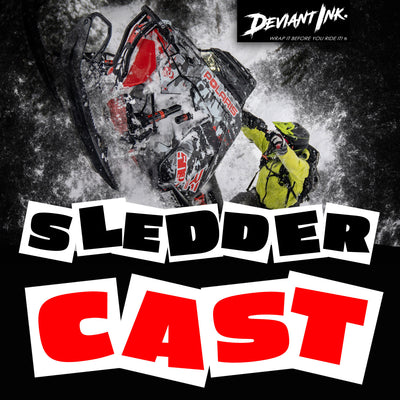
The very first Sledder Cast, recorded in the Deviant Ink booth the day before Hay Days 2023. We sit down with the SledWyo team, a backcountry guide service and rental company in Sheridan, Wyoming, and chat about how to create epic snowmobiling content.
Anna shares how she went from zero backcountry snowmobiling experience to guiding groups of backcountry sledders, Jeff gives his advice if you want to become a snowmobiling guide, and guide Anthony gives a first-hand account of surviving his avalanche.
Guests
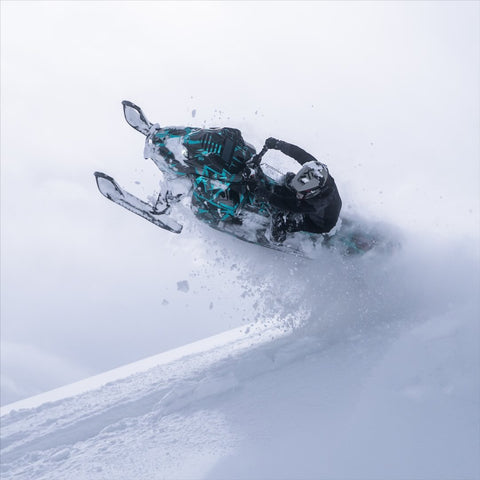
Jeff Shanor
Jeff co-owns SledWyo (Sled Wyoming), a backcountry snowmobile guide service and rental company in Sheridan, Wyoming, with Riley Sessions. He grew up riding the Bighorn Mountains and has been a Ski-Doo guy since he was a kid. By trade he is a freelance photographer and cinematographer in the outdoor and hunting industries, with KUIU among his biggest clients, and he shoots most of SledWyo's content.
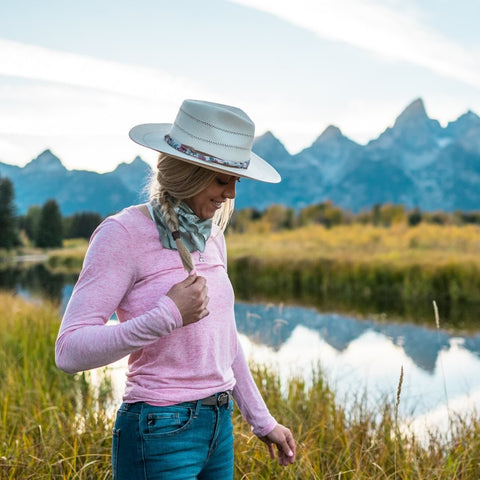
Anna Shanor
Anna (Anna Zowada at the time of this episode, now married to Jeff Shanor) grew up doing rodeo and had never ridden a snowmobile in the mountains until she started riding with Jeff. About two years later she was guiding for SledWyo, riding with a 509 sponsorship and co-leading the company's first women's beginner-intermediate backcountry clinic in January 2024. She credits Polaris ambassador Mandy Fabel, a lot of circles and countersteering, and learning in bad snow.
Anthony
Anthony reached out to Jeff Shanor about guiding and was heading into his third season with SledWyo at the time of this 2023 episode. In his words, he survived an avalanche in Cooke City, Montana, on a personal trip after a 20 to 30 inch storm. His sled rolled over him, and his leg caught in the handlebars pulled him up to belly button deep. Backcountry skiers nearby had eyes on him and reached him first.
Show notes
- 2:08Jeff's day job as a freelance photographer and filmmaker, including hunts for KUIU
- 6:19Why story beats a pretty shot, and why viral iPhone clips break his heart a little
- 8:20The 4K 120 fps camera upgrade behind SledWyo's slow-mo powder shots
- 11:27Creator tip: post pow content in the heat of summer, after Hay Days
- 12:29A guided day with SledWyo, from the shop safety meeting to hand signals on the hill
- 15:13Why the Bighorns are the closest mountain riding to the Upper Midwest
- 18:37Anna goes from never riding in the mountains to guiding in two years
- 22:12Ride bad snow: if you can ride crust, powder's easy
- 24:52SledWyo's women's beginner-intermediate backcountry clinic
- 28:47Getting unstuck: gravity, throttle, pin and wiggle, then a ski pull
- 35:39How to become a snowmobile guide: personality, patience, clean socials
- 42:13Anthony's avalanche in Cooke City, and how his handlebars pulled him out
Number one priority is make sure what you're filming is interesting, because story always wins. It doesn't matter how beautiful it is.
Win a free custom wrap
Drop your email and what you ride. We draw winners all season and announce them on the show.
Ride bad snow. That's an industry secret, seriously. If you can learn how to ride bad snow, powder's easy.
Questions answered in this episode
What is SledWyo?
SledWyo (Sled Wyoming) is a backcountry snowmobile guide service and rental company in Sheridan, Wyoming, at the base of the Bighorn Mountains. Jeff Shanor had been guiding for a couple of years before this 2023 episode, and the year before they launched an all Ski-Doo rental fleet after signing with Uncharted Society. They run guided tours, clinics and rentals. 0:39
Why snowmobile the Bighorn Mountains?
In Jeff's words, the Bighorns are amazing when they get good snow, and they are the closest mountain riding to the Upper Midwest. Riders from Minnesota can make a last-minute weekend trip instead of planning a 23-hour drive. He also says the Bighorns are not epic everywhere, which is why a guide who knows the zones and has explored them in summer helps. 15:13
How do you get a snowmobile unstuck in deep snow?
Jeff's first move is to use gravity: on a steep slope, roll the sled over. Then use the throttle to break the track and snow loose. On flat ground, pin and wiggle, but stop after the first try so you don't ruin the belt. Anna adds rocking the sled hard and pushing snow under it when it's trenched in. A ski pull from a buddy is the fallback. 28:47
How do you become a backcountry snowmobile guide?
Jeff says start with the personality for it, mainly patience, because most clients are new to the mountains and you spend the day teaching. Keep your social media clean and non-political, since it's the first impression. Riding skill comes third, and you don't need to be the best rider in the industry. Reach out, and don't burn bridges if an outfitter isn't hiring. 35:39
How can a woman learn to ride backcountry on a snowmobile?
Anna went from never riding in the mountains to guiding in about two years. She learned from Polaris ambassador Mandy Fabel to use the throttle instead of muscling the sled, practiced circles, S curves and countersteering to find the balance point, and started in crusty snow rather than powder. Her main advice is mindset, lots of reps and riding with a patient crew. 19:46
The whole way down I was just praying and hoping I would see light again. And if it wasn't for the handlebars, I don't think I would have.
Full transcript51 minutes · 15 sections
Read it
Lightly edited for readability. Click any timestamp to jump the video to that moment.
0:00 The first Sledder Cast, live from Hay Days
All right, hey, welcome to the very first Sledder Cast podcast. We're sitting here, if you can't tell, at Hay Days, the 2023 version. It's live and thriving here already. This is Friday, the show starts tomorrow, and we're about 75% set up. We're in the Deviant Ink booth, we've got Sledder Box over here, and we've got SledWyo over here. Speaking of SledWyo, we've got Jeff and Anna of SledWyo, and we'll bring in Anthony here in a little bit to chat. SledWyo, tell us about you guys. Where do you come from?
So SledWyo is, I guess the short answer is, we're a backcountry guide service and rental company in Sheridan, Wyoming, at the base of the Bighorn Mountains. That's the super short answer, straight to the point. We've been guiding for the last couple years, and then last year we launched the rental side of things. So, relatively new company.
On the Ski-Doo side, right? Running 100% Ski-Doos?
Yeah. I've always been a Ski-Doo guy since I was a little kid, and we signed a deal with Uncharted Society last year and started the rental company, and we're just sticking with Ski-Doo. I've ridden a couple other brands here and there, and some of my guides have had other brands, but primarily Ski-Doo.
Awesome. So I'm Trevor Erikson with Deviant Ink, and this is Mack Wible, also with Deviant Ink. We almost forgot that. See, it's the first podcast and we're just assuming things. So we've got a list of things to chat about today. If you're not familiar with SledWyo, go look them up on Instagram, on all the social channels. It's just SledWyo, clean like that. You're going to thoroughly enjoy the content they create. Not only do they run a business, but the content they create is amazing.
2:08 Jeff's day job behind the camera
And I'm assuming most of that is because of what you do outside of SledWyo. Are you able to talk a little bit about that?
Yeah, absolutely. The reason SledWyo has grown on Instagram and kind of took off the last couple years is because by trade I'm a photographer and a cinematographer, and that's what really pays the bills. When I'm not snowmobiling I go do film production projects and photography. I actually got into that because of snowmobiling. I wanted to promote my business, so I purchased a camera and ended up really liking photography and cinematography, and I used it to promote my business. Now here we are, and people really enjoy the content SledWyo puts out. So not only are we a guide company, we're also just having fun picking up a camera and trying to make cool videos.
So who do you work with outside of SledWyo?
I'm freelance, so I go all over the place. I like to say I specialize in the outdoor industry. I like to do travel and tourism projects, I film a lot of hunts in the hunting industry, and I'll do some work with nonprofits. Not super exciting stuff, but I'm very fortunate to be able to travel, go to all these cool places, pick up a camera and try to put a story together.
Nice. Can you say who you film for?
Yeah, I can say. One of my biggest clients is KUIU. I don't like to throw that out there, but I'll throw it out there. I shoot a lot of content for a company called KUIU. I'm very fortunate to be able to go film some hunts with that brand. They're super big in the hunting industry, and it's been awesome. I'm very grateful.
That's cool. And then you two are a couple.
Yeah. Basically ever since I met him, that's how I got into snowmobiling. I was interested in it because it just looks cool riding sleds. I never knew what a sled was before we started dating.
Which was a couple years ago?
Five years ago. We've been together five years. Obviously I'm a sled head, and Anna grew up doing rodeo and all this cool stuff. I told her from the beginning, snowmobiling is my thing, it's my passion. You can come with me, or just be ready, because I'm going to do it no matter what. The first couple times we went out she enjoyed it and was kind of good at it. I was shocked how fast she picked it up. But she's always up for a challenge.
Absolutely, and we're going to talk more about that here in a little bit. I'm just going to turn that down, I don't know if it's going to capture anything. And that tent just about fell over. Did you see that?
Is there someone back there?
No, it bounced back. I think we're good. We might be okay.
4:56 Filming snowmobile content that stands out
So we want to get into the content side of snowmobiling. With how popular social media is, there are more and more sledders out there trying to capture what they did on the mountain or the hills and bring it back. For most of us, it doesn't look as cool afterwards as we thought it did while we were doing it, right? But you guys always seem to make it look even cooler than maybe it was. So walk us through what you take into the backcountry with you as far as equipment goes.
Yeah, absolutely. I'm very fortunate to have the guides that I do and the people I ride with. I like to say they're very photogenic, so that helps a lot, just being able to point a camera at some pretty good riders. I don't ever want to come off as cocky or arrogant, and I won't ever say we're the best riders, because there are people out there crushing it. But I will say our guides are super talented riders. They're good at what they do. So I'm very lucky in that regard to be able to point a camera at people who can do cool stuff. I tell them to go do this thing and they'll do it, so that helps a lot.
That's what I always tell people. Number one priority is make sure what you're filming is interesting, because story always wins. It doesn't matter how beautiful it is. That's why iPhone videos go viral: if the content's interesting, people are going to like it. So that's where I start, making sure whatever I'm filming looks good. Then from there I like to have fun with edits, and you can make it more interesting than it is too, for sure. But it usually starts with the content.
Are you paying a lot of attention to the landscape? Like, this might be a cool thing, but the landscape behind it isn't that great, so pass, let's go to something else?
Yeah, absolutely. With getting content, sometimes it's controlled and directed. I'll have someone go do a very specific line with a backdrop, or maybe the light looks really good. Sometimes it's complete chaos where I'm just whipping my camera out and getting whatever I can, and sometimes those are the best clips. So it's a mix. Most of the time I'm like, hey, go do this, the light looks really good here. Or I'll tell Anna, hey, go do a wheelie for 100 yards on this ridge, because there's a backdrop. So a mix of both, for sure.
So what's the breakdown? How much are you using an iPhone versus your tricked-out setup?
Me personally, I'm probably using my tricked-out setup 80% of the time, because in my heart I'm a creative, and I'm a firm believer in camera gear. Obviously iPhones are getting better and better, but sometimes it breaks my heart when I see a viral iPhone clip, because I consider myself an artist. I love to film, I'm a nerd with the camera gear, I've got this super expensive camera setup, and this iPhone clip's going viral. So I admit it breaks my heart a little bit, but I get it, and it's good on the marketing side of things too. But yeah, 80% of the time I'm whipping out my good camera, because I just want to stand out a little differently than most people.
So what's your favorite piece of equipment in your camera setup? Is it the lens? Is it the actual camera? What's the thing that makes the difference?
Last year I finally upgraded to a camera that shoots 4K at 120 frames per second, and that really stepped up the content game, especially that buttery slow-mo. I have a love-hate relationship with slow-mo because it is overused a little bit, but it also always looks really good in my opinion. There's a time and place for it. I like using it for powder shots. There's nothing cooler than a super slow-mo pow shot. Everyone loves seeing that content, so having that ability is awesome.
9:05 The powder jump clip, and posting pow in summer
We could probably bring this in, but tell us about that one you posted a couple weeks ago. We'll overlay that video.
The first time I watched that clip, it was like I was there. I could feel it, like, oh, I'm going into the snow right now, I can't see anything. I wasn't just watching it, I was experiencing it.
That's the thing with the camera. You can get so much further zoomed in and not have it all pixelated like an iPhone, which makes it feel like you're there a lot more.
And it took off, just that one post. You were telling us there's nearly 2,000 likes on Instagram. I don't know how many views you had on it, but thousands across the metrics, right?
I think it's almost 100,000. I posted it a few days ago, which is pretty good for us and for the snowmobile world in general. Like I said, I'm very fortunate, because that was a video of Riley. I was taking the footage, and I was able to tell Riley, hey, go jump off this. It wasn't even a very big jump, but the way my brain worked when I saw that terrain feature, I knew because of how good the snow was, it was going to look super buttery if he just jumped off it.
It was buttery.
It's not a super technical maneuver. Anyone could do that. It's just the fact that it was super deep, epic pow. It was so relatable, and like you said, it felt like you were there. Whatever's in front of the camera is the priority, and you make it look good later. That video probably would have done pretty good if it was just an iPhone, but what really stepped it up was that 4K 120, very smooth, zoomed-in tight shot. You could see the snow hitting his goggles.
It literally felt like you could feel that snow hitting you in the face. I was really hoping at the end he was just going to come to a stop and fall into the snow.
It probably helped that it was about 90 degrees when I posted that video. In the West it was super hot, and people were like, oh, that looks so good right now.
Perfect timing. Genius.
I love posting stuff this time of year.
There was some mental stuff going on there with that one. We've got to get into your mentals.
If you're a creator looking to get views right now, post in the heat of summer. After Hay Days, start posting pow content. Pow content does awesome right now, way better than a jump would do, or a tree line. Post pow content right now and it gets attention.
That's a social media tip right there from Jeff. Timing is a big part of it.
12:04 A day with SledWyo
Okay, so that's kind of the content setup. Walk me through this. Let's say it's not my first time on a snowmobile. I've done a little bit of backcountry, I know how to get on edge and all that. Walk me through what a regular day would look like if I choose to go out with SledWyo. I show up in the morning, then what?
It kind of depends on where you're staying, because we don't offer lodging right now. Usually what we do is, we have a shop in Sheridan, and we'll have our clients come in the night before, sign paperwork, and go over what kind of gear they've got and what kind of sled they've got. We have a brief safety meeting in the shop before going up to the mountain. Then once we get up on the mountain, we evaluate where we're going to take the clients and I get a feel for their skills. We always ask people before they book what their skill level is, and that gives our guides an idea of what kind of terrain to take them to. But once we get up on the mountain I still evaluate their skills, because some people lie about their skills.
Do people send you video clips?
Most of the time it's the opposite, actually. People are better than they say they are. I'm like, dude, you put beginner, you're clearly experienced, let's go have some fun.
Because you don't want to show up and be that guy or girl, right?
Most people are pretty honest. Then we'll do a more in-depth safety meeting, do our avalanche beacon checks and all that, and I've got sign language that I give clients. Like, hey, this is my sign language. If I do this, it means don't go over there. That kind of thing.
Is this a secret sign language? You don't want to give out your signs?
No, it's just, hey, there are boulders here, take it easy. If I wave my hands, it means this is a boulder field, I wouldn't do a hard power turn here because you might hit something. Stuff like that.
You've got to protect the sleds, right?
Oh yeah, it's always about the sleds. I don't care about you, I just want the sleds to be good so we can keep riding. But yeah, that's the basic layout. We go over our safety meetings and then we go have fun. We have clinics, but even on the guided tours we're teaching people. I always ask clients, hey, is there anything you want to work on, a technique or something you want to refine? That gives me an idea. If they say they want to learn re-entries today, then I'm scouting spots where we can practice re-entries in a safe, controlled way, so I'm not taking them above a cliff where, if they lose their sled, their sled's gone. I find a good spot, I show them, I teach them, they try it, and we repeat that cycle until they start to get it. Sometimes people don't want to learn, they're pretty experienced, so we just go have fun.
14:53 Why ride the Bighorns with a guide
So what would you say is your number one selling point? Is it that you're going to get really cool content? That you're going to teach some stuff? That you're going to take people to the best snow? What makes you guys different?
First of all, we start with our location in the Bighorn Mountains. I like to tell people there are places with way better riding, in my opinion, but the Bighorns are amazing when they get good snow. I love riding there, I grew up there. The one advantage we have is that we're so close to the Midwest relative to some of the other places that also have amazing riding. I'll never say we have the best riding in North America, and I'll never say we have the best guides, because there are people crushing it everywhere. We have great riding, and people can almost day trip it from Minnesota.
The proximity to get into the mountains from the Midwest, right?
We're the closest to the Upper Midwest. You basically have to drive by the Bighorns to go farther west, so that's the one advantage we've got. If the snow's good, they can make a last-minute trip.
Get more days on the snow.
Absolutely. They don't have to plan a 23-hour drive to go ride and take time off work. They can almost do it in a weekend, which is awesome.
And even if they have been to the Bighorns, you've grown up there, so you know pretty much every single spot.
Every nook and cranny. We're nerds, man. We study the area so hard. We have clients who have been riding the Bighorns for 20-plus years, and they want to come out with us anyway, just to see where we go. I always joke that we're going to blindfold you into the zone and blindfold you out of the zone so you don't steal my spots. There's so much area, and we study the mountains like crazy.
Even outside of winter, right? You guys are exploring in the summertime. I see a lot of the content you post. I think that's super important, to know what's under the snow.
Right. I've been there spring, summer, fall, winter. I know this is a waterfall cliff down this drainage, we don't want to mess with that.
Because you've been there hiking through it in the summer.
Yeah, and that's another advantage I tell people about, especially clients who have been riding before and just want to hire a guide service. I'm there in the summer, and there are places not to go in the Bighorns, for sure. Sometimes when I see reviews online from people who had a bad experience in the Bighorns, I ask, well, where'd you go? They tell me, and I'm like, no kidding, of course you had a bad experience. I never ride there, and I've lived there my whole life. There are wrong places to go. It's not epic everywhere. If you try to go self-guided and just look at a map, you're going to think it's all mountains so it should all be good. But there are certain places that aren't good. They might not have the elevation or whatever. As guides, I've been there, done that, I've made the mistakes. I've taken clients into zones before and thought, well, this wasn't too great, we probably won't ever come back here.
And someone coming in for one or two days really doesn't have time to figure that out.
Absolutely. That's definitely an advantage of a guide service. They know what's good and what's not. If you just look at a map or Google Earth, you're not going to know if that zone is actually really good or if it's crap.
Unfortunately onX Offroad doesn't yet tell you this is a banger zone.
I'm kind of glad it doesn't. They probably shouldn't do that. I don't want them to tell people where the good spots are.
I'd definitely use that. Just show me the banger zones.
That would be detrimental to the guides, for sure.
18:37 Anna's progression from zero to guiding
So Anna, three years ago you were not seen in the mountains on a snowmobile.
No, never. Not once.
Okay, so fast forward. Two years ago you started getting into backcountry snowmobiling with Jeff and SledWyo. I'll call it going from zero to hero. You're putting on your own ladies' snowmobile clinic here in January, and we can talk about that. But walk us through it. If someone is in the position you were in two years ago, a female rider who has maybe done some riding in the yard with family and on some trails and wants to get into backcountry stuff, walk us through your progression. And if you could rewind and have the knowledge you have now when you started, what would those things be?
First thing, obviously, is mindset. You're not going to get it right the first even 20 rides, and you're riding with all males, right? I actually learned riding from Mandy Fabel. She's a Polaris ambassador. She helped a bunch.
So you spent some time with her first?
Yeah, I think we only went together two or three times.
And what did that look like? Is it, this is how you get on edge, or how you throw your weight around? Females typically might be lighter in weight than a male, so there's some different rider input you have to put in.
Yeah, she's actually a really short gal. Most of our weight comes from our lower half, where males can just muscle it around. Most of our muscle is in the bottom half of our body.
So you're probably using more lower body mass to put the sled where you want it to go.
Yeah, that, and just how to use the throttle correctly was a big help. I also did weightlifting, so I was trying to muscle the sled around myself, and she was like, no, you don't need to do that. Just use the throttle correctly and you won't be as tired at the end of the day. So that helped a bunch, getting a female rider to help. Jeff also helped a bunch, just getting a lot of seat time, because he rides all the time. Honestly, I kind of just figured it out as I went. Practicing countersteering, just circles all the time. I did that so much, and it helped a bunch.
So there you have it. That's the ticket right there. Just circles in a field, or circles on a hill.
Fields, and then just finding the balance point in the sled. It's basically balancing the sled with circles, and then S curves as well. It just gets you in tune with the sled. That's how I kept progressing. You've got to start somewhere. Start small. Also, I did not start in powder. We didn't have much powder to begin with, and that really helped, because crusty snow is where it's harder to control a sled.
Absolutely. Ride bad snow. That's an industry secret, seriously. When I grew up, my dad only took me out on Sundays, so it wasn't a guarantee the snow was going to be good. And if the snow was too deep he didn't take me, because he didn't want to get me unstuck all day. He wanted to go have fun. So ride bad snow. If you can learn how to ride bad snow, powder's easy. If the snow's bad, don't sit at home. Go ride and put in seat time.
22:50 When Jeff knew she had it
So Jeff, was there a certain point where you were like, all right, she's ready to hang? Anna did rodeo, still does rodeo...
I did rodeo. I did much more.
As we learned last night, she was using the lasso.
There were two moments where it was like a light bulb, and I thought, man, she's going to get this. The first couple times we went out, she immediately figured out how to get it on edge. A lot of people struggle with that concept, getting a snowmobile on one ski. That's hard for some people, but she did it right away, and I was like, whoa, that was really fast. She would overdo it, and I taught her to overdo it. I'm not as good of a teacher as Anna is, but I wanted her to overdo it so she could dial it back. So that moment, the first couple times out, I thought, okay, that was quick, she's got potential here. And then when did I start taking you guiding? Probably two years ago.
Is that your first tail gunner experience?
Really, it was when she started becoming better than most of the clients I take out. That was when I thought, okay, the potential with this girl is insane. With all due respect, I've taken clients out who have been riding snowmobiles 20-plus years, and it's their first time in the mountains and they're culture shocked. This is different, this is hard. And I'm like, well, Anna's learning how to do it, and she'd never touched a snowmobile before. I've got these guys saying they've been riding for 20-plus years, and Anna's pretty good. So that was kind of like, whoa, what can this girl do? What's the ceiling here?
Yeah, you've got to want to challenge yourself.
You've got to challenge yourself, and then you've got to fail. Because if you never fail, you're going to be stuck at a certain level.
24:52 The women's backcountry clinic
Well, that's cool. So now we've got, is it the first week of January?
Yep, January 4th through the 7th, we're going to have our clinic.
Okay, and what's it called? Do we have a name for it?
Women's beginner-intermediate backcountry clinic.
Okay, and you'll be an instructor there. Anyone else?
Yep, Tana Hoffman. She's a TOBE ambassador athlete. She lives out in Alpine, and she's a really good rider too.
Nice. And is it all sold out now? When this gets published, is this just good-to-know information?
We could technically take one more spot, but we're pretty much full.
We're going to have more, though. Our plan is to have more. We'll do this first one, see how it goes and work the kinks out.
And then you'll have great content to show people what these look like.
Yeah. This one will be fun too, because it's all-inclusive at one of our awesome lodging partners. It's a beautiful place, and we're basically going to take over the whole lodge. Just a sled party, with all these awesome women doing this clinic.
Is it three days or two days?
Two days of riding, three nights.
And it's clinic style, right? So if I'm considering going, and let's say I'm from the Midwest and I haven't been on mountains very much, what's the transformation you think I'll experience as a female rider spending two days with you guys?
It's completely different than trail riding. I had a lot of gals who were kind of scared to get it on edge, or weren't really sure. But once we used the throttle correctly, we call them little blips of throttle, they felt a lot more confident moving with the sled instead of working against the sled.
So we're going to learn blips and getting on edge.
Getting on edge, yeah. We also do a lot of countersteering, obviously, to get on edge, and sidehilling as well if we get that far.
27:00 Getting unstuck and staying self-sufficient
And learning how to get unstuck too. That's a huge one.
Being self-sufficient.
Exactly. Self-sufficient.
Any tips, Anna, on being self-sufficient and getting unstuck?
Yeah. As a female rider, I saw a lot of gals who pretty much wouldn't put enough into their sled. You really have to rock that thing out and use all of your muscle to rock back and forth. That does most of the work for you, instead of digging out each time. That helps a lot. But if it gets to the point where it's really stuck, like trenching in, push snow under the sled too and then really rock it back and forth.
It's not always an exact science, getting unstuck. We tell people every stuck is a learning opportunity. Okay, how did you get here, what happened? Also, we're all about conserving energy in the backcountry so you can ride longer and ride harder. Every situation's different, but we teach them, here's what we would try first to get unstuck, so you're not using as much muscle and you're not getting as tired.
So pause right there, because that thing is moving. I'll catch it. I don't think it'll hit your head. I think a lot of people get unstuck in different ways, so in general it might be good to know: in a pretty normal situation, what's your first go-to method of getting unstuck? I'm guessing the easiest one, with the least exertion from you.
Our first trick, and it depends on the situation, is use gravity to your advantage. If you're on a steep slope, just roll your sled over. We're lucky all these newer sleds have fuel injection, so you don't have to sit there for an hour pull-starting it to get it going again. So if you're on a slope, use gravity to your advantage. Then also use your throttle to your advantage. There are a lot of situations where you can get unstuck without using any muscle, really. Just break that track loose, break that snow loose with the throttle, roll it and get your sled out.
If you're on flat ground, we always say pin and wiggle. Use your butt to break your sled loose. Your sled's getting hung up on the running board, so you want to shake that sled and get that snow underneath your track to give it traction. But you only want to do that to an extent, because you don't want to ruin your belt or your sled. So pin and wiggle, but not too much. If it's not coming out on the first pin and wiggle, stop and evaluate from there. So those are the first two things: use your sled, and use gravity to your advantage.
Grab a buddy and get a ski pull.
A quick little ski pull is always great. The fallback is always, give me a ski pull. Because we pull skis all year long, I always tell clients, hey, help us save our energy a little bit. Try to get yourself unstuck first, and if you can't get yourself out, have someone come help you. But yes, a ski pull is always a go-to as well. That's nice to have if your buddy's there, but sometimes your buddies aren't there, they're stuck too. So that's what we teach our beginners: being self-sufficient in the backcountry.
30:18 Reps, frustration and riding with a good crew
I like it. I think we missed this, Anna. If you could go back to day one, when you really started getting into it, what would be that technique or tip, mental or physical, where you'd say, okay, I know this now, and it would have saved me months or a year of trial and error? Is there one thing you can pinpoint?
Just keep going. I know that sounds cliche, but...
Reps, basically. You're just going to have to put the reps in. It's like basketball practice. You have to do it over and over again to get that muscle memory. So the more reps you take, the quicker you adjust.
Yeah. Don't be scared.
One thing I just want to add real quick with Anna. Obviously she's got a 509 sponsorship now, and she's this amazing, talented rider. It sounds like it was super easy for her, but there was a lot of frustration too, and tears. And that's okay. I tell clients too, it's okay to be frustrated. You're not going to get it right away. Snowmobiling has a steep learning curve. I get frustrated too. I'm still learning. It never stops.
It really should never stop, right, if you're trying to keep getting better and progress in the sport.
Yeah, I just wanted to throw that out there too.
And now she's on a billboard, right? There she is. So two years of just banging away. A little sweat, a little tears, just keep grinding, and then you're going to be on a billboard.
Yep. And I'd say try. They can help you get unstuck, but at least you're trying. Don't just sit there, because I found myself doing that, and I was like, man, I should have at least tried to go up that line.
One thing you didn't say that probably should be known is you have to have a good crew. If you were starting off with Jeff, and Jeff was a punk and didn't allow you to make those mistakes, chances are you probably would have been one and done. Like, I can't hang, I'm just going to drop it. So get a good crew that's going to sit there and work with you. It doesn't matter if you're female or male. This guy right here, Mack, you were a snowboarder before you started snowmobiling six or seven years ago. It didn't take you very long. You put in the reps.
The one thing I was always worried about is that I didn't want to slow the group down. I didn't want to try something because, man, if I get stuck I have to slow everyone down, and everyone gets pissed. That was always a hold-up for me as to why maybe I didn't send it as much as I wanted to. I think you just have to get over that, because we're all homies. We're all here to have a good time and help each other out. If you can mentally get over that, you'll get much better.
And if there are people in your group who are like that, maybe shift to some different people to ride with.
Choose different friends.
Choose different friends. That's as real as it gets.
You have to have a good group to go with. And one rule we always have is we never get frustrated. People apologize to us a lot when they get stuck and it's their first time, and we're like, no, no, you're never going to learn if you don't get stuck. And we get to ride all the time, so you're not slowing us down at all. It's not like this is our one vacation.
And if it did bother you, you wouldn't be in the business of helping other people increase their skills on a sled.
Right, and that's another selling point of ours. You could just go out west and try to find a random group to ride with, but then you don't know who you're riding with. Joe Smith is working a 60-hour work week and just wants to go ride on the weekend. He doesn't necessarily want to teach someone on his one day off. So you could do that, but you might get stuck with someone who doesn't want to teach you and gets frustrated when you're slowing them down. That's why hiring a guide service is great. We get to ride all the time, to the point where we get burnt out at the end of the year because we're riding so much. So you don't slow us down at all. We'll stop and get you unstuck.
That's a plus of having both of us too. If there's a wife and a husband, I always like to help the wife when she's having issues. It's confidence, too.
35:08 How to become a snowmobile guide
Love it. Cool, so we'll bring Anthony on. You can tell we swapped someone out. We swapped Mack for Anthony. Anthony is a guide with SledWyo. Correct me if I'm wrong, you've been doing it two years?
This will be my third year.
Third year, cool. So one question we have for you guys: if I want to become a guide for an outfitter somewhere, what are some things I should be doing to make myself marketable to a company like you guys? And Anthony's pretty fresh, so he can help out here.
Yeah, Anthony will have great input on this too, because he reached out to me, and obviously he's a guide now, so we did something right. What I usually say is, make sure you have the personality for it first, before even thinking about being a guide. When we're posting all the cool videos, it's like, hey, we get to snowmobile all winter long. It's great, but also be willing to sacrifice, because it's work.
It's not just hanging with the boys.
Right, it's work. Very rarely do you get really experienced riders. When you do, it's awesome, because it is like riding with the boys. But a lot of times it's people's first time in the mountains, so you're going to be doing a lot of teaching, and you want to make sure they come back in the future. So you have to be really patient and make sure they experience the mountains the correct way and you don't ruin it for them. Make sure you have the personality first. If you've ever ridden with your buddies, and someone brought someone new and you were frustrated about it, then maybe it's not for you. Go pursue something else. But start there. Make sure you have the right personality.
So if watching someone increase their skills on a snowmobile is not something you really care about, it's probably not the right fit.
Yeah. If you're in it just for yourself, then probably not. Which is fine for most people who don't want to guide. They just want to do their thing. But if you want to become a guide, you have to have that personality. I know plenty of awesome human beings who admit they don't have the personality to be a guide, because they want to go have fun on their sleds, and that's totally fine. I'm not dogging on people who don't want to be guides. You can have a great personality and still not be a guide. But if you want to be a guide, make sure you're patient with people.
Patience is a big one.
Lots of patience. If you're not a patient person, don't do it.
Bring your mic up a little bit. There you go. We can hear you a lot better now.
So definitely that. And then, like any job really, people check socials now. Make sure you have a clean social media. I've had a couple interesting people say they want to be a guide. They send me this nice email, and then I go check their Instagram and it's all political. Just have a clean social media, because that's the first impression.
What is clean, though? What's clean nowadays? I have my version of what clean is.
When I'm looking, specifically, just clean cut. Don't have anything illegal on there, and I avoid anything political. Whether you are political or not, you don't have to show that in that space.
Especially if you're trying to do things in that space.
I think there's a time and place to be political, and obviously have your own opinions. But for me personally, social media is not the time and place to be posting political things, especially with snowmobiling. I just want to post snowmobile content.
Right there with you.
And you never know who you're going to get as a client. I think one way to instantly make 50% of the population be against you is to post political stuff. Whatever it is, 50% of those people are going to disagree with it, so you're already limiting your potential customer base. That's why it's better to stay neutral. Then you're not eliminating anyone.
Okay, so clean. So we've got: you have to have the personality, you have to have some patience, clean socials. Basically a clean resume. Make yourself presentable and marketable.
Right, because if you have those two things, it really doesn't matter how good of a rider you are. We can teach you. But obviously the third thing is, you want to have some skills too. That's always nice to have, because I want you to be able to teach clients your skills. So that's definitely a huge bonus.
So make yourself marketable and post those videos. You don't have to be doing crazy 270 whip flips to be a backcountry guide. You don't have to be the best rider in the industry.
You just have to have the personality for it, be responsible and be able to get from point A to point B, with the knowledge behind it. You don't have to be a crazy talented rider to be a guide.
Anything else you'd add to that, or is that a good starting point? You come packing those things and you've got a pretty good shot at having a conversation with SledWyo or another outfit.
Absolutely. And obviously reach out. It doesn't hurt at all. We're not always hiring. I've turned plenty of people away, and it's nothing personal. We just have it covered, we have enough people. I wish we were busier so we could hire you, because that would mean we're doing good too. So don't take it personally. And if you don't get the job, don't ever burn bridges, because there might be a time when we need another guide. If you were super nice to me and respectfully understood that we weren't hiring, I might come back to you. So never burn bridges, especially in this industry, because it's so small.
Such a tiny industry. People talk.
41:10 Anthony's avalanche
So let's transition a little bit to rider safety. Obviously we play in the backcountry, and the backcountry doesn't care who you are, where you came from, what skills you have, how much money you have or what toys you have in the garage. We're over in Idaho, you guys are right next door in Wyoming, and we ride and play in avalanche terrain. And one of us here has been in an avalanche. I haven't. Have you guys?
I've caused avalanches, a long time ago.
I think everyone has probably been in close proximity to some slides. But this guy right here, Anthony, has survived an avalanche.
That was a scary day.
Do you mind sharing? Walk us through the experience of being there, and then what you would take away from it.
First of all, it was the scariest day of my life, by far. Just the feeling of being under the snow, having so much pressure around you. You could not move. You could not do anything.
And you were completely buried?
I was fully submerged for just a little bit. How it all started was, I went up, did a re-entry, came back down, and flipped over the top of my sled. The sled pinned me under the snow because it rolled over me. I didn't see the avalanche happen. I didn't see the slide break, no cracks or anything.
Hold on. Even if there was no avalanche, if you're pinned under the snow, did you have someone with eyes on you? Is that a lesson we're going to learn?
I got really lucky that day. I was riding with a group of about five other sledders, and about 20 or 30 yards away there was a group of backcountry skiers just hanging out, camping, having a fire. They were on top of me before my sledding buddies were.
Wow.
Extremely lucky. They had eyes on me the whole time.
They saw it. On skis?
Yep. They had sleds, but their sleds were all parked at the bottom of the hill. They were climbing to the top of the mountain and skiing down, and they were just hanging out at a campfire, and we were playing on the same hillside with them. They were the first ones on top of me, and I'm grateful for that part. They had eyes on me from their vantage point. My other buddies were just down the hill a ways, and they were there within a few minutes. But if it wasn't for the skiers, I would have been stuck there for a good minute until my buddies got there.
When it slid, did you slide with the snowmobile on top of you, or did it get off you?
I slid with the snowmobile, all the way down. My leg got caught in the handlebars.
Oh. So it kept you down?
It kept me down. It was on top of me during the whole slide, and with my leg caught in the handlebars, it had one more flip and it pulled me up out of the snow. I was buried belly button deep. I think that was the only thing that saved me.
So when you came to a stop, you were upright, belly deep?
The handlebars were behind my leg, and the dash was sitting on top of me, and I was at about a 45 degree angle on the hill.
When you realize it's going down, in that moment, is your adrenaline rushing? Is there so much going on in your brain that you can't make decisions? Or are you able to think clearly, like, this is what's happening and here's my checklist of things I have to do?
That's what went through my head. With all the training I've been through, the local clubs, the Level 1 course we did and everything, I had a small checklist of what I should do. And none of it happened. It just happened so fast.
So you had the mental checklist, but it was so fast you just couldn't. It was 100% survival.
Yep. I didn't freak out, because I knew that was going to make the situation worse. I had that mental checklist in my head: all right, reach for the avy bag and pull. But it happened so fast I couldn't reach for it. The snow was too compacted and tight. So I thought, let me just try to brace an air bubble for my head in case I do get buried, or try to swim. None of that was possible for me, with the snowmobile on top of me. All I had was hope in that moment.
Because you're thinking this is going to go one of two ways. I'm going to see light, or I'm not going to see light.
Yep. The whole way down I was just praying and hoping I would see light again. And if it wasn't for the handlebars, I don't think I would have.
You'd better take those handlebars and mount them in your bedroom. Those things should never leave your side.
Nope. After the fact, it was a lot to take in, after I saw how big the slide was and how deep the crown was at the top. It was over six feet. I still don't know how it didn't pull me under farther. It was just those handlebars.
47:41 What he would do differently
So obviously you can now say you've survived an avalanche. I'm assuming if you could go back, you'd say you wouldn't have done what you did. If you're back in that situation tomorrow, what's your thought process going to be that keeps you from doing the thing that you did? Does anything change?
Yes, I would say so. That weekend it happened, we got a good 20 to 30 inches of fresh new snow.
Check.
That slope was more than a 30 degree slope.
Check.
And at that time I wasn't really thinking, I was just having fun. The other thing that threw me off is that we had about 90% of the hillside we were playing on tore up. I mean, tore up.
Oh, interesting.
And I just went off to the right, where there was still a little fresh section, and didn't think anything of it. I thought, ah, it's going to be good, and went up, and that's when it happened. Whether it's tracked or not, it can still happen. That's another thing I really learned.
If all of the boxes are checked.
And I just want to chime in real quick, for insurance, if they're watching this. This was not on a guided tour, and it wasn't even in our mountain range. It was in Cooke City. If you don't know much about Cooke City, it's historically dangerous. It's one of the top places for avalanche fatalities, so it's a super sketchy place to ride when you get fresh snow. I just want that on the record: this wasn't a guided tour, there were no clients. We take avalanche safety super seriously. If we had clients, we probably wouldn't even be close to that hill. So, a different scenario. I just wanted to chime that in there.
We were just out for a week, enjoying the new snow.
But glad it wasn't on a guided trip. That's the big thing.
It didn't only teach me lessons. It taught everyone else in my group, even the backcountry skiers there. It opened all our eyes.
50:00 Getting back on the sled, and sign-off
One thing I've always thought about: how do you come back into the mountains if you've been buried in snow?
It took me probably a good two or three weeks to get back on my sled. I was so starstruck and shocked. On that next ride, which was in the Bighorns, I stopped and looked at every hillside before I even touched it. For a while there I didn't even want to be back on a sled. That feeling in the back of my head just scared me a little bit.
And probably a good reset, right? All right, I'm human. I'm not invincible.
I am human. I am not invincible.
I think everyone has that moment in the backcountry. If you ride a lot, I think everyone has a wake-up call at least once, whether it's avalanches or just being unprepared, whatever. It's a blessing and a curse. But it definitely doesn't hurt to be overprepared.
Well, great. Anything else you guys would add? Otherwise we'll sign off. This has been an inaugural session right here, ladies and gentlemen. The very first. If no one ever hears this, then we know why. The cameras didn't record, the audio didn't record, something happened. We're testing gear here.
That'd be a shame, wouldn't it?
Okay, well, you guys enjoy Hay Days. Hay Days number one for you guys?
Yep. It's going to be fun. If you're looking for guided tours out west, we'll take you out in the Bighorns. SledWyo.com.
SledWyo.com. Got clinics, tours, rentals. Awesome. All right, thanks, guys.