
We made it back to the States just in time to head down to the SnoWest Utah Snowmobile Show, where we sat down with Clayton Krebs, founder and owner of Oxbow Gear, and dug into the beginning roots of the company, how they met their biggest challenge head on and overcame it, and what's unique about their products.
Clayton shares how he came up with the idea and bootstrapped the company to get it off the ground, what he would change about the snowmobile community, a snapshot of the future of Oxbow, and what it takes to become an Oxbow athlete.
Guest
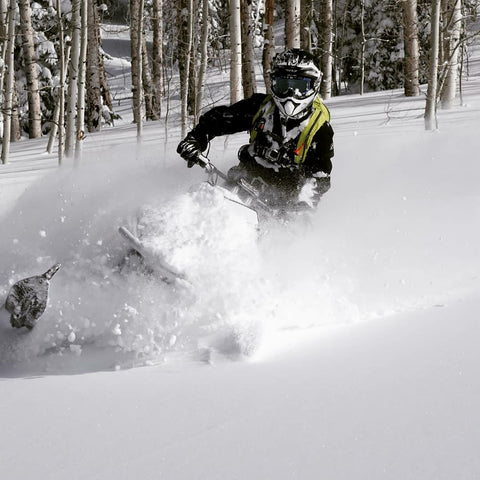
Clayton Krebs
Clayton started Oxbow Gear in Utah in 2015 with an engineer roommate, after night dirt bike rides with no light gave him the idea for a light that snaps into a GoPro mount. The first sale came in 2016 on Amazon, and he later bought out his partner and grew the company through snow shows. Oxbow's Renegade two-way radios, built to sit on the shoulder and handle backcountry weather, are what put the brand on the map with snowmobilers. He grew up snowmobiling and has a business school and digital marketing background.
Show notes
- 3:31Night dirt bike rides with no light, and the idea for a light that snaps into a GoPro mount
- 5:37The first sale came within an hour of listing on Amazon
- 7:39Buying out his partner with about 40 lights left, then selling out at the Boise show
- 10:35A dozen customers a week with frozen mics on the new Renegade radio
- 13:43The cause was wind pushing moisture through the mic membrane
- 18:15What he would change: more awareness of public land closures
- 23:24The Bluetooth radio, the handlebar button, and why Apple and Beats won't pair
- 26:33Eight of 10 radios failed on one trip, so he designed a radio that lives on the shoulder
- 29:25Full compatibility with BCA and other backcountry radios
- 30:38A 24-rider night ride in two feet of fresh on the ambassador trip
- 32:43What it takes to become an Oxbow ambassador: 1,000 followers and real engagement
- 36:30Lightning round: a Hot Pot, a turbo for a Catalyst, and a tunnel bag
I just want a light that I can snap into my GoPro mount, just something to get me down the mountain.
Win a free custom wrap
Drop your email and what you ride. We draw winners all season and announce them on the show.
We never considered wind when we were testing anything. We were spraying it with water, putting it in the freezer, doing everything we could, but we had never factored in the wind.
Questions answered in this episode
Who founded Oxbow Gear?
Clayton Krebs. He started Oxbow in 2015 with his roommate, an engineer, after riding his dirt bike down the mountain in the dark and wanting a light that snapped into a GoPro mount. The first sale came in 2016 on Amazon, and about a year in Clayton bought out his partner. 3:31
Why did the Oxbow Renegade radio mics freeze?
In Clayton's words, the new radio's design gave wind a more direct path to the microphone, so wind (or riders blowing on an iced-up radio) pushed moisture through the internal membrane and froze the mic. Oxbow found the cause about a month and a half into the season, fixed customers' radios and shipped out a cover, and says the issue is solved. 13:43
Are Oxbow radios compatible with BCA and other backcountry radios?
Yes. Clayton says Oxbow radios were built from the start to be 100% compatible with other industry radios, using the same channels and sub channels, so you can talk with buddies running BCA or other brands. 29:25
Does the Oxbow Bluetooth radio work with AirPods or Beats?
Not at the time of recording. Clayton says they could not get it to pair with Apple products, including Beats. Most Cardo units, UClear, Sena, Skullcandy and JLab earbuds paired fine, and a handlebar push-to-talk button was about a month out. 24:29
How do you become an Oxbow Gear ambassador?
Oxbow posts its qualifications on its website each year. The baseline is about 1,000 followers on a social channel, with real engagement (not bought followers), plus genuine, quality content. Winter applications close at the end of September, and late applicants can reach out to Zach on social media. 33:16
You go to Hay Days and there's people that come from around the world to go to Hay Days. I don't know of many other industries like that, where there's so much passion around a hobby.
Full transcript42 minutes · 16 sections
Read it
Lightly edited for readability. Click any timestamp to jump the video to that moment.
0:00 Intro at the Utah Snowmobile Show
Okay, welcome back to another episode of the Sledder Cast podcast, where once again we are still here at the Utah Snowmobile Show in Sandy, Utah. We're kind of winding things down. We have a few hours left of the show. There's still people here, that's good.
Yeah, it's definitely slowing down though.
Yeah, it'll slow down just like all of them do. I'm Trevor Erikson, host of the program. We've got Clayton Krebs here with us.
What's up?
If you're not familiar with Clayton, he's got his company on his chest right there. He's the owner of Oxbow. They're just right back behind us here in a booth. We see these guys all over the place, they're not too far from us. You told me you're in Utah.
Yeah, that's right.
So this is your hometown show. We're on his home turf right now. We're going to get into the story of Oxbow and how it came to be. My experience, from what I've seen from being on the outside, is nothing, and then all of a sudden, holy crap, who the heck are these Oxbow guys? Where we print wraps, it's like, man, a lot of people are throwing this Oxbow logo on their wraps. What's going on here?
It's interesting to me. I know it's never a light switch. There's a lot of grind and hard work that goes into it until it eventually starts to pay off.
Yeah.
So we're going to drill in and learn a little bit more about Oxbow, the story of the company, and what Oxbow has cooking for the future.
2:04 The first video, and starting with lights
If we just start out, how did Oxbow happen? The only thing I could find was your first YouTube video, posted probably five or six years ago on the Oxbow channel. Does that seem right?
Let's see, that would have been, I think it was 2016.
Okay, so a little bit more, six or seven years ago.
Yeah, 2016 would have been the first video. Honestly, I don't even know if it's still up. It was pretty embarrassing. I remember looking back at that first video like, oh my gosh. We literally had a vinyl banner in one of the bedrooms in our house that I was recording in front of, just talking about our first light.
A lot of people don't realize that. You say all of a sudden you start noticing us, and we get that a lot, especially in the snowmobile industry, because we started with lights in 2015. A lot of people don't realize that. Radios are really what put us on the map for most people in the snowmobile world. People come to our booth now and they're like, oh, you guys do lights too? It's like, we started with lights. We've always been doing lights. We just started doing radios.
3:31 The idea: a light for a GoPro mount
So 2015. Let's go back in time here. Are you sitting somewhere with some paper, a stroke of genius comes in and boom, I should do this? How was that?
It was a desire for me to have the product. I was kind of fresh out of college. I went to business school, I was really interested in owning my own business, and I had actually started and run several different businesses through college. I was working for a tech company in Lehi doing some digital marketing, and I was single, so I had a lot of free time.
I was dirt biking a ton. I would take my dirt bike to work early so I could get off early, and then at 4:00 get off work and go riding. I was doing this like three times a week, and I just kept pushing my limits further and further into the mountains, into the backcountry. Something goes wrong, you take a wrong turn, whatever it is, and I'm fumbling my way down the mountain in the dark because I didn't have a light on my bike.
One of the times riding down the trail I was just thinking, what's a solution? I didn't want to mount a hardwired light to my bike. I just wanted something simple and light. I had GoPro mounts on everything, and I remember riding down the trail and having the idea: I just want a light that I can snap into my GoPro mount, just something to get me down the mountain.
I 100% intended to go home and just buy one that night. I got home, started Googling it, trying to find a light that went into a GoPro mount, and I couldn't find anything. That was when the light bulb went off. Huh, that could be a cool product.
My roommate at the time was an engineer, so I partnered up with him, and that's where the first light came from. 2015 was a year of getting the product launched. I say we started the business in 2015. I think the first sale we took was 2016.
5:37 The first sale on Amazon
Do you remember what the first sale was like? Was it in person?
No, it was online through Amazon. We developed this product and we didn't have a ton invested into it. We had sourced a light and made this mount. I was like, I'm just going to throw this up on Amazon really fast, because I didn't have to build a whole website just to test the market and the price point. I didn't know.
I had a digital marketing background, so I put it on Amazon and threw up a Google ad for somebody searching for, like, dirt bike helmet light. I remember it was the day I listed on Amazon, maybe an hour after putting the ads live, we had our first sale. I was like, whoa, that was cool.
Oh boy, dopamine hit, baby, right there.
Yeah. But then we had that first sale right away, and it was a pretty slow trajectory forward for that first year. We did hardly anything. We both had full-time jobs. This was a side hustle.
I don't know what your experience is like, but when you're starting a new business it's always easy to look back and see what it could become. When you're starting it and putting all that work in initially, you don't know what return you're going to have on it. Sometimes it's hard. Do I want to spend my Saturday working on this? I don't know what I'm ever going to get back from it. A lot of people don't see all the work that goes in at the front, when you don't know as the business owner if it's ever going to go anywhere.
Yeah, and it's a daily thing. One day you're like, yeah, I'm in it, we're going to go crush. The next day the doubts come in. What the heck am I doing? Should I be doing this? The next day you look at the money, like, oh man, I've got so much money and time into this. What am I doing?
7:39 Buying out his partner and selling out in Boise
Cool. So first sale, compliments of Amazon. It takes about a year, you guys are grinding, wondering if you should be doing this. When was the next stage of, okay, no, we are doing this?
We had a pretty slow start, because again we were working full-time jobs and busy doing other stuff too. It was a side hustle for a long time. About a year after we started, my business partner wanted out, so I ended up buying him out.
At this time we were doing hardly anything in sales, and cash flow as a new business is really hard. I'm just trying to scrape up enough money to run another inventory production. I bought him out that fall, I had no money, and I had, I don't know, 40 or so lights left in stock.
I remember going to the Boise snow show. That was the first show we ever did. I was like, I just got to try this. I want to be able to talk to people face to face, get customer feedback, all this stuff. I went up to the Boise show and we sold out. It was probably '17, I think.
That was one of those moments that was inspiring. There is real interest in this. We had tons of good feedback, people were excited about it. And it helped us financially. Even though it was a little bit, it was enough to do production again and keep it going. But that's what it was like for years. It was just trying to keep the cash flow and get enough money to make more products.
And what a lot of people don't realize is, okay, I can go sell out, but that money doesn't come to my pocket. If I want to sell more products, I've got to put that money back into the business and buy more product. And at some point you're hoping it's going to go like this, and there's going to be money there to go do other things with.
Yeah. In the beginning it's a cash flow challenge.
It takes a certain type of person that can stomach that, put up with that, stay positive and have the motivation to push through. Most people hit that first wall, that first struggle, and go find something easier to do.
10:35 The frozen mic problem
So with the struggles, is there one in particular you can think back on and remember, that was a really big challenge for us and we overcame it as a business?
For sure. That was last year with the microphone issues.
I remember that.
I lost so much sleep over that. It was miserable.
You wouldn't have known by the YouTube video that you put out. I remember watching that video and thinking, oh man, I think this is kind of a big deal. But you were calm, cool and collected. No one knows what's going on on the inside. So tell us about that.
We launched the new radios last year, and with everything we had done on the product development side, we thought we had bulletproofed it even more than the first radio. The first radio was really good. We had very few issues with it, and we took this one a step further. We thought this radio was going to be so solid, and that's how we pitched it. We were selling it that way.
The first big storms of the season hit, and the next Monday we get into the office and we had, I don't know, a dozen or so customers calling in or emailing: hey, my mic froze over. We're like, what? We'd never had this before. We thought, okay, this is just a fluke, maybe weird conditions or something. So we let it go. I didn't really know what to make of it yet.
Then the next weekend hits, and last year there were storms every week.
Oh yeah.
The next weekend comes around, that Monday morning more customers are calling in, their mics aren't working. I'm like, oh shoot. At this point I'm starting to realize we might have something here. So we started reaching out to them all: okay, send your radios back to us. And we started going through them.
That's tough, because that's their only radio.
Yeah. And the other thing is I felt sick about it. I take it very seriously that people trust us to give them a product that gives them communication in the backcountry, which to me is a huge safety issue. They're trusting us with that, expecting it to work in the elements we say it works in, and we start having all these issues. It made me sick.
So we started going to town with the radios people were sending back, talking to people all over the place, trying to figure out what was going on and trying to replicate the issue here in Utah. There were days on the snow where I'd take four radios on my backpack and ride with four radios trying to replicate the issue, and I personally could never get it to happen. But every Monday we'd get to the office and have a bunch of customers reaching out. It was a real problem.
13:43 Finding the cause: wind
Eventually, if you watch the videos, we figured out it was the wind that was causing the problem with the design. We were able to solve it and fix it all. We were able to fix everybody's radios, came up with a cover for it and shipped those out to customers.
Right.
And it is a bulletproof radio now. We don't have those issues anymore. But for a while it was stressful.
Sometimes it just takes quantity of testing when you're trying to do new stuff in an industry.
Well, that's the funny thing. With the first radio we launched, it was actually just by luck that we had designed it this way. On the old radio, the internal mic channel was offset from the microphone. So when you applied wind to it, the wind couldn't blast the water through the internal membrane.
What we found on the new radios is it was more of a direct shot into the microphone. Even though we had an internal membrane over the microphone, you get the wind funneled in there and it would blast the moisture through the membrane and freeze the mic.
We never considered wind when we were testing anything. We were spraying it with water, putting it in the freezer, doing everything we could, but we had never factored in the wind. After tons and tons of testing, literally a month and a half into the season, we finally figured out, oh, it's the wind that's blowing it through.
And when people would see ice on their mic, I would never blow on my mic. I would just let it go and I could still talk with ice on it. But some people would see the ice build up and they would blow on the radio, and when they blow on it they blast the water through the membrane.
So we were able to figure that out and fix the problem, but it was a nightmare. It cost us a lot of money.
I can only imagine the constant headaches coming from that.
Oh, the sleepless nights.
Well, it's good that it was a challenge that was overcomable, and now you're past that.
16:15 What he would do differently, and who runs the marketing
If you were to start Oxbow over again today, what would be some things you would do differently?
Obviously I've learned a lot on the product development side, how to make things better, like with the mic issue. That information could be very valuable going back in time. And knowing what I know now, I could grow the business faster than it initially took us. I could do it better and faster if I were to do it again. But honestly, I've loved the journey. I love doing what I do, and there's not a whole lot I would change. It's been awesome.
As far as the marketing, I'm a marketing guy, so I like to take note of good marketing, and I've seen great marketing from you guys. Is that all from the brain of Clayton?
No, definitely not. I'm more of an analytical marketer. My background was the analytics side of things, the back end, analyzing engagement and that sort of stuff. Zach is the one that runs all of our social media, and he runs all of the Facebook ads and everything now. He's killer at it. He knocks it out of the park.
I've had a couple conversations with Zach, and he was sharing with me some of the analytics you guys pull from sponsored athletes and riders on social media. It's next level.
Yeah, we track stuff, which is awesome. That's my background. I like the data.
18:15 A lifelong snowmobiler, and what he would change
As far as the snowmobile industry goes, have you always been in the snowmobiling space?
I have, as a customer for sure. I grew up snowmobiling. I think every kid dreams of doing something in the industry they love, and that's been just that. But until Oxbow I was always just a customer, a snowmobiler at heart.
If you could grab a magic wand here and wave it around, what would you change about the snowmobiling community? You go to a lot of shows. You see the Midwest snowmobiler crew, you see the out west crew. You were in Denver a couple weeks ago. So you see and talk with a lot of sledders.
Dude, the snowmobile industry is awesome. I talk to my wife about this all the time. I just love the snowmobile community. You go to Hay Days and there's people that come from around the world to go to Hay Days. I don't know of many other industries like that, where there's so much passion around a hobby. People are obsessed with it, they come from all over, they travel all over, they spend so much money. It's just a part of our lives. There's no other sport like it. It's so fun and it just hooks people. There's this really strong, tight-knit community around snowmobiling.
Even before I was in the industry, you see a truck going down the road with a Klim sticker on the back and you're like, oh yeah, that's someone like me right there.
Those are my people.
So that's been really cool. One thing I would change about the industry is increasing awareness for the battles going on with public land getting shut down. That's been a big issue, and I feel like a lot of people just don't pay attention to it. There's a lot of money going into these groups that are shutting land down, and I feel like a lot of the community is just kind of blind to it. So more awareness around that.
You would think there's enough businesses here, everyone should be able to rally around that and put some good resources towards it, because that can cause a lot of fits for people. What's hard is, we're up in Idaho and there's just so much open backcountry public land that we haven't felt a lot of it yet. There are some trails getting closed down here and there. We don't want that to change, so we've got to fight for that stuff.
21:24 What is next, and the best sellers
Okay, the future of Oxbow. If we could snap right now and go three or four years into the future, what are we most excited about for Oxbow?
Some cool new products. I honestly don't want to talk too much about it. We're working on some stuff that's going to be totally new to the industry. We came out with the Bluetooth radio, and nobody had really done that before. We've got some new technology we're working on that nobody's done before that I'm really excited about. We're probably still a couple years down the road with that, but that's all I'm going to say about that.
Do you feel like you're in a pretty good cycle of product development and testing, so you've got a runway for the next few years as far as new product goes?
I'd say we've gotten a pretty good amount of practice at it, where it's gotten pretty consistent.
Cool. As far as products go, we've talked about the early days of Oxbow with lights. You hit the snowmobile market with a bang with the radios. What would you say are your most popular two or three products now?
The first year of launching the radio it became our best-selling product, just by number of units, and it's still that way today. We sell more radios than anything else, for sure.
Okay, radios number one. You've got the Renegade. Is the 2.0 the best seller?
The 2.0 is the best seller.
23:24 Bluetooth, the handlebar button and pairing
Then we've got the Bluetooth version. We're still working on the Bluetooth button for the radio, so you can push the button on your handlebars and transmit through the radio, pairing it with your intercom systems or headphones. We've had that radio out for a year, and the button's coming out in another month, month and a half. I feel like that's held a lot of people back from the Bluetooth. They're like, I'm going to wait till the button's out to really complete the set.
But it has definitely been gaining traction. It's actually opened a lot of doors in other industries, like hunting and some of the off-road stuff, and the trail riders are really interested in it too.
With the Bluetooth capabilities, can you sync up with any Bluetooth capable mic and headset? You can go on Amazon and there's a ton of different ones, Cardo is a brand.
Not 100%. We have big issues with Apple products, which includes Beats, because Apple owns Beats. For the life of us we cannot get it to pair with Apple stuff. So be aware of that: if you've got Apple products, it's not going to work with our radio yet.
But most things do work. Most of the Cardos work, there's a few that don't. The UClear works, the Sena works. A lot of the big name intercom systems work, a lot of the Skullcandy earbuds, JLab earbuds, stuff like that. Most products out there work, but there are a few we have issues pairing with. Honestly, we keep talking about this and haven't done it yet, but we need to post a list on our website of devices that work and don't work that we've found so far.
That'd be handy. I've spent a few days on the snow with, I don't know if it was a Cardo. We're usually just on two-way radios. But being on the snow with an in-helmet headset system, linked with four or five riders and just conversing while you're riding, that's a game changer.
For some people it's probably like, yeah, we've been doing that for a long time. But for me, someone's out leading: hey, watch out, there's a stump right here on the right when you come up. Hey, I'm going to dip over here and see what's going on. Having that instant communication while you're out riding is really cool.
And you can hear while you're riding, instead of having to stop and say, what did you say?
Yep, it's in the helmet. You don't have to stop.
26:33 Why choose an Oxbow radio
As far as competitors go, you're going up against some brands that have been in the space for a long time. You've got your BCA products, I believe it's the BC Link radio. If I'm someone who hasn't purchased a radio yet and I'm weighing the options, what would you say, respectfully, is why I would choose an Oxbow radio?
We literally built it from the ground up for snowmobiling, to handle the elements. That was our number one goal. We had been manufacturing lights, and the idea for the radio came from a trip in Afton where we were using another brand's radios. I won't name names. That day, eight of the 10 radios failed. Either it was batteries freezing and not working or the mics freezing over, different issues. By the end of the day we had no communication.
I remember getting into the truck, driving home, just thinking about it. Man, there's got to be a better way of doing this. That's when we went to the drawing board. When we first started prototyping radios, we were also going to have the whole mic and cable setup, because that's what I knew. Then we went back to the drawing board: if I could build something from the ground up, if I could have my dream radio, what would that look like?
As we started thinking about it, I was like, I actually hate the mic, because every time I want to recharge the battery, change channels or figure out why the radio's not working, I have to dig into my avy bag and pull everything out to see what the heck is going on. It would be really cool if we just had the whole radio on the shoulder, if the radio could withstand the elements. That was the issue. With your standard radio, the battery's exposed, the screen is exposed, everything up there is exposed. It can't handle a snowmobiler in the backcountry.
So that's where we started developing the product, so the whole radio could sit on your shoulder and take the abuse. When we launched the radio, that was the big advantage we wanted to push. You don't have to root into your avy bag anymore. The simplicity of having the whole radio on your shoulder is an awesome experience.
Then we have significantly better battery life than the competition. Except for some issues last year, we don't have the mic freezing issues. We get better range, all that kind of stuff. And they are 100% compatible. That's one question we get all the time: if my buddies are on a different brand, BCA or whatever, are they compatible? That was one thing we did from the start, making sure they're 100% compatible, all the same sub channels, so you can communicate with all the other industry radios.
Smart. I like it.
So in a nutshell, from the very beginning we were designing this as a radio for snowmobilers. And you look at BCA, they've launched the new radio they're coming out with, and they're copying what we've done, because it has worked so well and the market has responded to it so well. It's been really cool. It's been fun.
What's that saying? Imitation is the sincerest form of flattery. Is that what it is, or did I say that backwards? Oh boy, I'm on the spot here.
It works out. We know what you're saying.
30:38 The athlete program and the team ride
Back to a comment I made earlier on. We print a ton of wraps, and we've seen a ton of Oxbow stuff come through. You guys have an athlete and ambassador program. Do you have different tiers?
We do.
Are you able to talk about those tiers, or is that more of a Zach thing?
It's definitely more Zach. He manages the whole program and runs it. I'll say it's been super fun. It's been an awesome experience working with all the ambassadors and athletes. We did a huge ambassador ride last year.
I heard a lot about that.
It was the highlight of my winter. It was so fun. We did three days of riding and did a night ride, Oxbow style.
Had to be a night ride, right?
Had to be a night ride. And the crazy thing is, we went to a new area that only two people out of the 24 riders there that night had ridden. So we're going into the night riding a brand new area to most of us, and it was in two feet of fresh powder. It was a blast. Then we did two other days in the daytime, but every night it was snowing one to two feet, so it just refilled every day. Everything timed perfectly.
Getting to know all the different athletes was great. We take customer feedback and athlete feedback very seriously on our products, because it's valuable information. How can we improve our stuff? These are the people on the snow, they have different experiences than us. So we had a really good meeting with all of our ambassadors on their wish list for products and features, the issues they've had with different products and how we can improve on them. It was really cool. Sorry, that's kind of roundabout. To get back to your question, yeah, we've got different tiers of athletes.
32:43 How to become an Oxbow ambassador
How do I get invited to the Oxbow team ride? I've got to be an ambassador or a sponsored rider. What does someone have to do? Because we're in the same space as well, and there's a lot of, hey, what can you do for me?
Give me a discount.
Give me a discount. The good ones know how to do it right. If both parties are going in thinking, I've got to provide more value to the other person than I'm taking from them, that's a great collaboration. So what are some of the things you guys look at in a person?
One of the big things is just content. It's hard to constantly be coming up with content to post on social media. So quality content, if ambassadors can send that to us or just post it on their own page, that's gold. That's really awesome.
Then just being an influence out there to people. A lot of people, especially if you're new to the sport, want to know what gear they need. So having people out there saying, this is my experience with Oxbow, or with this product. We always tell them we want them to be genuine. I don't want them putting on a face for stuff. And we try to make sure our product can stand behind what people are saying.
We've got different tiers. If you want to know the details, the standard is we require a thousand followers on whatever social media channel you're looking at, Instagram, Facebook. We do make exceptions if you have other influence, but we do want our ambassadors to have some sort of influence in the industry.
That's a good baseline. If you're not there yet, here's a goal to go shoot for. You're weeding out a lot of, I don't know if riffraff is the right word, but here's the bar.
Yeah. We look at engagement too, because there are some people out there that will just buy a bunch of followers.
That's true. We could go get a thousand followers right now.
Right. But if they're a bunch of bots, we don't really care for that. And that's easy to tell.
We're in the same shoes. It's super easy. If you've got 10,000 followers and I go to your feed and you've got one or two comments on all your posts, and they're like, hey, promote this on this page, not true genuine comments, red flags.
100%. You should have engagement and comments if you've got that following.
People try to sneak one through there. It's getting a little more tricky to do that. So there's a baseline of follower count, so level of influence, and then what quality is your influence. Are your followers engaging with what you're doing?
Yep.
Anything else you guys are looking for specifically?
There's a list, and I can't remember all the details. Like I said, this is Zach's territory. But we post it on the website every year. The winter applications run through September. It closes at the end of September. We do make exceptions, so if you miss the boat, you can always reach out to Zach on social media and see if there's interest there. But we post the list of qualifications that we're looking at, so we're open about it.
That's smart. We should actually probably do that. I'm going to steal that one from you guys. You okay with that?
Yeah, for sure.
36:30 Lightning round
Cool. We're going to move into the lightning round here. A couple toughies for Clayton today. You guys know the drill. The first one is, Clayton's got a brand new snowmobile, clean, right from the dealership. What are your first three mods? We've never had anyone say nothing, I just ride stock, which can be an answer too. But what are three things you go do?
Hot Pot.
Ooh, I like it.
Oh yeah, you've got to have the Hot Pot.
You've got to get the Hot Pockets cooking on the mountain.
Yes. I like a toasty lunch.
Okay.
I think it kind of depends on the snowmobile. I'm actually eyeing the new Catalyst quite a bit. I'm a turbo guy, and they don't have the turbo yet, so if I were to get the Catalyst I'd be throwing a turbo on there. That would be one mod. If it's not the Catalyst, say it's a Polaris, I'd be putting a can on there. That'd be another mod. And a tunnel bag.
Put it on a little diet right there. Okay, and storage.
Yeah, storage.
So you've got feed me something good, put me on a diet, and allow me to pack some more weight in the storage.
That's right. There we go. Transfer the weight from the front to the back.
There we go. Okay, so question number two, this is the tough one. What do we not know about Clayton that we need to know?
I'm not that interesting. Oh man. A lot of people don't realize that I didn't get into dirt biking until college. We started the business off of a dirt bike related product, and that was kind of a new thing to me. I picked up dirt biking in college and got super passionate about it, but it was new to me.
So it was just wham bam, thank you ma'am. Consumer straight to, okay, I love this stuff, I've got to go figure out a business within this space.
Well, like we talked about, it came to me as an idea of just solving a problem. I wasn't necessarily looking for a business in the space, which I can't complain about. It's awesome. But yeah, solving that problem.
39:20 Where to follow Oxbow
Well, cool, Clayton. So where should people go? We just go follow Oxbow Gear on the socials you guys are active on. Oh my goodness, I forgot about this one. We should have brought Zach in here. You guys did a reel that I showed my kids so many times. We watched it over and over. It was the most hilarious thing ever.
Which one is it?
The one where, where's my dad? I'm all alone, I'm too small to be here on my own. There are very few of those where I'm like, that was creative and that was awesome. So nice job, Zach, on that one. He gets the applause for that.
We spend a lot of time figuring out social posts, for sure.
Okay, so Oxbow Gear.
OxbowGear.com. All of our social media handles are just Oxbow Gear. We're on TikTok, Instagram, Facebook, all of it.
All righty. Well, we'll close this down. The show's starting to wind down a little bit here in Utah. Appreciate Clayton coming on and talking about all the cool stuff Oxbow's doing.
Yeah, thanks for having me. I appreciate it.
Okay, we'll see you.