

In this episode of the Sledder Cast podcast, Trevor Erikson and Chet Jordan, owner of Backwoods BMP, sit down with Rory Edwards, General Manager of onX Offroad, to get the untold story behind the app that's changing the game for snowmobilers and backcountry navigation, from the early days of coding in a small Montana office to building one of the most powerful off-road navigation tools on the planet.
Rory takes us inside the tech, the mission and the future of backcountry exploration, including features you're probably not using yet but should be: slope angle, avalanche forecasts, offline maps, how onX crowdsources trail mapping, how to plan a snowmobile trip with the app, and what's coming next with smart goggles, AI and real-time tracking.
Guests
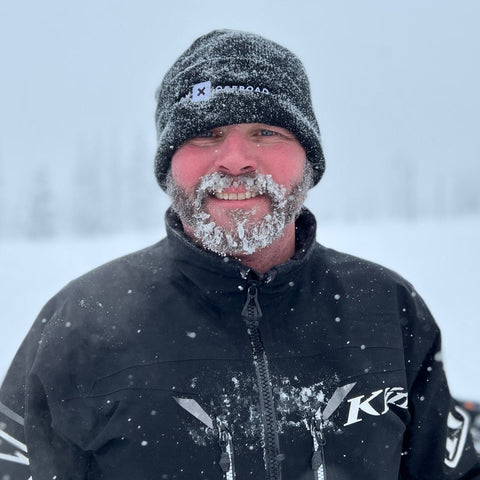
Rory Edwards
Rory grew up in a town of 5,000 in southwest Montana and started out as a web developer in Bozeman around 1999, coding full-time and racing dirt bikes on weekends. He joined onX in 2016 and led the launch of onX Offroad in 2019, which started as a team of three in a Missoula conference room. He rides the backcountry with his wife and two kids, including his daughter Isla, who races RMSHA hill climbs, and he volunteers in emergency response and search and rescue in his local community.
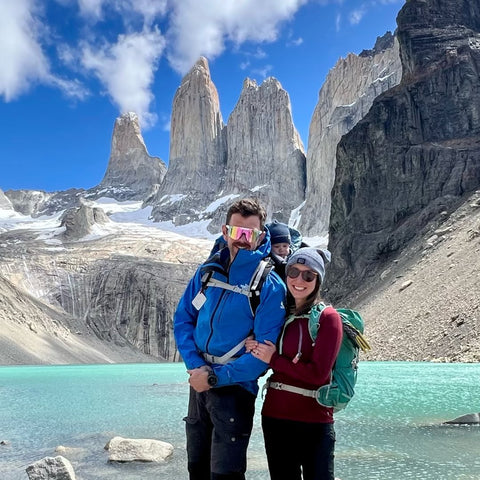
Chet Jordan
Chet started Backwoods BMP in Maine after crashing his Ski-Doo XM Freeride as a teenager and building his own bumper in his dad's shop, because he couldn't afford to buy one. He kept the brand going through Maine Maritime, welding bumpers in an unheated barn and mailing them from the Castine post office, then went all in after graduating. Backwoods now makes bumpers, billet parts and protection for Ski-Doo, Lynx, Polaris and Arctic Cat sleds, and runs the Power Hour creator competition at Hay Days.
Show notes
- 3:48Rory Edwards: a Montana web developer racing dirt bikes around 1999
- 6:11Before the apps, onX made chips for handheld GPS units sold through Cabela's
- 6:50Eric Siegfried, a hunting guide, started onX in 2009 to answer where he could legally go
- 8:43Why onX moved into off-road in 2019
- 14:03A team of three, a no-window conference room in Missoula and a road trip to Moab
- 17:22Turned around deep in Island Park with his family: the moment Rory trusted the app completely
- 26:13Over 500 data sources plus a few thousand volunteer Trail Guides
- 27:35How to join the Trail Guide program (Tread Lightly certification required)
- 32:31Slope angle: the feature most riders should be using
- 34:44Smart goggles and digital lenses, a few years out
- 38:16The North America avalanche report in the app, updated by 7 a.m. every day
- 42:28Planning a trip: 3D mode, saved maps, waypoints, and start your track at the truck
I realized I was putting so much trust into the app in my hand, or in my pocket or on my bars, that I was willing to risk my entire family's life out there.
Win a free custom wrap
Drop your email and what you ride. We draw winners all season and announce them on the show.
I've got a leader, I've got a person who can put information and content in the app, and I have one coder. That's the team of three.
Questions answered in this episode
Who founded onX?
Eric Siegfried founded onX in 2009. He was a hunting guide trying to figure out land access, where he could and couldn't go, so he built a product for himself, and onX Hunt grew from there. Before the apps, the company made chips for handheld GPS units sold through retailers like Cabela's. 6:50
When did onX Offroad launch?
onX moved into off-road in 2019. Rory says the first version was built in about three months by a team of three in a Missoula, Montana conference room, released on Android first, then tested by walking around Moab, Utah asking riders to try it for free. 8:43
Where does onX Offroad get its trail data?
From over 500 data sources, including base trail data and authoritative agencies that set what is legal on a trail or area, such as wilderness or seasonal game closures. On top of that, a few thousand volunteer Trail Guides ride the trails with the app, take photos and write descriptions to confirm location, access and difficulty. 26:13
How do you become an onX Offroad Trail Guide?
It is an open program you sign up for in the off-road section of the onX website. You have to be Tread Lightly certified. Guides track trails and write them up, get a free Elite membership, and earn gear as they add more trails. 27:35
How do you plan a snowmobile trip with onX Offroad?
Rory's steps: study the zone in 3D mode on a computer or phone, save offline maps for the whole area (zoom out a little extra), turn on slope angle and mark waypoints for travel corridors and transitions, and start your track before you leave the truck. Then share the routes and markups with your group. He also checks the avalanche report, updated by 7 a.m. daily, in the app. 42:28
I can't wait until you don't have to think about what color lens you're going to use, because they're digital lenses and they just change and pick up the contrast.
Full transcript58 minutes · 15 sections
Read it
Lightly edited for readability. Click any timestamp to jump the video to that moment.
0:00 Intro
Welcome back, everybody. We're here at another Sledder Cast podcast. We're in Jackson Hole, Wyoming, at the World Championship Hill Climb. We're in the Backwoods clubhouse, pit side, trailside, trackside. The race is going on right outside the window here in the penthouse. If you're watching the feed online, you'll probably see the flags flying.
Oh, for sure. It's important to have a presence here. It's not just about being at the races. It's supporting the races and the riders, and being here with guys like Rory and making it all work.
Yeah. So obviously we've got Chet with Backwoods, and we brought on Rory Edwards with onX Offroad. He's the general manager. We were setting up our tents the other day and I was happy that we were neighbors, so I got to know Rory. We were at Kelly Canyon, the RMSHA race last weekend, and Rory's daughter is Isla. Isla's been cleaning house all season.
She's been having a heck of a season. Isla Pearl, 123. She's just been hitting it hard and attacking. She's a young lady, but she really goes for it.
15, right?
15 years old.
15. So technically she can only race juniors here at the World Championship.
Yep. She races several women's pro classes all season. Then when she gets to the World Championship, she's just a little bit too young to compete.
You got to be 16.
16. So next year she can, and next year it's going to be open house. It's going to be a fun year.
Yeah. So we're stoked Chet's going to help me out here. You're going to bring a little life to the party.
Absolutely. It's important to me, because I pay attention to Sledder Cast, I keep an eye on you, but especially Rory. Rory's always been part of the team, kind of not directly, but we bumped into each other at Out West Sled Fest and it was just such a natural thing. Oh, who are you? Who are you? Friends of friends, and now I feel like we're family.
Besides the fact that we sponsor both of his kids, Isla and Kaiser, the whole family thing is awesome. And the way it intertwines with onX is even better. That's something Backwoods can totally get behind. There's nothing better than when you can share a couch. We don't just work together, we're friends. We're family. So I had to jump on board and make sure I could supervise.
That was pretty cool. Chet and I, I always say I've met some of my best friends on a mountain somewhere in the middle of nowhere. And that's what happened when Chet and I met.
Yeah. It takes two or three ski poles to really get to know somebody.
That's exactly right. It was pretty cool.
Well, cool. So we're going to get to know a little bit more about Rory. Selfishly, I told Rory two days ago, I just want to know the onX story, how you guys came to be. This is good for me too, because you see you guys everywhere. You're very much involved, not just the app that gets me back home, which is really what I'm thankful for. You guys are the title sponsor for the RMSHA circuit, correct?
Yep, we are. Deeply invested in the sledding community, and we love it so much. It's a massive part of my personal life and my business as well.
So this will be a great opportunity. I'm very much interested in this story as well. I'm excited for this one.
These guys put us through a whole lot of work and stress last year when they became the title sponsor. Like two weeks before the races, everyone's got to have an onX Offroad logo on their sled. Everyone's calling in, "Hey, I've got to get a reprint in, I've got to get the onX on there." So, good times.
3:48 Who is Rory Edwards
So Rory, who are you, for those who don't know? Give us a brief background of your upbringing and where you're at right now with onX.
Yeah. Thanks, Trevor. I think about myself as a small town guy. I grew up in southwest Montana in a town of 5,000, where I got to play in the outdoors all growing up. As I grew and moved into the working world after college, technology was my calling. I started out in Bozeman, Montana, in technology, where I was the only guy I knew of who was coding full-time as a web developer and racing dirt bikes on the weekends.
That's quite the spread right there. You don't meet a lot of dirt biking coding guys.
I didn't know any of them at the dirt bike races. And we're talking '99, 2000, 2001, when the web was just coming online and it was kind of fresh.
Back when the world was going to end in 2000, right?
Yeah. Y2K. Otherwise, I'm just a guy with a wife and two kids who love to play in the backcountry every possible moment we can. Work hard, play hard, mix it all together and it becomes a life. So I grew up in technology as I worked, and played in the backcountry, and as time went on, in 2016 I had the opportunity to join onX in the really early phase of the growth there. It was really where my working life and my outdoor life met. So I got a chance to join a great opportunity.
It's not easy to blend the two and actually turn it into a living. So when that opportunity pops up, you almost have to pinch yourself. Wow, these can coexist, and I can actually kick ass at it too. You guys know how it is. You can blend your work and your life and all of it together, and nothing feels like work anymore. That's where the magic comes out. Because the people you support, the way you're intertwined with it all, it couldn't get more wholehearted. It's everything.
Yeah. For sure.
So that's a good beginning. That's Rory, general manager of onX Offroad.
6:05 Early days of onX
So when you first started with onX, what was your position when you jumped on board?
We came in in the early days. We were almost a manufacturing company, creating chips that went into hardware GPS units and selling those through Cabela's and different outlets. As we were growing and looking at what the next trajectory of the business looked like, apps were just coming online in that era. Phones were getting strong enough to really support GPS, and we were in the transformation phase of going from a manufacturing company into a technology focused company.
And back then, was onX Hunt the first digital product you guys offered?
Yeah, that's correct. In 2009, onX was created by the founder, Eric Siegfried. He was actually a hunting guide, and hunting on his own, and really trying to figure out access and land data. Where can I go, where can't I go, and how does that all fit together? He ultimately created a product for himself and put it together. He started telling people about it, and that's how things kicked off. So it was really about where can I go, where can't I go, what access is available to me, and how do I get outside and go a little further.
Being able to see the actual property lines. I'm a guy that follows. I have a guide, I have people who know where they're going, so I don't necessarily need a GPS sometimes. But when stuff hits the fan, there's nothing more comforting than knowing you can pull up an app and know where you are.
And just for the common knowledge of, hey, here is this property line, this is wilderness, this isn't wilderness. It's so reassuring, and very cool. The hunt thing was new to me. I'm not really a big hunter. But then you pull up this app and you start understanding why that stuff is important, and it all starts making sense. You have all the information.
Yeah. And land ownership, like we use in Hunt, and the importance of that. You mentioned it. You want to know you're in the right place.
It's also really nice to not get shot at.
Right.
I've been avoiding that for years.
Hopefully they're bad shots.
So that was really the beginning, around that general access point. As we moved along within the business, we saw additional opportunities and the Hunt business continued to scale. We really looked into the off-road space, where there's a high need for planning and a high need for navigation. We're going out there, it's high risk, and we want to come home safe to our families.
100%.
So in 2019, we took a look at the opportunities and the markets out there, and some of the passion I could bring to the business from my off-road roots and what we do every day. Really knowing this audience, we said this is a pretty good place for us to go. So 2019 was following the same principles we used in Hunt. Where can I go? Where can't I be? What's the access? Where can I go have a great time without getting in trouble? The trail system.
I've got a lot of questions for you coming up, because if someone's used both apps, it's almost like, okay, did you guys just hit copy, paste, publish and change the name? But those who have dug into it know what the differences are in the two apps. So I'm curious to learn more about the backbone of Offroad.
9:58 What it's like being the GM of onX Offroad
As far as your progression within onX Offroad, you started generally with onX, and then you guys saw a need. Hey, this off-road division is somewhere we'd like to go. You headed that up. What does the day-to-day life look like as the general manager of the off-road division at onX? What are you spending your time on during the day?
Each day is a bit different, for sure. Some of the days are in the field, some of the days are in the office, but they're all generally focused around how we can continue to improve. Continuous conversations with customers, content feedback, where our opportunities are in the information we might be able to pull in to help users be better at what they do, as well as the features that really bring that information to life. The conversations inside scale up and down from strategic to tactical on a regular basis, but they all revolve around the same center point, which is the customers and how we can help them have a better day outside and stay safer.
I think I've already got it figured out. Here's the scene. It's me and you, we're in a Maverick R, whatever the hell they're running now, and we're out in the backcountry driving. I'm going to start asking questions to myself, but you're going to be there to answer them. That feedback of, where am I, what am I doing, oh, I forgot to download this, I forgot to do that.
It's cool to hear, and I know firsthand, that you guys aren't just office people. You guys are out in the field actually doing this stuff. You're a hell of a snowmobiler too. So I think we could schedule that. That sounds like a good business R&D trip in the Mavericks, figuring out the ins and outs of this thing.
You've got to go find more untracked trails and get those on the maps.
There we go. And a jump feature would be good, if I could hit a button every time there's a jump. Drop a flag so people know. Kicker here, kicker there. Cliff drop.
Nice.
11:48 Early day struggles of onX Offroad
As far as those early days, we had a great conversation with Chet when we did a podcast with him about the struggles in the early days that people don't see. You guys feel them, you go through them, but the general public never sees those types of things. What were some of the early struggles of transitioning out of handheld devices, the Garmins and whatnot, to the onX Offroad product?
Oh, man. You're dealing with phone hardware versus the hardware you get out of a dedicated GPS. Some of the great things were that you're on a new platform, on a screen where you can bring aerial imagery and satellite imagery to life, and you can do so much. But you're also in a pretty early phase of technology, building apps and bringing apps to life. We were in the early days of really bringing mapping to life on a phone in general.
For sure. You get the foundation of these phones. I've got so many GPS units, and I'm using them for everything unrelated to GPS, because now my phone does it all, especially with the satellite integration. It's incredible. What a cool tool to be able to work with. But you've got to build the app. You've got to build the interaction part of it, and there's a lot that goes into that. It's not easy, I would imagine. I've made an app or two, but nothing like this.
When you're dealing with disruptive technology in those ways, you can't really look through the lens of what history had and what was available to you then. You need to look into the future and really zone in on what customer problems, opportunities and needs they have, and how you can maybe solve them differently. I think some of the challenges in any growing company come from looking at past history and what was available then. Start looking ahead at what the technology can do two years from now, three years from now. That's a tough thing to do.
But you really have to, because you can spend so much time on something right now that could be irrelevant later down the road.
Yeah. But that's the exciting part. And you start off just like any business does. Okay, I've got a leader, I've got a person who can put information and content in the app, and I have one coder. That's the team of three. We're going to go make an app, make it happen, start from there and learn.
Team of three.
Team of three. We sat down in a conference room and drew out on paper what we wanted to zone in on.
The conference room, as a team of three. I can picture it. I had a conference room too, with a team of three.
A no-window conference room in Missoula, Montana. We drew out what we wanted it to look like, and focused in on the first core need we wanted to solve for users, which is: where can I legally take my off-road vehicle? We said, okay, that's our concentration point, focus there.
Because there are so many things and places and different needs, and you get so excited about all the possibilities you can build, especially when you guys are capable of doing all of this stuff. But you really need to find out what's most important to the people using your product. I think that's where we get our best feedback, when you go directly to the source. You're dealing with the guys who actually use it, and you can get that feedback easily. It's really up to you what you do with it.
Yeah, it was really cool. In our case, we spent three months. The three of us put the app together, we got it out on the Android platform first, and we all jumped in the same truck and drove to Moab, Utah. Then we walked around with the app talking with folks. Hey, will you try this app out for free?
For the record, I don't know where my phone is, so maybe we need an app for that too. But I think there is one. My onX tracker is on today. It started already, so we're going to see what we can tally up for mileage and information.
You're going to get some pretty good elevation gain.
Oh, for sure.
You may not be hiking up it, but you'll get the elevation. You'll probably be surprised by the end of today.
It's going to be a long day. It's early. It's only 11:33.
We won't know your steps, but we'll know the elevation change.
16:10 The moment onX Offroad knew they were on to something big
So Rory, was there a point where you looked at what you were cooking up and said, "We are on to something"? Because I can remember being a user and a customer. Garmin handheld. There's an app available. Okay, but I still take both of them with me.
And you have to charge both of them too.
Charge both of them. And then the moment I felt confident enough to leave the handheld and just run with my phone was so freeing. It was amazing. I'm trying to remember what the feature was where I said, yeah, I can go full app now. I think it was the buddy tracking, and being able to download the maps.
Tracking and downloading maps.
Yeah. Once that was there, I didn't need service. I can pin and mark stuff on my computer, sync it, and have it on my downloaded map when I'm out in the field without service. That was my biggest thing. We're in places where there's no service a lot of the time, and I've got to have that function.
Personally, I was in Island Park, Idaho.
It's a great place. Great proving grounds for sure.
I had my wife and two kids with me. They were quite young. And I realized we were way deep in. We hadn't taken a trail. We'd just been boondocking all day long, cruising around.
So this is on snow?
This is all snow, on snowmobiles, riding the backcountry, kids probably 10 and 12. So pushing farther than many do. And I realized I didn't know which direction the truck was. I'd never been there before. I had just taken my family and we rode and rode and rode, had a great time, ate lunch, and I was actually spun around, thinking the truck was the other way. I realized I was putting so much trust into the app in my hand, or in my pocket or on my bars, that I was willing to risk my entire family's life out there. So that was the moment.
That's such a good example, because everything you've ever worked for, your wife, your kids, is right there. You're at a point where you've had fun, you've been able to relax and just go and be, and then all of a sudden, where is the truck? We do need to get back home. We have plans. And to have something to be fully reliant on and be able to trust, you're making sure you can rely on that, and you're making sure everybody else can rely on it too.
Yeah, that's a good one for sure.
A ton of trust at that point. And I realized I was actually starting to operate differently than I ever had before with the use of the technology. I was throwing caution to the wind. When you're growing up, you're out with your folks, or whoever your leader or guide is who teaches you about the outdoors. Mine was my father, and every day, five times a day, it was: which direction's the truck? Which direction's the truck? I had thrown all that out the window. I was blowing into the backcountry with my kids, winging it and leaving it all to onX. I thought, well, we're here.
From a business perspective, it was March of 2020. We went to the Mint 400, did a booth, and met a whole bunch of partners. At that point you could really feel the business start to scale and catch some wind. The conversations we were having were making sense, and the audience was really starting to react positively to our entrance into the off-road space.
Right. And as a customer, when you know you can legitimately connect with the guys who are making it happen, that's the best part. That's when it really starts to take off. I've never ridden with anybody else GPS related. None of this stuff. And that's the biggest thing for me. You've got to be out here. You've got to show face. You've got to be with the people who are using your product and really putting it to the test. That's what I love about the whole thing.
For sure. Absolutely.
What I got from the two stories you shared is the moment you realized the product was legit. It's like, this thing's going to sell itself. Now we just have to show up, and the product is going to sell itself. That's a really good place to be.
It's a very good place to be. When the product can sell itself, you're in a really good place. There's nothing better than that. Marketing is easy. Then the next hard thing is showcasing it and showing it to the people, which is a complicated thing. We joke about how easy it is, but it's tough sometimes to say, "No, really, guys, we're on to something. We have something good that takes care of us, and it can take care of you too."
Yeah. It's interesting. You look at the different markers. You look at the sledding space and what we have available, from wraps to bumpers to attire. Some of those things you really see. They're bright and they're loud. When I'm running my Backwoods bumpers, I make sure they really pop. I love those things. When you're selling an app, it's a bit different. You can't see it on someone's body or on their sled. So you need it to really fly for you and really solve those needs, so that people are talking about it over drinks after a great day out sledding.
Well, to be honest, this product is the difference between a great day and not, in most cases. And not that I'm trying to plug backwoodsbmp.com... cut that one out.
We'll give you two.
That's the reality of it, though. We've always focused on getting back from your ride. Not all of us are good enough. You hit a tree, and sure, you might have reliable gear, but you've got to know where to go.
Right. Gosh, I can think of a number of times.
I thought that was another camera. It's a train horn. Just as a reminder, guys, this is Jackson Hole. We've got live streaming over here right now, and at least 25 people over here. Flip the camera around and give a quick show, because I'll give these guys credit for holding it together. Shut the horn off. That's good.
Deviant Ink: If you love the show and want to support us, head on over to deviantink.com, use the code SLEDDERCAST and save some money on your next premium custom wrap. If you've spent any time on deviantink.com, you already know it's the best, easiest custom wrap builder out there, with its new interactive design tools that make designing and customizing wraps super slick. We're big fans of the new color mixer tool. It randomizes colors until you land on the perfect combo. The design mixer tool is a game changer when you already know what colors you want and want to see all of our designs in just your pre-selected colors. So head on over to deviantink.com, use the code SLEDDERCAST and save some money on your next wrap purchase.
23:36 Technology stack and creating their own path
I didn't check with you first about the technology stack you guys use, because there may be some stuff you can't share. But I'll ask the questions, and if you can answer, that'd be awesome.
I didn't get an NDA.
Oh, let her fly.
Here we go. What's something about the technology stack onX uses that most of us don't know, that would probably blow our minds, that you're pulling all this in and putting it together and, pop, there's an app?
I probably don't want to go too deep into it. I would say onX has been around for a while. We entered the app space pretty early, and to be a pioneer in some of this mapping space, we've really had to create our own path and our own technology to bring it together. We have a great stack from an engineering and code perspective, and we put it on the platform. But a lot of what we've figured out is really about the information you need to be better at what you do. We look at it like this: how can you go into a new area and get 10 years of information, like you lived in that place for 10 years? If you can get that in 10 minutes, we've solved what we're after.
So a lot of our focus has been around that platform and how easily we can feed that into the app, but really it's about simplicity and making it easy. Something you might not know, and it's a little off from the stack, is that there are actually a couple hundred people behind the scenes at onX coding and bringing content into the app. Just from an employee perspective, going from three to that. So if you're looking at an app on a phone and it's easy to use and it makes sense, it means there's a lot of work done behind the scenes.
A lot of work has gone into it. So don't take it for granted. An example is Google. Google has made it so, when have you ever jumped on a support call to figure out how to use Google?
Those are the worst. I don't do support calls.
But we don't need to. Right.
Exactly. And that's a beautiful thing that takes time and energy. That's what thousands of engineers will do. It just works.
26:03 onX Offroad trail data
Trail data. Can you talk about that? Is it user generated? Are you guys pinging into other APIs?
That's a great question. We bring over 500 different sources of data and trail information into the app. A lot of that is your base trail data set. Then you've got an authoritative entity of some sort that's usually providing what's legal on this trail and what's not legal on this trail or in this area, if we're talking wilderness, or areas with game management during a certain part of sledding season.
And that's a lot of great information, because I'll tell you what, you're saying a lot of things that just don't come into my mind. So when you're able to understand some of that quickly and easily, that's great knowledge to have.
Yeah, it's pretty handy. So we bring a lot of data sources in, pile through them, and bring them to life through the app. And then we also run what we call our Trail Guide program. We actually have a few thousand folks out there ground truthing the trails, making sure we know exactly where the trails are, what the access is and how difficult they might be.
How are they doing that? Are they tracking themselves as they're moving through?
They're running a trail. They're using the app. They're taking pictures along the way and writing descriptions, taking pictures of the hard part or the river crossing.
Is that an open program? If anyone's listening, can they get in on that?
How do I get on board? Because I'd like to do one of those for the Jackson Hill Climb today. Especially if pictures are involved.
Yeah, that is an open program. It's right on our website, in the off-road area. You come out, you sign up, and you start running trails. You have to be Tread Lightly certified.
Okay. So you tread lightly.
Yep. And then away you go, tracking your trails and doing your writeups. You get a free Elite membership to the product, and as you bring more trails in, you continue to earn gear and all sorts of cool stuff.
That's great to know. It sounds like I couldn't do that program unless I put some work in, but that's what you want. You want reliable people giving back the proper feedback and contributing in the right ways. That's really cool.
People just love to join the program, and they love to give back. Maybe they're really good at their area in, I don't know, Arizona.
Right. Exactly. And so they're gifting the information to someone who wants to go to Arizona but lives in Idaho. Like you said, 10 years of information compiled into maybe 10 minutes, maybe 10 seconds. You've got to earn that stuff. Those maps they used to hand draw, that wasn't easy. So it's great that you're taking people who are specialists within their regions, where there's no better place to get that information. You're not going to catch me giving someone a tour through Colorado or Utah or anywhere. I'm clueless. So to get the right people contributing, that's awesome.
Local experts in an area. And you love to share, because you love to go see a new area and have an adventure and have some knowledge. The world is huge. There are so many places.
And to just say, "Well, follow me, I've got this one." There's no way. It's Tom, and then Peter and Joanne, they're the best ones in the area. Let them be the ones who give us the information we need.
Yeah. It's a lot like having a guide right alongside you.
It's digital, but it's in your pocket. Versus a thousand bucks for a backcountry guide for the day, right?
29:35 AI in onX Offroad?
So, any plans with AI? I'm sure you guys have had conversations around how AI can be integrated and how you can take advantage of it. Any conversations like that?
Yeah, absolutely. And honestly, every company should be having AI conversations.
You talk about the future. I mean, we're a bumper company and we're talking about AI.
So absolutely, every company should be talking about AI and how you can leverage it. It's really about productivity. Your productivity in your human resources department, or in your technology stack, or your content delivery. There are so many ways to improve and gain efficiencies out of what AI can bring us now. So many simple things, and it just helps us all. It's not about replacing people. It's about enabling, taking on tasks, and efficiencies all the way across the board. So absolutely, not only AI within our stack and our data, how it all comes together and the speed of processing, but across every single area of the company.
I think people misinterpret that too. You have to take the realities of AI and not shy away from it. Yes, it's scary, but it's a resource. And again, it's not about cutting back, "Oh, perfect, we'll just AI this, we'll AI that." It's about enabling and giving people the right tools. The sooner you realize you're willing to do whatever it takes for the company to be better, as a product, as a company, for the people, that's what it's really all about.
When you really visualize and understand what's in the future and say, "Hey, we're going to do whatever it takes. This might be a little weird, a little scary, but we're going to figure it out and use it to be a positive thing for the company," that's what's going to make your product better than anybody else's. You get ahead of it now and start working on it, which you guys always are ahead of the ball.
Yeah. Because the reality is, I look at it like this. My grandma and grandpa, I love them. You hand them a phone and they have no idea how it does the things it does. And so I look at that and say, if you're not trying to figure out AI, you're going to be sitting there trying to understand how the crap people are doing what they're doing.
And that's not going to be when we're old. It's going to be next week.
Right. Like next week.
We're living in the future here.
So anyways, that's good to hear. I was assuming AI is heavily baked into the process.
32:21 A feature most people aren't using
This is one of my favorite questions right here. A feature that most people don't use on onX Offroad, but absolutely should be using.
Okay. All right.
What do we got?
I've got a couple. If you're not using slope angle to understand your terrain when you're in the backcountry, you can easily look at slopes and tell if they're 25, 35 or 45 degrees. If you're not using that, you've got to use it. It's an incredible feature.
Powerful. Coming from the East Coast, I've taken the most basic avalanche training, and thankfully I'm surrounded by guys who have been there. But when you're out in the elements, this is when you're relying on features like this, just to get a feel for it. I can't roll up to a slope and say, "Yep, 27, 35, 42." But using this app, if every time you get to a slope you check it, you can slowly start creating trends in your own mind, to finally be able to call it. Make a game with yourself. What degree is this? 27. Check the app. Boom, it's 28. You're getting close. We're dialed.
It's an incredible feature that I personally really enjoy, because it's intimidating getting into some of these zones. You check the avalanche report, and I always treat it like it's high. You get into these spots and stuff can happen quick, and there isn't much time to figure it out and deal with it.
Yeah. And it's easy to think about looking up at a slope and asking what it looks like. But so many times on a snowmobile, you're out in the backcountry working through the trees, you're dropping into the next hole, you're navigating yourself and you're doing it by sight. But when you're dropping into something and you go, "Okay, that's a red zone. If I go 100 yards to the north, check this out," the safety factor can just shoot up.
Let's take a quick break. Let's pull out the app and look at the map. Oh, no kidding. We don't have to drop right here, you lunatics. We can go a little bit to the right and we're good to go. And everybody's like, "I like you. Let's follow this guy." Brought to you by onX. Confidence.
34:30 Smart goggles
So here's one. Smart goggles. I've had a conversation with some people around smart goggles, because you've got smart glasses now, right?
They better not fog up.
So listen here, because this may be something you guys are cooking up. How cool would it be to have the technology in your goggles where it's showing you slope angles as you're looking at the slope, knowing through GPS? So it's taking in what you're looking at, but also where you're at on the terrain. Your goggles are showing you red, orange, yellow, green as you're scanning a horizon.
It's a few years into the future right now.
I'm so excited for goggles.
Oh, no kidding. Rory's like, "Who told him the inside scoop?" I love that.
Do we need to cut this out?
No. Things are coming to eyewear. They're coming to glass. They're coming to our watches. They're coming to the screens in our vehicles, and to our side-by-sides and snowmobiles. Screens are going to be a major part of our life, showing up in glass we look through. Like you said, it's going to be some time, but we can see it.
I was having a conversation with my daughter a couple of days ago. She's out here to hit the World Championship and make a run. I asked, "What lens are you going to use?" And I said, "I can't wait until you don't have to think about what color lens you're going to use for the sunlight, because they're digital lenses and they just change and pick up the contrast." You can bring stuff to life so well. We were just talking about that, but of course at work we talk about the opportunities and what we can bring to life, and the struggles. It'll be some time.
Watch out for the people crossing. It's not moose crossing around here, it's Muskoka crossing. He comes in fast.
He did recognize where the camera was and went around it.
That was rare. He's been there before. It's almost like he had the onX app. He knew where to go.
Well, I'm excited to see what kind of technology comes from that.
That is the exciting part. It's cool to know. A lot of people are like, "Nah, this is what we've got, this is what we're rolling with." But to be the ones diving into the future and knowing we're cooking something up, it's crazy how an idea starts off as a tiny thing. Then you get the right people involved, you put a little water here, a little water there, and the next thing you know it's in your hands, it's in your helmet, it's there. That's my favorite part about this whole thing, how much control we have over some of these aspects, being the driving force within it. I think the industry is safe in our hands, in most aspects.
It's an exciting space. There are so many different inputs and outputs to pay attention to from a user perspective. We have our voices, our ears, our eyes, these different senses we can use to clue in on what's going on out there and communicate. Does it even need to be a screen anymore? Where would you want the input? Maybe it's actually coming through your ear. "Slope angle 35." I don't know. This is fun to think about.
That's what I need. Can I get my wife's voice?
Don't go there.
37:48 Snowmobile use cases for the app
Let's get into snowmobile use of onX Offroad specifically. For the snowmobilers, what's the biggest benefit sledders can gain from the onX Offroad product?
I know we talked about a few of them. Slope angle is really cool. Avalanches are real. They're real killers. Pay attention to the terrain, know what you're doing, and get some training yourself. But the avalanche report for all of North America is in the app, updated by 7:00 in the morning every day. It's easy to read, it's easy to scan, and it's worth doing. Just like drinking your coffee. Have a cup of coffee and scan that avy report. It's right there and available for any zone you're going to go into. So from a benefit perspective, starting your day out that way is always a smart way to ride, stay safe and come home to your loved ones.
Creating habits too. This app should be part of your habit. I'll give you guys a lot of credit. I got a new phone, I was out on the slope, I downloaded the app, signed in and was ready to roll, literally before the guys could start their sleds and go. It was probably four or five minutes. I do believe this should be integrated into the daily routine. If you're out riding with the boys, take care of yourself and take care of your team. There's nothing better than being informed, and the fact that there's an opportunity to do that, why not?
Yeah. For other options and opportunities for help out there, certainly have your saved maps when you head out into the backcountry. The slope angle we talked about is super handy. I'm always turning that on and off and keeping a good lay of the terrain, and of course tracking where I'm going and marking a few things. I like to evaluate a new area I'm going into, look at where I want to make the passes and the changes into the next level of terrain, and put waypoints on those. So I've pre-mapped where I think the best, safest lines are to get into one zone and out of another.
Something I've been keeping in mind is that you have all these incredible features, but while you're on your snowmobile riding, it's tough. Something that popped into my mind quite literally yesterday is creating the ability to use these features quickly and easily. So maybe a little collaboration between the Backwoods crew and onX. Maybe we can provide some hardware that holds a phone, or something that can communicate with a phone, and you guys take care of all the coding I don't understand. Every time I push this button, whether it's on your phone or something else we create, it means go here, don't go here. Quick and easy, boom, boom, boom, while you're out there. Keep riding, hit the button, keep going.
Yep. It's great to have the best technology in the world, but if it's hidden away and you can't get to it and it's not in the right spot, it's not that useful and you don't use it. So I've actually been doing a lot of testing this winter with my phone and other devices mounted right by my bars.
I think we can get something cooking today.
TREYL: TREYL is one of our newest program supporters here at the Sledder Cast podcast. You can find them at treyl.com. They're coming in hot with all the goodies, all the backcountry essentials. A few of our favorite must-haves are the Grizzly folding saw, with razor sharp teeth that plow through those pesky branches with ease. Also the lightweight ski pole strap, a real back saver when your buddy needs that seventh pole of the day. And of course the TREYL Hot Pot exhaust cooker, because hot meals are way better than cold meals in the backcountry. So head on over to treyl.com, that's T-R-E-Y-L dot com, and grab your exclusive Sledder Cast promo code in the description below.
42:03 How to plan a snowmobile trip using onX Offroad
Okay, that's cool. As a sledder, let's say we're going to plan a sledding trip to a zone we're not as familiar with. What are three things you'd suggest my group does to plan that trip and fully use the onX Offroad app, to make that trip into the unknown the best experience possible for us?
Take a look at the zone you're going into before you go, and download some maps. The 3D technology and the ability to see that terrain, get on a PC or your phone, either way, and look at the terrain you're going into. Flip it into 3D mode and get a really good idea of the terrain and the travel path you're going to take. So 3D mode is number one.
3D is key.
Save your maps for the area you're going into. Just make sure, if you're transitioning in and out of cell service, that the information you want is there.
Because arguably there's nothing more important than where you're about to go and what you're about to do. You've got your photos, you've got everything else, but let's be real, when something hits the fan, you need to have these maps. All you do is hit that button, download that area, zoom out a little and get a little bit more just in case. You never know where you're going to end up.
And the phones do a great job. The technology we have now does a great job of caching all the things you've looked at. It almost feels like it always works, but it's worth making sure. Just like don't forget your beacon, don't forget to save your maps.
Put your airbag on, put it in the schedule.
Yeah. The other couple of things: mark the zones you want to go to, and maybe the travel corridors you want to hit, when you've got your slope angle on, and see those transition places. I love to do that. Mark a few waypoints. And the last thing is to start that track before you leave the truck.
Start the track when you leave the truck.
Started mine this morning.
Yep. And you can share all those things out super easily now, from any markup or route you've created. Tap it, throw it in a folder, share it to the entire group, and then everybody knows what the plan is and where the transition zones are.
Now, I should know the answer to this, so forgive me. Live tracking on downloaded maps. What are the capabilities of that?
Right now you get live tracking of your own track, just for you. At this point.
So as far as syncing up with Chet on the mountain?
Not yet.
That's a crazy place to be, with me on the mountain.
Not today. We've got some cool things coming for 2026.
But again, the idea is that you guys are the ones. After this podcast ends, I could pressure you pretty hard, and you're going to say, you know what, there are a lot of guys who keep talking to us about doing this. I don't know how to do it right now, but I bet if we put our brains together we can figure it out. That's probably the coolest part, the potential influence that's available. Look what this room is made of. Some of the biggest snowmobilers in the industry. We're going to have a short conversation about what we're going to do, and it's cool that, even when we can't do things yet, we know firsthand, face to face, what the people are calling for. That's what it's all about.
And the other part of that is you're working with your customers, you know what they want, and you're working on it. There's always a priority. There's a limit to how many engineers and how much data you can bring in, and the reality is some of these problems take two or three years to solve.
There's no doubt about it, and we know all about that. As much as we'd love to snap our fingers and have it, especially bug free. Do we launch version one, deal with the bugs and fix them as we go? What version are you guys on? 1.2, 1.3, 0.09?
46:13 What the future looks like for onX Offroad
Cool. As we get into the future here, we've talked a lot about some of the cool stuff you've got cooking. But if you could snap, boom, five years in the future, here we are. Paint that picture of what onX Offroad is doing. What are some of the bigger things you hope we're looking at five years out?
Five years from now. I think we've mentioned a couple of them already: the different screens and glass and inputs and outputs that are going to be available to us. What does the future look like, where do we need to be available, where are we expected to be available, and then creating simple experiences in those locations that really help. We're always looking ahead and evaluating, and the landscape is always changing and moving to a certain extent. AI is really taking off right now, and we don't know how much that's going to change our attitudes and our outlooks. So we'll certainly be looking five years out. But at the core of it, it's always the same. You're continuously working with your customers. You're trying to look past the particular problem or need we have today, at what's going to be available to us then, and start working toward that.
Five years is kind of a little too far out there. It's pretty crazy. You look at five years ago and then at where you're at right now. That's a long time. It's hard to see.
You don't even know the problems yet that you're going to be solving two to three years from now, right?
The Backwoods and onX integration, I'm so excited for this one right now. He already has his dynamic builder tool out there.
That's patented technology.
You've already got it going in your head. I can already tell.
It's good. And that's probably my favorite part. We surround ourselves with the right people who help us make the best products, and I think you do the same thing.
For sure. Absolutely.
There's a reason your flags are everywhere out here. There's a reason they're on everybody's snowmobiles. We talked earlier about how they have to be. But let me tell you, these decals would be on there no matter what.
Oh yeah.
Because it's not just a brand and a product, it's a person, and that's easily the best part. I've got a lot of respect for guys who give me ski poles, and this little boy right here has given me a couple. So, some fun.
48:43 Lightning round
Awesome. So as we round this out, Chet's already been down this road, so we'll give Chet a pass here. But we end every episode with the same two questions. The first one is, if you have a brand new snowmobile, what are the three things you're going to do to that snowmobile? The three mods, and wraps don't count. That's question number one. And the last question is, what's something none of us here know about you? That interesting factoid that's out there, that we're going to let all out here on the Sledder Cast podcast. So let's go back to number one. What are the three mods?
My three mods. Always lighten up. So dropping that weight right away. Second one, I always do front and rear Backwoods bumpers. Every year.
Every year. Well, that's... wow.
On every sled we own, which is a lot of them. They always get Backwoods bumpers. My kids are good at hitting trees, so we save a lot of front ends. And the third, I haven't had the opportunity to do this, but I'd swap out the skid. I'd go with the Thomas skid.
Okay. Have you met Justin and the crew?
Yeah. I've ridden sleds with their skids under them.
Okay. I'm trying to get in on that. Well, I'll follow your track. We'll lead right over to the Thomas racing team and see what we can figure out.
Yeah. Those are the three I do. And I know I'm not allowed to mention it, but I do wrap my sled every year.
Yeah. Protection and looks, for sure.
Yeah.
Okay. But here's the nitty-gritty. Here's why we're here. What's something no one knows about Rory?
This is why I stuck around.
Gosh, what do you not know about Rory? I'm not a huge social guy publicly, but I dedicate a lot of my home time to emergency response and search and rescue in our local community. I love to grab the resources I have available, because people have their worst day out there. They're having a rough time. Something goes wrong, a broken leg, just purely lost, whatever it is. I love to get involved and help someone have a better day by bringing them home safe.
That brings it full circle. How could you not be more comforted knowing the app you're using is designed by a guy who is bringing his family out snowmobiling on a regular basis, relying on getting back somewhere, and then he's out in the field helping and assisting? There's no way you're not pulling out the app and checking this stuff. This is everything that gives you the confidence to do what you do, and to do it safely, follow through and be a contributing factor in whatever crazy situation we may or may not get into. Being ready for everything, that's what's so cool. It's not just the office guys behind the books. It's the guys out in the field making it happen. I absolutely love that about onX.
Heck yeah. That's a skill set that, if you think about it, when our kids go to school, sure, they may be able to dissect a frog, but they should probably know that skill set more, right?
100%.
If every kid walked out of school with that knowledge and those resources, and that confidence, how much more valuable would they be? Anyways. Well, cool. That's going to wrap it up. I told the boys we'd be 45 minutes.
Oh, yeah. 45. I know how that goes.
In my head I'm thinking we're going to be an hour and 10.
We're less than an hour.
But an hour in Jackson time, that's like a day. A lot going on. So, I thank you guys for having me on board. This is something I'm personally very much behind, Rory and onX as a brand. Backwoods, for sure, 100%. And that's what it's all about, being out here, being on scene, making it happen.
Love your kids. I will say you have the two best kids I've ever met, and I can only hope my kid grows up and acts like your Isla. She's got the strongest handshake of most of those racers out there, and she keeps eye contact I can't even keep up with. So I really appreciate it, and I'm glad I was able to jump in on this. I love your brand, I love the company, but most importantly, I love you and your family.
Back at you, buddy. From the day we met on a mountainside, we've been in love since. So thanks, man.
Awesome. All right, thanks, guys. We're going to go back out and take in the World Championships. Thanks for tuning in, and we'll see you on the next episode.