
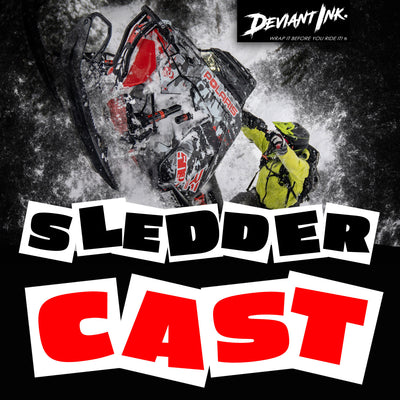
We sit down with Nels Eide, the guy steering the marketing ship for Polaris Snowmobiles, and pull the curtain back for a little peek at what goes on at Polaris HQ.
Recorded live at our booth at Hay Days, right after we announced Deviant Ink as an officially licensed Polaris graphics provider.
Guest
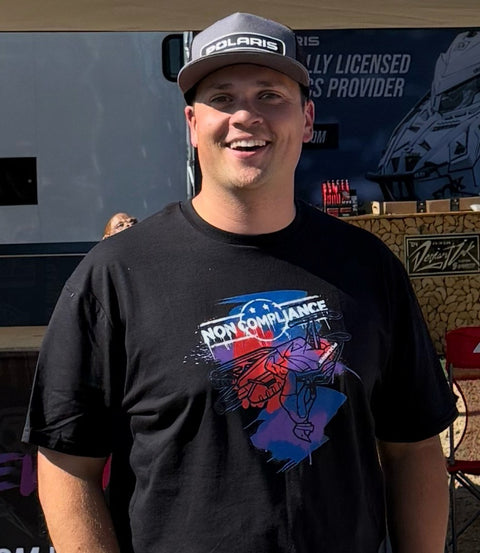
Nels Eide
Nels leads marketing for the Polaris snowmobile division. He's been at Polaris 8 years, including three as a product manager on the engineering side before moving back to marketing in 2025. He grew up racing cross-country sleds, got his start through the Clean Snowmobile Challenge at the University of Minnesota Duluth, and originally trained to be a social studies teacher.
Show notes
- 2:00What Nels actually does at Polaris, and why the sled division runs like its own company
- 10:47Six goosenecks, six one-tons and almost 100,000 miles chasing snow in one winter
- 15:20The most controversial decision Polaris has made in years (it's the 9R, and not for the reason you'd think)
- 18:45Can a snowmobile even get any better?
- 22:34What it's like having to issue a stop ride
- 27:47How Polaris really looks at Ski-Doo, Cat and Lynx
- 35:15How Polaris decides who to sponsor, and what actually gets you noticed
- 42:32The Kyle Saxton story from last season
- 50:47Rapid fire: his all-time favorite sled, and why the 9R head is painted blue
You can go on Facebook Marketplace right now and buy an 800 Axis for 4,500 bucks, clean the clutches, put some plugs in it, tighten the track, go on your buddy's trip and have a hell of a time.
Win a free custom wrap
Drop your email and what you ride. We draw winners all season and announce them on the show.
We got a lot of funny looks. We're like, here's a 900. They're like, 900? Really?
Questions answered in this episode
How many people work in the Polaris snowmobile division?
About 100 to 150 on the engineering and business side, by Nels's count, mostly in Roseau, Minnesota. Another 15 to 20 work out of Minneapolis on sales and marketing, and the manufacturing crew is on top of that. 2:00
What is the Polaris 9R?
A high-end 900 two-stroke, no turbo, that runs on pump gas. Nels calls it the most controversial call Polaris has made in years, because nothing else on the market lined up against it. 15:20
How does Polaris decide who to sponsor?
They want long-term partners. Some riders Polaris goes after, some email in. Either way the question is what that person brings to the team, not just how hard they ride. 35:15
How do you get sponsored by Polaris?
"We're not a football team," Nels says. Riding is part of it, but Polaris looks at who you reach, what makes your content different, and whether you're good to work with for years. 38:50
Is Polaris building an electric snowmobile?
He wouldn't say. Polaris starts with what riders need instead of picking a technology first, and nothing's ruled out. 32:25
We're very much behind the scenes united in snowmobiling, while also going to the racetrack and slugging it out with not a lot of love lost for the others.
Full transcript59 minutes · 18 sections
Read it
Lightly edited for readability. Click any timestamp to jump the video to that moment.
0:00 Intro
All right, everybody. Welcome back to another season. This is now season 3 of the Sledder Cast podcast where I can't believe we're back here at North Branch, Minnesota, Hay Days. And it is chilly. Feels good.
I mean, feels kind of feels like winter a little bit, don't you think? I think we're going to see some 30° temps over the next couple days and we're probably going to get a little bit of rain during this episode, but we'll just truck right through it. So, you're probably familiar with who we have today as our guest. We've got Nels Eide. He is the marketing manager for Polaris snowmobiles.
Super pumped.
0:45 Announcement: Deviant Ink is an officially licensed Polaris graphics provider
We've kind of dropped a little bit of news about us at Deviant Ink becoming an officially licensed graphics provider for Polaris. Kind of a new deal. It's been I mean, it took a long time for us to get to that point and I'm really stoked. I know as our company here, it's the results of a lot of hard work that goes in. I'm under the impression that Polaris just doesn't, you know, pick some random, you know, graphic companies, you know, in Rexburg, Idaho, to you know, be able to put a an officially licensed tag, you know, on graphics.
So, it means a lot to us and it just makes us want to work, you know, even harder to pump out good quality graphics.
Yeah, cuz who doesn't like graphics, right?
Exactly.
We're stoked to have you. Like I say, it doesn't Joe Schmo's graphics company doesn't get to be an official sponsor or partner, excuse me, of Polaris. So, we're excited to have you guys.
Awesome. So, we've got a lineup today, ladies and gentlemen. We've got a lineup of questions and selfishly a lot of them are just stuff that I want to know, you know, from Polaris and get to know a little bit more about Nels and kind of the program of how Polaris operates the snowmobile department.
2:00 What does Nels do at Polaris?
So, as we kick this off, why don't for those who, you know, haven't seen some of the videos on the Polaris YouTube channel, like tell us about Nels. Like, what do you do? What is a normal day look like for you at Polaris HQ?
Yeah. yeah, so I'm the marketing manager for snowmobiles, like you said, so lead the marketing department for our entire snowmobile business. it's super varied. Like, every single day is different. we got a small but mighty marketing team that works just on snowmobiles, so we got a group that's dedicated just to sleds all year round. and we're very seasonal, right? Like, in the summer we're doing a lot of planning. We run the fall events here. We've got athletes, ambassadors, all kinds of partnerships.
We get into the winter, we're shooting content, we're getting dealers out on rides, doing all our best, and then we launch again in the spring, and the machine just keeps on moving, but yeah, we run, you know, at Polaris, something people might not know is we have kind of these very specific divisions. So, we have a snowmobile division that's almost like its own mini company inside of Polaris. And so, we've got a team that's all we do is sleds all year round, dedicated to snowmobiles, so.
Nice. Yeah. As far as show, you know, show is starting show season right now for the snowmobile industry, do you do I know like you we'll have dealers that kind of you work through at various shows. We used to see a lot of them on the shows that we go to back in our neck of the woods. As far as like Polaris proper, like Yeah.
What other shows do you guys do?
Yeah, we're actually going to back to more this year kind of as what we call Polaris corporate or like the big marketing the semi and the whole deal. So, I think we're going to be at nine or 10 of the big ones across US. So, we do I think we're doing five or six in the US and then three big ones in Canada.
Nice.
So, trying to get to more, trying to bring the semi out to more, and getting get with more people, more riders, and just visit with some more people. And then like you say, some of the smaller shows work with the dealers, especially ones later in the year once they got new sleds and make sure that no matter what show people go to, even if it's Hay Days or Epping or Toronto, a big one or a small one kind of in their hometown, they can see the new sleds, so.
Awesome. So, what is it you know, give us kind of paint us a picture if us as listeners, if we're walking in our first day at work at Polaris HQ, like what is the feel or the vibe like in there? You know, I have no idea if there's like 10 people who work at HQ and everyone's remote or if there's like, you know, 150 people who are all there with a few people remote, you know? Like how does that What does that look like?
Yeah, so the bulk of the team's in Roseau, Minnesota, like a vast majority of the people that work for the snowmobile division work in Roseau. All of our engineering is there both on the chassis side and then powertrain team, pretty much everybody's there. Obviously, manufacturing's there. then we've got a small group of probably 15 or 20 down in the cities in Minneapolis that kind of our big corporate. that's more like sales and marketing and stuff like that. And then we got a few people spread out around the country, but it's smaller than people think. so I think maybe about 100 150 people. and it when you walk into the Roseau facility
Oh, like 150 people at HQ, not just in Polaris snowmobile on the Polaris snowmobile line or Polaris snowmobile?
Polaris snowmobiles, yep. So, if you kind of manufacturing, you know, they've got, you know, the assembly line and stuff, they've got a big staff obviously to run the line and all the back shops, but I'd say on the kind of engineering business like snowmobile division side, 100 150 would be my guess.
Awesome.
It's smaller than people think and when you walk into the Roseau facility at it's half of it's a shop. Yeah. It's a giant shop next to a manufacturing building. Then we've got offices, you know, a big CAD desks that have got CAD and simulations and all sorts of stuff on the computer and it yeah, it's a pretty cool environment.
That's cool. you just had Kesterke out there like literally like 3 or 4 days ago or maybe last week. Yeah. So, that will give you kind of some time frame of when we're filming this. But, yeah, I think it's cool when you guys bring athletes and ambassadors out to kind of check the shop out, you know?
Yeah, they always enjoy coming up. you know, and we obviously got you know, a sled reveal with Caleb here this weekend on Saturday. So, he's getting a little sneak peek at that when he was up. something. Yeah. but yeah, it's fun. You know, I like to say it's a very family environment for being a really big company. I don't know if you drink Sierra Nevada beer, but on the can of Sierra Nevada beer it says family owned, operated, and argued over.
And that's like the best way I've thought of to describe our team.
Awesome.
You know, a lot of people have been there a long time and there's a lot of pride. So, we argue a fair amount and we enjoy working on new snowmobiles together.
Yeah. you if like you can tell you have a healthy relation working environment when you can be in a board room or in a meeting and you can have it get heated, right? But then still be able to go out and hang out and be like remind each other I actually I like you know, like we like each other, right? For sure. So, that's a like that's a good relationship when you can have those kind of hard, you know, the hard meetings and decisions, but still, you know, have a kind of a family environment there. So,
Yeah, we like to say we can't do it can't do it alone. You know, building the new building a new snowmobile platform new engine whatever it is. it takes all of us. And so, we have to work together and that comes with some good disagreements sometimes.
7:25 What's the innovation process like at Polaris?
For sure. For sure. So, you know, speaking on, you know, building you know, new product and new machines. One thing I think that I think is super interesting for like the general population is innovation. And we'll get down to like, you know, the Matryx chassis and talk a little bit about that, but what goes in like when you guys decide to innovate on something?
What's that process like at Polaris? And I'm pretty sure you're working years ahead, which kind of throws a whole another matrix into the thing, but like when you guys decide to innovate on something, where does that kind of where does that birth from? Where does it start?
Yeah, it comes from a lot of places. where we start, we have a it's almost like a philosophy for each one of our snowmobiles of how the snowmobile should work. No matter what, this is our very much our philosophy of snowmobiles. So, we use our RMK as an example as far as most relevant to your crew, right? It's lift control and response. It's been that way for 30 years.
The RMK needs to lift itself up out of the snow, respond quickly when you make an input, and be easy to control all day long. And so, when we innovate, it always starts with making one of those things better. And when we go and build a new we don't just jump to we want to do new running boards. We say like we did last year for RMKs, we didn't just jump and say we want to do new running boards. We said we want it to be easier control and lift out of the snow better.
Well, we know ways to do that are make the sled lighter, make your make it easier to put your body where you want them. So, on a running board, make it easier to put your foot where you want it, which means less snow build up. And then, easier control, you get the sled up out of the snow with less drag. Then, we start to work on, okay, how are ways we could do that? Running boards were an opportunity.
We did some prototype work and we worked through the analysis and all the work that has to go, but it does start with the customer. I think that's something that people maybe don't always believe or it's easy to think that it's not true, but we sit and argue over what the customer wants. Yeah. What does the rider want? What do they want their sled to do better when they're out on the hill or on the trail or working with their sled, and then it really does flow from there. what where the kind of meat with that is like we're always building stuff in the shop.
And so it's a kind of this dual path of whether it's racing or just building cool protos or whatever it is. And then when we kind of bring those two together, that's when you see things like say those new running boards right that came out last year. So
Now you guys you're building in and prototyping this stuff in the Midwest and there's a segment of that stuff that is, you know, trail riding but a lot of the I mean Rocky Mountain King didn't just get, you know, that name just didn't get made up, right? So like Correct. your mar- a big segment of your market is out west but you guys are Midwest. Yeah. if you built something prototype something in the summer, you can't really get direct input, right? So is there a lot I'm guessing there's a lot you have a lot of athletes and partners out west where you're tweaking something, dialing it in, sending it out, get some input there? Like is that kind of how it works?
Our team spends an insane amount of time on the road. our engineering team gives spends a lot of days away from family. I think last year I had 53 days on the snow and I was not even close to near the top of what some of these guys are doing. Kind of a fun fact, so our engineering team, we have six matching gooseneck trailers and 1-tons. Every kind of subgroup has their own trailer. and last winter those six trailers did almost 100,000 mi in the winter. So we've got little kind of shops or base camps all over and then we hit the road.
And that's different than you know how some others do it. You know, other groups where they've got a western home base and an eastern home base and what we believe it's more difficult to do it we think the way we do it. but you have to go find all the snow. Yeah. we just and you know, you just ride in Teton Valley, right? You know, that's all you do is you just ride there. It can work really well, but you got to go to Chris's and make sure it works at 13,000 ft when you can't breathe.
You got to go to Alaska, make sure it works at sea level. Got to go to Scandinavia, make sure it works in the weird snow they like it really is all over. So our home base is in Roseau, of course, but we spend a lot of time on the road. and when you really stretch the geography, you can stretch the season. Right? So we're in Alaska in November and we're still in the mountains in May.
And so it does give us a little bit longer year, but it's a lot of time trying to find all the little bit of snow we can.
Yeah. And the other kind of equation you got to throw in there is like you can't there's a certain amount of months of the year where there is snow on planet Earth, right? And sometimes there's more and sometimes there's less. And so there's so many you know, variants that play into that. So
There is and we have to plan, you know, like we talk about right like if you're going regardless, like it's going. And then when it comes to April, May it's time to make some decisions cuz you can't just order another set of parts and try it again in 3 weeks cuz the snow will be gone. So it's a hard element. Obviously, I'll you know, us Ski-Doo cat we all deal with it, right? Like they don't have a magic snow factory where it snows in August, but yeah, it's part of the challenge.
12:55 How Polaris sees the future of snowmobiling
That's cool. the last couple years it's not no secret, right? Like the snowmobile industry has seen a bit of a down tick. Right? Just a lot of factors played into that. Inside Polaris, like how are you guys viewing and what do you believe the future of the snowmobiling industry to be like?
We're pretty optimistic on it, for sure. we make it really like we love snowmobiles at Polaris. Like we love the snowmobile division as a corporation. it is a huge part of the company, right? It's we like to say it's kind of the heart and soul of Polaris in a lot of ways. And so, we love the snowmobile business. We're very confident in it.
I would say over the long term, obviously it's a challenging environment right now. what we've really focused on and we've been very vocal about is managing this time appropriately, making sure we keep our dealers healthy, keep our line healthy, you know, kind of balance Polaris overall. when you look out over the snowmobile industry over the last 71 years, right? Like there's a lot of these. obviously the last 5 years with, you know, everything going on it's been a little different, but we're very much focused on navigating the current situation to make sure we're in a good spot on the way out, both us and our dealers.
14:20 What makes a healthy dealership for Polaris
Yeah. you mentioned something about keeping our dealers healthy. You know, for those who maybe aren't that familiar with how the dealer, you know, the dealerships run, what makes a healthy dealership like from Polaris's standpoint?
Yeah, that's a good question. you know, we obviously can't share all the details. you know, we've said, you know, in kind of public statements and stuff like our focus as a corporate or as a company is dealer inventory levels. you know, we want the dealer to make sure that they've got a comfortable inventory level that is sustainable for them. Yeah. Yeah. you know, a lot of our dealers are long-time dealers, and so they've, you know, they've been around for a long time and have seen some of this. but our focus is really maintaining that inventory level. Well, that's kind of the core health of a dealership in a lot of ways. right there, yeah. and that's the one that, like I said, we've shared publicly, that's a big focus for us. So, yeah.
15:20 The most controversial decision Polaris has had to make
Okay. the last couple years what's one of the most risky or like controversial decisions you guys have had to make at Polaris?
That's a good question. What do we got here? What can we share? I would probably say 9R and not for the reason that people might think. Snowmobiles are when you look over the last 70 some years of snowmobiles, it's very odd how closely we have all followed each other in a lot of ways.
Right? you know, you look back at the 2000s and all three of us went big bore at the same time. Like literally as a group. And then we everybody went back, you know, to smaller displacement, lighter weight. you know, obviously us and you know, BRP beat us to the turbo punch by a year, but and there's a little bit of comfort in that in some ways cuz it's such easy comparability. You can compare pricing. Like you just know where you stand. 9R was I mean, technically a big challenge for us.
It's a 900 RMSHA engine that runs on pump gas. Like that's literally what it is. That's a not an easy thing to put out in the world. but then also it was in kind of a league of its own, right? It kind of sits off by itself. We have an 850.
They have an 850. They you know, Cat's got an 858. Like they're all right there and then we just threw this 900 out there that's pretty expensive. It's got some crazy high-end parts in it. We thought it ripped really hard, right?
Everybody that rode one loved it. So it was unique and I think challenging from a something different to the market. It doesn't have any real comparables. Like I say, it's a really high-end NA two-stroke. It's got a lot of high-end parts in it and we wanted to make sure that it worked how good our 900 improved engines worked.
You know, obviously it doesn't have twin pipes on it as much as we all wish it could. But everything else is literally the same. Yeah. And yeah, it's a for a lot of ways it was a challenging interesting one to put out in the world. We're happy with it, right?
It's been awesome. Everybody who rides it usually loves it and we're super happy with it obviously, but it was an interesting one to put out there. We got a lot of funny looks when we came out in kind of the you know, pre-launch stuff with press and athletes. We're like Here's a 900. They're like 900?
We Really? What? Like what are we going to the mold here, guys. Let's go on. kind of different. So yeah.
Yeah, it was an interesting one.
Yeah. No, I could see I can totally see that. You know, there's wasn't a blueprint there, right? To kind of model off of and so you kind of setting that blueprint up, but No, we've we're big fans of We've got my 9R over there. I choose that over my over our boost.
So Mac takes the boost on days when it's just like you know, it's like the perfect weapon. Unless you can guarantee, you know, 3 ft of pow every day, like take the boost if you can guarantee that, right? But if not, like this thing is so fun. So capable.
Yeah, you're kind of going back to like you know, one of your first questions, like how do you guys decide to innovate? You know, with RMK's, it's lift control response. That 9R makes all three of those better. Yeah. It hits quick.
It lifts up out of the snow faster cuz it hits quicker. It's lighter. It's got more mid-range. Responds faster. And then it's easier to ride.
Yeah. Like it makes the vehicle feel lighter because it responds quicker. So Yeah, we're happy with we did it, but it was that was an interesting one to work through and put out in the world.
18:45 How can you keep making snowmobiles better?
Yeah, I know you can't talk much about like, you know, what kind of stuff's coming next and I wanted to talk, you know, we look at the Matryx chassis and with all chassis, there's you know, there's some kinks you got to work out. That's a pretty sweet chassis right there and like I think as a industry in general, you kind of look at the machines and you're like you know, take the outliers out, right? How can you possibly make this machine better? You know? Like So like as you as we look at the Matryx chassis, like
Deviant Ink: Hey guys and gals, if you love the show and want to support us, head on over to deviantink.com. Use the code sleddercast, save some money on your next premium custom wrap. If you've spent any time on is the best, easiest custom wrap builder tool out there. With its new interactive design tools, makes designing and customizing wraps super slick. We're big fans of the new color mixer tool. It randomizes colors until you land on the perfect combo. The design mixer tool is a game changer when you already know what colors you want and you want to see all of our designs in just your pre-selected colors. So, head on over to deviantink.com, use the code sleddercast, save some money on your next wrap purchase. Let's get back to the show.
Like, how do you make How do you guys think about making that chassis better?
It's a good question. It is something that challenge is so unique in snowmobiles because there's nothing else like them on planet Earth. you know, when we look at motorcycles or you know, I think rec side-by-sides are the perfect example, right? Like RZR's and X3's, I mean, the performance they're pushing is crazy, but there's also class 10 cars and trophy trucks and pre-runners and there's all this stuff that's bigger and arguably maybe pushing some more, right? Just cuz it, you know, trophy trucks are million-dollar builds, right? So, they can do anything.
And so, there's a lot of things you can look for with snowmobiles. They're like the most unique vehicle on Earth. Yeah. And when you go talk to snowmobilers, a lot of them say what you said, like, "Well, this thing's awesome. How do you make it better?" We kind of think about it in two different ways of thinking. where you know, we consider the chassis kind of like the foundation of the house, like the frame of the house, and you got to get that right. and we think we did with Matryx.
But the fun part about how we've done it is we can keep kind of remodeling a room at a time or doing addition or something like that with things like suspension, power train, technology, things like that. across the whole line. We launched new Voyagers and the Voyagers probably aren't super cool to a lot of people that watch this, but they're built on the same platform as like a XCR. And we were able to build a really cool rec sled that does things for, you know, that audience and those riders that they've never been able to do before using the same foundation. So, the Matryx foundation is awesome. we've done a lot kind of on top of it when it comes with, like I said, suspension, power train, things like that and we got more in the barn for sure that we're working on. but it's a good foundation of the house.
So, there's been some there's been some chatter online about some IP that I don't know how long it was launched. I don't know if like it's that's public, right? Like some carbon fiber frame side panel. I forgot what I saw. There was a IP release.
A release, okay. Yep.
So, the way patents work is once they're approved after a certain amount of time they're released to the public. Okay. and I think that's all I'm allowed to say.
Okay. So, you want to go Google that I guess they can go Google that, right?
That is how like I said, that's how patent applications work in the US and
Well, cool. Yeah, so go Google that. That's all I'm allowed to say. you'll find it on Facebook somewhere. Yep.
22:34 What it's like issuing a stop ride
There I have kind of an interesting question here. not sure what, you know, how much you can share on it. when you guys have to issue, like I can only imagine being on your side. When you have to issue a stop ride or a recall, you know, or something like that's a huge deal. Right? Yes. I'm trying to put myself in your guys' shoes and I'm like this sucks.
This is a bad This is a bad time.
They are Yeah, they are very significant.
And like what goes into having to make that decision public?
So it's two pieces. Yeah.
On. Let me pause it cuz I think a lot of us what we're thinking is like, "Hey, someone you know, wrecked or went off a bump and then the handlebar jabbed me." And there's maybe one person who that happened to and now we all have to take our sleds in and get you know, get the new handlebar hooks, yeah. hooks, yeah. So that's kind of like Yeah. Yeah, I could be way off in that assumption, but I think a lot of people kind of feel like that you know, think similar. But like so what goes into
Yeah. So we it would shock people how what we call it post-sale surveillance. It's a fancy term for basically saying like understanding what's going on in the world with our products. People would be blown away if they knew how much data and insights and like monitoring we're able to do through our dealers and warranty and things like that, but also like our team is super connected. Like we try and know everybody in the snowmobile world to know what's going on.
So we're very closely watching for all kinds of feedback inclusive of potential issues like that. we have taken a route of being very focused on if there's an issue, we're going to make it right for all of our customers. that's very important to us. So that is our position as a organization. if we have an issue, we're going to own it. We're going to take care of it. Yep. cuz that's our commitment to customers. The other side of that is that as an American company, we American manufacturer, we work with CPSC and we follow their process.
And so we are very committed to like I said owning those issues and making them right. When it comes time to do that in a public way, we follow the CPSC process and that has depending on the situation kind of defined guidelines that we follow and that's what customers see when we you know put out an a notice like that whether it's simple as a bulletin like just an awareness piece or all the way to something like a stop ride stop sell recall whatever it might be so. Yeah.
That makes sense. Now I mean it takes I'm guessing it takes a lot of the guesswork out when there are those guidelines of like we're we've entered this protocol. Here's the blueprint and the guidelines of what we have to do next so. Yep.
25:45 How to make SnowCheck great again
Awesome. well not awesome. Those stop rides suck but good to hear kind of from the inside of how Yeah. how those things work out. SnowCheck I know there's kind of been some interesting conversation among you know for all OEMs. Yeah. how do we breathe life back in I once again another assumption coming from me but how do we breathe life back into the SnowCheck program? Maybe I'm wrong there but maybe you guys you know what's your perspective?
You know SnowCheck is you explain SnowCheck to somebody who's not in snowmobiling and they're like what? Why do you do that? Like what are you talking about? Like even like you know our counterparts that work in you know off-road or boats or something we're like yeah so we're going to we're launch our sleds and our customers get like a month to order them but we already like ordered the parts cuz the lead times are so long so we're like kind of already building them and then they're going to order them and then they're going to get them later and it's just it's incredibly unique to snowmobiling. for Polaris right SnowCheck specifically like over the last 30 years it's evolved a lot. It is ebbed and flowed to kind of meet where everybody's at the industry's at.
You know when we have crazy new products like 850 or something like that right you know that's different than maybe a year with not as big a news. So, we're always talking about SnowCheck. Yeah. Like we absolutely do not just say, "Yep, this is how SnowCheck works at Polaris." And we do it every year. Like we're always evaluating it and trying to use it to our advantage. and I think, you know, my speculation is that the guys in the yellow and green trailers are doing the same thing.
Yeah. it's been challenging the last couple years just with how the industry is, of course. you know, coming from where it was a handful of years before, but we're always working on it. Like it's not a it's not necessarily a set in stone thing for us. We're always trying to make it the best we can for customers, for dealers, give them best opportunity to get the cool sleds, get some value out of it. So.
Got you. Yeah. Okay.
27:47 How does Polaris view their competitors?
Speaking of the So, we're looking at like all the OEMs right now. I've got Ski-Doo, BRP, Polaris, and then an Arctic Cat is down there. how does Polaris look at your competitors? Like Yeah. You know, like I'm curious what that Yeah. that looks like.
That's one of my favorite parts about snowmobiling. So, I've been at Polaris 8 years now. and I grew up racing cross country sleds and riding snowmobiles all the time. Like I've snowmobiles have been my life. And on the outside I was always thought like, "Oh man, they must just slug it out, you know." we love competing, but there is I think there's a ton of respect between the three. we spend a an automatic amount of time together every spring when we go out to snow shoot, you know, which is our magazine event. Like we all get to ride together and visit a little bit. so, I'd say we're very much friendly competitors, but collectively focused on snowmobiling.
Most customers Most riders don't know this. We have a really strong Manufacturers Association. So, it's called ISMA, International Snowmobile Manufacturers Association. It's us, Ski-Doo, and Cat, and BRP with Lynx. And we together on all sorts of stuff.
Land access, snowmobile litigation for both US and Canada, you know, different laws and things. With, you know, the government trying to, you know, make sure snowmobile access is okay. We work with the state associations. We have an annual kind of congress of all the state associations talk about snowmobiling. So, we're very much behind the scenes united, I would say, from my perspective, in snowmobiling and kind of promoting snowmobiling, while also going to the racetrack and slugging it out with, you know, not a lot of love lost for the others.
So, it's a ton of fun. I've gotten to know my counterparts at Ski-Doo, Lynx, and Cat a little bit over the years and a ton of respect for them. They're just a bunch of other people that really love snowmobiling. So, Yeah. it's fun.
So, when you guys are out west, you know, doing the snow shoot stuff, are you like texting each other and be like, "Hey, we our crew is going to be here. You go somewhere else." Or do you just sometimes end up in the same places? Like when you're out, you know, getting foot you know, content of the new Yeah. the new units.
Once in a while you'll walk in you'll walk into breakfast in a little town out west and see the Ski-Doo or Cat gang and say hi, but seeing you guys here. there is so many tiny I mean, when it comes time to do development work or shoots or something, there's I mean, you know, there's a million and one little parking lots all over the west. So, yeah, we generally give each other space. But the snow shoot event, we all purposely come together and all the magazines come and we ride together. So, that's always a That's cool. fun one.
30:14 What truly makes Polaris different
What makes Polaris different? I mean, obviously you're biased. Yeah. And that rightfully so. Right?
Yep. But you know, what does truly make Polaris different?
Yeah, we talk a lot about authentic design. And that's I think the thing that makes us the most different. we when we innovate, when we build new products, when we work on the sleds we have, we always talk about is it going to make it better on the snow? And one of the ways that we characterize that is no gimmicks. My old boss used to say that. He's retired now.
He always say, "We're not just going to do it if it's a gimmick. We're not going to do it cuz we think people think it's cool. We're going to do it if it makes a snowmobile better." Whether that's a Titan backing up in deep snow or boosted RMK going straight up the hill, XCRs in the rough, whatever. So, I think that we I think that our sleds have a little bit of a edge of authenticity to them in that they just work. in the conditions that they're for, they perform every time and there's nothing on that sled that's distracting that doesn't actually need to be there. There's not bodywork in the way of where your body should be.
It's narrow, it's compact, it's easy to move around, it flows with you, and it's just built for you. And I think that We talk about that a lot internally and I think you can see it in elements of our sled. Yeah.
32:25 Polaris talks electric snowmobiles
And kind of riffing off of that and going into like the future and the progression of the snowmobile, especially from Polaris, share what you can. Hopefully, it's a lot. Everybody wants that. Like I have down here electric I mean, so we all know obviously mountain sleds are trying to get lighter, more power to the ground, lighter, right? But the electric thing, it's kind of like this thing where it's like so many things are going electric.
We've got our e-bikes out here that we brought with us. Yeah. they're so fun. They're so quiet. Yes, you know, does the snowmobile community want that? I'm curious when you guys are looking you've got your board, right?
Of the blueprint or the road map, how much of that board is sectioned to electric sleds? You know, we
I think what I can say here. kind of like I said up front, we don't decide the solution. We don't start with the solution, right? An electric snowmobile is a solution to a problem. Yep. We don't start with a solution.
We start with what the customer needs. What does the rider need? obviously as Polaris as a whole, we're working on electric. We have an electric Ranger that's, you know, been out for a while. we've, you know, announced some electric partnerships we've done. We've been doing different stuff over the years. but when it comes to snowmobiles, we start with that solution. or excuse me, we start with what they're looking for and then work towards the solution. obviously BRP's got electric snowmobiles out. they're pretty cool. There is some, I think, pretty significant, from my perspective, just significant limitations to what the sled can do. that I think in its current form would struggle to satisfy a lot of what those people need. but we don't rule anything out.
You know, the example that I have used for myself over the years, you know, the we the old guard, right? That Polaris I mean, there's people worked there their whole life, right? And that the knowledge is just incredible. And one of the older powertrain engineers who's still there would remind me about when they built the 700 RMK in '97. And the way he says it is, everybody was building triples.
Everybody and their mom was building triples. We were they were cat was doing like was triples. And when we went and spent time with those riders in the deep snow, right? Mountain riding wasn't even really that much of a thing in '93, '94. What they wanted was a sled to go through the snow better.
And that means it needs to be lighter and faster response. So, we built a lightweight twin. Everybody was building triples, and we bet the farm on a lightweight twin, and it obviously worked, right? I that RMK 700's up on the Mount Rushmore of Polaris snowmobiles we've ever built. But that's the an example of that spirit of like the solution there would have been well, maybe we could take some weight out of the triple or we could, you know, do more pipes or whatever it would be, but when you back up and say what do they really need?
Yeah. Let the solution come from there and that's how we think about all product development inclusive of Yeah. power trains like that. So
One day maybe we'll get a more clear response, but I mean there's companies out there and obviously like we're in out in the west and Yeah. you know, like it's scary to hop in a electric vehicle now and try and drive anywhere. The anxiety of like am I going to make it? You know, is there a station there to charge up, so I will wait and see. Yeah.
35:15 How does Polaris decide who to sponsor?
Let's get into like kind of like the marketing and sponsorship thing. how does Polaris decide? So you're you've moved to the marketing manager how many how long ago? Eight months?
This summer, yep. Yeah, so I started at Polaris in marketing sales and marketing and snow team and then spent the last 3 years more on the engineering side. Product manager is what we call it. Okay. And then I've been back with the marketing gang since May.
So, how does Polaris decide who to sponsor? That is a very loaded question. Do you go do you enforce it or do you know applications are coming in? Like are you more proactive or like how?
All kinds. there are some that we have gone out and pushed hard on. you know, I think if you pay close attention, you can probably decide which ones those are. you know, if people are riding a different brand or they're on a different program. There have absolutely been ones where they kind of come to us. You know, there's been a couple again, can't name names, right? But there's been a couple where we get the email and they're looking for a ride and we're like oh What's going on here? This will be awesome.
Like I didn't think they'd be interested in riding for us. So, it's all kinds. I would say our approach to sponsorship overall is we're looking for long-time partners. You know, when we're looking at sponsorships, we're looking for people who we think want to be have an opportunity to be a part of our brand. And it sounds cheesy, but like our family for a long time.
And you could can see that, right? Like, you know, obviously we pushed hard on Chris, you know, back in 2010. He was a cat guy, right? I mean, through and through. but we when we worked with him throughout that winter, obviously it was before my time, but you know, when the team worked with him that winter, it was there was a long-term partnership there. And obviously that's grown.
You know, you look at Levi and Dan and some of our longer-term athletes. So, I think the other thing we're always looking for is what do they bring to the team? And not just like the team, kind of our athlete team, but just Polaris overall. You know, we're always looking for different locations, kind of new faces, people who think about sledding differently, you know. Caleb was a great one.
Like, he just brings a totally unique element to our crew. And how he rides, how he does content, just who he is as a person. so, yeah, it's a lot goes into it. Yeah. it's probably obvious to say, but we can't sponsor everybody. And that sucks sometimes that we got to pick and choose, but yeah, we're focused on good partnerships for us overall for a long time.
TREYL: All right, guys and gals, TREYL is one of our newest program supporters here at the Sledder Cast podcast. You can find them at treyl.com. They are coming in hot with all of the goodies, all the backcountry essentials. A few of our favorite must-haves are the Grizzly folding saw with the razor-sharp teeth that plow through those pesky branches with ease. Also, the lightweight ski pull strap, a real back saver when your buddy needs that seven pull of the day. And of course, a TREYL Hot Pot exhaust cooker because hot meals are way better than cold meals in the back country. So, head on over to treyl.com. That's t r e y l.com. Grab your exclusive Sledder Cast promo code in the description below. Let's get back to the show.
38:50 Tips to get sponsored by Polaris
Okay. So, if I'm that guy or gal and I'm seeking some sort of sponsorship or ambassadorship, right, with Polaris. Are there, you know, a few couple things that you can, you know, clearly say, "Hey, if you can get really good at doing these few things, it'll give you a really good shot. You know, it'll point you in the right direction."
Yeah. I The way I'd say it is everybody's got an Instagram account now. Everybody's got social media. Everybody's got a YouTube. I think the piece that I personally am always looking for is what makes them a little different, a little unique.
What do they bring to the team? I think another misconception out there is it's not just how good are you at riding. it's not We're not a football team. If you don't It's not that oh, I did a bigger re-entry than that guy. How come I'm How come I'm not sponsored, right? Like, we're not a football team where if you played better than the guy in front of you, we're going to put you in. you know, on the marketing side.
Racing, that's Yeah. That's kind of over here. We're here to win races. But, as I said on the marketing side, I think that's something people think like, "I just got to get good enough at riding and then I'll be in." And that's obviously an element of it, but you know, who do you reach? do you have a little segment or an audience or a different group of people that is unique to you? Do you do something different that makes you unique?
I think in the age of we call it the sea of sameness on social media. After a while everything starts to look the same, right? How do you how do you break through with that? but also being a really good person. Yeah. Like that's Like I said, we're looking for long-term partnerships.
Like that's a big deal to us. so you got to have all of it.
Yeah. Well, that's good. We I had a really good last season we had a really good episode with Dustin Pancheri with Klim. Yeah. and we went over like the 10 things not to do if you want to get sponsored. And Dustin brought you know I brought you know some good stuff from like you know our perspective at Deviant Ink.
Klim has you know the kind of their list of things not to do which a lot of that probably bleeds through or across you know from Polaris. sure. But you know, check that episode out if you are curious. I think there's you know some really good guidelines as far as just don't do these things. Like there's some things just don't do it. Like you can choose to publish it or not or say it or not.
And you know if you were seeking to do some of those things like just don't do it. Like let sit on it for a day or so and see if it's you know if it's still heavy on you. Like you want to do it but
Yeah, it you know this is my own perspective. As the OEM, you know, as an OEM there's a little bit of there's an extra level when it comes to a partnership. you know, there's a ton of aftermarket companies, right? Obviously. And you know, when they sponsor you know, get somebody discount or kind of an entry-level sponsorship. there's just more kind of more everyday, right? Like okay, yep, yeah, cool.
I got you know, I got to deal with you guys or got to deal with somebody else. when it goes to the OEM level, it's just there's another level of expectation. and so that's why like I say we're pretty picky. Yeah. when especially when it comes to like big-time partners, you know, we just brought Kyle Pulsipher and Ty on to the athlete team and we're super stoked to have them, but that didn't happen overnight. you know, Ty and Kyle in their own way have been a part of the Polaris Crew for a while. and they didn't just we didn't just see him on Instagram and call him up and offer him a deal. That's for sure.
Yeah, got to put the time in.
42:32 Kyle Saxton
I had to set Nels this one like in advance. Obviously, you've probably seen episode we did last season with Kyle Saxton. and we had a good conversation. he we chatted about an instance where he was out with the Polaris team on a ride. had some unfortunate things happen. felt like Kyle was pretty respectful in kind of his, you know, storytelling or recalling of that event. And what a lot of people don't realize is cuz we just posted that real like a few month or two ago. Yeah. That didn't happen this season.
It happened last season. So, it's almost like it's like a year and a half ago. So, a lot of this stuff, you know, was going on and there was some kind of crazy comments that really kind of took off. Kyle's video of the you know, one of the big things he did on there blew up. So, just kind of a lot of attention that was thrown there.
I thought it would be maybe helpful or just interesting if we could get a little bit of Polaris, you know Yeah. Yeah, you bet. on that and a lot of it is me cuz like I wasn't trying to like purposely, you know, put throw shade. Like we're an official graphics, you know, licensed graphics you know, provider for Polaris. So, Yeah. but I was curious like you know, what does Nels, you know, what's kind of his perspective there and like how would he address or respond to
Yeah. Yeah, I was there that day. Like I was with him on the ride. you know, I can't contract-wise and honestly out of respect to Kyle, like I'm not going to talk about that. he was an athlete, not anymore. but we're good with Kyle. Like, you know, I think, you know, even though he's not on the athlete team, kind of like I said, we have a lot of sponsorships that people don't see. It's We sponsor a lot more people than just the 10 people that are big Polaris athletes in different ways.
So, Kyle's still part of the family. We sponsor him with some sleds and some parts and, we're stoked to have him ride Polaris. Unfortunately, for a lot of reasons, not just, what I think the comment section thought it was, not on the athlete team anymore. But, like I said, we're stoked with what he's doing. the Ride Fast stuff he's got going on is awesome and we're you know, we're still sponsoring him, just in a different way. So, that's there, but I'm good with Kyle.
Like, we're good. He's riding our sleds. We're good.
I think with the poor job that video did was it made it seem like it were there was a direct cut off. Like a you know, snap right there. Just a
It's never that easy. It's never that simple. like I say, we're I just said, right? We're looking for long-term partnerships in all of our partnerships, not just the athlete team, but organizations we partner with, whoever it is. And so, we don't make rash decisions on the back end when that's what we're looking for. but yeah, like I said, we had a lot going on. Obviously, the snowmobile industry has had a lot going on.
Kyle, you know, not part of the official athlete team anymore, but, yeah, he's 26s will be shipping to him. Like, he's still part of the part of the crew, in a different way and we're excited to keep sponsoring him.
Yeah. I've kind of wanted to read a few of these. And part of it's like I'm curious what you guys, you know, on the other side of it cuz think about Sledder Cast, all right? Like, when you see this kind of stuff cuz, you know there was hundreds of comments you know should we got should have got a promotion. that one whip video has 267,000 views just on Insta. It seems to me that you covered your obligation.
Like this person knew what the obligation was, right? But on capturing usable content. Whoever decided to drop you is way out of touch. Dude, you way out of touch, man. Right? so Polaris gets him the sled, expects him to risk life and limb jumping it, then gets mad he broke some parts.
Terrible way to run a business. Terrible way to run a business. See like you know there's some crazy comments that came from that. Like do you guys kind of look at that and you know if you took every comment on social media to heart, you know you live a horrible life, right? And so Trust me, I know.
I'm in the videos. Yeah. So like how do you guys address that besides just being like come on sled because I might have to grab it you know let something like this roll.
It's all good. Like I mean this when I say it, the passion is why I love snowmobiling. And you know I think that we'd we you know snowmobiling is the highest passion I've been able to find in anything. That's part of why I personally am addicted to it. So that comes with all of it and I love it.
Like we Yeah, I don't we don't harbor any ill will. Like people love snowmobiling and we love that. We want them to keep loving snowmobiling. like I say I can't like get into the details of it, but yeah that wasn't the like you said the hard cut off. That's just not how that stuff goes. Yeah.
And the passion like you said we'd probably be questioning like if no one did say anything and no one cared like lack of passion. That's you know that could be taken a whole different way of like where the industry is going, right? Like you want that passion built up. and you know, people don't have the whole, you know, the whole side of, you know, the entire story. A lot of people weren't there. They're armchair quarterbacking.
Yep. And I what I kind of wanted to give, you know, Polaris and you guys just at least on our channel because it's where it kind of stemmed from was it wasn't like a snip, snap, see you later. And Kyle also called me also. Well, we talked after the episode. He called me when that was published.
We chatted about it for a little bit and I think everyone's good now. Like I
I honestly I when I saw it go up, I was like, is this an old like clip or something? You know, I obviously follow you guys on Instagram and I was like, is this old or Yeah, why are they posting this now? And then I was like, okay. And But yeah, no, we're good with Kyle. Like I said, stuff happens. you know, we're always trying to get better.
It's one of the things we ask of our athletes is, you know, in our sponsorships, partnerships, again, not just the 10 people that you see on our website as athletes, right? But the other 100 groups and people that we support in different ways. so, that's what we're always looking to do, but yeah, no, we're good with Kyle. I talked to Kyle after it, too, and yeah, we're just fine. Like I said, it's 26 is our shipment soon, so I think he's all right.
Be out here, too. I think he's jumping over there, so yeah. Yeah, so we'll see him in here in a couple days. We love Kyle, too, obviously. He's one of our top pro riders here at Deviant Ink, so Yeah, it's hard worker that dude.
Hard worker. For sure.
49:38 The expectations of an OEM
Yeah, being an OEM in snowmobiling is tough. Like just like to dive into that the comments a little bit. The expectations, I think, of what Perfection. a normal snowmobiler has, when you look at like other comparable industries like you like at Moto or side-by-sides or you know, boats or something like that. The expectation on nearly all fronts and I tell myself it comes from the passion. I think it does.
I believe it does. but it's challenging some days, for sure. you know, we're building the highest performance, you know, vehicles you can buy. A you know, a Boost RMK has a power-to-weight ratio of 2 and 1/2 to 1, about, right? Like 2 and 1/2 lbs for every horsepower. I mean, there's nothing other than a purpose-built race car that comes close to that, right? A Pro R RZR is 10 to 1.
And ours comes with a 3-year warranty. And then we go do, you know, they go jumping through the back country. Like it the expectations on the product, on the sponsorship, all the different racing that we support, it's a lot. and so we try and do as good as we can and keep everybody going, but it can be challenging. Yeah. For sure.
50:47 Rapid fire round
Now that I've we're down to a rapid-fire round, so and these are meant to just be quick, you know, just off the cuff, okay? Are you ready for these?
I'm ready.
Okay. Favorite Polaris sled of all time?
So there's actually a good story. I'll share this first. Okay. So I grew up riding Arctic Cats. Okay. it's all we rode, green sleds.
Still have one. And when I was in school, in college, I had an M8 that I modded to kingdom come and thought that was the right thing to do and I made it way worse than it actually was. And we all had, you know, M7s and Pro Rides and stuff. And then it would have been December of 2015, we all went out to the Grand Mesa for winter break cuz they were the only place that had snow. And one guy in our group had bought an 800 Axis RMK, very first one, the red and white, you know, Okay. first launch edition, the raw.
We rode for the first day, the snow was killer, we were all happy. Next morning we go out and download this past around this Axis that he's bought, and the other five of us like the whole trip was wrecked cuz we were just like, "Well, that is like so much better than what we brought to ride." so, that one is always probably a favorite of mine. a special place. And I think we'll look back in 20 years and the axis will be one of the best platforms we've ever built. I mean, that thing was incredible for a lot of reasons, but yeah, that first 800 axis I wrote, I was pretty mind-blown. so, that's probably my favorite.
Okay. if you well, maybe we already answered, maybe you didn't. If you didn't work at Polaris and let's just say you couldn't own a Polaris snowmobile. What sled would you ride?
If I had a Ski-Doo or Lynx or Cat?
Yeah, which one would you go for?
That's a tough question. I would probably go I'd probably ride a Right now, I'd probably say a Freeride. Okay. an air boost? Probably a turbo. Turbos, okay. however, I've a pretty big fan of that new Cat.
Ooh, not a huge Alpha guy, personally. so, they obviously launched in May, so we didn't you know, usually we get a ride We all ride each other's new stuff each spring, which is pretty crazy when you think about it. but, they didn't have their sleds out, so curious to see what that Catalyst with a twin rail is like. I think a lot of people are. Oh, for sure. but, yeah, if I got to jump on a Ski-Doo, a Freeride is usually my go-to.
Okay. this one might tie back to more of your engineering and you know, production days at Polaris, but what Is there a single feature that you fought super hard to keep in production?
That's a good question. Single feature. This might be a silly one, but the blue head on a 9R. So, 9R head is painted blue. Okay.
And it costs a couple bucks Okay. to paint it blue rather than leave it raw. but I have always thought it is like you look back at old engines, XLTs, and even red top VES motors. Like I think that painted head is just you open the hood and you're like that's freaking sweet. Yeah. So, I pushed pretty hard for that one over the years. Okay.
It's easy to save a couple bucks and just not paint it, but Yeah. when you add oil in the morning, you know, open it and if the sun hits it's gloss blue, you're like, "Yeah, that's pretty cool." Yeah.
Nice. what scares you about the industry?
I think I'd say lack of contentment a little bit. We I will my belief that snowmobiles innovate faster than any other industry on Earth. I firmly believe that. I think the that has maybe created over the years an expectation of the pace and the jumps. Every year something And it's hard to do.
Like and it's I'm not just talking about the money. Like it that's difficult. Lack of contentment. And I think you know, I it was one of the things that blew my mind the most when I started at Polaris, and you know, you grew up watching all I mean, I joke with Chris, I grew up watching Slednecks videos, and now we like work together all the time, right? You know, I think you watch it online and you watch all these guys and all these guys ride, and you're like, "Man, I got to have like the craziest, gnarlies sled ever in order to keep up or like go ride.
I got to have all the parts and the latest and greatest and you kind of think I thought those guys did, too. And then you spend some time with them, and you're like, they just love riding snowmobiles." And you know, you get them on a we go take them on our new stuff and they're like, "Man, these stock sleds are good. Like, holy smokes, this is cool." And you know, you can go on Facebook Marketplace right now and buy an 800 Axis for 4,500 bucks and clean the clutches and put some plugs in it and tighten the track and go on your buddy's trip and have a hell of a time. Yeah. And I think we've lost that a little bit of just the joy of going snowmobiling. rather than focusing on do I have the absolute latest?
And I know that sounds crazy coming from the guy who wants to, you know, works at the company that sells new sleds, but yeah, I think we got to enjoy snowmobiling a little bit a little bit more. And enjoy the new stuff when it's here cuz we're always working on new stuff. Like, I don't want that to be taken as like we're not innovating. Like, the pedal's through the floor like on our engineering and innovation, but yeah, we got to enjoy snowmobiling a little bit.
That was very that was a very thoughtful response. I you had me nervous there like you were going to come back with a I don't know. But no, that was I can like I can see that. I think all of us, you know, who are listening and watching this like that's a thing that we can all see is, you know, you get to that to the releases new model year releases every year and if it's like not a brand new chassis, everyone is freaking the crap out, right? Like Yep.
And so yeah, your comment of lack of content contentment. I think Yep. That's good. Here's the last one. Okay?
Okay. I'm So we're wrapping this bad boy up here. And I think it's just starting to rain, so we're timing this perfectly, right? What's one thing that no one knows about Nels? Like So, we've asked this question on every episode.
Yeah. And it's kind of an interest interesting one. It doesn't have to be snowmobile related, but what is one thing unique that no one I would say most people who are watching this or know you don't know about Nels.
It's a good question. I guess I'll say I went to school to be a teacher. That was the plan. That's my background. I did Clean Snowmobile Challenge, which is a super cool engineering student event.
Super involved in that, got an internship.
What university?
Minnesota Duluth. Okay. Yeah. Cool. Polaris hired super heavy out of that, and so I got into an internship through that. but I had no backup plan.
I had applied at Polaris, and if that didn't work out, I wasn't really sure what the backup plan was. So, yeah, I'm not like you know, my class like training or anything's not marketing or engineering or anything like that. Just love snowmobiles and managed to get through the back door and
That's crazy, dude.
Me around, I guess, so.
Yeah. That's cool. Yeah. That's a good story, you know, for someone who is interested in working, you know, at OEM. Maybe they could have a similar story as you.
A teacher What kind of teach Like what were you teach What were you What was your dream job?
Studies. Social studies. That was the That was the dream right there. Yep. Yep.
My license is lapsed now, but it was still good for a while there, but yeah, no, still no backup plan. Love the crew at Polaris, and it's a fun place to work. Working at an OEM, like I said, it's tough. I know Ski-Doo and Cat guys, especially Cat guys these days, would say the same, but Yeah. we all love snowmobiling and the sport and the people and the passion and the innovation and we're on the gas.
Awesome. Okay, well, Nels, appreciate you carving I mean, this is a super busy week and for you guys and appreciate you carving out a little bit of time to come over and talk some shop a little bit, so. All right. Thanks, everyone.