
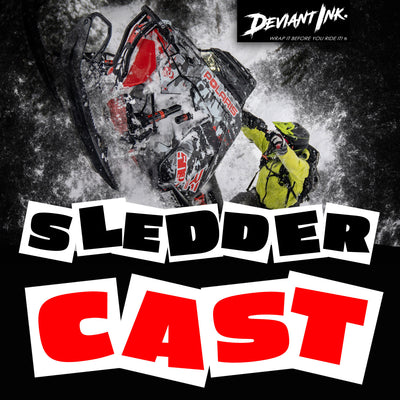
We're continuing our Hay Days series with a special guest and friend of the program, professional backcountry snowmobiler Kyle Saxton. Recorded on the Friday of Hay Days before he rode the freestyle shows, Kyle talks about building his own sled as a teenager, his rapid progression in the backcountry, and the business he runs off the snow so he can spend a lot of time on it.
Kyle also tells the behind-the-scenes story of a crash on a 2025 manufacturer shoot that ended his factory contract, in his own words. Then he gets into how he balances creating content with straight rippin' it, a few nuggets on getting snowmobile fit, and the three aftermarket mods he'd put on a new Polaris 9R.
Guest
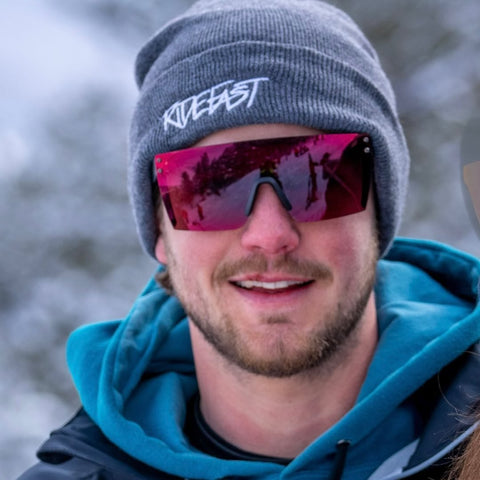
Kyle Saxton
Kyle is a backcountry and freestyle snowmobiler from Bigfork, Montana, and a Team Polaris athlete. He works as an electrician and construction contractor in the summer and runs Ride Fast Company, selling sled parts. He was first asked to help set up X Games Aspen 2026, got his rider invite about a month out, learned to backflip two weeks before the event and finished 6th in both Snowmobile Freestyle and Speed & Style as a rookie.
Show notes
- 1:30The backyard freestyle ramp that jumps his driveway onto a buried conex
- 4:15An $800 Phazer off Craigslist, bought with lawn-mowing money, and a home-built tube-frame chassis at 15
- 7:05Running an electrical company, a rental and a trailer park off the snow
- 12:03Growing up on Slednecks: Turcotte for freestyle, Burandt for technical
- 13:35Backcountry freestyle goals and a summer dirt bike ramp setup
- 18:3847 days in Revelstoke and the jump to the Arctic Cat Black Cats team
- 20:15The 2025 content-day crash and losing his Polaris contract, in his words
- 24:00Why content is how athletes pay back the brands that back them
- 27:30From out of shape to riding harder: strength, cardio and flexibility
- 34:02His biggest sled fitness tip: stretch 10 to 15 minutes every morning
- 36:55CFR bars, Backwoods bumpers and revalved stock shocks on a 9R
- 42:00Only child of a dad who sailed 42,000 miles around the world
I don't ride for the social media. I ride for myself, and I ride because that's what I love to do. But it's something I can do to help myself ride more and help the companies that support me.
Win a free custom wrap
Drop your email and what you ride. We draw winners all season and announce them on the show.
The better shape you are in, the better you can ride, the longer you can ride, and the more crashes you can take and not get hurt.
Questions answered in this episode
Why wasn't Kyle Saxton a factory Polaris rider for the 2024-25 season?
In Kyle's words, he damaged a 2025 sled on a Polaris content day, breaking a running board support on a big whip and later bending an A-arm and a shock landing in a thin-snow spot. Parts weren't available to fix it for the next day, and with tight industry budgets his contract was ended at the end of the season. He says there are no hard feelings, he is riding independent on his own Polaris 9R and Boost, and he hopes to work with them again. 20:02
How did Kyle Saxton get into snowmobiling?
His mom said no to a dirt bike but yes to a snowmobile, so at about 10 years old he bought an old Yamaha Phazer off Craigslist for $800 with lawn-mowing money. His dad, who grew up riding in Minnesota, bought one too, and they started riding the mountains of northwest Montana. By 15 he was building his own tube-frame chassis off a Ski-Doo REV 800. 3:38
What does Kyle Saxton do for work outside of snowmobiling?
Kyle is a licensed electrician who runs his own electrical company with employees and an apprenticeship program, after years of general contracting. He also invests in real estate, including a rental property he built and a trailer park with two partners, and runs Ride Fast, which sells apparel, parts and snowmobile fitness programs. 7:05
What aftermarket mods does Kyle Saxton run on his Polaris 9R?
Besides a wrap, his top three are CFR handlebars for a comfortable, stronger cockpit set to his height, Backwoods bumpers for protection, and stock shocks revalved with heavier springs through Suspension Pros, a valving kit he helped develop. 36:55
How should snowmobilers train to ride harder and get hurt less?
Kyle focuses on strength, cardio and flexibility. His single biggest tip is to stretch for 10 to 15 minutes every morning, then add weights for legs, upper body and core. He trains year round rather than cramming before the season, and sells a four-week preseason program plus a summer maintenance program through Ride Fast. 33:58
You can progress your riding a lot when you're riding with people that are way above your level.
Full transcript50 minutes · 11 sections
Read it
Lightly edited for readability. Click any timestamp to jump the video to that moment.
0:00 Intro
All right, hey, welcome back to another episode of the Sledder Cast podcast. Bright and early here in North Branch, Minnesota, also known as Hay Days stomping grounds. Heck yeah. We've got Kyle Saxton here. This one's been in the works for a while. We actually had to get permission for our name, because we kind of spun off of your original podcast, Sledcast, and you were gracious enough to give us a thumbs up on that name. I think we already had all of the logo and stuff created, so it would have been a pain to redo all that. So I appreciate you giving a thumbs up, man.
I'm pumped to hear you guys putting out more content and giving the people something to listen to that's sled related. It's awesome. I'm all about it.
Yeah, and we even got you on the thumbnail behind us now this year. We should have done three walls on this thing, but we'll play with the sun. I think the sun is over there, so we should be good for the episode. This is Friday at Hay Days, so Kyle, maybe just give us a quick intro of what you've got planned today and this weekend here.
Yeah, so riding the freestyle this weekend. Today is pretty much setting up ramps, getting the bag all dialed in, just getting the freestyle pit all set up and ready to go, getting sleds ready. Then we're going to do a practice session tonight from like 5:00 to 7:00.
There we go.
Get some practice in, and then two shows a day this weekend, about 11:45 and about 3:00 each day, riding freestyle.
Atta boy. And you've got quite the setup at your house that I've been following.
So I set that up about two years ago, and it goes over the driveway. I'm in kind of a neighborhood. You come in off the road, drop into the run-in, hit the ramp, go over the driveway, and then I've built a big dirt mound. I buried a conex and got a bag jump topper sheet for it. You land on that, ride back out, hit the road, cruise back over on the asphalt and drop in for another hit. Pretty nice, right out the shop door.
What do your neighbors think? Do they line up and watch the practice sessions?
Most of them are always out there watching, pretty cool with it. The people that have the living room view of the freestyle compound, they're sledders and they love it. They're always out there in lawn chairs, chilling, watching. They're all about it, so it works out pretty good.
That's good. Well cool, so we've got a fun episode today. To kick things off, Kyle, we're humans, and our attention spans are shrinking by the day, right? For that person who just stumbled across this video, they're swiping and they see our video thumbnail here. Knowing what we're going to talk about in this episode, what's the reason we can give that person to stop on that thumbnail and watch this episode?
I think it'll be awesome to cover how I got into sledding and why I ride, a lot of stuff on how I got into it. And then some of my involvement with the OEMs in the industry, and how I've been a part of the industry the last few years.
Yeah, cool. We've got some fun questions, so let's jump right into it.
3:38 How Kyle got into sledding
As far as background goes, everyone here has their earliest memories of snowmobiling and who got them into it. What's your earliest?
Growing up, I always wanted something with a motor. I was always into it. I grew up riding BMX bikes everywhere as a kid, and some of my friends started getting dirt bikes and some motorized toys like that. I'm like, man, that's so fun, because I'd go over and ride them at their house. I always wanted to get one, but Mom wasn't super on board with the dirt bike thing. But she said yes to a snowmobile.
I had been working like crazy in the summer, mowing lawns and stuff. I was super young at that point. My dad worked at a construction company, and I'd mow their lawn at the office, just stacking up a little bit of money as a kid. And I found this old Phazer on Craigslist for 800 bucks and got the go-ahead to get that. So I was ripping all around the hay fields when I was younger, and my dad started playing on it a little bit, and he ended up buying a Phazer as well.
Oh, so you brought snowmobiling into your immediate family.
Yeah. My dad grew up riding. He was from Minnesota here, actually, and he grew up cruising around fields and trails as a kid, but hadn't ridden for a long time until that. So he got the Phazer, and then we started going out to the mountains, and it just evolved from there.
Nice. And this was all in Montana?
Yep, northwest Montana.
Awesome. How far into your snowmobiling journey did it click that you were like, hey, I'm actually pretty good at this, maybe I should consider doing more of it?
I was hooked right away. We rode pretty much every weekend for a couple years there, and then we wanted to get bigger sleds. So I ended up getting an old Ski-Doo 800, the ZX chassis, the old flip hood and everything. Once I got that, we started getting into some bigger terrain, and I'm like, man, I want to get a newer sled. But I was still super young and couldn't afford it, so I went down the whole rabbit hole of building my own sled.
I took a Ski-Doo REV 800, stripped the chassis all the way down, figured out what was different between that and newer sleds, and ended up building a full tube frame chassis, kind of my own design off of newer sleds. I raised the geometry up a little bit so it wasn't so planted. I spent so much time on that, welding it and getting it all set up, and that was my first really big wake-up call. Like, man, I want to do something here. This is awesome. Snowmobiles are so cool. And I really got hooked on the mods, first just to try to keep up with everyone on the newer sleds, before I could afford the newer stuff.
Sure. So roughly how old were you when you were pulling apart sleds?
When I first started riding I was 10. And then when I really got into modding them out and trying to get a better sled going, I think I was 15. I was working at a landscape company just up the road in the summertime and building sleds after work.
Wow.
7:05 What Kyle does for work
Nice. Okay, so fast forward a few years to now. What do you do outside of snowmobiling that allows you to get as much seat time on the sled as you do during the winter?
I have a few different companies. My main bread and butter is electrical work. I'm an electrician, I have a company with some guys working for me now, and I have an apprenticeship going for them. So basically ripping on electrical work. I started that company in 2018. I was still working for an electrical contractor at the time, getting my license, and I grew up doing construction, so I started general contracting on the side. I'd have subs come in and help with jobs, did a bunch of remodels, and kind of started to learn the business end of that.
Then two years ago I went fully out on my own after I was licensed, and it was half construction work, half electrical work at that time, just building up clientele. This last summer we've been straight electrical work.
Transitioned back to just electrical.
Yep. Got enough clients now, and I'm in with some builders locally that throw a few houses my way every year.
Atta boy.
So ripping with electrical work, and then I've been playing with real estate investments. When I was 19 I bought my first property off Craigslist. I'd been watching it pretty heavy, and I got a super good deal on a piece of land. It was literally three hours after he had posted it for sale. I hopped on it, and it turned out my dad actually knew the guy. He was another contractor, so he was down to help me out a bit too. I got that place and built a house, and then a few years later I ended up building a shop with an apartment in it and renting the house out. I did long term on that for a bit, and this last year I did Airbnb on it.
Then some other construction clients of mine, they're big investors, and we got in a deal where the three of us went in to build a trailer park. So I've got a trailer park going in town now.
There we go.
So I'm playing with that, and then I started Ride Fast, which has been more of a passion project for the snowmobile industry. I always sell a service, and I wanted to try selling a part or a hard item. So I did a giveaway to come ride with me and did some apparel the first year. That did awesome. People are super supportive of it. This last year I put out some fitness programs and got some parts from my sponsors on the website, and I'm just playing with it. That's more of a passion project.
So you've got your trade, your service, you've got some real estate, and you're dabbling in e-commerce now with the website. I like it. You sound similar to me. You get kind of bored just doing the same thing every day. It's nice to stimulate the brain with some online e-commerce stuff and working with your hands, right?
Well, the business stuff is just so interesting, how it all works. I've had a huge passion for learning all that, and it's been fun to go down some different avenues with it and help support the sledding habit.
Yeah. And one thing I've noticed with you, Kyle, is you're doing everything yourself. You started a podcast, you figured out how to do a podcast. Now you're on e-commerce. You've wrenched on sleds your whole life. I think that's really cool. You don't just sit back and hire someone out to do it initially. You figure out on your own first how to do it and get an idea of how it's going to work, and then go from there.
Yeah, heck yeah. Well, thanks, man.
11:05 When Kyle started sending it
So was Kyle always sending it from the beginning? Where was the transition from more recreational riding into big technical air stuff?
It's just evolved from the beginning. I've always had a drive for it, ever since that first year on the Phazers. This is so cool, and it just keeps progressing from there. I don't know what it is about snowmobiles, but it's just my thing. I just love them and want to keep pushing on them.
So just a slow, steady transition.
Yep. There's never been anything about snowmobiling that I haven't been stoked on, even the late night wrenching. Sleds break, but it's cool to figure it out and be able to get out there the next day. Just everything about it. I'm hooked on it, and it's definitely my full passion.
Was there anyone as you were growing up that you looked up to, to get inspiration, or as a role model?
For sure. I had Slednecks on repeat from the beginning. I've worn those videos out. A couple people that really stand out from that group: Turcotte, for his freestyle stuff. I always thought the freestyle was so cool, because there's a lot to it. A lot of practice goes into being able to do tricks, especially in the backcountry where it's not a set ramp. Every hit's a little bit different, so to be able to pull off some of the maneuvers he does is just incredible. I've always thought Turcotte was super cool to watch with freestyle.
You were probably somewhat young when you first saw that. Turcotte was in, was it Slednecks 11?
I think so, yeah.
You would have been pretty young, right? And now you're doing freestyle at shows with them. Unreal. Little Kyle is now you.
It just doesn't seem real some days. It's like, man, what an opportunity I've been given. It's so cool. And then for the technical riding, I've always thought Burandt has been pretty fun to watch. He's always been pushing the technical, and still is, and it's so cool to see what is possible on a snowmobile.
13:35 New tricks planned this season
So as far as technicality goes and the steady progression, is there some maneuver or technical aspect of your riding game that you're specifically working on this year to improve?
I really want to get freestyle tricks in the backcountry. I've dabbled with it the last few years and got a few little things, but never a full-blown freestyle sesh off a backcountry jump. So I really want to get some grabs or something cool this year in the backcountry and start progressing that a little bit. I think riding during the summer at my house is really going to help with that, because it's not like you take all summer off from a snowmobile. I'm able to ride year round now.
That is nice.
Being able to be in the air and be used to that for the full season, I think that's going to be a game changer as far as progressing the jumping and the freestyle stuff.
You also get some work in at [Rob Bailey's place], yeah?
Yep. I got in with them a couple years ago. They're local in the valley where I'm at, and they set up a track outside their shop. Those guys have all kinds of stuff going. They just built a full-on drift course that they paved, so they're drifting cars now. They set up a little pit bike track this summer and then allowed me to set up a freestyle setup for dirt bikes there. So I've been dabbling with dirt bike ramping this summer and learning a lot on that. I built a ramp this spring, and Tyler from Octane Addiction helped me out, loaning me a bag for the summer. The bikes are just a little bit loud for the neighborhood where I'm at, so that's why I go away from the house for that.
You want to have good neighbors, right? You want to be a good neighbor.
100%. And ultimately not get the snowmobiling shut down there.
Yeah, for sure. How did you get connected with those guys?
Rob Bailey is the owner, and he started CCV, which is an entrepreneurship mentoring course. I did his first year of that and kind of got in with him a bit there. We clicked, and we've stayed in contact throughout, because he thinks the snowmobile stuff is rad too. He watches that stuff. Then I approached him this spring about setting up a dirt bike setup there, and he was all about it.
Does he get out on a sled much?
He has one. I think he gets out a little bit.
Dude, you've got to get him out there on some backcountry sessions.
That would be cool.
16:15 OEM history and why Kyle isn't a factory Polaris rider this season
Awesome. Let's talk some OEM and some of the professional industry type stuff. So you started off on Arctic Cat. When I first got to know you, you were throwing an Arctic Cat around, and you've been throwing an Arctic Cat around for a long time.
I think I was on Cat for almost five, six years. In the beginning I kind of bounced between Ski-Doo and Polaris, just older sleds. Then I rode with a buddy in Eureka, Kyle West. He had an old Cat that I hopped on, and I was like, man, this thing's sick. So I found a 925 big bore, a 2014. It was pretty hammered out, but I ended up buying that and rode it for the rest of the season, and I was like, man, I think I'm going to get a fresh Cat. So I picked up a Hardcore in 2019, their first year of that.
I think that was when I really started to progress my riding. That was the first year I did a backflip. That was when my social media started to kick off. I started posting more consistently, a lot more of the process, a lot of the crashes, a lot of the successful jumps.
Deviant Ink: If you love the show and want to support us, head on over to deviantink.com and use the code SLEDDERCAST to save some money on your next premium custom wrap. If you've spent any time on deviantink.com, you already know it is the best, easiest custom wrap builder tool out there. Its new interactive design tools make designing and customizing a wrap super slick. We're big fans of the new color mixer tool. It randomizes colors until you land on the perfect combo. The design mixer tool is a game changer when you already know what colors you want and you want to see all of our designs in just your preselected colors.
I think that was the first year that we started working with you, when we picked up Deviant Ink. I had seen you all over my feed, and you were somewhat local, just up in Montana, and we're down in Idaho. You were one of our first big athletes.
Yeah, that's cool. That was a good year. I spent, I think, 47 days in Revelstoke that season.
Wow.
And since I spent so much time up there, I was able to link up with a lot of the bigger athletes. You can progress your riding a lot when you're riding with people that are way above your level. So that year was a big pivotal year for growth, and that was the year I got in contact with Arctic Cat. They had started their Black Cats program and then took a couple years off from it, and in that couple years off I got in contact with the race department. They helped me out a bit with parts that season. Then the following season they kicked off their Black Cats team, and they approached me to come on as an athlete. So I rode for the Arctic Cat Black Cats team for two seasons.
Towards the end of the second season I was starting to get some more interest in Polaris, so I ended up leaving the Black Cats team that season on my own behalf. I wanted to try out Polaris, I got in with Polaris, and I've been riding with them the last two seasons.
Nice. And from a recent post that I saw on Instagram, it sounds like you have a little bit of freedom this year. I don't know if freedom is the right word. More wiggle room as far as what you do with your snowmobiling. You're not tied in with Polaris this season.
Nope. I'm independent this year.
Independent, that's the word I'm looking for.
I'm still going to be riding Polaris this year. I ended up crashing a '25 on a content day last year. I'm sure a lot of you have seen the big whip that I did.
Was it the one where the engine, or the power, went out?
Yep, that was the crash one. I didn't break anything on that one, but on the successful one I came down and broke the back part of the running board support. Then later on in that day, snow was pretty skimpy in an area, and I jumped off a cornice and landed in a pretty much dirt spot and bent an A-arm and a shock. So I messed up the sled a little bit, and they weren't super stoked on that. I offered to stay and fix it and get it ready for the next day, but they didn't have parts available for it. So there was a little bit of conflict there. They weren't super stoked on that, and I think with the budgets this year, they terminated my contract at the end of the season because of that incident.
But no hard feelings. I get it. In the snowmobile industry they didn't have a ton of snow checks this year, and there's not a ton of money rolling around right now. So I think they're just trying to cut back a little bit, and with that incident...
Cut back, wait for a rebound.
Yeah. But they want to stay in contact, and there's no hard feelings or anything. We'll see how the season goes, and hopefully there's more opportunity in the future with them, because they've been awesome to work with and I appreciate everything they've done for me so far.
That's awesome. Does anything change with your program? For someone who hasn't ever had an OEM contract, do you go about your season any differently now?
I'm just keeping my options open. I want to spend a little bit of time on the Catalyst this year and see what that's about. I've only spent like 15 minutes on one of the original 600s. So it definitely gives me a little bit of opportunity to ride some other sleds, get a bigger perspective of what's out there now, and get some seat time on other OEMs to see what they're all about. But I've got a 9R and a Boost still coming for the season.
There you go.
So those will be my main sleds, but it just opens up my options to try some other units out.
And probably a little bit more freedom in what you can post as far as content goes, right?
For sure. If I wanted to get out on a Cat for a day and post some clips on the Cat, I can do that now.
Heck yeah, that's cool.
22:55 Balancing content creation and sending it
As far as balancing being a professional backcountry athlete and creating content, how do you go about balancing that? Because you do pump out a lot of content, and I would say it's pretty rare to find someone who can do both very well. We see a lot of it in the hill climb space. You see a lot of hill climbers who are awesome at what they do, and that's just what they focus on. They don't really focus on creating a lot of content outside of the races. But you've got great content, you're always pumping new stuff out. How do you balance it? I think a lot of it comes from the business stuff. Your brain is thinking, hey, if I'm out here, either I'm just seeing it by myself or with my buddies, or I can extend that reach if I'm planning ahead.
100%. To be able to ride as much as I do, it's nice to have support from companies that want to back what you're doing. But from a business perspective it's got to make sense for the companies that support you, and the best way to support the people who support you in this industry is content. Because there's no backcountry contests. There's no X Games or anything for backcountry. It's strictly social media and word of mouth to help companies and yourself out, all the companies that help me out. So I look at it as, I'm helping you guys out by helping promote product, and promoting myself to get more reach. It's just a value transfer.
And like with electrical work, on the job, doing the work, that's the easy part. That's the fun part. Just like riding in the backcountry, that's the fun part. That's what we do it for, what we love. But then there's the office work that comes with electrical, or the content work that comes with the sled, and it just goes hand in hand. It's just something you've got to do, and I've kind of grown to enjoy it. I don't ride for the social media. I ride for myself, and I ride because that's what I love to do. But it's something I can do to help myself ride more and help the companies that support me.
Yep. I love that frame of mind. We've had instances in the past where we've worked with other organizations or companies, and there's a lot of nickel and diming. Like, hey, if you want this, you're going to have to do this now. And I always come from the perspective of, yeah, there's a time and place where a fee is warranted. But there's also a lot of opportunity where you're already there. Just create the content. You never know who's going to pick it up or how far that reach is going to go. Maybe the company takes that piece of content and runs with it and drops hundreds or thousands of dollars in ad budget on it. It extends your reach as the creator, and all you had to do was have a little bit more of an open mind and think, hey, how could I make this valuable for the businesses that I'm working with?
Yeah. It's kind of annoying, because it does add more brain power that you've got to think about when you're going out to ride, instead of, I'm just going to go ride. But you can look at it too as, I'm getting content, and I get to look back on this in 20 years and be like, man, look at this crazy stuff I did back in the day. As far as that perspective of it too, it's cool.
27:00 Fitness tips for snowmobilers
Cool. All right, so Kyle, we're going to talk some fitness. I've got a couple questions around your fitness in general. For most people who are maybe new to following you, this is you. But I feel like I'm remembering you differently. When you first started out, I don't think you always looked like this. You've put the work in and made a bit of a transformation. So walk us through the backstory there, what worked for you, and some of the levers you pulled that made the biggest difference in the transformation of your body.
For sure. When I first started riding I was definitely not in shape. I did not take fitness seriously at all. I just wanted to ride, and that was the extent of it. Go work during the summer to make some money to ride during the winter. But fitness has been a huge thing that has affected my riding. The first year that I really took fitness seriously, I was able to ride way harder and I progressed way faster, just being able to ride longer during the day and not get worn out, and be able to crash harder and not injure myself as much.
I think there are a lot of aspects of fitness that you don't realize play a huge role in snowmobiling, just because it's a lot of work to throw a snowmobile around all day. It definitely takes a lot of fitness to do. And I think the better shape you are in, the better you can ride, the longer you can ride, and the more crashes you can take and not get hurt.
What are some of the changes that you made? Lifestyle changes?
I guess just eating healthier, and then trying to stay consistent through the summer. When I first started getting into lifting, it was like, oh, sled season's coming, I need to jam out some workouts this next month before the season. Then I transitioned into just staying active year round, hitting the weights, staying good on cardio, just getting after it a bit more. And that's played a huge role in my riding for sure.
So with Ride Fast Company, with your e-commerce, you've got online training.
Yep, so I've got two. One's kind of a preseason program, and it goes over a lot of aspects of flexibility, cardio and strength, because those are the three aspects I think play the biggest role in sledding.
So you said those three things were cardio, flexibility, strength.
Yep. Sleds are heavy. You've got to have some muscle on you to throw them around all day. Cardio: you pull a big line, you're winded by the end of it.
So the better shape you're in cardiovascularly, the better you are as far as riding longer, riding longer lines, being able to do multiple hits consecutively, right?
Yep. And then flexibility. You're bound to take a crash here and there, and the more flexible you are and the better shape you're in, the better you're going to come out of a crash.
When you say flexibility, it reminds me of a moment last year. We had Levi Green on, and he was talking about you. He said he was in the gym with you one day and you were talking to him about flexibility, and you said something like, it's how far you can put your head behind your back before you break. That's the type of flexibility level we've got to get to if we want to be pulling tricks all day on a snowmobile. That stuck with me for some reason, but that's awesome.
Yep. You crash and get tumbled down the hill. If you can put your feet behind your head or whatever, you're more likely to not come out injured than if you can't even touch your toes.
As far as your program goes, is it an online digital course?
Yep. You get the whole course laid out, what to do each day, and I linked a YouTube video to every lift. So if you don't know what a certain lift is, you can click on it and see how it's done. It's all laid out.
And is that you doing the training?
Yep, so it's me. And then I do emails through it, so I check in through the whole process. If you've got any questions, I'm just here to help throughout all of it.
And can anyone start it at any time?
Yep. I have a preseason one, which is kind of getting you in the groove for the season, and then I have a sustainability one to help keep your fitness through the summer. Not quite as intense lifts, but just to keep it going. It's more directed towards sledders who work a lot in the summer and a little bit less in the winter, so it's directed towards a busy summer schedule.
Okay. With your preseason training course, how long is it start to finish?
You can keep doing it, but it's a four-week program. I recommend doing a couple months of it before the season starts, a few cycles out before the season, and working your way into it. There's a lot of stuff in there that you can go all out on, or you can just start dabbling with it and work your way into it. But it's laid out with the stuff I recommend that's going to be most beneficial to building your body for sledding.
Nice. So what's the cost? Is it a monthly fee, a one-time fee?
One-time fee. You get the program and you can use it as much as you want. And if anyone's interested, I'm doing a discount on it. We'll call it the code SLEDCAST.
There we go.
So if anyone wants to hop on that program, we'll do a discount for you and get you set up.
33:30 Fitness cheat codes, and a rider in the family
Nice. Now with snowmobiling-specific training, let's just say I want to make sure, if I am going to the gym, and I know I'm going to spend a lot of time snowmobiling this season. Give me a few Kyle Saxton cheat codes. A couple things that are going to pay the biggest dividends in my mobility and strength, specifically for snowmobiling. What are a couple of those levers that I'd want to focus on?
Biggest thing: wake up and spend 10, 15 minutes stretching every day.
Oh, start your day there. Get that stretching in.
Yep. If you do anything, I'd say just start with stretching and get yourself moving and flexible. That helps a lot. And then if you don't want to jump into a whole program, just start throwing some weights around. Focus on your legs, focus on upper body, and a lot on the core too.
Cool. Well, Kyle, we're making good time. You've got to go pick up the lady friend from the airport, right?
Yep. She's flying in. She's going to come hang out for the weekend and support me riding.
Nice, heck yeah. Does she like hanging out at Hay Days?
Yeah, yep. She's a shredder herself.
Oh yeah, we've seen her.
She actually raced dirt bikes for 12 years.
Oh, really?
Yeah, so she's got a big moto background. She got into sledding, I think, five years ago or so, and I think a lot of the moto skills transfer, because she's picked up on it really fast. She got out with her brother a lot in the beginning, and he helped her grow a lot as a rider. Then when we got together, she's ridden with me most every weekend, so she's getting lots of seat time and getting in with a lot of good groups. She's grown as a rider immensely the last few years.
Oh yeah. It goes back to that rule where you're the average of the five people you spend the most time with, right? If your crew is the five people she's riding with, her skill set is going to just drastically improve.
And everyone's been so supportive too, getting her out there. It's intimidating, a lot of the stuff that we ride, and everyone's so supportive of her getting through it and learning. It's been cool to have all the support from friends in the group too that want to see her shred. So that's awesome.
Yep, pretty cool. Good.
36:20 Lightning round: three aftermarket mods
Okay, so we're at the lightning round. We ask the same two questions to end every episode. The first question: you've got a brand new sled. You've got a 9R and a Boost coming, so let's pick one. Which one do you want to roll with?
The 9R is going to be my main one.
Okay, so we'll go with the 9R. If you only get three aftermarket modifications that you can make to this unit, what are the three you're going to do? And a sled wrap does not count, because we know that would be the first one.
Got to make them look cool.
Got to make them look cool before you do anything else, right? All right, so what would those three be?
Probably the first thing I'd do is CFR bars. I've been running them for 8, 10 years now. They're just a comfy cockpit, they're stronger, they bend better. I just love everything about the bars. You can get them set up to your height perfectly. So that'd be the first thing I'd do to a sled, a CFR bar setup.
Next is probably Backwoods bumpers. I'm kind of hard on equipment, so having a little extra...
You can fix your own problems.
You can fix it, but if you can avoid fixing it, that's always better. So I'd say get some Backwoods bumpers on there and add a little protection.
And then the next thing I'd say is suspension. That's been a big thing the last couple years that I've been working on. I got partnered up with Suspension Pros, and we've been working on a valving kit for the stock shocks.
Oh, cool.
Yep, so those are feeling pretty dialed. I've run quite a few aftermarket companies' shocks, but honestly I'm just running valved stock shocks anymore through Suspension Pros. I really like the valving package we came up with. We put a little heavier duty springs on them and upgraded the insides of them, and they're feeling really good. I think that plays a big role in your riding too, having suspension that's set up for you, your riding style and your weight. So those would be my top three.
Awesome. So your top three, let's do a quick recap. We have the cockpit, getting your handlebar set up. We've got some protection with the bumpers through Backwoods. And then Suspension Pros, getting the suspension dialed.
Yes, sir.
Love it. What's fun is we do a full season, and it's always fun to look back. We do a recap post of the top five most recommended aftermarket parts from everyone that was on.
That's awesome.
And last season, getting your cockpit dialed in, the handlebar setup, was the number one.
Well, flip-flop question. What's your top three?
That's a great question. I don't do a lot of modification to my machine, because I'm not like you. I can't fix my own stuff very well. If it breaks, I'm in big trouble. That's a skill set I wish I would have picked up on much earlier in life. I feel like it's just like knowing how to brush your teeth. You should know how to do some of that stuff, which is unfortunate. But I always like to lighten it up, right? So we'll pull the stock silencer out and put a can in. A little bit of a snappier sound, but not too loud, just a little bit more aggressive. And I'm on a 9R as well.
Nice. Good choice.
So we'll do the lighten it up. I've never done handlebars.
You'll have to try them sometime.
So that might be on my list as a want or a wish. But for sure bumpers. We're not too crazy in the backcountry, but my biggest selling point on bumpers was last year. I watched Travis, Tahoe Sled Head, just nuke a rock. Everyone on the hill turned their head to see what just happened. We were at Out West Sled Fest in Island Park, and we thought, he's done. The bumper saved him, dude. The bumper was trash, throw the bumper away, but he was able to ride out fine, right? So ever since then, and I mean it's pretty obvious, but for me it was like, man, this could have been a really bad deal. Wipe out your pipe, not be able to ride it out.
Yep, and then that turns into a real long day.
Oh, it's a long day. So that kind of cemented it for me. And we like to cook, so if I were to throw another one on there, it'd be a Hot Pot. Can't beat those. Kind of a luxury item out there, but a warm meal in the backcountry is a force to be reckoned with.
41:45 One thing people don't know about Kyle
But the last question I have for you, Kyle, in the lightning round is, what is one thing that those who are listening to the podcast today don't know about you? What's that secret or interesting factoid that we're going to let out here on the podcast?
I thought about that one a lot. I share a lot of what I do on social media, but I don't think a lot of people know that I'm an only child.
Oh yeah? I didn't know that.
Just me.
It's just old Kyle. So how's that been? I mean, you don't know anything different.
I don't know anything different, but I feel like I was raised in a way that it wasn't all about me. I was raised right with that. A lot of only children, I don't know the best way to put it, but life revolves around them, because they're the only one. There aren't other siblings to take care of. I was raised to work for it, so I think that played a big role in coming out good. My parents have always been super supportive, and it was good growing up.
My old man's kind of a wild man himself. He's retired, and in his 20s he bought a sailboat and sailed around the world with it.
No way.
Yep. He did like 42,000 miles, because he zigzagged all around the world. And growing up, he's had this boat and he's been restoring it. I think he spent like 12 years on it. He gutted the whole thing out. Some of the straps that run down the hull were rusted, so they went stainless, and once they got into the fiberglass, the metal had expanded. So he cut these big holes in the side of the boat and re-fiberglassed it all, redid all the woodwork in it, totally restored it.
About four years ago he retired and hit the ocean again in it. He set sail and went over to New Zealand, hit a bunch of islands over there. I actually flew out to New Zealand and saw him for a couple weeks. That was a pretty cool experience. I sailed with him for a little bit.
Wow. So is he out on the water now?
He's back in Port Angeles, Washington right now. He sailed back, and then last summer he cruised up the coast all the way up to Alaska. This year he did a bunch of maintenance, and he's been riding his pedal bike a bunch in Port Angeles and working on the boat. Next year he's going to head out to Hawaii, and he's not sure where from there. He's just going to set sail and point the direction to the Hawaiian Islands. He can do about 100 miles a day on the ocean, and it's about 2,800 miles, I think, from Port Angeles to Hawaii, so it's about a month's sail out there.
What an interesting life.
I think that's a big thing that people don't know.
That's where it comes from, right there.
My mom was a traveling nurse. She traveled all over nursing, and that's actually how she met my dad. He was sailing, and I think it was actually Hawaii she was at, and he came into there years ago and met her, and she ended up sailing with him for a while. And she's done a bunch of bike tours. She biked all across Alaska, and a bunch in the States.
Wow. Kind of adventurous parents.
Yeah. That's where it comes from, that's for sure. I think that's a good fact that no one knows about me, my parents, and that it's just me.
Well cool. All right, Kyle, we appreciate you taking the time. We've tried to make this happen a few times in the last year or so. Once we started the podcast, we thought maybe we'd come up to your neck of the woods and do something, but I'm glad we were able to finally connect here. And now your work starts here in a little bit. We'll be seeing you flying over these trailers later on in the day.
Well, I'm glad we got to get it done, and it was great talking to you.
Heck yeah, man. All right, hey, thanks for tuning in. We'll see you guys on the next episode.