
We kick off Season 2 by heading down the highway a few miles to KLIM HQ in Rigby, Idaho, to sit down with Dustin Pancheri, Sr. Associate Marketing Manager at KLIM, who runs the athlete program. We talk about the growth of KLIM over the past decade, the key highlights, the biggest challenges, and a behind-the-scenes look at how KLIM innovates on new gear.
Then we share our top tips on what not to do if you want to get sponsored in the powersports industry, from posting habits and private accounts to timing and budgets, and finish with Dustin's three aftermarket mods.
Guest
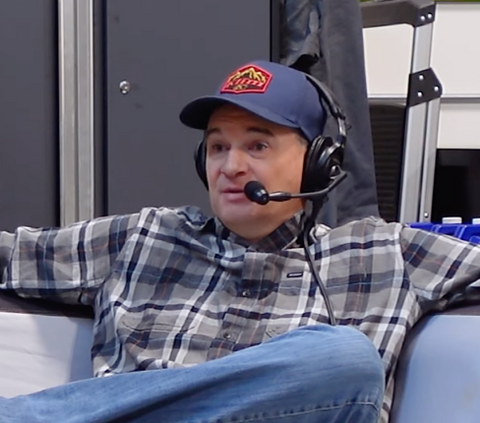
Dustin Pancheri
Dustin runs the athlete program at KLIM in Rigby, Idaho, where he is Senior Associate Marketing Manager. He joined KLIM from SLP in 2013 as a regional sales manager for the Rocky Mountain West, later built up the company's southern territory and its dealer training program, then moved into athlete management. He has worked in the snowmobile industry for more than 25 years, races hill climbs out of Idaho Falls and won the amateur class at the Jackson Hole World Championship Hill Climb in 2021 and 2022.
Show notes
- 6:35From regional sales manager in 2013 to running KLIM's athlete program
- 10:58Why a tagged post doesn't get reposted right away, and the heads-up that helps
- 15:05Avalanche bags built by snowmobilers for snowmobilers
- 18:08A no-snow Midwest winter and 400 to 500 dealers sitting on inventory
- 19:44The Adrenaline boot, and why BOA took years to get durable enough
- 23:21Six years on a heated goggle with three heat modes and a pocket battery
- 32:39KLIM's start in Rigby: cutting asparagus from the ditch bank for dinner
- 34:46The don'ts list begins: vulgar language and music in your posts
- 41:18Mass-emailing every competing brand for the best deal
- 59:54Show what you've done, not what you plan to do
- 1:02:28Why timing and budgets decide who gets sponsored
- 1:06:40Dustin's three mods: storage, suspension and a stage kit
If we tried to develop everything perfect, we'd never come out with anything. You'd never get anything out. So you have to draw this line.
Win a free custom wrap
Drop your email and what you ride. We draw winners all season and announce them on the show.
It's not my job to pay your bills. You have to figure out how to build your brand and your program in such a way that our relationship justifies a check or more product.
Questions answered in this episode
Who is Dustin Pancheri at KLIM?
Dustin Pancheri runs KLIM's athlete program. He came to KLIM from SLP in 2013 as a regional sales manager for the Rocky Mountain West, spent several years building the southern territory, developed a dealer training program for a year, and then moved into athlete management, where he handles athlete contracts, show planning and budgets. 5:20
What should you not do if you want to get sponsored in snowmobiling?
Trevor and Dustin each brought a list. Their don'ts include vulgar language or music in your posts, begging brands to repost you, trash talking other brands or riders, mass-emailing competing companies for the best deal, arguing online, mixing politics with sponsorship, posting rarely, never following up, sloppy presentation, expecting free product up front, keeping your account private, pitching plans instead of results, and wearing competing gear. 34:46
Why won't a brand repost my snowmobile content right away?
At KLIM, social posts run on a planned calendar built around product launches and the go-to-market plan, so a tagged post may wait days or not get shared at all. Dustin and Trevor suggest giving the brand a heads-up before you publish and asking which day works best, and making sure the content is high quality and shows the product. 10:58
How does KLIM's heated goggle work?
Dustin says the goggle was about six years in development. It has three heat modes: always on, automatic through a moisture sensor, and controlled by a remote. The battery can sit on the goggle or move to your pocket on a cable, and it can plug into a 12-volt source like your sled. Iron Dog racers tested it, and the first production units went to Chile for final durability testing. 23:35
Why can't a brand sponsor me this year even if they want to?
Timing and budget. Dustin sets KLIM's athlete budget 9 to 10 months ahead, and most of it is committed to long-term relationships. A sponsorship works like a job opening: if there is no opening, it has to wait until an athlete retires or the budget grows. He has had deals take two or three years to come together. 1:02:28
I can ride a stock sled with stock horsepower and stock suspension, but if I can't carry my safety gear on it, I'm not going in the backcountry.
Full transcript76 minutes · 22 sections
Read it
Lightly edited for readability. Click any timestamp to jump the video to that moment.
0:00 Intro and the Edge eFire giveaway
Guys and gals, we got an awesome giveaway today. As you know, we're dropping the Klim episode. So, to spice things up a little bit, we have teamed up with Klim to give away their brand new heated goggle lens. This is their Edge eFire goggle. Couldn't be more stoked to give this away to one of you listeners. How do you enter? Easy. Click the first link in the bio. There's going to be a place where you can drop an email in. This is probably going to take you less than 20 seconds. That's all you got to do. We're going to announce the winner before the next episode drops. So, in the next 2 weeks, these will be on their way to one of you. Okay.
Hey, welcome back. We are season 2 of the Sledder Cast podcast. We hopped on the old Interstate about 15 minutes, dropped into the Klim HQ and in Rigby, Idaho. We're sitting here with Dustin Pancheri. And we have a wonderful conversation set up for us. We're kind of preseason. We're getting ready for the show season to start up. And so, I'm excited to get talking about snowmobiling.
And yes, especially since it's 100 degrees outside. It's brutal.
We're in that when you're watching this, you'll remember the couple weeks here, man.
It is brutal. Heat across, I mean, everywhere. So, I wish I was headed to Chile again.
Wasn't that last year? Around the same time or was it more in August?
We left on the 22nd, I think or 24th. I can't remember exactly. It was last week of July.
Have you kept up with snow conditions down there right now?
Follow it close. And it's killing me. It's booming down there. So, it's early season for them. It'd be like our December. 9 ft of snow pack in some areas.
Wow. So, I was actually thinking about that the other day. Why is it that we don't see on social media content from down there. Am I just not following the right people or like cuz when it's winter here we see like it's all over but like is there just not enough a lot of like people industry down there.
So, there's just not enough people down there that's creating the content. And I only follow a couple of sites down there: Ski Corralco, cuz that's the ski resort right next to Cesar's outfit, and then Andes Snow. And Andes Snow has had some pretty good content. And then Cesar's Sled Chile. They've got some pretty good content. But they were riding early. Really early.
So, when does their season typically wind down? Is it really
I don't know for sure cuz I haven't been down there, but I'm going to guess end of September, October-ish is my best guess. I know they stop guiding I think right in the end of September. And then most of those guys come from you know, the Utah, Colorado area.
Oh, so they're jumping down there.
Yeah, so Skyler Holgate, he's kind of like the lead guy and partnered in that business down there. He lives in Durango. So, he's the head I don't know exactly what his title is but he's like the avalanche mitigation expert for all of Silverton. All their stuff. So, he's the guy that flies around in the chopper and they're like, “Hey, drop a charge here or drop a charge here.” And then he guides in Alaska in the spring and then he goes to Chile in the summer. So, he's got a you know, kind of a nine to 10 month snow gig.
Like total dream job, dude. I got to follow that guy.
Yeah, he and he's a stud. Like he's the dude knows probably more about avalanche stuff and snow stuff. He's been all over the world. Seen all different types of terrain.
3:46 Why this episode is worth your time
That's cool. So, I want to ask you a question. So,
Oh, here we go.
If someone just stumbles across this video online or the audio version. What can you say to that person now knowing that we're going to talk about the growth of Klim over the last decade? And we're going to we're going to go through a pretty extensive list of things not to do if you want to get sponsored in the snowmobiling industry. So, knowing that's kind of the general conversation that we're going to have here, what is something that you can say to that person who just was swiping and came across this that's going to get them to stop what they're doing and dive into this episode?
I think one of the biggest questions I get asked all the time is like what does it take to be make a career in the industry, powersports industry in general? We're going to pretty much cover that. We'll go through most of that. So, if you've ever been interested in what it's like to work in the industry or kind of get a career or sponsorship, that type of stuff, we'll talk through that, I think. Most of these questions will cover a lot of that.
Awesome. Cool. So, Dustin, you were just over a decade, like 11 year almost popping into 11 years, 2013, you made a career transition from SLP to Klim. So, when you started at Klim, what was the role that they hired you for? And then like how did how does that transition to what you're actually what you're doing today?
Yeah, 10 years later, 10 plus years later. Well, there's kind of a crazy little bit of a story about there. I actually had two offers to come here and I didn't take the first one. I don't most people don't know that. It was in development, product development. Which I enjoy. And back then, so let's go to 2013, what categories were we in the same categories that we are today, dirt, you know, street, casual, obviously snow. As wide. We were just kind of getting started into the motorcycle side. We had off-road. We had a couple motorcycle pieces, but not like what we have now.
Hadn't done really much with avalanche safety at that point in time either. So, we've just taken those categories and really expanded them. So, but then they hired me when I did start here, it was as a regional sales manager. So, I had a territory that I managed reps. I think there was four or five of us. And I was in charge of the Rocky Mountain West. So, basically the whole mountain snow belt, you know, Utah to the coast. Which was awesome cuz that's what I was passionate about.
6:35 From regional sales to running the athlete program
Cool. So, that's what you got hired on. That's what you got hired on to do. How did how did your career transition over the last 10 years to what you're currently doing now? What different roles have you had along the way?
What's interesting is I'd always wanted to get into the marketing side. Like that was really my final goal. The sales management job was I don't want to call it a like a stepping stone, but it was a foot in the door. And I had the contacts from being in the industry for, you know, 15 20 years or whatever. And I did I was a regional sales manager for like six or I don't know, five or six years. That changed. We territories rearranged and I ended up in the south and developing that area. We weren't We didn't have a ton of presence in the south.
So, we were trying to build up some dealer bases and our product to work better in the south and things like that. So, I spent four or five years doing that. And then I really liked the technical side of the business. We were looking for somebody to kind of develop a training program for our dealer network. And so, I decided to move into that position. And we did that for a year, and then I moved into the athlete management position.
Nice.
Yep, and that's been fun.
On the dealer side, I don't know if this is like knowledge you can share, but when you reference your dealer network, like how vast is that network? I mean, are you guys
You know, it's constantly growing. It's I would say it's a pretty good size network. I mean, we've got thousands of dealers. So just in the US, I can't say exactly how many you have right now, but I think it's over a thousand. Just in the US.
That's awesome. So now you're over you're over the athlete program. Right? And so like on a day-to-day basis, what's Dustin doing within that program? Probably depends on the time of year, but
Yeah, it does depend on the time of year, because we have to plan a long ways out. For budgeting purposes, I mean, we start planning for shows 9 months before we go to the show. You know, we do athlete contracts ideally long before that contract starts. But we'll write we'll start doing budgeting in September for the following season. So I might be setting a budget for something that I'm not going to use for a year or over a year. And that planning is a big part of what we do because we work with so many influencers and athletes, you know, so many events, so many shows. Like that's a There's a lot of numbers when it comes down to it.
I mean, the spreadsheets are not fun, right? But it's a lot of planning. A lot of conversations, a lot of strategies. We're Our marketing plans are all planned out. We have a thing that we call the go-to-market plan, and we literally have sections in there that are shows, you know, product focuses, athletes, special projects, events, content creation, and then it's all planned out by the month, and then each person has tasks, and we go through, and you know, who do we need help for this project? And so, it's not just a, hey, let's feature this month.
We actually plan it out based on when we're going to release a product, how many we're going to get, what athletes we feel like work best for that product, what shows make the most sense to promote it, what ads do we need, what Facebook posts do we need. That's all planned out on calendars.
And I think most people don't realize that. Like a company your size backed by another company that's even bigger, Polaris, like you can't just fly by you can't just be shooting from the hip.
There's too many moving parts.
Too many moving parts, there's too many you know, decisions that have to be had to make sure that you guys are doing the right thing. And so, that's I think that's something that just most people don't realize, especially athletes who are trying to get into the space, and get some sponsorship from companies that like can't just you know, on a whim decide yes or no if you know, if we're going to roll with that athlete.
10:58 Why brands can't repost your content right away
So,
Yeah, and I would say one of the biggest questions, or maybe misconceptions, we have is, so, we have a full-time social media manager, Mo. She does a great job. But we always want content from people. Like we always wanted to send us content so we can post it and share it and things like that. But that's all on a calendar. So, people send it, and then they're like wanting us to share it right now. Post it, post it. Well, Mo has programs that she like loads everything into, and it kind of posts it. I don't know exactly how it works, but you know, she's very organized and has a very schedule some things out.
Yeah, she's got a great plan and it's not easy for her to change that. Or you know, she would basically be sitting there doing it 24/7, which that's not realistic, right? And so like she's she comes in, she works an 8:00 to 5:00 just like the rest of Well, she works way more than that, but you know, basically she has her work hours and she's very organized about putting all that together. Well, it's very hard to just change all that on the fly and then throw a post in there. Something in, you know. And so and social media is all about quick response, right? Like what's happening now?
And we appreciate it when people send us that content, but it might be, you know, a couple of days or whatever before she gets it posted because she has to kind of stick to her schedule. So a lot of people don't understand that. They just think it's somebody who's like, “Oh, here's a cool post here. I'm going to post this right now.” It kind of is, but there's more moving parts than that.
And one thing that we've noticed that helps out, and we've actually done this with Klim as well, is if you can communicate with that company: “Hey, I've got this cooking. I'm probably going to you know, give them a preview. I'm going to publish this probably this day, this day, or this day. What day would work best for Klim or for whatever company?” That way you just give them a little bit of a heads up cuz you have no idea what's on their content schedule. Like if
You are dead on.
If you like post that and then invite them as a collaborator, but they just like barely did this big launch or something. They're Now they're debating, “Well, now that kind of interferes with the program we were we had set up for the next couple days.” So I think just communicating and planning and giving that company just a little bit of a heads up, “Hey, if I were to if you were to come in on this post with me, when would be the best time for you guys?” And Mo's awesome with that.
Like she if you start that conversation early and go like, “Hey, how's the best way to go about this?” And she'll kind of tell you what makes it easier for her. She is way more willing to work with you on that and spread your message, you know, on your post. There's something she can do. Like I mean, we do have certain kind of brand rules and things we will and won't do just because it doesn't make sense for the brand, but if it's somebody that is an influencer that's you know, that's in our camp that we're that we have a partnership where I mean, we want them to grow as well. And so, there's things that we'll do to work together.
It may not always be perfect or what somebody exactly envisions, but at the end of the day, we want to uplift the industry. We want to uplift you know, everything, everybody. Like that's our job to help them, they help us. And so, if we can help them grow, they can help us grow. It's a win-win.
Yeah, I like to reference it as and some of these guys here have kind of heard me use this analogy, but it's I like to use a relational bank account. So, you build up relational equity with a person or a company, meaning like if I just always come to let's say Dustin and Klim and I'm hey, can you do this? Can you do this? Can you post this for me? Da, da, da. I'm always withdrawing from that relational bank account.
But if I'm constantly depositing and adding value to a company or just to the space or the industry, now when I go for that ask or that withdrawal, I've got a pretty big bank account already set up there to where that industry is more acceptable or that company is more acceptable of yeah, like, Trevor is has the deposit like they've added a ton of value here. Yeah, we'll do this for them, right? So, and that's one of our top 10 things. We're speeding ahead.
15:05 Avalanche gear built by snowmobilers
That's all good though. It's all Yeah, so we'll get into that. But over the last 10 or so years, what have been some of the key successes from your perspective that stick out as, yeah, that was a pretty significant thing we did?
I think avalanche safety gear for us, especially backpacks, has been a real key. I've been heavily involved in the avalanche stuff for the last 5 or 6 years. We really wanted us a bag that was kind of developed by snowmobilers for snowmobilers. And we were I would say the first to do that. And now there's kind of been other people that have kind of understood that, hey, this snowmobile market is a big market. It makes sense to develop a bag that works more specific for the snowmobile market, and that's been a I think a pretty that market's grown a lot in the last 5 or 6 years. Avalanche safety awareness has gone up.
And with the snowmobiles that we have nowadays and the capability of the riders, it's something we all have to be aware of. Like, we have to educate ourselves. And the snowmobile community starting to understand that, and so avalanche safety and the strides we've made in that and the products that we've developed for that have been a big part of our business and a and something that we're it's a pretty rewarding feeling to know that a lot of the stuff you see on the snow is a Klim avalanche bag. Yeah. So that's I'd say that's one of them.
So, here's kind of a fun question. I'm like trying to remember back in 2013, 2014 what it was like, but let's say you were in a group, maybe 10 riders, right? Back then, what would you say the percentage of those riders having the essentials, right? The bag, the probe, the beacon, shovel. Like, what do you think the percentage 10 years ago? 10 years ago, compared to now. Like, with the crew that you kind of maybe you were just
I don't know if my crew's the best example because we were pushing that at the time, and so with most of my crew I was adamant that we needed to have something. But if you take an average of that, I don't think it was really high. Yeah. So, that change has been extremely
15%?
Yeah, extremely. I have no data to back that up with, but now I bet it's got to be over 50 or 60%, I would think.
Oh, yeah. For sure.
All the hardcore guys, for sure.
Yeah, it's and it's good because it's almost to a point now where it's like if you show up and you don't have that you're like looked upon a certain way. Like, what the heck are you doing, man? Yeah. Like, you know.
And honestly, that's the way it should be. It should be. Yeah. Because that person I need that person to have my back. Right? So, if they're not prepared then I'm at risk, right? And so, there's a selfish way to look at it and then there's also way like I care about that person being safe as well. There's those two perspectives, but yeah, we need to put pressure on our riding partners.
Yeah, for sure.
18:08 The biggest challenge: snow
Cool. What about some of the challenges? What have been some things that you've seen over the last decade that you're like, “Oh, man. Barely survived that one.”
Dude, snow. The volatility of Mother Nature, right? Yeah, snow and I would say land use. There's always I mean, there's always challenges in business no matter what, right? Like, there's always going to be hurdles. Just working with relationships and dealers and you know, co-workers and employees. Like, that's never going to go away. But, the one thing that's just out of our hands completely is weather and snow. And that when you Obviously, snow is it's like half our business, right? So, we have the motorcycle side that's less dependent on weather. Yep. But, the snow makes it at times pretty volatile.
And this year is a perfect example because the Midwest had no snow last winter. Like, like there's trails not even open. 4 to 500 dealers that are sitting on 70 to 80 percent of their inventory. And from an economic impact to the industry, that is huge. Like bad. You know, like it's basically the worst possible scenario. You get high interest rates, you get economic downturn, and then you have no snow? That's a That's a really for super crappy conditions and situation.
And so when this goes live, it'll be October, so fingers crossed maybe we get some September snow.
I hope so. I hope so. Everybody needs it.
19:44 The Adrenaline boot and BOA
Perfect. As far as like innovation goes here at Klim, you guys are pretty I guess I would describe it as kind of leading the innovation as far as mountain technical riding goes as far as, you know, high-end gear and equipment. What have been some of the cool innovation things that maybe us on the outside don't get to see, but you being on the other side of the curtain, you get to see and can share with us.
Sure. I think early on it was the Adrenaline boot. Yeah. That's just from looking at the numbers, that's the most popular boot in the industry, the best-selling boot in the industry, and it has been for years. Yeah. And lots of people have What was recognized that and tried to make something that's similar or it's been copied, it's been and it's just the Adrenaline boot has been become the staple for the snowmobile boot in the industry.
Deviant Ink: If you love the show and want to support us, head on over to deviantink.com. Use the code SLEDDERCAST, save some money on your next premium custom wrap. If you've spent any time on deviantink.com, you already know it is the best, easiest custom wrap builder tool out there. With its new interactive design tools, makes designing and customizing wraps super slick. We're big fans of the new color mixer tool. It randomizes colors until you land on the perfect combo. The design mixer tool is a game-changer when you already know what colors you want and you want to see all of our designs in just your pre-selected colors.
Yeah, what was available at the time? What else was there?
Like basically snowboard boots. Snowboard boots I think was actually what the aggressive people were wearing. But the Gore-Tex, you know, Gore-Tex was kind of the technology, the driver, the sole that we developed for snowmobile running boards. Nobody really done that before. And so there was a specific boot built to keep you dry, keep you warm, and withstand, within reason, the running board abuse. So, that was one of them.
And with that boot, when did you guys introduce the boa technology? Cuz that wasn't something that I mean that was I mean it's been around just not in the snowboarding but not in the snowmobiling industry. Was that something that came... I'm just trying to think when my first boot was. It was probably 16, 17 I don't know well maybe back then.
We've had it for, I would say, seven or eight years. We've actually been playing with it for a long time. We played with it clear back, oh crap, almost 15 years ago.
Wow.
But the durability wasn't quite what we wanted and so it took some time to get it a little more applicable for our application. And we could see the demand and there was definitely an opportunity for it there from a convenience standpoint. And so once we kind of found that we could make it more durable or they had a product that was the BOA brand specifically that would work for us, then we came out with it.
Cool. So. So, the Adrenaline boot. One of the most significant things that you've seen come through the product line. Over the last decade.
23:21 Six years building a heated goggle
What are some cool things that maybe you have cooking you guys got cooking here?
Yeah, there's something that will probably it should be out by the time this is broadcast. Have to make sure. We have a new heated goggle.
Oh, cool.
And heated goggles aren't necessarily new, but the way we're going about it is a little different. Yeah. And it's been in the works for six years. So, we've been playing with some ideas. We really wanted to take the concept of the heated goggle and then refine it. Better battery life. More consistent heat across the lens. That was the biggest deficiency that we were seeing was there was just really inconsistent heat across the lens. The ability to control the heat. So, the functions that we have built into the goggles, there's three different functions and you can make the heat come on all the time.
You can there's a there's a moisture sensor in it, so you can make it automatic. And then we have a remote, so you can control it from your pocket or your battery if you want to. And then we have it so you can take the battery off the side of the goggle and put it in your pocket and there's a cable that'll go down to the battery.
Oh.
So, you can get the weight off your helmet if you want.
And cuz that battery is known to swipe a few branches and then just break right off, right? Cuz it just sticks out.
Yeah. I mean, the durability that was one of the aspects that we really focused on and our durability I believe is quite a bit better than what's out there. And so I think that'll be less of a concern, but the weight, you know, the we had a bunch of Iron Dog guys testing this for a couple of years and they'll run 1,000 miles a weekend, you know, and they notice the weight. So, getting that off the helmet, so that's an option. You'll be able to plug it into a 12-volt source if you want, like a boost pack, a battery pack, plug it into your sled if you want. Yep. So, it's really versatile goggle.
And then it's got the widest field of vision of any heated goggle.
Oh, nice.
We got a ton of lens options. So, it's we took what everybody kind of had introduced. I'm not saying we're the first. We're by no means the first heated goggle, but we took it and refined it into a package with more options, better durability, more field of vision, better heat saturation. Yeah, just make a better product, right?
So, with that heated lens and the ability to remove or reposition where the battery is, does that I still have the ability if I don't want to run heat, that battery is off, the weight is off my head. The battery is concealed, so I don't have to worry about banging it. It's just a
Regular goggle.
That's cool.
And then the way we're attaching the lens, there's the lens is a quick release. And it's also we'll have some with HD.
Oh.
So, they're high-end lenses. So, it's a pretty cool. We've been like I said, we've been playing with it for 5 years, had tons of versions. Early ones like were clunky, battery life wasn't great. I mean, we've had to refine the firmware, the software, where the all the hardware. We've had to beef some things up, wires that didn't last, and you know, the Iron Dog guys in the super cold conditions could get them to fail. So, we had we found those failure points. So, we've really put them through their paces. It's been fun to watch the project from what we started with to what we have now.
And even like so, they're I mean, we're what's July right now? They're actually being built at the factory right now, and the first ones that came off the line, even those they're headed to Chile to do final durability testing just to make sure that what's coming off the line is still Yeah, still dialed. So, big project, a lot of effort.
27:03 Keeping prototypes secret, and the failures you never see
I always wonder, because when you come out and create something new, naturally you want to tell the world immediately. How does Klim conceal that? When you guys are like 5 6 years out with development? Like how do you guys keep that stuff to yourself?
It's challenging and we're testing it, too, right? So, like I have my group of guys and I might be wearing a prototype something and I'm like, hey, sorry to be the Debbie Downer, no pictures today. Yeah. You know, I mean guys want to remember the right, you know, we want to we take pictures and post and things like that. So, I'm either like taking my jacket off or my backpack or whatever it is I'm wearing, you know, hiding it behind the sled so we can take pictures or I'm having to step out of the photo or I'm the one taking the photo. So, there's challenges that go along with that.
But the stoke level's always high and you want to talk about it, and yeah, it's challenging.
Yeah, and it's fun to be a part of that like that the growth I think it brings to a company excitement for the future if you're always, you know, tinkering and coming up with new stuff for the industry that you're serving. So.
Well, that the cool thing about I'm not saying we're the only company that's this way, but I think we're it's maybe in the minority. Most of us ride and we want better products for us. So, a lot of most of what we develop, it's stuff that we feel like it's going to make our experience better and the general public gets the advantage of that, too, right? I mean, it's a business, so you have to drive and pursue new ideas and improving that product, but I'm selfish. I want it for me. And so, we're always trying stuff that's just stuff that we're thinking about that we want.
And then, what the consumers and the general public don't see is the failures. They don't see the ideas that didn't end up being a very good idea or the stuff that failed and we had to refine it. And so, I think a lot of times they don't Sometimes they may not appreciate what the end product is and they're and they'll be a little bit critical. It's like, “Well, you didn't see the four years that it took to get to this point.” Not that everything we that we have is perfect, but I mean, there's a lot of personal investment into those products. Because at the end of the day, I'm using it. And I want it to be good. And I don't want it to fail.
I want, you know, and so, that's the part that the consumers and the general public don't see.
And when you're sort of leading the charge on that innovation, I think from a consumer side, you got to be able to recognize that. And say, hey, these guys are actually out here like trying to create cool new stuff. It may not be perfect. The goal is to get to perfect, but maybe perfect is the second or third year after it's been launched. It's still a phenomenal piece of product, but being able to always tweak and improve upon what is launched is key for business. And I think some people just, I get it, if you're paying $23,000, $24,000 for a new sled, everyone wants that to be pretty flawless.
Well, there's so much technology nowadays, it's gotten to the point where it's really hard to develop. Because there's it's so complicated. But, for us, I think what we do is we say okay there's this fit for use concept. Like what's the end use going to be? Is it going to work specifically for that? Are other people going to buy it for other things? Yeah, but does it mean that's what we designed it for? No. Are there some tradeoffs or some compromises that happen there? Absolutely. And people forget that sometimes.
They're like, “Well, that's not exactly what it was designed for.” They think we just designed it and put it out there and it's going to work for everything and that's not always the case. And so that perspective kind of needs to be understood. But then also there's this fact like if we tried to develop everything perfect we'd never come out with anything. You'd never get anything out. So you have to draw this line. It's like yeah, we know there might be some opportunity to refine it a little bit, but this is a good product. And it does what we want it to do.
We very rarely have to say well, I'm not even sure if we ever really have had to say, “Well, it's good enough.” I don't think we've ever really said that. It's more like this meets the standard that we've set. And in 3 years, you know, we're going to work on a revision or whatever and then and we continue to refine and make it a little better, little better, little better. But for the most part we won't come out with something until it hits this certain standard. And we've killed projects. Like there's been plenty of projects that never came out because we just couldn't get it there.
It just for whatever reason the technology wasn't there, the base fabrics weren't there, the you know the materials just weren't quite ready and then we have to go figure out how to develop those materials. That takes a lot of time.
Yeah, I like this the term 80% and done and finished is better than 100% and never completed, right?
In some cases, yeah.
Yeah, and 80% could just mean we know the what this thing's going to look like eventually. We're pretty damn perfect on this 80%. So we're going to send it.
Yeah, it's not about settling. It's about hitting that performance aspect, getting to that point.
32:39 From asparagus dinners to a $100 million company
Awesome. So, as far as like numbers go and general growth of Klim, I mean it's been, you know, a decade, like we said, plus for you. Countries that you're that Klim's in, growth of the company, total, you know, amount of SKUs you guys offer, like what can you address? Like the timeline. Timeline, yeah, like
Well, the cool thing is, it started here in Rigby. I mean, Justin, country kid, farm kid, just like a lot of us that are here. Started with zero. I mean, nothing. Like he tells a story about how he's going to college and didn't have any money and they were going out in the ditch bank and cutting asparagus for dinner.
Wow.
When they were first married, trying to start the company. I mean, literally started with nothing.
Sheesh.
You know, and he took it to a hundred million dollar company. And then we won't get into specifics.
He took it to a hundred million dollar company. That's a pretty cool accomplishment. That's crazy. That's wild, though. And most of that, would you say, came by... I mean, nowadays Klim's business is split roughly 50/50, kind of evenly?
We're It's pretty even right now. I think I could see motorcycle surpassing snow just because it's a bigger market.
Bigger market, yeah. Time frame too.
Most states you can do it year round, so
Exactly.
And if you look at through the whole world, I mean, the snowmobile industry is pretty small. You go to Europe, I mean, there's motorcycles everywhere. You know, you go to Asia, there's motorcycles everywhere. Now, is that our clientele? Well, they're most of them are probably not a premium buyer, but I mean, the growth the opportunity for growth in motorcycle is huge. Yeah. And we've just started to scratch the surface.
Nice. So, cool. I think we've done a pretty good job of going through Klim in a nutshell over the last decade since you've been involved with the company.
34:46 Don't #1: inappropriate language and music
Why don't we jump over to the no-nos? Yeah.
So, you hear cuz nobody's ever asked me this way before. It's always like, “Hey, what do I need to do if I want to get sponsored?” Nobody's ever said, “Hey, what do you not do?” Yep. It's kind of a fun spin.
And that's kind of how we wanted to take it. So, the experience that I'll be speaking from is obviously Deviant Ink and the sponsorship program and ambassador program that we have there, and you're obviously with Klim and have the experience from dealing with your extensive sponsorship and ambassador program at Klim. So, I think we'll have a pretty good base of some of the stuff we've seen where we're just scratching our heads at, like, “Really?”
And when I worked at SLP, I did sponsorship, too.
Okay, so you've got a little bit of perspective from that, too. So, Dustin and I don't know what each other's top 10 list is. I said, hey Dustin, you create your list. I'm going to create my list. We might have a few of the same things, but let's not muddy any of what we might say and we'll just start from scratch here. And so, some of these, a few people are going to be like, “Really? Really? You think that's a big deal?” I think so, but really, first impressions matter. I think a lot of the stuff
Absolutely.
A lot of the stuff is going to be pretty helpful. So, why don't you start and mine aren't in an order.
They are or they're not?
Okay, so, we'll start with the first one and we'll go down the list.
And there's not an order of importance.
There's not an order of importance. Perfect. Okay. Okay. 10 things, let's go. What's your first one, Dustin?
Inappropriate language in posts or public areas, including music, is a no-no.
Yes. So, I have that, too. I've got super vulgar or risqué posts, and that can be in just your language or the music that you choose, right?
And I'm the perfect example. So, I got a 12-year-old, right? And he I mean, obviously knows what I do. And I'll have people that have tagged me in stuff, and there's a song, and they're dropping F bombs and stuff like that, and I'm like, “Dude, untag me from that right now.” Like it's just not It's not okay. This is a family-friendly sport. Family-friendly, and what people need to realize is like your circle of friends that might be normal for your group of friends. Fine.
Like, that's totally great, but if for a company to come out and have that come from a company, they may not be that may not be the perception that the company like the standards that they have, right? We're never going to share it. We're not going to share it. We just don't do it.
That's a great one. I just want to make sure I put a note on that, that we already talked about that. But yeah, I think that's a great one to discuss. I'm going to I'm going to I'm going to put a checklist of how many of ours are the same. So, there's one right there. Yep. Man, that'd be crazy if they're all the same.
38:01 Don't beg for reposts or trash talk other brands
Okay, so I'll go. The direct message or email the company and ask them to repost your content. So, the explanation here is we will get people who will tag us, right? And then if we don't share their content, you know, to stories or whatever, then it's like they're in our DMs asking, “Hey, can you share my stuff?” Right? The reason why that's a no-no for me is because I think there needs to be you know, sometimes we may not just see it, but if it's good content, most of the time we see it. So, you got to take a step back and say, “Well, why isn't Klim or why isn't Deviant sharing my stuff?” Maybe it's because there's language in there.
Maybe if I take a step back and say, “Well, how's my quality versus what I see when I go to the apps?” If I compare that, maybe my quality is way down. And it doesn't mean we're looking for super polished stuff, but a lot of times it's like, all right, we see you driving a snowmobile through the trees, and maybe our product isn't shown in the video. But when I get a person who's constantly almost begging, I don't think it's a good look.
So, There's some desperation there.
Yeah. So, Yeah. Anyways, that was it.
And I'll add to that because we I mean, Mo can't share everything. She just can't do it. Like, that's a not possible, right? So, she's going to focus on the top quality stuff, right? And also the people that have taken the time to develop their channels. Yep. And it's mutually beneficial. Now, that doesn't mean we wouldn't share something because we have a good relationship with somebody and it makes sense and there's a you know, there's a plan there. But to your point, most of what we're sharing from our partners, there's already a plan in place. It's not a reactionary thing. Occasionally it is, but Yep.
But that's just not possible to share everybody's stuff.
Cool. Okay, what's your what's your second one?
Second one is trash talking competing brands. That's a no-no for me. I do not like negativity. I don't want to hear anybody trash talking another brand.
I don't have that one on my list, but that needs to be on my list. I love it.
Yeah, I there's we all we're all in this industry together. Like we I want everybody to succeed. Dude, I don't want to see anybody do bad. Right? I mean, does that mean I agree with everything that everybody does? No. Do we have competition? Absolutely. But, I want the whole industry to grow. So, I respect my competitors. And there should never be any trash talking. It's just it's not good.
And I think there's also a perception you could pull from that: if they're willing to trash talk a competitor, who's to say they're not going to trash talk us, right? So, I like it.
41:18 Don't mass-email competing brands
Okay. All right. My number two here is So, you get the bug, you want to be, you know, become an ambassador or a sponsored rider, and you send like a mass email or message out to a bunch of companies that are competitors, right? So, for us it would be like, I'm going to I'm going to I'm going to send mass email out to all the wrap companies. And see what happens, right? So, what happens is the first person who bites on that email or who gets back to you, you take that deal, right? Whatever that opportunity is. Well, it may be three, four day, maybe a week when you get back to them.
And by the time you get back to them, they've already got some sort of deal in place. They're locked, loaded, signed up, whatever. The no-no for me for that is like you're just fishing for the best deal. And we like to find people that we can be friends with. Like we want to have a relationship with this individual, and we want to be buddies. Like And so it's easy to tell and a lot of times like we won't even we won't even like respond back to an individual if I can already tell like oh, they're already like they got an affiliate link already in their bio for a competitor.
It's almost like a bid process. And I think from any brand, whether it's your competitor or our competitor, if you see that, it's kind of like, yeah. And I didn't write that one down exactly like that. It's I when I was going through these I had a thought that was almost exactly like that. What we our goal and I You almost said it perfectly. I want to build long-term relationships. Those are more important to me than finding a short-term deal where somebody's
You can get some posts out of it, right?
Exactly. We believe in long-term relationships for a couple of reasons. I think it's easier to help each other grow over time, because you get to know them. You understand what their personality's like, what their strengths and weaknesses are, how you can compliment one another. When you get to know somebody, it's human nature to work harder for them.
100%, yeah.
And so with all of our athletes, the ones that I feel like we get to know pretty good, and you can't possibly be buddies with everybody. You know, but I can still have a friendly relationship and care about that person and get to, you know, understand who their kids are and their family and their history and all this stuff. It makes a difference for most people I think. But in a business relationship sometimes they just see numbers and that's not generally a long-term solution. It's it just historically for us it hasn't been. So, 100% agree. We're not interested in competing just to be the highest bid.
We're interested in a bigger picture than that.
44:39 Don't argue online or show up without a resume
For sure. Cool. Okay, I think we're on three. Your third one, right?
Sure. Arguing or complaining. I don't like to see online arguments. I don't want to see social arguments. I don't want to hear it at races at events. Complain like again I don't like negativity. We don't like negativity. We want to be around people that are uplifting. And they're uplifting the people that are around them. So, negativity online, and I've got another one that's kind of similar to that, but there's no reason for it. It's not a professional way to act.
Love it. So, my third one, I hesitated putting this in here cuz it's a little bit of vanity, but I think it's just some self-awareness. If you want to present yourself in front of a company and you want that company to buy into you, and you've got less than a few hundred followers, knowing that you could still represent a brand and not be the super social media person, right? You better dang well have something offline where you've got presence and you've got some sort of value that you're doing offline, right? But if you don't have that you don't have that and you come to a brand and you've got a couple hundred followers.
That's super hard, cuz a business is going to invest in you because, you know, it's marketing. And so, if you're only going to be able to get in front of a couple people versus a bunch of people, your marketing dollars are probably going to go to the person who has a bigger reach.
Yeah, what's your audience? Because that's really what I want to know. We know social media is a big part of marketing now, right? It's not the only part, but it is the quickest way to see what someone's visibility is. It's one of the quickest references to see visibility, but there's other ways to be visible. There's clubs, there's organizations, there's racing, there's dealerships, there's you know, there's all these other things, shows, and but you have to be able to communicate that value, right? It's a resume essentially.
So, the don't here is don't come ask for sponsorship without having that resume prepared and being able to show your visibility and your influence.
Love it.
Exactly. I've got another one that will kind of tie into that, so I'll leave it for then.
47:18 Don't mix politics with sponsorship
Maybe it's the same one, but all right, let's go to four.
Don't mix in controversial topics and politics with sponsorship.
I've got that one on my list, too.
Yeah, cuz that leads to the other one, arguing and complaining.
Yep, and you can have those conversations as much as you want.
Have it over the kitchen table.
Right. But earlier in my career, in another company that I was with, as soon as you post something that goes left or right, you immediately turn off 50% of potential connections or potential opportunities, right? And that is silly, right? But it's But it's the truth. And it's like, just don't post it, man. Before you hit that publish button, just move your finger away and don't do it.
Throw your phone. You wake up the next day, it'll be way better for you. I get it. You can be passionate about things. That's awesome. We like to be passionate about stuff, but you need to understand the effect it has on everybody around you and the image that you have cuz you're creating this brand image. And you'll notice that most of the high-level, very influential industry people don't ever touch that stuff. Yeah, there's a reason. It doesn't mean they don't have an opinion. They just don't touch it.
Smart. And the other thing, too, is we've had multiple times where some random person has DM'd us and said, “Do you really support this individual?”
That's happened to us, too.
I hate being influenced by someone who I don't know, when I have somewhat of a connection with the athlete. So, we'll go check it out and we're like, “Oh, man, I wish you didn't post that.” By posting that, you're putting the company in a position where they have to make some tough decisions. And they're just trying to run their company. Don't put the company in that position where it's, all right, do we keep rolling with this individual, cuz they're kind of like a firecracker over here?
But here's how you know you have a good relationship with an influencer is when you can call them and say, “Hey, dude, I saw this post. Did you think about it from this perspective? Here's a concern.” And then the person's like, “You know what, dude? I didn't even think about it.” He's like, “I'm really glad you called me and told me that.” He's like, “We should change that. I should change that.” Like they care about how that's perceived by everybody and they're totally open to that and you can have that conversation. It's an open conversation, it's dialogue, it's just helping each other out.
They are happy that you cared, because you care about how it's perceived, right? And they're like, “Yeah, dude, we need to take that down.” I mean, we've had to pull posts down before. You know, so it's like it's a it's a community effort. But if you don't have the relationship where you can have that conversation about that post, that's a sign.
It's a tough conversation. For sure.
50:21 Don't go quiet or trash talk other riders
Cool. All right. Was it my turn?
Sure.
Yeah, okay. So, quantity. So, this one ties in. If you're going to be at the influencer, ambassador or sponsorship level and you reach out to a company, and I go look at your profile, and I click on this one and it says, let's say, September, and I click on this post and it says July or June, and I see there's one post in there that just has snow or a snowmobile in it. It's like, come on. You've got to show up. You got to put in work. You got to be consistent. So, maybe you're listening to this right now and you're like, “That's me.”
Well, I think it's a lot of us. I've been there, too. Not that I'm trying to be an influencer, but I don't care when I post, and I'll go a long time before I do a post, and then somebody will be like, “Oh my heck, your son is so big now.” And I'm like, “Oh, yeah, I kind of haven't really done that for a while.” But when it's part of your job, when you're seeking out those opportunities, it's important to companies to see that. They want to see consistent work on your end, right?
Yeah, for sure.
Okay. Let's see. I'm going to kind of do two here. So, one of them is trash talk other influencers, other racers.
Oh.
It kind of ties into what we talked about a little bit before, but what I don't like and I don't respect is people who aren't respectful to other racers or influencers, and they talk negative about them or they trash talk them. Don't like the controversy. It's not a good look. There's even people out there like this is a big one. You know, the controversy about Haiden Deegan. If you follow motocross, he's pretty much in your face. The Deegan family likes to stir the pot. Right? Okay, that does bring some attention. But what kind of attention, right?
From a relationship standpoint, I don't want to have to wonder if one of my people's going to start something with somebody. I want attention, but I want good attention. You know, so I don't I don't we don't need the trash talk. Bring attention, but do it in a positive manner, right? So, that's one thing that we look at is hey, how does this person getting attention? How are they bringing attention to themselves and their sponsorship? Is it in a controversial way where they're being disrespectful and not you know, I just don't think that's the way to go.
Yeah, and relatively speaking, the snowmobiling industry is small.
You can burn bridges super quick, super fast if you know, if you're not careful. And I'm not trying to pick on the Deegan family. Those guys are obviously like super successful. They've built a great business. I mean, they're very smart with that stuff. Do I agree with the way he goes about some of the stuff he says? I think he's got some maturing to do.
Yeah, for sure.
53:45 Follow up, and clean up your presentation
Okay. So, this is a This is kind of a fun one. I put no follow-up. So, you don't follow up. So, you're reaching out to companies
I have that on here, too.
And you reach out to them one time, and then you don't follow up. And there's a quote I love by an old guy named Jim Rohn, and he says, “The fortune is in the follow-up.” And I would go out and say a super high percentage, 80 to 90% of all success in business, happens because people are following up.
Absolutely.
So, just because you reach out to Dustin and maybe he doesn't get back to you in the amount of time that you think he should, he's got a lot of stuff on his plate. So, just follow up. Dustin's going to appreciate that, right?
I have one in my inbox right now. And my inbox is a mess. That's one of my deficiencies, for sure. I've got one in there somebody followed up cuz I didn't reply to their first email. Very professional about the way they did it, too. Like he went automatically to the top of who I want to reply back to first because of the way he handled it.
Love it. Great one. I'm a huge fan of follow-up, so okay.
Presentation. Don't be... How do I want to say this? Sloppy. Don't be sloppy. We always try to show up with a clean truck, a clean trailer, you know? I mean, we're we look professional. We present everything we do has a nice, clean, professional look. Presentation matters. That first impression that you talked about earlier, presentation is usually how that's formed, right? Somebody that I've become pretty good friends with, Scott Judnick, who owns Judnick Racing. We had this conversation yesterday on the phone. And he's like, I owned a garbage business for 25 years. He's like, our garbage trucks were never dirty.
I didn't allow our drivers to have empty pop cans. It was like, dude, you're driving a garbage truck. Put it in the back. He's like, I know it's a garbage business, but presentation still it's a matter of professionalism and how people will respect the way you carry yourself and do your work and all those things. So, presentation matters. Don't have poor presentation.
Love it. Fully agree on that.
56:07 Don't expect free product or keep your account private
Okay. We'll skip a couple of mine because you've already called those ones out. Here's one. Expect free products from the very beginning. So, this is the idea here is you know, give before you take.
Entitlement.
Right. Entitlement. So, understand, step aside, get some self-awareness here. Okay, where do I sit in scheme of things, you know? Am I coming at this company from, like, a freeloader space, or from a brand angle? If I'm not pulling that, I can't expect much out of the gate from that company. Right? So, we really love to see athletes grow within our platform. And so, I had one last week who literally joined our program last year, didn't really purchase much of our product, wants to come back again this year, and then asked for a full comp free wrap. Just a lot of weird things about that. And it's just a big no-no for me.
And they didn't do a good job of showing you what they did to grow your business. They might have done it, but clearly you don't know about it.
Yeah, exactly. That's perfect way to say it, yeah. So, it's like, well you why are you asking for something when you haven't really given anything?
Yeah, that and that's I see that a lot, too. They're not good at documenting their successes and their contributions. And so when it comes time to re-engage that relationship and those conversations, you're trying to remember what this person did. Or it's more like what you said, where they didn't do anything. But in their mind they've put all this effort in and it doesn't really match the expectation. Yeah, we see that quite a bit, too. I had entitlement down here as one of mine.
We're kind of skipping around now.
I know. I only have a couple more that haven't been taken, so here's one I'm going to bump down to. Having your social media set to private.
I've got that, too.
Doesn't work.
I think you were going to have that.
It doesn't work.
I have that.
You know what? I actually wasn't... So, I asked one of my coworkers, “Hey, what should I put on this top 10?” And somebody said it and I didn't have it on there, so you're right. Justin brought it up, so that's a good one.
Yeah, that's a tough one, because if we don't know each other and I'm reaching out to you, right? And I'm private. Well, the first thing you're going to go check is, “Oh, what kind of presentation does this person have?” Click on it, private account. I can't see anything here. And it's useless. So, anytime you post, you're not getting any algorithmic reach or benefit. And so yeah, it's just that's a tough one. So, you can stay private, I've got no beef with private, but if you want to be an ambassador or on some sort of sponsorship level, you just can't have a private account.
Or you have to be prepared to show your value in other ways.
Outside.
Exactly. Which in this modern marketing era is getting tougher.
For sure.
59:54 Show, don't tell, and why timing matters
Well, I only had two left, and that was one of them. So, the last one I have, and we've kind of hinted at this a little bit, is telling the company everything you've got planned or you're going to do this season, right? Instead of showing the company what you've done. So, that's I see that all the time. Hey, I've got plans to start a YouTube channel. I'm going to go hard on YouTube. I just bought a camera. I'm going to go hard with video. And it's like, that's cool, but
Heard it before.
Historically, it's probably not going to happen the way you're portraying it to me. It's almost better to just take a season, go build this stuff out, and then come back. Right?
This goes to a conversation we were having the other day, cuz there's this trend of, how do I turn this into a job? How do I make this my profession? I want to take my hobby and turn it into a profession, right? And when they do that, all of a sudden the first thing they do is they start trying to figure out how to get somebody else to fund it. And I'll make some people mad by saying this, but it's not my job to fund it. Like we have a relationship of sponsorship that's a win-win. But it's not my job to pay your bills.
Like you have to figure out how to build your brand and your program in such a way that our relationship justifies a check or more product or whatever. But I can't tell you how many times we've had people come and be like, “Well, I've decided I'm going to do this for a living. I'm going to quit my job, but I'm going to need some help to do it.” Well, I need help to pay my bills. You know what I mean? I'm kind of making fun of it a little bit, which is disrespectful, but that's happened a lot. If you find yourself in that frame of mind, you got to pause. So, hold up.
I know it's a big risk and you're taking a leap of faith and you're trying to make your dreams come true and those are all the things that you have to do. But you've got to figure out if you have the value to justify somebody helping put the money in your pocket. And honestly, in this industry, it's small enough most people don't.
Yeah, and the perception of, well, you're Klim, you're so big. Surely you guys can afford this, right?
Well, if you saw the list of things that we try and achieve each year and what it costs to go do these things, you'd understand, right? Yeah, the industry has limitations, and that's actually one of the ones that I have written down here: don't underestimate the importance of timing. I think a lot of people don't realize that timing is a huge factor in relationship building, and I'll give you an example. The checkbook's only so big, right? People view us as a big company, and in some respects we are and in some respects we're not. I still have a budget. And that budget was decided 9 months, 10 months, whatever ago.
And I have long-term relationships that I'm working with that budget has to take care of. So people will be like, say somebody wants to switch brands and they want to start wearing Klim or whatever. There has to be an opening. It's literally a job. And if that job opening isn't ready, you're not going to get that job. Right? And sponsorship is exactly the same way. We want to sponsor that person, but the timing might not be right. I may not have the funds to do it. I have to wait for somebody else to drop off, cuz the checkbook doesn't usually grow every year. It does grow a little bit.
But that timing is a huge factor in those decisions, and it's always frustrating to be like, “You know what? I so want to do this deal with you right now, but I can't do it this year. Let's keep this door open and let's talk next year.” And I've had a couple of those deals go two or three years, before an athlete retires or we grow enough to get my budget bigger. Boy, I can't tell you how many people don't understand that from the outside looking in. They really have a hard time wrapping their head around that. Even some higher profile athletes.
They take it personal cuz they're like, “Oh, well, you don't value me that much then.” No, you don't understand. I can't just go write a check to buy a new house right now. You know why? Cuz the money's not in the account. Same thing with sponsoring you. Like I really want to, but I'm sorry, man. Like I have pre-existing relationships that I value and I can't displace that just because I also want to have a relationship with you. Like timing is very important.
So, that was one I had. I have that one on mine, so I'm glad we were able to get that one in here.
1:05:00 Competing products, unrelatable content and giving back
So, we've gone through all of mine. Do you have anything else on there that we didn't touch on?
That we kind of hit on. Don't mix and match competing products. That's usually not very well respected. For us, we're a head-to-toe company. So, if we're going to have a long-term relationship with somebody, I they need to be in Klim head-to-toe. Doesn't do me any good to promote somebody else's stuff. That doesn't help us, right? Unrelatable content is one. Posting about your dog every 5 minutes doesn't really help us that much. Not that I don't... I mean, I love dogs and I think it's cute and it's fun, but one post about snowmobiles and 20 posts about dogs isn't getting the job done, right? So, unrelatable content has to be considered.
Not giving back to the sport. We look at that. Just taking. Are you involved in clubs? Are you volunteering for things? Are you helping build this industry? That's not part of your contract? “Oh, it's not in my contract.” I never want to hear that. Like we have a responsibility to give back to the industry. So, we look at that one, too. I think we've pretty much touched on it. You covered a couple of the other ones.
Yeah, that's a good mix. Awesome. I think either five or six were pretty much almost exactly the same.
Half of mine were on yours, so.
That's good.
1:06:40 Lightning round: three mods
That is good. Okay. So, we're coming up on time here, and we always end our episodes with the same two questions we ask everyone. So, we kind of call this our lightning round, but the first question is you have a brand new sled sitting over there. Just pulled it out of the crate. What are the three aftermarket modifications that you are going to do to it? Wraps don't count. And you start from scratch. So, what are the first three and only three things you're going to do?
The first thing I do to every sled is storage. I got to have a tunnel bag. I got to have a handlebar bag. I don't want it on my back. I think this is kind of like pretty well known in the industry now. A lot of the higher profile people are like, “Hey, I don't want it on my back.” So, I have a tool kit. I have an extensive first aid kit, spare gloves, generally a mid layer, something that I can put in a bag and shrink down. So, I've got a little angle finder in my handlebar bag for measuring slope. I keep my cell phone in my handlebar bag. I don't keep it on me.
Generally I'll have a spare pair of goggles, if there's a compartment on the sled. Most of them have one now, for a spare pair of goggles or something like that. So, bags is the first thing I do.
Yeah, okay.
Suspension is usually my second go-to. I'm a bigger guy. I have a feel that I like. Not that I can't do very well with the stock suspensions, cuz a lot of them are really good now. But I will generally put the suspension that I like on it, right? That's kind of tuned for me and my style of riding.
Number two.
And then number three is going to be a stage kit of some kind. If it's a boost, it's going to be clutching, exhaust, tune. You know, if it's naturally aspirated, it might be pipes, heads, clutching, intake. Take some weight off, add some power, but it's going to it's going to be a stage kit. Generally.
Nice. I like it. So, we just published our top five most recommended mods from season one of Sledder Cast. And your last two were on that top five list, but storage, I don't even know if storage was on there.
That's disappointing. That means people... Maybe it's just they're not putting it as a priority, but that means they're not prepared. That's a little scary.
So, we'll see. Maybe the storage will make its ranks up this season.
Cuz I can ride a stock sled with stock horsepower and stock suspension, but if I can't carry my safety gear on it, I'm not going in the backcountry. So, that's why I put that as number one.
1:09:16 What you don't know about Dustin
Nice. Okay. All right, what's one thing that most of us here, who are going to be watching or listening to the Sledder Cast podcast, don't know about Dustin? What's that secret you got for us?
I have a total geeky one and then I have an industry-related one.
Why not both?
Dude, I love gardening.
Like flower gardening, or food?
Food. Well, I have landscaping. I'm OCD. I want to pull into my yard and the grass is cut and the flowers are up and there's no weeds. I walk in the backyard, my raspberries are there, and my corn, my potatoes. I think it's really fun in the fall to have peas and potatoes and corn and just everything out of my garden. I think it looks nice.
There is some manliness, though, to being self-sufficient, right?
And that's right up there, the same thing as being self-sufficient. And my wife's into it, so we're like, I don't know.
It's the same thing as farming, right?
Yeah, it's the same thing.
You're just doing it on a smaller scale.
But it's funny, though, because when I was 22, I'd have been like, “Why? I don't need a garden.” You know, and now I'm 46 and it's kind of relaxing. I like gardening.
No shame in that. Love it. Okay. Give you a good laugh, Colby. What was the other one?
It's a little bit of bragging. I have two Jackson Hole World Championship titles. In the amateur class. I don't want to discount the fast guys. '21 and '22. Another rider beat me in '23, and Brett beat me in '24. So, I got '21 and '22.
Awesome. Yep. That's a fun little thing, to have a plaque on your wall that says world champion. Gardener and a hill climb racer, right?
Yep, multifaceted.
Yep, cool. Okay, well, while Dustin gets back to work here, we appreciate it. I love recording podcasts in July. That means we're sticking to a calendar. We're in the flannels in July.
Flannels, yeah. Not sure this was the best choice.
Yeah, it's a little toasty in here. But yeah, so we're excited for the upcoming season. Like I said, this is going to publish in October, so when you're listening this, we're in October already. That means we've had some shows already under our belt. We're pumped for Hay Days. We're excited for that show. And hopefully a lot of cool stuff happens and the people show up, right? People show up to the shows cuz that's where that's where you build that stoke.
And it always snows again. We know there's snow coming.
Yeah, yep. That's one thing for sure.
Get ready.
Okay, all right. Thanks, guys. Thanks for coming.