
David and Melissa Wagner are a true power couple in the snowmobile world who've poured years into protecting and advancing the sport we all love. If you've been to a snow show, chances are you've met them.
In this episode, recorded live at the Boise snow show, they explain the International Snowmobile Congress, what it actually is, what it took to bring it to Salt Lake City, and why it matters more than most riders realize. We also get into snowmobile clubs. Do they still serve a purpose, and what role do they play in keeping our trails maintained, our access protected and the future of snowmobiling intact?
Guests

Dave Wagner
Dave grew up riding in Kemmerer, Wyoming, where his dad raced Rupps and later ran a Kawasaki dealership. Based in Arnold, California, he has raced the Iron Dog in Alaska and is racing the full RMSHA hill climb series this season, with a goal of 100 to 110 riding days a year. He and Melissa started Bear Valley Riders, a year-round nonprofit club, and he is co-chairing the 2027 International Snowmobile Congress in Salt Lake City.
Melissa Wagner
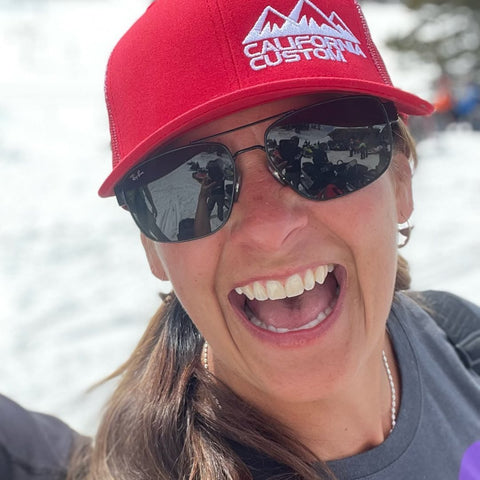
Melissa hated snowmobiling at first and says she finally learned by copying whatever the rider in front of her did. She is secretary of the Utah Snowmobile Association, a Team Polaris ambassador who runs ladies' rides and teaches beginners, and co-founded the Bear Valley Riders club with Dave. She has also called RMSHA hill climb races on FloRacing.
Show notes
- 2:40Home base in California, six months a year in Alaska racing Iron Dog, and winters in Utah
- 4:27Dave's dad raced Rupps at West Yellowstone and ran a Kawasaki dealership
- 5:33Melissa's first ride: dollar-store cotton gloves, a sled she couldn't start and an hour alone on the trail
- 8:01The day Melissa decided to copy the rider in front of her, and got hooked
- 16:50How club dues flow to state associations and the American Council of Snowmobile Associations
- 20:19How the Utah Snowmobile Association won the bid for the 2027 Congress in Salt Lake City
- 23:02Average Congress attendance is about 400. The goal for Salt Lake is 700 to 800
- 29:19Why Bear Valley Riders is a year-round club with Jeepers and side-by-siders
- 33:14Are we watching the death of clubs?
- 36:12Melissa's elevator pitch: beacon check stations, toilets and clean parking lots come from clubs
- 38:19A $650,000 grant more than doubled the Franklin Basin parking lot near Bear Lake
- 45:28Dave on his cancer diagnosis and pushing the next generation ahead
My goal with Congress is in 10 years when they look back at Congress, they still are talking about how great Salt Lake City was.
Win a free custom wrap
Drop your email and what you ride. We draw winners all season and announce them on the show.
I don't think I know the answer, but without a club, I will tell you snowmobiling will disappear.
Questions answered in this episode
What is the International Snowmobile Congress?
It is a meeting held once a year in June where the American and Canadian snowmobile associations, and sometimes groups from Sweden and Europe, get together in person. Melissa Wagner explains that club dues flow to your state association, and state associations belong to the American Council of Snowmobile Associations, which watches government decisions that affect riding access. The Congress moves region to region by bid. 16:50
Can anyone attend the International Snowmobile Congress?
Yes. Anybody can come, and there is a cost to attend. Some meetings are closed to association leaders, but the breakout sessions are open to everyone, on topics snowmobilers want to learn about. There are also opening sessions with big-name speakers, and the manufacturers attend. 21:03
Where is the 2027 International Snowmobile Congress?
Salt Lake City, Utah, at Little America in June 2027, after the Utah Snowmobile Association won the bid. Dave Wagner is co-chairing it. He says the average Congress draws about 400 people and they are aiming for 700 to 800, with day passes and a media room. The 2026 Congress is in Nebraska. 22:26
Why should I join a snowmobile club?
In the Wagners' words, a club gives you a voice with the Forest Service and other land managers, often years before a riding area or parking lot is closed. Clubs also fund and maintain avalanche beacon check stations, trailhead toilets, parking lots and grooming, and help new riders learn the basics. Melissa puts the cost at $30 to $50 a year. 36:12
How do snowmobile clubs pay for trailhead parking lots?
Often through Recreational Trails Program (RTP) grants, which individual riders can't apply for but clubs and associations can. The Utah Snowmobile Association got a $650,000 grant that more than doubled the Franklin Basin parking lot near Bear Lake, with money left over for new signs, a beacon station and a toilet. Melissa says snowmobilers rarely use RTP money because nobody writes the grants. 38:19
Paying $30 to $50 to protect the riding area that you couldn't even take your sled out in if it got taken away. Join a club.
Full transcript58 minutes · 11 sections
Read it
Lightly edited for readability. Click any timestamp to jump the video to that moment.
0:00 Intro: live from the Boise snow show
All right, welcome back to another episode of the Sledder Cast podcast. We're live coming in hot here from Boise, Idaho. Dave and Melissa Wagner, welcome. Welcome to the show.
Thanks for having us.
Yeah, you guys are everywhere and glad we were able to pull you aside and sit you down on a couch and have a conversation about snowmobiling today.
That's what I'm saying. I'll tell you this, Boise show is really hot. There's a lot of people walking around here and they're all having a good time. So,
Yeah, we're excited about that.
We really like the Boise show. It's one of the most fun shows we do. It's in our home state, obviously. We have a lot of friends and buddies over here and companies that we get to, you know, last night we were go-kart racing till midnight with the crew. So, it's a great time over here in Boise.
I mean, anything with a motor, right?
Yeah. It's a little warm. We've had no snow really yet. So, hopefully by the time this goes live, there is an abundance of snow.
Looks like there's some weather coming next week, I think. Right.
It's going to come.
Yeah.
It'll be here before you know it.
It will. It always does. Hopefully, lots of it. So,
We got this. We do.
Yep. That's coming. Yeah. So, obviously I've seen you guys online. You guys, you know, are very active on social media, but also in person. I mean, let's talk through some of these things you I mean, the events that you guys have attended this year so far. Let's say from September on, like, give me a list of these events.
A lot of snow shows. We missed Hay Days because I had doctor's appointments. But
Yeah, unfortunately we did miss Hay Days, so that was really too bad. But yes, we did make it to the Utah snow show. We went to the Kalispell snow show and here we are in Idaho and we've been a few other places in between. But we are so looking forward to a really fun season. We have a lot of events planned this season. David is going to be racing RMSHA. So we're going to be at all of the RMSHA races this year. And yeah, December 5th we're going to be out in Salt Lake City at the Young Powersports headquarters doing their open house event. So that'll be really cool. We're looking forward to that.
We're going to be talking some snowmobiles there.
2:37 Who are Dave and Melissa Wagner?
Great. And where do you guys call home base?
Mostly California.
Mostly California. Well, we used to spend a lot of time in Alaska about six months out of the year racing Iron Dog up there and doing RMSHA this year. We'll be staying at our place in Utah for the majority of the winter probably.
Great. When's the last time you did RMSHA?
Never have.
Never. So, you've never done RMSHA? Just Iron Dog.
Just Iron Dog. So, you have RMSHA and then you have Cain's Quest. Those are the two things I want to do still. So
Sweet.
We'll see how this year goes.
Awesome.
I was only going to do a couple races and then Melissa and Cody said you have to do all eight. So that's what we're going to do.
You're doing them all. And I guess you may be familiar with Melissa's voice, right? Because aren't you full-time this year with a new gig with RMSHA and FloRacing? Is that in the works maybe?
I feel like it's kind of in the works.
Kind of in the works.
Kind of in the works, but yeah. Yeah, I do like to talk snowmobiles and for sure I'll be at all of the races and I'm looking for something to keep me busy.
Nice.
I'm not really a racer personally.
She did FloRacing last year with Trace and the two of them got it going pretty well, didn't you?
It was very, very fun. We had a good time.
She wasn't too interested at first when I threw her in there, but that all changed.
I mean, I either want to be riding or I want a heater. So, I'm just saying.
Yep. There you go. Well, we'll be looking forward to that and we'll see you guys at some of the RMSHA events this year. But as far as snowmobiling goes, what's your history of snowmobiling? I mean,
Lifers, you know, late bloomers. I've been riding snowmobiles as long as I could walk. My dad started out racing Rupps way back when. We'd go to West Yellowstone for the oval races and he raced a couple other big races and then ended up with a Kawasaki dealership and we sold Rupps and Scorpions. He sold Four Winns for a while.
Wow.
And then he retired when he was like 37 years old and walked away from it all and we kind of went away and I don't know we'd been married for about eight years and I said it was time to go do it again. Bought a couple old Arctic Cats and Melissa hated it. She was like, no way, I'm not doing this. She cried, had a fit and about six years ago we jumped into it and started racing Iron Dog and my goal is to ride 100 to 110 days every year and
Excellent.
That's what we do. She loves it now. She has warm clothes and they're not ski clothes, so she has fun.
I mean, to be fair, my learning snowmobiling came from the day David decided we were going to buy these two janky old sleds in a tilt trailer. They weren't janky at the time, but they were cool. And they were old sleds and they were I felt like it was a ton of money back then, but it was probably like $1,000 or $1,500 and it felt like a ton of money.
Rewind 20 years ago and we went and picked these sleds up and he was so excited and we go out just him and I on a snow day and I had like my Walmart cotton dollar pair of gloves on and I had like some really cheapy snow boots and I think I had on my snowboard pants. So I had snowboard pants and I had like some Columbia boots or something and just like those stretchy cotton gloves that you know, you could buy them at the dollar store or something.
And so that's what I wore and we went out and we go riding up the trail in these two old sleds and at first it was kind of fun but David was so excited because he rode his whole life and you know here I am brand new and he goes I'm going to go off and like catch some powder and I'll be right back. And so I couldn't start the sled for one. So I couldn't start the sled. I didn't know where I was. And he left to go play in the powder and he got stuck and didn't come back. And so I sat there on this trail and we were seriously all alone. I didn't see another soul for more than an hour. And I thought he died, right? And I'm like,
“And you're next.” Right.
Like he died. I'm freezing. Like I can't start the sled. They didn't have reverse, you know, the whole thing. If anything could go wrong, it did that day. And I didn't pack anything with me. I just, you know, went out into the wilderness with nothing. Not even a granola bar type thing.
Yep.
You know, anyways,
That's the proper way to break someone in. You know, give them the worst experience possible. If they come back, they're going to be a lifer, right?
Well, she turned into a lifer. It's her life now. I say it all the time. My favorite person to ride was my wife. Yeah. And we ride 99% of the time together. I tried talking her into doing Iron Dog with me and she wouldn't do that. So
Yeah, that's a little beyond my capacity. But yes, I at one point a couple years later really had just like a little brain moment where I was like, “Wait, I'm the only one not having fun here.” And I'm looking around, everybody's high-fiving each other and having the best day. And I'm like crying in my helmet, just having a bad attitude all over the place. And boy, when my attitude is bad, it is bad. And so, I decided I was going to learn it and I was like, I either need to learn this thing or I need to stay home cuz I'm being a fun stealer.
Yeah.
And so, I decided this one day that I was going to copy and do whatever the guy in front of me did. It wasn't David at that time. It was just somebody. I don't even know who it was. And so I had like this little brain moment and so I stood up and I started leaning on the sled and like every time the guy in front of me would step over to the one side, I would do it. And when I would see him move his hand, I would move my hand there and I just like copy repeat the person in front of me and I ended up like having the best time that day and I've been hooked ever since. Yeah. So yeah,
That's the way to do it. Yeah. Just find someone who knows what they're doing.
Yeah.
And just study the heck out of them And then try and replicate it. Right.
She'd come home and call Bret.
Yeah. I did make friends with Bret Rasmussen that following year at a snow show and I was like, Bret, you need to help me here. So, yeah.
9:38 What the Wagners do for work
Well, cool. So, outside of snowmobiling, what do you guys do in life that affords you to be so involved and so engaged in the sport? I mean, you said 110 days, right? That's a lot of days.
That's a lot of days.
So what allows you guys to do that?
I've owned several businesses. My dad always told me you're either going to go build your own dream or you're going to build somebody else's. And so we went out and we've been very successful at a lot of things. I've got a work ethic that's like no tomorrow. I've got loyalty and we've been able to be real successful. And now since the kids are gone, we're chasing snowmobiling like no tomorrow. Getting involved in a lot of different things like congress and clubs. Melissa's secretary of the Utah Snowmobile Association. We started a club and so...
Which we're going to get into. Yeah. Talk about this. Yeah.
I've been successful at life. Some people call it luck, but most people don't want to be unlucky long enough to be lucky.
Yeah.
So,
I don't know. I feel like we work hard when we're home.
Yeah, we do.
Yeah.
When we have to work, we'll work.
Play time is play time. We'll play twice as hard as we'll work. I guarantee you that.
Yeah. What's your superpower then? Because my 11-year-old showed up and he saw this box of donuts and he was stoked.
They were good donuts.
And so he starts going into it. I'm like, “You need to go thank Uncle David and Aunt Melissa for these donuts cuz they brought them over here.” But what's your superpower?
Passion. It's the passion. Passion's a huge thing. You know, a guy named Bret Rasmussen told me people will do more for passion than they'll do for money. And I believe that 100%. And snowmobiling, come on, where else do you have people that aren't family that's family? I mean, our family is snowmobiling. I mean, we just left our family in Southern California and I couldn't wait to get here to hang out with everybody here.
Yeah.
And that's it. It's the passion of this whole sport and the love. Everybody has a common goal and a common thing. Nobody's jealous of each other. So, it's
Yeah. That's it. It's passion. And the other thing too and I was talking to someone just earlier today can you think of any other industries where from basically September through November almost every weekend in North America there is like a snowmobile expo event show.
It's like every weekend.
Yeah. And then there's like now that you're seeing, you know, more and more video premieres, like you couple that in, like there's so many things going on that when you're in the bubble, you kind of think it's normal. But if you kind of step out of it, you're like, wait a second. I know some passionate people with pickleball, but there's not, you know, there's tournaments you can go play in, but there's not like trade shows and events and all these things that are just so many of them, you know?
Yeah, for sure.
And so, I think, you know, you said, it's passion. I think everyone who snowmobiles goes through the same struggle every year. That passion gets taken away from you, right? You can't just go down, you know, you can't be playing outdoor pickleball and then when it gets cold, if it gets cold where you live, then you just go indoor and play pickleball, right? So everyone in the industry, there's a moment where I can't do snowmobiling anymore and I have to wait. And I think that kind of helps breed that passion. Everyone here knows and experiences that.
Well, with your 11-year-old, how many events are you going to go to and let your 11-year-old run around everywhere and know they're going to be safe?
Exactly.
I can set Melissa's purse down at RMSHA's booth sitting right out there in front and I know nobody will take anything. Try that at the NFR rodeo. This is it. I mean, it's family oriented. You trust people. I know this. If you broke down on the side of the road and somebody comes by and they're a snowmobiler and they see you got a sled, they're going to stop. So tell me, where else do you find that?
Yeah,
You don't.
Mhm.
I have a good theory. You know what I think about snowmobiling? And I tell people this all the time. Where else as a grown adult could you go play with your friends? And you play with your friends and you get in situations like every ride there's some kind of situation that you have to figure out as a group how to get out of it.
Yeah.
You know, like somebody's going to break a sled or somebody's going to run into something or you know, there's always something that happens. And so I feel like there's such a camaraderie out there with your riding group or the people that you ride with that you just kind of become brothers,
Sisters,
You know, whatever it is. Like
Your ride group are your very best, most trusted friends.
They have to be there. Especially when you're, you know, when you're riding backcountry terrain, you don't have a lot of options out there if things go south. Yeah.
So, yeah, to answer your question, I did think of something on the spot.
Yeah.
Adult escape rooms. That's where you go play with other adults.
Yeah. I was like trying to think. I'm like, that's actually pretty true.
How do you play with your friends? There's always that competition, but it's friendly competition. Yeah. You'll poke at each other and make fun of Ski-Doo and Arctic Cats and everything, but at the end of the day, everybody walks away with a smile on their face and happy with each other. Yep.
Yeah. So, there we go. Well,
It's true.
16:02 What is the International Snowmobile Congress?
We were chatting, I think it was at the Utah Snowmobile show, you kind of hinted at some congressional movements that were going on and your involvement and honestly speaking, I had no idea what
Congress was.
Congress was, what they do. Correct me if I'm wrong. Is it the Snowmobile Congress?
International Snowmobile
International Snowmobile Congress
Congress. Yeah.
I'm going to go out on a limb and say a good percentage of you who are watching or listening to this probably don't know what goes on.
Go check it out
At this thing.
It is so important to us.
What is it? What is this event? How often does it happen?
So, the International Snowmobile Congress is held every June. So once a year in June, all of the leaders in your state associations get together with the American Council of Snowmobile Associations. So, just to give you a quick like rundown of how this works, when you join a club, then you are joining part of the American Council of Snowmobile Associations. So if you join a club, a piece of your dollars goes to your state association. Your state association is kind of like the umbrella over each club in every state.
That state association makes contacts and keeps your riding areas open by being friends with the avalanche centers and the Forest Service and the Department of Natural Resources and the manufacturers and all the things. So your state association does that and then all of the states belong to the American Council of Snowmobile Associations. So those are the people that are always watching what's happening in government. So they're the ones when something is happening in our actual Senate or actual Congress or the Trump administration right now.
They're paying attention to all of the logistical things that are happening before they happen so that we have a voice as snowmobilers to keep our riding terrain open whether that be in the trails or here out west. They're always kind of watching out for us if that makes any sense.
So their brains are proactively thinking and aware of what is happening and what could happen.
Exactly.
And like we talked about a minute ago, most of us are reactively thinking,
Right?
We show up to the parking lot, there's a sign that says zone is closed or parking lot's closed, and we're like, “What the heck? How did this come to pass?” If they were closing that a year to two years before that, there's open comment sessions and everything else. That's why it's important to join your local club. If it's Magic Valley, if it's the one where you're at, if it's our club, Bear Valley Riders, if it's Top of Utah, whatever it is, by joining them, then you find this out and then you have a voice two years before all of this happens. And if we don't have a voice, what happens? Everything gets closed.
We've went through this in California, losing area, and that's why it's become such a passion to us to get involved in it. Yeah. Because most people want to go ride but they have no idea of all the logistics behind that to get it to that point.
Yep.
Exactly. So to answer your question, the International Snowmobile Congress that is held in June is a meeting where the Canadian associations, the American associations, and there are a few sometimes from like Sweden and Europe and other places that come and they all get together once a year in June to have an in-person meeting. Usually a representative from every state attends this meeting. So they put it out for bid and it hops from region to region. And last year it was at Prince Edward Island up in Canada.
And this year in 2026 it will be held in Nebraska and we put a bid in as the Utah Snowmobile Association to do the congress or hold the congress in Salt Lake City, Utah. So we're going to be host and we won the bid.
So when you say you put a bid in, explain to me, what's that process like?
We had to show what our budget was going to be. Show that we had the money to back all of that. Show we had the facilities to do it and sell them on the idea why we were going to be better than someplace else.
And where does the money come from? Is it from the associations or
The Snowmobile Association is putting it together.
Okay.
And it does cost to come to it. Then we will have sponsorships and things like that to be able to pay for it all.
Who can go to it? The general public?
Anybody can come to it.
So it's kind of like a show where you just come, pay and punch your ticket?
Right?
And what are you doing? Like if I go there, what am I doing as a generalist there?
So they do hold a lot of different meetings there. Some of them are closed meetings. So the elected officials, say the association presidents, will go to the association presidents' meeting which is a closed meeting where they plan and learn and do all of their group meetings but there's also a whole bunch of what do you call them? Breakout sessions. The breakout sessions anyone can attend and they're going to be topics that snowmobilers want to learn about.
So you're going to be able to come in and do like three breakout sessions and learn a bunch of stuff in June and participate and just kind of get your feet wet of like learning what happens on the back end. They also have like opening sessions where they bring in big-name speakers and things. The manufacturer associations are there. So yeah, all of the manufacturers come.
22:26 Bringing the Congress to Salt Lake City
Well we're working on Utah. I leave here and go to Salt Lake to kind of ink the deal and put it together. Cody Sargent and I are co-chairing it for June of 27.
Okay. So next June, not this June.
Yeah. And then we're doing it at Little America. And, maybe a cocky statement, we want everybody in the snowmobile industry to know what we have out west.
Do they give you a number on attendance? Like, can you say here's the number and I want to blow that number out of the water?
Yep.
Is that available to you? Cuz that seems like that would be valuable to know. Like
On average about 400 people show up to these things. We honestly believe and probably get in trouble for saying this. I think there's no doubt we can get 700 to 800 people. We're going to do day use so people can come in see what's going on. We're excited about doing some things with a media room so you could come and do your podcasts with people from other places and things like that and bring in some of the bigger names from the mountains. Yeah.
And my goal when we decided to do this, we were sitting in Washington DC and they said, “We need to have some bids.” And I said, “We're going to do this.” And at first everybody was like, “There's no way we're doing this.” And I'm like, “Yeah, we are.” And so my goal with Congress, with the mountains, with RMSHA, with all the Rocky Mountain stuff and everything is in 10 years when they look back at Congress, they still are talking about how great Salt Lake City was. Yeah. And to open people's eyes up about what we have.
Well, I think it's going to be a really great chance for some new people to get involved and get excited about making a difference out there.
Yeah.
Yeah. You know, companies like yours, you know, having your stuff there and these guys now who ride trail sleds get all excited about wrapping their sleds and everything. Things that hasn't even went east yet is exciting.
Mhm.
Yeah. East meets west. It'll be really cool.
Yeah. At the crossroads of America
Right there in Salt Lake City. And it's very convenient for us to drop down. So, I'm excited. I mean, I obviously don't know much about it, but any way we can get involved, I'm happy to. I'm kind of like you, like I want to know that number and like
Blow it out.
I want to go blow it out of the water. Right. Well, I think somebody else already said this, but Salt Lake,
When I walk in there, the words are this is the place.
This is the place. Yep. Someone already said that. Yeah.
But no, I mean, that's the thing. Think about, and I'm being pretty biased right now, think about the cool businesses that are out west. You guys, Starting Line Products, Zbroz, all them things that them guys back there kind of see but they really don't know much about. FloRacing, they watch the hill climbs but a lot of them have no idea you can show up and go watch this you can enter the amateur thing. So what can we do and how big can we make this and how can we move it into the next generation?
I mean
Which is key. I'm old, but the majority of people and they're probably not going to like this when I say this is people at Congress are a lot older than I am.
Yeah.
And the only way we're going to keep this alive is if we move it into the younger generation.
Yeah.
The kids 11, 10, 12 years old, if we don't have them out doing stuff, they're not going to want this passion.
Yeah. I mean, look at that right there. We need kids
Playing on the old Arctic Thunder.
I love this.
Like, look at that kid right there. He is in heaven right now. Yep. So for the viewers, right to our right, there is an arcade game with a snowmobile on it and there's three little boys sidehilling right now, just having
The time of their lives right there.
Well, you know that just speaks again about the whole industry and the passion thing. Come on, your kid's 11 years old. I remember growing up, I love to hunt. I love to fish. I love to do all them things. But one of my most favorite things was to go get on a snowmobile and go riding with my dad.
Mhm.
And then I learned to wrench on sleds. I was with him.
Yep.
And you know, so many of them lessons through snowmobiling and things like that were life lessons that then took me into my older life and taught me things. Does that make sense?
Absolutely.
And it's things like that they're missing, I think, in America today that is in this room right now.
Yeah.
And so,
For sure. Well, you kind of touched on decisions. Are there actual concrete decisions that get made or are they conversation starters that end up potentially being decisions that get made at the International Snowmobile Congress?
Everything starts with a conversation, right?
Yeah. It's not like you're going there and voting on something and boom, it's going down.
When you go to Congress, like Melissa was saying, with her being secretary of Utah Snowmobile Association, she's got very well educated about all this stuff. But when you go there, all they're doing is setting up a group of people that are able then to have educational conversations to be able to make things work. Because you and me without their help, we don't really know what's going on. We know, oh, they're going to close our trails down. And that's what we know. We don't know everything behind it and how to address it to be able to work around that problem.
You know, whatever the problem is, I believe there's rewards and consequences to everything. So, if we can figure out how to make the rewards work in our favor by working with people, that's a huge thing.
Yeah. You know, and if we understand the problem, if we understand the other side, no one wants to feel like they're getting the short end of the stick. So, the more you understand, okay, how can we best make this a win-win, you know, for everybody. We might have to give a little, they may have to give a little, but in the end it's a much better result for sledders, right? Like that's what we want, right? But we can't just be like put a wall up and say it's this or nothing, right? Like
28:54 Why you need to join a club
You need to join clubs. That club gives you a voice, you know? It's like if you don't join that club, you really don't have a right to have a voice. Yeah. Because it's the people at the clubs that then in turn are working with Congress, the states, clubs and everything else that helps keep our stuff open. And it's not just snowmobiling. Them trails are side-by-side trails, too. Yeah. And our club that we started out in California, we're a year round club cuz we figured if we can work with side-by-siders and Jeepers and snowmobilers, then they're all trails we all use together. So, we have a bigger voice.
Instead of 200 snowmobilers, we got 2,000 Jeepers and side-by-siders that have a voice like Melissa said. So, when we go to the Forest Service and say, Hey, look, this is what we think, we have 2,000 club members, we have a bigger voice than if we go in and say, “Hey, I'm Dave Wagner. I like to ride up there and I want to keep this open.” And they're like, okay.
But when they have 2,000 people behind there, and then you take that 2,000 people from one club to the state association, now you have 10,000 people. So now in Utah, when you go before Governor Cox or something like that down there and you say, “Hey, look, we're speaking for these people. We want Moab open or we want Logan Canyon to stay open at the Sinks trails or something like that.”
There's more people behind all of that. They listen to you. He's thinking, “Oh, if I'm just going to upset Dave, I can upset Dave. If I've got 10,000, I don't know if I want that problem. I don't know if I want to go down. I don't want my name to go down like that.” Right.
Yeah, that makes total sense.
But, you know, with clubs come responsibilities. If you're going to put your name on that thing, you have to be a responsible rider out there. Don't leave your crap laying around everywhere,
Which we all are very responsible riders anyway.
Yeah. And you know there's all kind of things the clubs make the trails work and that's why the clubs are so important.
Yeah.
You know, what's $50? You're one of the great people that have done it. You join our club and you have an opportunity of being able to get a discount on your wraps, Oxbow radios and a couple other places we're putting together right now. And so you join, you spend 50 bucks to join the club, you go buy a wrap,
We're getting your money back anyway.
Money back. Yeah.
And you're doing a good thing for us. We then have a voice, not just put on rides and hang out and things like that, but we have the money then to send somebody to Congress that then can send somebody to Washington DC to the Fly-In that then gets to walk around DC and talk to all the senators in their area and help explain to them what we do.
Yeah. You guys, you keep talking about your club. What I don't think you mentioned is you guys just started this club, right?
We did.
Bear Valley Riders.
Yep. What's membership like? How long ago did you start it?
It took a long time. We did it as a nonprofit, so we had to file all the papers and everything else. Had to put a board together.
Finding somebody that wanted to be in charge of the money was no fun. We had a hard time finding a treasurer, honestly.
Yeah.
So, we finally got one. We have one now.
Good.
We got it all running. Membership's starting to grow. And, you know, our goal is to have 400 members by this time next year, which is a big club.
Yeah.
But, you know, if you go ride, and I don't want to sound cocky. I don't want to sound egotistic, but if you're going to go ride on my trails, the trails we help take care of and everything else, and you want to complain about it, then pay into the club so we can change something. Because if you don't, if you're not involved in that, you got no reason, you got no right to speak, if that makes sense. And so, it sounds cocky, but that's how I feel. You know, if you want to have a word about it, you got to have some responsibility to it.
33:07 Are we watching the death of clubs?
Yeah. So, what's interesting is you guys just started this club.
Mhm.
And one of my original questions to you was, are we watching the death of clubs? Because
Maybe
Because I think you could put a maybe in that box, right? And so the follow-up question is I think everyone can assume club members are typically an older generation.
We are
Which was great years ago but the math doesn't math, right? And so everyone I think knows what needs to happen. The torch, the baton needs to be passed down. But if that generation isn't willing or isn't even there to grab the baton, now we got a problem. So, what's your thought on how clubs can do a better job making sure there's someone there to pass that baton on to?
Well, it's a huge question. I mean,
If there was a solid answer and it was easy, everyone would just
I don't think I know the answer, but without a club, I will tell you snowmobiling will disappear. You look in Utah, the association is starting to take over grooming and things like that, but without that club, there's not going to be that grooming. Yeah. And without the grooming, you know as well as I do, they're going to start screaming and hollering. Trails are getting ripped up and everything else. Yep. Cross-country skiers are going to have a fit and that. So, it's a huge question. I can't answer that.
I don't really have an answer, but I know if we don't somehow encourage the next generation to get involved in this, we're not going to have what we have, what I grew up with. I mean, I grew, like I said, I grew up in Kemmerer, Wyoming, and we had a club clean back as far as I could remember. And we went out, took care of the trails during the summer. We cleaned things up. Rory at onX, they give chainsaws and that away for people during the summer that will go out and clean up trails in that. They give them a Stihl chainsaw in that. And so, if we don't have that, we're not going to have any trails. And little by little, it gets political.
They're going to take it away from us. And if we don't have the clubs to be able to speak up for it, the Forest Service, well, the Forest Service does nothing more than enforce the rules that get put in place. We are going to lose all our riding. So, being able to get the next generation in is huge. And if somebody has an answer for it, I want to hear how we can make it work.
35:48 The elevator pitch for joining a club
So, you're in an elevator, the two of you, with a snowmobiler who's never joined a club ever.
Yes.
Has never even thought about joining a club. You've got 15 seconds in that elevator with that individual to sell. When they walk out of that elevator, they are going to donate to a club. What are you saying? How are you pitching that? What are you saying to that person?
Do you want me to pitch it or you?
Go for it.
All right. Well, first I would ask if they're a member of the club.
No member. They've never even thought about joining.
Okay. So, I would say, “Hey, you should join Bear Valley Riders snowmobile club.” And they're going to say why. And I'm going to say because we're going to keep your trails open so that you have a place to ride. When you come up, there's going to be a trail there. We're going to protect your rights as a rider, and that's the biggest thing.
Second, if you're a beginner, clubs are great because if you just want to learn how to snowmobile, like you could just go with a club on a club ride and someone will take you under your wing and show you that you need to put oil in your sled, because a lot of new people don't even know that they need to put oil in their sled. If you need help learning how to change your belt or you know all of the really basic things, if you join a club, they're going to help you to get started. I understand like this is beyond the elevator thing, but I do understand like, hey, a lot of people just want to go ride with their ride group.
Why would I pay for a club? Because I'm just going to go ride with my four buddies and that's what we do. We hop from region to region. So, we don't really want to like join this old dude's club over there. And I get it. Maybe you don't want to go on the poker run because that's not your thing. However, those clubs are keeping your parking lots clean. When you show up and there's an avy beacon check station, mostly those across the country are provided by clubs. Club memberships. Clubs do the fundraising to pay for those. They install them.
A lot of the clubs are the ones that check the batteries and make sure that they're running appropriately. A lot of the clubs are the ones that petition to get a porta toilet at the trail head. As part of the Utah Snowmobile Association, we just got a big grant for $650,000 to build a parking lot
In Franklin Basin. And it's done.
We doubled the size. Well, more than doubled the size of a much needed parking lot in Franklin Basin up near Bear Lake, Utah. And we were able to get the grant last year and the construction happened over the summer. And so, we had some money left over because we had some really great people on that project. And I do believe that they were able to put up a whole bunch of new signs and a new beacon station and a new toilet in there. And so anyone that goes riding in that area is going to benefit from that. And that is the power of joining a club. Now that we've done that in Utah, we're going to be starting on another one.
And a lot of good things are going to come out of that. But part of that is like being a good volunteer and part of that is having a good club base so that when we wrote for the grant we can say this is how many people are going to benefit from that. And the Department of Natural Resources that we were working with said to us like, we have a ton of money with the RTP funds that are available for the snow use. And usually snowmobilers don't use it because nobody writes grants for it
Because the average snowmobiler isn't going to sit down in their free time and just like write a grant and go build a parking lot, right?
Yeah. But if you're a member of the club, then that happens for you in the background.
Yeah. I don't know if you call it branding, but like that parking lot goes up.
Yeah.
You better have signage, right? So visible that says because of this club, this exists. Otherwise, people will show up and say, “Huh, city's great. You know, county is great. I love this state.”
People have no idea the taxes, the RTP tax out there. You and me can't write for that grant, but as a club, we can write for that grant. This year, we were in Washington DC talking about that. There's so much money out there and if we don't use it on trails, it gets rolled over into these general funds and it goes for things sometimes to fight us from having trails. Does that make sense? And so the club's huge. The RTP tax and the money that's available out there to do stuff is insane. You could do 10 podcasts on that for clubs to be able to gather that stuff up and do something.
Yeah.
41:07 If you can afford a sled, you can afford a club
Well, you know what I think the bottom line is? All right, I'm going to talk to you out there real quick. If you can afford to buy a snowmobile and you can afford to put gas inside a snowmobile and you can afford to put oil in it, you can afford a wrap, you can put bumpers on, you can drop 50 bucks if you're doing something and you know, you can put some Ice Age rails on that thing and you can be the coolest guy out on the mountain with your super cool monosuit and you know all the things. Paying $30 to $50 to protect the riding area that you couldn't even take your sled out in if it got taken away,
Right?
Join a club.
Yeah.
Like, just feel like it's your civil duty,
You know? Yep.
It's really not that big a deal. Like skip going to McDonald's later cuz McDonald's going to cost you $35.
Yeah, we spent that on donuts today.
Yeah. Seriously. Hey, we were the beneficiaries of that though. Appreciate that one.
Those donuts were good.
Oh, yeah. Yep. Well, great. So, the whole club thing was something that I felt like I personally needed to know more about. For those who are listening who are in southeast Idaho, you know, riding in our zones, I think you're probably in a similar mind. I think mountain riding in general I think has a little bit softer view on clubs whereas trail riders Midwest east where I cannot get off this 20-foot trail, and the clubs are what make this 20-foot trail possible for me.
Right.
And so you guys have enlightened and inspired me to be better at that. So, thank you.
Thank you. Join a club.
Well, you know the club thing when you said we have these areas to ride. You can believe it or you can't believe it, but it is going to happen. It's a matter of time before they're coming for all the riding area. I mean, I don't want to sound like I'm a conspiracy theorist or anything like that, but it is coming. Yeah. Because even though, I don't know if you want to call them the evil side or the other side, there's very few of them people, but they have a huge voice and they want everything shut down.
And without joining a club, it will happen and you're going to show up in a parking lot one day and it's going to say it's closed and you're going to say why. If you went back in time, you would have been able to do something.
Yeah.
Does that make sense?
Yeah. Yeah. Like you said, I think just a little bit ago, we probably will never have more access today than we had yesterday.
Our freest day of riding was today.
Yeah,
I believe that 100%.
Yeah.
44:12 Why Dave is so passionate about passing the sport on
Well, cool. As we round this, you talked about passion in the beginning and where it stems from and you shared some personal stuff that has helped drive this passion in life in general. I know you made a couple posts about it on Facebook. You're dealing with your own health issues, but you're still
That's what the doctors believe. I don't believe that
The doctors say that.
Yeah. But that hasn't clicked in there and you told me kind of what your view on that is and what your plan is going forward. I thought it was a pretty interesting way to take it. If you don't mind sharing, I think it might provide some inspiration to some, because everyone has something, whether it's you, your kid, your wife, your grandma or a friend, right?
So you never know when you're dealing with somebody and they're pissy or upset or whatever and you never know what somebody's going through, but one of my favorite sayings is nobody will ever know you died until they knew you lived.
True,
True,
True.
So, you know,
Yeah.
I've been dealing with it for a while. I don't like going to the doctor, but what was it? July
July.
July they told me I had cancer. There's nothing they can do with it. And they have their theory of how long it is and how long you can last and things like that and I've just chosen I don't believe them. Everything happens for a reason out there and this is just a new journey that we're doing and it's really driven the passion like no tomorrow for snowmobiling for families cuz snowmobiling had such an impact in me as a younger person and the people we're friends with that's where they're at. So it's driven the passion to see some really incredible things happen over the next few years.
You know, if all things go the way they say and I move on to the big powder and someplace else to go riding for a while, I want to be able to have done enough things that we can push the next generation far enough ahead that's going to make a huge difference, and have somebody else grab that passion to do this.
Wow.
Does that make sense?
Yeah.
I believe one of my favorite sayings is they'll never know you died unless they knew you lived.
Yeah.
And you know a friend of mine John Maxwell has always said if they opened up that obituary what would it say about you?
Mhm.
And I don't want mine to say I just coasted through life and kind of hung out and done did things.
Yeah.
I don't want to go to bed with regrets. That's my whole thing. I don't live a life of regrets. Period. That's it. Yeah.
That's powerful. I know as I've thought about like obituary and funeral who's going to show up. It's like you can control and dictate who shows up by the connections and relationships that you built here, you know, while you're here. The passion that you have with this kind of initiative of it takes you back to happy memories growing up and wanting that to be passed on to complete strangers right here in this arena is pretty remarkable and I think that's pretty cool.
Well, to watch little kids start riding. We were down at the grass drags with Levi and watching them little kids and watching their dads do stuff like Houston over there with his kid getting him all ready to grass drag and everything else. There's just nothing really like that, I don't think. Period. That's it.
Especially when you've tasted that before and you know what that passion can lead to.
Yep. For real. You know, one of the things that I believe is you're never going to regret the things that you did. You're going to regret the things you didn't do. So, if you have something that is on your mind or something that you want to accomplish in life, whether it be in snow or something else,
Like anything,
Step forward and do it already. Like, don't let it go for another year or another day or another time because you never know how much time you might have. Like you might have a long time, but you might not.
Yeah.
And so if there's something that just drives your soul, then do it today.
The only way you fail is not doing it.
You won't be sorry. You might learn along the way and you might stumble on the way. And life gets hard sometimes for everybody. We all have some, right? We all have some.
Get knocked down seven, get up eight.
10. I love that.
Yes. The one that matters is the eighth one, right? That's it. You just got to get there. Yeah. You just keep trucking along, but at the same time like do it. Just do it.
Do it.
Love it.
49:34 Wrapping up
Well,
Yeah.
Well, thank you. This has been a great conversation. I've had a bunch of different types of people put the headsets on this season of the Sledder Cast and I like having different kinds of people, different personalities, different experiences. Otherwise, conversations would just get boring, at least to me, right? So, I appreciate you guys coming on. We appreciate you out there listening, watching. It's fun to hear people come up and say they appreciate the show. It's great. So like, subscribe, go follow. Where should we send people?
Well, Melissa's got a pretty cool Facebook.
Do you guys hang out mostly on Facebook?
We do. Facebook is the place for you guys.
Facebook's the place. But yeah, Melissa has Be Like a Girl and then we have just me, David Wagner on Facebook.
Great. Go check it out. We'll link it up. We'll link it all up. And I'm excited to kind of follow you guys along and see how the progression of the International Snowmobile Congress goes as we get closer to Salt Lake City.
It's going to be the best there is. Period. That's it. We've made that decision.
I think it's going to be amazing.
You put that you've stamped it right there. So the only thing left to do is just do it.
That's it. I mean, we're going to do a good job for y'all. It's going to be a great job. We're putting together a great board. And you know, the event's only as good as the board. The board's only as good as the people that are on it. And they're only as good as the vision that the leader puts together.
Yeah.
And so I think we're going to have a great time. So if everybody goes and buys a wrap and joins a club,
Join a club
And take their kids out riding.
Join a club.
We're going to have one heck of a winter this year. It's going to be exciting.
Yep. Awesome.
Okay. Actually, take your kids out riding. That's your number one. Number two, join a club and get a wrap for your kids.
All right. We'll do it in that order. Yeah. There we go.
Well, thanks for having us. And thank you for everything you do.
We're so excited to work with you this year.
Yep. We're pumped.
We're going to wrap Melissa's sled and go wrap my RMSHA sled and it's going to have no regrets on it. So, we're excited.
No regrets. You know, it's still cool to ride a $1,000 sled.
Yep.
Like vintage sleds are where it's at and those are the safest sleds to put your kids on in my opinion.
Great.
I wouldn't change my learning lesson for anything.
Yeah. If you can toss one of those older sleds around, then you can
Right.
You can handle everything else. Like put your kid on a super old sled and you won't go wrong because when they run into something it doesn't hurt so bad.
Well, let's just meet a whole bunch of people this year and see how we can change snowmobiling.
Yep.
Yeah.
Love it.
Let's do it.
All right. Okay. Thanks, guys. Thanks for tuning in.
Thank you.
And we'll see you on the next episode.
Thank you.