
Backcountry snowmobiler Bridger LaBau sits down with Trevor at the SnoWest Snow Show in Boise to talk backcountry style, and to break down some of his biggest sends caught on film, walking through his thought process behind the hang time.
You'll hear the three things that made the biggest impact on Bridger's progression, play-by-play recaps of some of his wildest hits, the mindset it takes to learn the aired-out re-entry, and what he's most excited about in the future of snowmobiling.
Guest
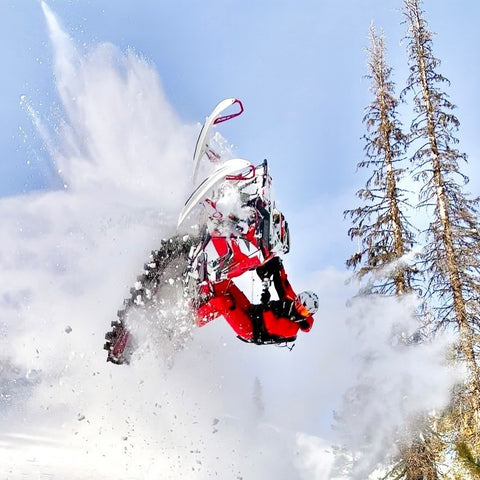
Bridger LaBau
Bridger is an Idaho backcountry snowmobiler known for big hang time, bow ties and aired-out re-entries. At the time of this episode he was 24 and worked as an RN in the emergency department of a small rural hospital, on three 12-hour shifts a week, which leaves him time to ride and hunt. He credits Brent Little with teaching him the aired-out re-entry and Jaden Ballard with the hop over. He spends the fall bowhunting elk and pronghorn and admits to a fear of heights.
Show notes
- 3:05Bridger works three 12-hour ER shifts as an RN, which leaves four days a week to ride and hunt
- 4:23Archery pronghorn in the farm fields and his first elk with a bow
- 12:23A low-mile 2018 Axys right out of college was the season that changed his riding
- 14:55Brent Little taught him the aired-out re-entry, Jaden Ballard taught him the hop over
- 18:42His three keys to progression: a reliable sled, time on snow and cardio
- 20:57Breakdown: a hop over without enough momentum turns into a bow tie above a cliff
- 26:20The side hill panel drop where a tree ripped one hand off the bars
- 30:51Six or seven tries at a rock launch, and the hit that made him stop
- 36:33Setting up an aired-out re-entry: in-run, lip and a steep, soft landing
- 40:40Clamp your legs against the tank and seat and tuck into the sled in the air
- 42:45Lighter, shorter sleds, and why he's looking forward to quiet electric ones
- 45:48His top three adds: a can with a cooker, a magnetic tether and ODI Ruffian grips
When you stick one, it is the coolest feeling ever. You're like, did I really just do that? And then you look at your track and you're like, I put that track up there. That was me.
Win a free custom wrap
Drop your email and what you ride. We draw winners all season and announce them on the show.
The hop over can take you from a really bad situation and put you into a good situation, if you have the confidence to say, hey, I just want to flip the sled around real quick.
Questions answered in this episode
Who is Bridger LaBau?
Bridger LaBau is an Idaho backcountry snowmobiler known for big, clean airs, bow ties and aired-out re-entries. At the time of this episode he was 24 and worked as an RN in the emergency department of a small rural hospital, on a schedule of three 12-hour shifts and four days off, which he says is how he finds time to ride and hunt. His name is pronounced LaBau, and he posts as @bridgerlabau on Instagram. 3:05
What is an aired-out re-entry on a snowmobile, and how do you set one up?
It's a backcountry move where you launch off a feature, usually a pillow or a rock with snow on it, and float the sled back down into a steep slope. Bridger says it's all about the setup: a good in-run, some sort of lip to launch from, and ideally a steep, soft landing that hasn't been blown out by earlier attempts. In the air, he clamps his legs against the gas tank and seat and tucks into the sled so he can hold on. 36:33
Can an intermediate backcountry rider learn the aired-out re-entry?
Yes, in Bridger's view. He says an intermediate rider can learn it, and that once you land one you know you can do it again. The bigger skill is learning which setups are safe and which aren't, so you don't go straight up and have the sled cartwheel on you. 39:40
What helps you progress fastest as a backcountry snowmobiler?
Bridger names three things: a capable, reliable sled that isn't hammered (any brand, ideally a 155), time on the sled, and physical fitness, with cardio being the biggest. He also credits riding with mentors: Brent Little got him into aired-out re-entries and Jaden Ballard taught him the hop over. 18:42
What sled would Bridger LaBau buy, and what would he add first?
He was choosing between a 2024 Polaris Khaos Boost 155 and a 9R Khaos 155 as an all-around sled. His top three adds are a can with a cooker for hot meals on the mountain, a magnetic tether, and ODI Ruffian grips on the stock Pro Taper low bars. He says none of those companies sponsor him. 45:48
Everybody wants to get views and everybody wants to be the best, but there's got to be some sort of risk management.
Full transcript54 minutes · 14 sections
Read it
Lightly edited for readability. Click any timestamp to jump the video to that moment.
0:00 Intro at the Boise snow show
Okay, all right. Hey, welcome back to another episode of the Sledder Cast podcast. We're still at the Boise, Idaho snowmobile show that SnoWest puts on. It's late into the evening, but there are still a lot of people roaming through the doors over there, and it seems like the snowmobile stoke is pretty decent over here in Boise, in your neck of the woods.
Yeah. We just need snow.
Just need some snow, right? So I've got Bridger, and I probably should have figured this out, but I don't think I know how to properly pronounce your last name. So I'm going to give it a shot.
Take your best guess.
Labba?
Close. No. It's LaBau.
That would not have been one of my three or four options.
Yeah, most people don't get it. LaBau.
LaBau. Okay. I think we just cleared that up for a lot of people out there. If we ended the podcast right now, it'd be a success, right? Give the people what they want. They wanted to know how to say that dude's last name.
Yep.
Cool. So we brought Bridger on, and we like to theme our episodes: what's the value drop we're going to get out of the episode? When we were putting this together, I kept coming back to backcountry style.
Sure.
I feel like a lot of the stuff that you're doing just looks sexy. There's style points there. And I know a lot of times you do post the non-hits, your failed attempts too, but we see a lot of the clean stuff that you do. So we're going to spend some time on that.
What'll be cool about this episode is we're going to do some play-by-play, going through some of your videos and trying to pick your brain: what were you thinking here? Hopefully that helps some of us who are trying to enhance our skill sets and what we're capable of in the backcountry, and gives us a different perspective or mindset on how you could set some of these things up.
Yeah.
So we're going to get into that. Before we jump right in, once again, thanks for watching the Sledder Cast podcast. We're on all the audio platforms and all the video platforms. Make sure you're subscribed on YouTube. You can find us on our Deviant Ink channel. We post a full video, but we also cut up all of the videos into bite-size segments, to make it easy to get to the one or two sections of each episode that you really want to watch. So without further ado, let's jump in.
3:05 An ER nurse on a three-twelves schedule
So, Bridger LaBau.
Yep.
Give us a quick background. What do you do? What's your occupation? What allows you to snowmobile in the wintertime?
A little bit about me: I'm 24 years old, I'll turn 25 in January. I work as an RN in a small rural hospital, in the emergency department. That's what I do to be able to fund it. I say fund because I really don't make enough money. Nobody makes enough money to snowmobile.
Nobody. Pretty tough to figure that one out.
It's pretty tough to figure that out. But that's my job. I normally work a three-twelve schedule, so I work three 12-hour days and then I have four days off. That's how I get to ride and hunt, and that's the secret to my success, I should say. So that's what I do, and I just like to have a good time.
4:23 Archery pronghorn and a first elk with a bow
Cool. If you follow Bridger on socials, especially during that late August, September, mid-October time frame, we're typically not seeing you on snowmobiles, obviously because of the time of year. But you do spend a lot of time out in the elk and deer woods.
Sure.
So how many days are we counting? Does it depend on the year? I'm like, when it's archery season, if there's 30 days in Idaho, I'm spending 25 of those out. I know you have your work schedule.
So this year was pretty unique. Our hunting season started in the middle of August for archery pronghorn. And man, that is brutal. You think elk hunting is tough, you should try shooting an antelope. They just stay out in the open fields.
Right. They're in the flatlands.
In the farmers' fields, or in the really short sagebrush. You can do the spot and stalk thing, or you can sit in a blind. That was a unique challenge. I'd never done that before. Ultimately I was successful. I shot a pretty nice buck. That was just the opportunity that presented itself, and I got lucky.
What does a pronghorn taste like? Have you tasted it yet? I've heard mixed things, sagebrushy meat. I don't know if it's true.
No, I think it's really good. It's kind of like when you eat a mule deer. They're normally living in the sagebrush, so they don't taste very good. The antelope, at least the ones we were hunting, are in the farmers' fields.
Okay, so they're getting the good stuff.
They're getting the good stuff. They're not feeding off of sagebrush.
Choose your antelope wisely.
Yeah, exactly. So I was successful, but it was brutal. It was a grind. Antelope eyesight is incredible. They see to the extent that we would see looking through eight or 10 power binoculars, at least that's what I've been told, and that's what I experienced as well.
So you're trying to army crawl through the stubble, or whatever it may be. If there's a little rise in a hill, that's super helpful to sneak in on. Things look flat out there, but they are not flat. There's little rolls. So Brooke and I spent probably six or seven days out total antelope hunting in August.
And then once September hits, August 30th through September 30th, then it's elk. Antelope done.
I'm 100% full send on the elk.
Yep, exactly. So elk season was really fun. I shot a cow this year, which was pretty cool. I shot it at about 40 yards. We sat a water hole. That's what we did that early season, late August, early September, when they're not really fired up yet. We sat a water hole and ultimately I was successful.
And for those who don't know, in Idaho in archery you can hunt pretty much almost any species, male or female.
Yep.
So with your archery tag, just a general tag, you can go out, male or female.
Yeah, male or female on this hunt. And this is actually my first elk I've ever shot with a bow. I've always hunted with a rifle as a kid, but the last couple of years I've been getting into the archery thing and I'm starting to figure it out. So I shot the first thing that came in, and I was shaking.
Great meat. It's hard to go wrong when you shoot an elk.
Yeah. So I shot that one. Brooke didn't have a tag yet for the unit we were in. My dad did, but he didn't come out with us in early September, so he didn't get to participate in that. Then we tried to shoot one for my dad and Brooke, and we weren't successful. The rut this year was kind of interesting. It wasn't really a rut. The elk weren't fired up, and man, when you're trying to sneak in on an elk in the forest, it's tough.
It's brutal. We were talking about this in a previous episode. I think the success rate for archery elk is like 10 or 11% statewide.
That's probably about right. It's tough.
So if you think about 10%, let's just say a 10% harvest rate, that would mean a single person could hunt for 10 years and only shoot one.
Yeah, that's how the math works, right? That's brutal.
But the thing about it is you don't feel like the other 90% is failed or lost time.
No. Man, hunting will push you to your limits, whatever it may be. But elk and antelope with a bow, that's a mental game as well as physical. But it's fun.
9:58 Deer season, a helicopter elk hunt and snow mode
So anyways, fast forward through September. We spent a lot of days out, and then October hits, and that's the general rifle deer season. We hunted quite a bit, and ultimately we all shot deer. I say all: me, Brooke and my dad. That was pretty fun and exciting. We put a lot of time in, and I'm already looking forward to next year, because every year that you hunt, you get this idea of what you want to do next year.
It's the same thing with any sport or hobby. You're like, man, what could I have done better? What could I improve on so that I'm successful?
Your knowledge base increases just a little bit.
Oh, dramatically. Or if you're hunting a new area, you're like, no, I don't want to go back to that area, I want to go focus on this. Or maybe if I would have hiked in a little bit further on this ridge, I could have seen this. Whatever it may be. Your knowledge base grows immensely.
And then November hit. Moving through the season. I guess in September I also helped my good friend Jeff shoot an elk. That was pretty cool. We did this helicopter elk hunt, and man, oh my goodness, it was brutal.
Helicopter to remote, or what?
Yeah, so helicopter into a remote area, and then we had about a 3,500 foot vert climb, straight up the mountain.
The helicopter couldn't drop you guys off on top?
No, it couldn't, unfortunately. But that was super cool. Then in November I helped a buddy shoot an elk, Brooke shot a deer the week after that, and now we're here. Now it's snow mode. We just need the snow.
It's going to come, though.
Yep. You get through hunting season and you're like, all right, it's time to snow. Let's get this going.
12:23 The season that changed his riding
So we're going to transition into snowmobiling, and backcountry style, like I said in the intro. If you're not following Bridger, hop on the gram and give him a follow. The stuff that he does with a snowmobile, there's just so much hang time. Are you getting halfway through the alphabet up there? I'm thinking you count to like 12, 15.
I'm thinking, man, this is either going to be really good or really bad. That's what I'm thinking.
So when did you first start, quote unquote, sending it? Have you always just been a sender?
No. You know what, I'll save part of that for the end. Something that people don't know about me.
Okay.
I would say my biggest season was right after I graduated college. You finish school and you're like, oh man, I'm going to go buy a new sled, I'm going to go buy a new truck, life's going to be good. I was riding this clapped-out 2017 Axys, and by the time I sold it, it had about 5,500 miles on it. It was just hammered.
So I went out and bought a low-mile used sled, a 2018 Axys 800, 155 with a 3-inch track, and that was my pivotal moment. I always grew up watching the Thunderstruck videos and the Chris Burandt videos, and I was like, man, I just love snowmobiling. I love everything about it. I'm so passionate about this, but I don't have the sled or the time yet to get to my full potential.
As a kid, you're watching the Rasmussen videos and you're watching the Burandt videos and you're like, oh man, what would it be like? That is my dream.
So once I had maybe some of the keys to success, the time and the money (I'm not rich by any means, but you get out of college and you start making some money), I was able to buy a nice sled. That was the season that turned me from a good rider to, I don't want to say a great rider. I don't see myself as a great rider. I see myself as a rider who improves every year.
And that was the quick improvement.
Yep. That was the turning point, where things just went well for me. And I met some people. I met Brent Little that year.
And speaking of Brent, where are you, man? We've got a seat saved for you.
He shot me a text and I was like, where are you, dude? He's got a long drive to get here. But I was able to ride with Brent one day. Bluebird day, fresh snow, just epic. And that was the day I started learning the aired-out re-entries. He was kind of the guy who was like, dude, you've got to try this. I remember flipping over backwards and just not really getting it, not understanding it, but I was like, man, this is really cool.
That was actually interesting, because he hurt himself that day. It was kind of a drop-off on the trail, and he went a little deep and messed up his neck a little bit, and he was out for the season. So I never really got to ride with him that year, or the next year. And then this previous year, on the Matryx, I was able to ride with him quite a bit. He's an incredible rider.
I remember a few years ago, back then you didn't see a lot of continuous bow ties, at least people weren't filming them. And that's what first caught my attention. I saw him, I think he was on a 175 or some long track, and he was just bow tie, bow tie, stringing them together on this beast. And I was like, that's pretty cool.
Yeah, man, he's got style. The dude is incredible. He's like a whitetail deer, he's just all over the place, bouncing around. He's crazy. I absolutely love it. So he was pretty pivotal in the aired-out re-entry.
Another person that was pretty pivotal was Jaden Ballard, Core Freshies. I've ridden with him a couple of times, and he's the guy who taught me the hop over. Nobody really ever taught me the bow tie. I figured that one out myself. But I will say Jaden taught me the hop over and Brent taught me the aired-out re-entry. Those are the two people who were crucial in that, so props to them.
For sure. One thing I've picked up on, just having conversations like this throughout the podcast, is that there's mentors in the space. If you're willing to put yourself out there in the snowmobiling space, there are mentors to be had. People are pretty cool that way.
Sure. And mentors everywhere from beginning steps to, hey, I'm a good rider but I can't figure out how to do this maneuver. Or I can't figure out where you hop. Do you actually hop? Sometimes you do, sometimes you don't. Having somebody show you, or just get the wheels turning, helps you so much.
So that was the pivotal change, when I bought that sled right out of college. This will be my fourth season out of school.
So three or four seasons ago.
18:42 The three things that sped up his progression
So you've casually told us some of the key pivotal moments for you. But if we were to put a number on it: looking back on those three or four years, these three things made the biggest difference for my progression.
Sure. I would say one of them is a quality sled that's not hammered. A capable, reliable, pull-and-go sled where you're not fighting it all the time. Because, man, when you have issues on the mountain, it is the worst. You go to start your sled and it doesn't start, and your heart just sinks. You're like, oh, I'm done for the day. So that's crucial.
Okay, so number one, a capable sled.
A capable sled. Whether you ride Cat, Polaris, Ski-Doo, Lynx, I don't care what you ride. If it's reliable, runs good and it's a 155, that's the ticket, in my opinion.
Then time. Time is huge with any sport or hobby, or whatever you do. If you don't have the time to put in, you're not going to be successful. That's just the nature of it. Money can't buy you time. Well, maybe it can buy you time, but time is priceless, and you need that time on a sled to get good.
And then the third thing is physical fitness. That's super huge. I'm not the most fit guy. Nobody is, unless you're Caleb Kesterke. But having that cardio worked up and being able to hang on throughout the day, that's huge.
fitness and cardio, I would say, is the biggest one. A capable sled. And then time, practice. Those are the three things that were huge for me.
20:57 Breakdown: the cliff hop over that went wrong
How's your service? Do you have good service here on your phone? So Bridger's going to pull this video up on his socials. If you haven't seen it, we'll splice it over the video here. You want to start with the cliff?
Yes, that one right there.
So I'll give you my perspective. The first time I saw it, all we see is what's in the frame. What I saw in the frame was a wacky dude doing some wacky stuff. It seemed like there was some very high consequence, and you were doing some very playful stuff above it, and then you were like, all right, I'm done with this spot. I'm just going to bunny hop off this cliff, turn my sled on its side, barely miss puncturing myself on a tree and then just ride it out.
Yeah.
So let's pull that video up and walk through it. Are we screen recording? Let me screen record that, so as we talk we can have it recording for us.
So going into it right there, this was my second try at this little maneuver.
Okay. So the first try, what happened?
The first try was a very similar thing. If you hold right there, it'll stop the video.
Let's do that. Start over. Perfect, I love it, it pauses for us. Okay, here we go.
So going into this scenario, my goal was to do a hop over on top of the rock and come back out the way I came. I call it a rock, but it looks like a cliff in the frame. It's not so much a cliff, more of a rock, but there's definitely a drop-off there.
My first one, I never posted it, because it wasn't really a fail but it also wasn't that cool. Going into it I did a little hop over, but it wasn't super clean, and I just kind of slid down. I elevatored down this base right there. So I was like, I could do this better. I got this. Get the cameras rolling again, boys, let's see how this goes.
So I took this one just a little bit deeper. The problem with this setup is there's a rolling knob right before here, and then it also rolls here, and this is kind of a little valley right where I'm trying to do my hop over. The problem with that, especially on a stock 850 (it's clutched, it's got a can, some shocks and other things, but it's a stock sled), is you cannot build enough speed with the snow conditions to keep your momentum through the rolling knobs.
With the hop over maneuver, you've got to have momentum. You've got to have some speed. Otherwise you're going to do exactly what I did, and it just didn't quite work out the way I wanted it to.
So fast forward, going into it without enough speed, and you'll notice that the track just washes out and spins in the snow versus hooking up, because I don't have that momentum.
Getting the tips up, setting the sled and coming back.
So it kind of comes back, but it spun so fast, and I was not in a great position. I'm looking down here when I should have been looking uphill. You always want to look where you want to go. That's a Chris Burandt thing. So I'm just holding on for dear life right here.
Okay, so right here you're just holding on.
I'm just holding on, and I'm like, well, we'll see how this goes.
So now you've turned this into a bow tie, pointed down over the cliff.
Yep. Or the rock, as I call it. And I stick it. I land it in that little valley. And this is so much steeper than it looks. It's a lot steeper than any video shows. So I get my sled up and I do the pin and wiggle, the classic pin and wiggle, and I'm looking down there.
Was this ever an option to you? Were you thinking...
No, that wasn't the idea. Plan B was way down the list. As Levi Green would say, don't do a plan B, just go with the plan A. I didn't have a plan B.
26:20 The side hill drop and the tree that tethered him
So I do the pin and wiggle, I'm looking over the edge here, and I'm thinking, huh, that's pretty nasty looking. There's some kind of a ledge down here that you don't really want to go over. So I got myself set up and started looking at this other route, and it happened a lot quicker than I thought. When I looked at the video I was like, why didn't I take some more time to look at this?
So anyways, I set myself up and I just go for it. Go for the panel side. You know when you drop into this, you're going to have to panel it and crank it around and land into the mountain right there.
Why couldn't you just go straight down? Was there not enough down here?
It's completely flat in the bottom. In the bottom of the frame there's basically a little pack trail. You've got to take that side hill right there. If it would have been a straight downhill right off the top, easy peasy. And that's what you don't see in some of these videos, right? So I'm thinking, let's just go with the side hill drop. I've seen it in some videos, we'll give it a go.
Hold on. So you've never pulled this maneuver off?
Not quite like that. Not off something like that.
So you're learning on the fly.
Somewhat learning on the fly. You watch some YouTube videos, you're good.
Figure it out.
But this was a lot safer than over here. There's a big rock over here that's sticking out. This looked a little better to me, and that tree is a hittable tree.
Hittable.
So anyways, I go for it, and I just lay on the pipe as I'm coming into it, to get my front end up and also spin the track sideways, so you land in a side hill. And I did hold on with one hand. The tree just kind of ripped my other one off, unfortunately.
Yeah, there it is right there. The tree's in it.
The tree's in my stuff. And that tree actually tethered me right there. It's kind of funny. If this will load, from the other view, that tree actually tethered me. I wasn't planning on killing my sled. It just tethered me. Jake Larson, love the guy, was recording this one. So come around, boom, land, and you can see the steepness of this hill. And it's super flat in the bottom. There's no real great run-out, I should say. Your sled could just nose right into the bottom, and that is not ideal.
So you're getting out and you take a little peep over the top.
Yeah. I'm looking, and I'm like, man, that looks like an insurance claim about to happen. I better not go that way. Let's see if it loads here. There we go. So I give it the look, and I'm thinking, man, this other way looks a lot better. You can see it's so flat in the bottom there. That's where it was really crucial to just peg it and get the track to spin.
So before you got down there.
Yeah. So I start to line it up, and I'm thinking, oh man, this is either going to be really good or really bad, but I've got some confidence this should work out okay. The Wi-Fi is not working with us very well right now. There we go. Boom. And I held on with one hand. Brent and Jake said this was the craziest thing they've ever seen.
You can hear their commentary. I think it's Brent's video.
Yeah. He's like, what in the heck? I don't remember exactly what he said, but it was something like, I don't know how you just did that. Boom, right there, tethered. I was like, what the heck. So that was a pretty cool one.
That's cool.
30:51 Breakdown: launching off the rock, and knowing when to stop
So I'll stop that recording there. Real quick, we'll see if we have decent service for this one. We reposted this, and a lot of people were confused as to why you would purposely drive your snowmobile right into a rock.
Right, right on top of a rock. So something about this hit: this was probably my sixth or seventh try at it, and that's what put me into the situation of launching off the rock into the rocks. It was one of those times that I pushed it too far, I would say. I remember Brent and Jake saying, man, is this really worth it? They told me that a couple of times. After hit four, after hit five, they were like, hey, maybe you should not do this.
And I didn't listen to them, and that was really dumb, to be honest. It was like, dude, what are you thinking? This is something that could hurt you. But I was so stuck on the fact that, man, I got this. I can do this. I'm going to launch off this rock and land below these other rocks, and it's going to be the coolest thing ever.
So anyways, going into it, I'm thinking these little rocks, man, they launch you. You can take right off of them, and it's pretty hard on your sled.
So your track is just sticking right against it.
Yep. You're just spinning right off of it, and with the angle of the rock, it's going to toss you the way you want it to go. But it's also rock on sled. There's no snow on that. And I'm midair looking down, and I'm thinking, this didn't put me where I wanted it to.
So were you hoping for it to send you a little bit further down?
Yep. Down below the rocks, into my nice little fluffy landing zone. I had a couple that put me right there, and I just didn't stick it quite right. But it could have been really cool. So at that point I'm thinking, eject, because we're letting go. My sled lands in the rocks. It hit so hard I thought my bulkhead was broken.
Was it rideable?
Oh yeah. The only thing I broke was, on the Matryx, the little tabs where the side panel clips into the front bumper. I broke one of those and that was it.
Wow. Not bad.
Trencher A-arms and Fox shocks, I guess, held up pretty well. It was just one of those hits where after it happened I was like, Bridger, what are you doing? Reality check. Let's think about this a little bit more before you do that again. And I didn't hit it again. That was my turning point, where I was like, okay, is this worth it? Because everybody wants to get views and everybody wants to be the best, but there's got to be some sort of risk management.
Because if that didn't turn out the way it turned out, now you've potentially got to deal with a sled that's not running, you've got your boys there whose rest of the day you probably just ruined as well, and then pulling that thing out.
But you're also pushing yourself, bro. You're trying to get better. As long as it's somewhat calculated, people who want to push themselves are making some of those types of decisions, right?
Yeah, it's the nature of the beast. I'm not trying to be the best, but I'm trying to be the best that I can be. So you've got to make those decisions. Risk assessment, I guess. It's huge.
35:25 How to learn the aired-out re-entry
So I love watching all of your aired-out re-entries, and we've talked a little bit about how Brent Little is the one who got you into that. If someone wants to figure out the aired-out re-entry, what kind of mindset do they need? I know it's hard to do without actually being out on the snow, but if we can verbally talk through what that aired-out re-entry is all about. Because it looks really good on film.
Doesn't it? It's so much fun, dude. They don't even have to be big, but when you stick one, it is the coolest feeling ever. You're like, did I really just do that? And then you look at your track and you're like, I put that track up there. That was me. Oh man, it's rowdy. It's so much fun.
So walking through it, it's all about the setup. The setup has to be good. You've got to have some sort of a feature. I really like McCall. There's pillows, there's rocks, so you end up with some snow maybe this tall sticking off a rock, and you come into it, and that's your launch pad, I should say. You hit that and you just bounce and coast right over to your landing zone. So you need a good in-run, some sort of a lip, and then ideally a steep landing that's soft. That's what you need.
So when I'm scoping out a hit, I'm thinking, here's my in-run, here's my launch pad, now where am I going to land? Because as cool as it is to go up, you've got to come back down somewhere.
And as you're coming down, most of your body, at least your upper body, is taking that hit in the snow, right?
Sure. So that's the biggest thing. You've got to have a good landing, and something that's not blown out too. Because if you hit something two or three times, there's a bomb hole, and it hurts. I had one last year where I kept trying to get it, and I landed in my same track, and oh, it hurt.
So when you're not landing in a track and it's just fresh, describe that feeling. Is it like landing in a soft, fluffy bed?
It's rainbows, butterflies and unicorns, man. It's great. It's so cush, you don't feel a thing. You come into it, you hit that launch pad, a lot of times you're going to be pegged, just to try and get that track to come around, and you're looking down at where you're landing and you're like, oh, this looks good, this is going to be good. And you stick it and you ride it out and you're like, oh man, it's incredible. It's like your first kiss. Maybe your first kiss wasn't as good, I don't know.
We need a headset in your helmet for when you're doing those, so we can get an idea of what you're saying.
Oh, it's a lot of woo-hoos and yeahs, that's for sure. But there's nothing like it. It is so cool to be able to accomplish a maneuver like that.
Say you're not brand new to the backcountry. You can get around and do those things, you're just not hitting some of these features. You're not sending it like this. Where would you say the aired-out re-entry sits as far as skill level? Is it something an intermediate backcountry sledder can pick up?
Oh, sure.
And once you do it once, is it like, oh, everything just clicked right there, and it's stuck in the brain, so when I do it again I don't have to relearn everything? Is that what it's like?
Sure. I love hunting, I talk about hunting all the time, but when you shoot your first doe or your first deer, you're like, I can do this. I got this. Or you land a job, whatever it may be. Some pivotal moment in your life that you've been working really hard towards. If you can do it once, you can do it again. It's an incredible feeling.
I think the biggest thing, and it's something Brent taught me that I never even thought about: when you're sitting on your sled and you're in the air, you want to really clamp with your legs against the gas tank and your seat, and really just tuck yourself into the sled. That's going to allow you to hold on, versus bailing off early or getting flailed out up there.
So no, an intermediate rider can learn it. It's the right setup, and maybe part of it is learning what is a good setup and what's not. What's safe and what's dangerous, what's going to work and what's not. Because you don't want to go straight up and have it cartwheel on you. Nobody wants that to happen to them. So knowing the right setup is crucial, but I think anybody can learn it.
Cool.
41:43 Where sleds go next: lighter, shorter, electric
What are you most excited about with the future of snowmobiling? If we think three to five years out, what gets you excited, personally?
Oh man, everything about snowmobiles gets me excited. What are you talking about?
It's like giving candy to a kid.
I think we're at a moment in history where sleds are getting pretty dang good, right? How are they going to get better? You've got turbos, you've got short tunnels. What more do you need?
Shout out to the SledSend Podcast. We listened to their Fire and Ice episode on the way over here, and they talked about this too. I think they landed on the obvious thing, which is lighter.
Yeah, and shorter.
Lighter and shorter.
Lighter, shorter and more capable. They have a three-and-a-quarter-inch track now. That's nuts. And I'm excited for electric. I think that's going to be cool. I know a lot of people are against electric, but man, the instant power could be really cool.
It's inevitable. They're going to figure out the batteries and the cold.
Yeah, it'll all get figured out. But I'm also excited for the quiet. To have an electric sled and just be buzzing around in the mountains, and you can hear your buddies screaming and yelling and hollering. That's going to be cool. I'm stoked for that.
That perspective has not come across my mind. Because for a lot of people, that's a negative. They want to hear the sound of the engine. But you will hear your buddies.
Oh yeah, dude. You could almost have a conversation. Hey guys, try to keep up.
It may take 20 years before it's refined, but I'm excited for that. And as time goes on, factory sleds are already really good out of the box, and they're only going to get better. I don't know what else they can do better, but that's their job, right? There's smart people out there figuring that one out.
Yep. Smart people taking my money.
So I'm pretty excited. It'll be cool.
44:17 Refining the hop over this season
What are a couple of maneuvers or tricks you're excited to refine, things you're going to add to your tool belt this season?
I feel really good with bow ties. There's a lot of times where you don't really need to do a bow tie. 90% of the bow ties I do are just fun. It's just having a good time. I feel like I'm getting the hop over down, but that is one of the most beneficial maneuvers, in my mind. The hop over can take you from a really bad situation and put you into a good situation, if you have the confidence to say, hey, I just want to flip the sled around real quick. It's all good.
And most people can't do a hop over, right? So refine the hop over in various different scenarios and situations. The scenario where you're puckered and you're like, I'm either going to total my sled or I'm going to make it out of here. That's when it matters. That's when you want to be able to do a good hop over and make it clean.
I like it. We're going to hold you to it. We'll see some videos.
Hopefully some cool hop overs.
45:48 Lightning round: the top three adds to a new sled
Cool. So this leads us to our lightning round, where we ask you the same two questions we ask everybody. First one: you've got your brand new sled. Let's be specific. What sled do we want to talk about here?
I'm going either 2024 Polaris Khaos Boost 155 or 9R Khaos 155. For an all-around sled, I'm between those two. I don't know what's going to be best, but either one would be great.
So let's do that. Top three things.
I'm putting a can on it with a cooker, or a can and adding a cooker. I love the cooker, man. Once you have a couple of hot meals, it's so good. Breakfast burritos, Hot Pockets are fantastic.
It doesn't matter what you put in there, it's going to be good. Some little smokies.
Oh yeah, that's good. I'm not going to rank them one, two, three, but those are my top three. A magnetic tether. I love my magnetic tether. That's just an everyday thing. And then, thinking about it, I really like the grips on my sled. I run the stock Pro Taper low bars, but I have the ODI Ruffian grips, and they're life changing.
Really?
Life changing. It's a little bit thicker of a grip, and it's grippier, I guess. I was turned on to those a while ago by Derek Post. I was actually at the snow show here, probably five or six years ago, and I was like, man, I really like these, and I've been running them ever since. And they don't sponsor me. I don't get a deal through them. My magnetic tether, I don't get a deal through them.
What are these guys thinking?
I don't know. I guess I need to hit them up and say, hey, what's the deal, guys? I love this product. So top three: I really like my grips, I really like the magnetic tether, just from everyday use, and the cooker. That's huge for me. You can talk about suspension and clutching and all that other stuff, but for everyday use, that's what I'm going with.
Love it.
48:25 Fear of heights, and where to follow Bridger
Okay, final question. What is one thing that most of us, maybe all of us listening and watching, don't know about you?
Fear of heights.
Fear of heights, man.
If you look at my Instagram, I don't do big jumps. That's not me. I hate heights.
You're talking like going to the edge of a big drop or a big cliff and taking that drop down, or building booters and stuff?
Yep. Man, I don't know what it is. I hate heights.
Have you seen the latest Muskoka Freerider video he posted with the boys down in Utah? They built that in-run back into the mountain, and then he hit that. Are you saying that's a fear of heights thing right there?
Maybe it's not even a fear of heights. Maybe it's just the fear of falling, or what could happen. Maybe that's what it is. You look at a lot of Instagram people and jumping is their thing. We're going to build a booter and we're going to huck a 150 foot jump. That's not what I do. I would love to do it. I would love to feel comfortable with it. I have the setup to do it. I just don't know what it is. That's just not my thing.
Well, you're still killing it with the backcountry style, though.
Trying to do my best.
So, Bridger, appreciate your time, buddy. You could be doing a lot of other things tonight. It's a Friday night. Where can people go to follow you? Instagram, Facebook, TikTok?
All of them. I haven't even been on my TikTok in a few months.
So if I'm going to go one place, I'm going to go to Instagram.
Follow Instagram. It should cross over from Instagram to Facebook. It's just @bridgerlabau. I have a unique name. There's no underscores, no periods, nothing like that. And look forward to some sled content coming soon. Hunting season's over, so I need to start posting some sled stuff. All we need is some snow.
Okay. Well, if you get a bunch over here, just push it eastward. We would appreciate that.
Perfect, I can do that. I'll do my snow dance.
Awesome. All right, Bridger, thanks. And thanks, guys, for tuning in.