
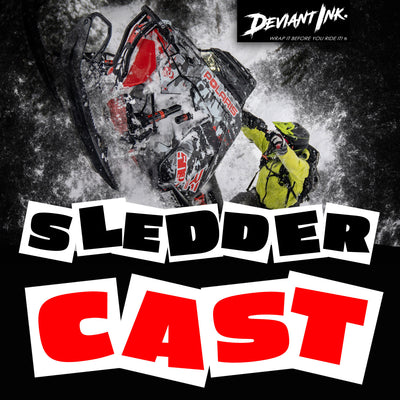
Remember the snowmobile crash video that went viral last year, where the rider attempted a backflip and the machine landed on him? Andy Messner is the guy behind the bars, and in this episode he rewinds time and walks us through the entire day, in his own words.
Andy shares the backstory of the crash that wasn't shared, a frame-by-frame walkthrough of the crash itself, how he got off the mountain and the aftermath, and what it's like to have a video of yourself go viral. Plus his favorite aftermarket mods for his Ski-Doo and one little secret you might not know about him.
Guest
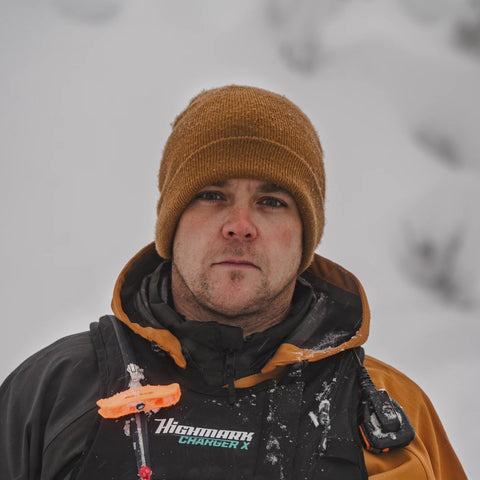
Andy Messner
Andy is a backcountry snowmobiler and dad of two from Coquitlam, BC, who posts as Andy Messner Snow. He grew up in a snowmobile family in 100 Mile House in the BC interior, first rode the backcountry with his dad at three or four, and now works as a parks manager for a city near Vancouver. In March 2023 a flip attempt near Whistler ended with his sled landing on him, dislocating his hip and breaking his pelvis, and his helmet-cam video of it passed 7.5 million views on Instagram. He was back on his sled that November.
Show notes
- 3:21Riding the backcountry at three or four years old on an old Mach 1, on routes his dad scouted from his airplane
- 9:55Three days in Revelstoke with Curtis Gage and Kyle Saxton, riding out with headlamps in a blizzard
- 15:45The injuries: a dislocated hip, a broken pelvis and a torn meniscus
- 18:50Tombstone, the 120-ft gap jump the crew built, and the broken ribs before the flip
- 20:55Going first on a flip jump he had no hand in building, after it baked in the sun
- 25:06The right hand comes off the bars, laid back with no way to push away
- 33:27Cody's flying hop over and the sled toss
- 42:45Search and rescue: six more serious calls ahead, about six hours each
- 45:29Riding himself out to the ambulance: "I'm the patient"
- 48:14Back on a sled at the end of November, pain-free by the end of day one
- 52:017.5 million views, 185,000 sends and a TikTok repost past 50 million
- 57:07Three mods: a GGB can, Cheetah Boondocker bars and Raptor suspension
I've always preached this when I'm teaching others how to flip: don't even yank back. Let the snowmobile do the work.
Win a free custom wrap
Drop your email and what you ride. We draw winners all season and announce them on the show.
They're like, "Where's the patient? We're here to get him." I'm like, "I'm the patient."
Questions answered in this episode
What happened in Andy Messner's snowmobile crash?
On March 18, 2023, near Whistler, BC, Andy went first on a flip jump his friends had built off a frozen lake. In his words, he came in overconfident, pulled back too hard, and his right hand came off the bars. Laid back with no way to push away, he fell and the sled landed on him in deep powder. Cody and the rest of the crew lifted it off within about 20 seconds. 23:40
What injuries did Andy Messner get in the crash?
He dislocated his hip and broke his pelvis when the impact popped the side of the pelvis out. He also tore his meniscus and was beat up head to toe. He spent almost 10 days in hospital after surgery and couldn't put weight on the leg for three months. 15:45
Why didn't search and rescue fly Andy Messner out?
The crew was about 25 km from the parking lot with no cell service, and nobody had a sat phone that day. When Curtis Gage reached cell range, search and rescue said there were six more serious calls ahead of them, about six hours each, on a busy St. Patrick's Day in Whistler, and suggested he ride out if he could. Andy rode himself out to the groomed trail and met the ambulance. 42:24
How long did it take Andy Messner to ride again after breaking his pelvis?
About eight months. He was on crutches the day after surgery, spent three months not putting weight on the leg, did his physio, and was back on a sled around the end of November 2023. By the end of his first day back he was riding pain-free, and around Christmas he was hitting big jumps again. 48:14
What mods does Andy Messner run on his sled?
His three must-haves are a GGB can (quieter and lighter than the stock exhaust), Cheetah Boondocker 2.0 bars on a 4-inch riser for his 6'3" frame, and Raptor suspension, because at 250 lb he jumps up to about 150 feet. 57:07
I had so many people reach out to me that genuinely cared and wanted me to heal. It restored some of my faith in humanity.
Full transcript66 minutes · 16 sections
Read it
Lightly edited for readability. Click any timestamp to jump the video to that moment.
0:00 Intro
All right, welcome back to another Sledder Cast podcast. This is a first for us on the podcast: we are doing this remote. So we've got Andy Messner and myself. I'm in Southeast Idaho, and Andy is up in Canada. Remind me the city you're in.
Coquitlam, British Columbia. Probably 45 minutes outside of Vancouver, on the West Coast.
West Coast. Okay, and how did you say your city name?
Coquitlam. Not going to spell it for you.
My tongue can't even make those sounds.
Yeah, when you see it it makes more sense, but yeah, Coquitlam, BC is where I'm at.
Nice. Cool. So we've got a really fun conversation lined up with Andy. We've had this in the works now for a few months. We thought maybe there might be a chance we could hook up at the Edmonton snow show when we were up in Canada, but we knew we could always jump on and do it remotely. So we had a backup plan, and we're stoked for the conversation. We've got some really cool questions.
We're going to walk through the crash. I don't know if there's an official name for it, but it blew up last spring. March 18th was the day that changed Andy's 2023 riding season pretty drastically. And so we're going to get the behind-the-scenes video walk-through of what went down, and what could have been done differently if you could go back and replay that day, replay that hit, that sand, right? I'm sure we've all seen it. That thing blew up, and Andy, you'll get into some of the metrics there.
We'll have a fun conversation around that, and then we'll talk about sending it big deep in the backcountry and how your style has transitioned throughout the years as you've graduated into a father role.
We've mentioned this before, guys and gals: we're not a podcast company, so we don't make any money off the podcast. What you can do for us is either share this podcast out or simply subscribe to us on YouTube. All the links will be in the description, and we've got some pretty sweet deals from a few of our companies, and onX Offroad. I think we're still waiting for onX to hit Canada with the off-road and snow mode version, but if you're in the US, it's a must-have app to have on your phone. Anyways, Andy, enough of me jabbering here. Let's kick things off.
3:21 Who is Andy Messner?
So who is Andy Messner, for those who are watching or listening to this podcast? Who are you?
Sure. First of all, obviously I'm a dad, the Shredder Dad, Andy Messner Snow on Instagram. Basically just a die-hard snowboarder that is looking for adventure around every corner. I love meeting new people in the backcountry. I love sharing my experience with people in the backcountry. And I'm just always kind of chasing the thrill. It doesn't define me as a person, but it's a big part of my life.
Snowmobiling has been a part of my life since I was a child. I grew up in a snowmobile family that was always involved in snowmobile clubs and racing, and always doing those things on the weekends like flipping burgers for fundraisers or building trails in the summer. I've just grown up around motorsports, and it's turned into a huge piece of my life. To be honest, I never thought it would turn out the way it has. But snowmobiling has been a great industry. It's given me a lot of different opportunities, I've made a lot of friends, and it really is a piece of who I am. I'm excited to share what I do with the world and make friends along the way, chase some thrills.
Nice. And have you always been more of a backcountry sledder, or is that something you transitioned to as your time in the sport and your skill set progressed?
Well, I've been around backcountry snowmobiling my whole life. When I was a kid, my dad would jump in his airplane and fly up over the mountain ranges during the week, and he'd say, "Hey, I think we can drive up this logging road and snowmobile into this fire zone," or whatever it is. So we'd plan out the route during the week and then go chase it on the weekend. The first time I went up in the backcountry with him, I think I was about three or four years old, on an old Mach 1, not a mountain sled like we have today.
I started riding on my own in the backcountry on an old 583 Summit around 1995, so I would have been nine years old at the time. Backcountry riding has always been a big part of what I've been doing, and I've always had that love for the mountains. But at that time the snowmobiles didn't really let us get into the backcountry early. March would come and you'd get a few weeks in the backcountry, maybe three or four rides a year, just because the technology was so poor and the snow is so deep.
So it's obviously what I've always loved to do the most. But I grew up in a small town in the interior of BC where it's 30 below Celsius all winter long. There's really not a lot to do. You like ice fishing, you like hockey, or snowmobiling. I didn't like either of those other things, but I loved snowmobiling. So I'd come home from school, jump on the sled and ride till dark every day, and it became my passion at an early age. We were around the industry so much. I did racing as a kid, drag races, hill climbs, a little bit around the track, never really a track racer. But the backcountry has always been where my passion and my urge to go was.
Yep. So tell me about the area that you ride in. Are you riding right out your back door, or do you have to drive far to get to some of the zones you ride in? What is it like up there for you?
Like I said, when I was a kid growing up, I'd walk out the front door, jump on my snowmobile and be gone. I could ride all day, all night from the front yard. Slowly became an adult, got a real job, and we moved to the Vancouver area, which is a huge city, the biggest city in western Canada. There's 4 million people around. I had to get a real job, go to school, do all those things, start a family. Now the city I live in has a couple hundred thousand people. It's very rare to have snow, and I've got neighbors on every side of me. I'm a bit of a fish out of water living in the city, to be honest.
So no, I can't just walk out my door and ride anymore. I've got to load the sled up and drive about an hour and a half in any direction to hit snow. We're surrounded by zones, it's just a big chore to get to them. It's not easily accessible like it used to be. Don't get me wrong, we do get the odd snowstorm, and when it happens I'm out the door, driving down the streets, driving through parks. I still try and make it happen, but it's a bit more of a chore than it used to be. It doesn't slow down the passion, that's for sure.
8:05 A day job that makes room for sledding
As far as occupation goes, what do you do that allows you to enjoy yourself in the sport of snowmobiling?
I'm a city manager at a smaller city nearby. I'm the parks manager. I don't want to say it's a chill job, because it's not. It's a lot of hard work and it's very busy. But they know that I'm a snowmobiler and they know that I take time off in the winter. I kind of save my time off for the winter. I have a great boss that is super supportive, and they understand this is a part of who I am. If you want Andy to be great in the workplace, you've got to let him go do these things once in a while.
So it's really a perfect combination. It's a good income, it's secure, it's safe. If there's a sunny pow day tomorrow, I just send a text, boom, I can go. A very supportive management group that allows me to do these things. I was in the golf course industry for a long time, where I was laid off in the winters. So I'd work all summer and have three or four months off in the winter. Then it's that parks lifestyle: very busy in the summer, a little quieter in the winter, so it's ideal for my lifestyle.
That's great. Especially to have a company or organization that's kosher with their employees going out and doing what gets them fired up, like you said, so you can bring that back into the work zone and be a rockstar there too.
Yeah, I just spent three days in Revy with my buddies, and it's an ugly time of year where we live. It rains a lot, it's gray, it can wear on people, and it can be hard to get through the doldrums of winter. I spent three days in Revy with the boys, rode every day, I'm exhausted, barely sleeping. I come back to work and I'm invigorated again. It's just in my DNA. I kind of need that to function in some ways.
9:55 Three days in Revelstoke
So you sent an email to me early Friday, I think it was. You're like, "Hey, I've got the boys, we're doing a road trip up to Revy and we might be able to do a podcast with everyone." We didn't end up getting a podcast, because you guys just rode and recuperated.
Barely recuperated.
Barely. Just rode, rode, rode. Anything to report from that trip? Anything crazy go down?
You know what? Not really. I don't want to call it chill by any means, but we didn't do any flips or big jumps.
So you had yourself. Who else was there with you?
Curtis Gage, Kyle Saxton, our buddy Sled N Snow, who just started working with Deviant Ink, and then a bunch of other people from around the world. Elliot Dion from White Space Films. We had a legit crew and we were intending to film the whole time. The weather was not ideal for filming. It was raining, it was snowing, it was a mixed bag. The snow was good but not great, and it was just so socked in. It didn't lend itself to doing anything crazy. It was very difficult to see.
So we just shredded all day, let the sun go down and kept shredding. We were getting back to the trucks about 8:00 at night, riding with headlamps in a blizzard every night, and we made sure we were right out of fuel and energy every single day. We had a lot of fun. Not the most productive weekend, but we needed it. We've had a terrible snow season in BC, and it's been a real struggle to get in the flow. You get a couple good days and then weeks of rain or no snow or no sun. So we just wanted to go have fun, took it back to the basics and shredded hard.
Good for you guys. Much needed.
Yeah, it was super fun. And I'd never met Kyle. He's a great guy, super fun, super chill dude, and I was just blown away. I'm a jumper, I'm a dropper. You point me at a jump and I'll blow your mind. But to get me into the trees and do the technical stuff he's doing, it blew me away. I'd never seen some of the things he was doing.
That guy never stops, man. He's just a machine. He's got the motor on the whole time.
Yeah, and he's just such a chill, nice dude. It was awesome.
12:22 Tree riding versus big sends
That was actually going to be my next question. Andy, if we go to your Instagram, we see high alpine, big sends, no trees ever. So either you just don't film yourself in the trees, or you don't really care to spend your time riding in the trees. Which is it? Do you ride trees? Are you hustling trees? Or is it, I've got to get through them to get to where I want to go?
No, I love tree riding. When you go into the trees, it's kind of your chill time to just have fun. I just vibe out. It's much more of a relaxed opportunity. When you're hitting huge jumps and drops and flips, sometimes it's not even fun. The stress levels are through the roof. If you make a mistake, like I have, it's going to end in something bad. Major bodily injury. There's risk of avalanche. Some of this is life or death.
So when I ride the trees, I'm just going to go and enjoy it. I love it. I can do it. I'm not as talented as some, because I don't do it as much. Kyle's on another level, Curtis Gage is on another level, but don't get me wrong, I can keep up with them and have a good time. It's just a different vibe. So I focus on enjoying it instead of worrying about producing content. I'd love to diversify my portfolio a little bit when it comes to Instagram and social media, because I know it's not out there. But like I said, I'm just enjoying it for what it is.
I hadn't even really thought about that until you mentioned Kyle shredding the trees, and I was like, I don't know if I've ever seen Andy with his Insta360 in the trees.
They're out there. There are some clips around. I'm sitting on a few of them for sure. I get squirrely out there, but don't get me wrong, I pound in the trees all the time. I'm upside down in the tree well. It's not always as effortless as some others, but I sure enjoy it.
Nice. Well, cool. Let's transition. I want to spend some time talking about this big crash, this wreck, whatever we want to call it, last March. I'm going to see if I can pull this video up and share it.
15:05 The crash: the backstory
There's a whole backstory that led to that too, which we can get into before you pull it up or during. There are so many events that led into it. The whole day played a part in the outcome. It wasn't just one moment in time. It was a variety of moments that led to that point, which is kind of crazy to think about.
Yeah, let's do that. I can easily screen share this in. Give us the backstory here. Maybe let's start at the end. You do a big send, and it doesn't go the way you had planned. List the injuries that came from it.
I dislocated my hip and broke my pelvis.
Dislocated hip, broken pelvis. That is annihilation of the midsection, man.
Yeah, they kind of go hand in hand, right? My leg took a major impact and it popped the side of my pelvis out. So when it dislocated the hip, it actually broke the pelvis at the same time. There were other injuries. I had minor injuries in my knee, I tore my meniscus, and obviously I was beat up from head to toe. But that was the epicenter of the injury.
Okay, so that's the magnitude of what came from this event. Lead us up to it. Who you were with, what the plan for the day was. Walk us through the beginning stages of how this day played out.
Sure. I basically have to rewind five to ten days back. One of my good friends, Jeff Brown, is a pro snowboarder in Whistler. He has a web series called Out of Service. Amazing films. He does stuff on YouTube all the time. I've been riding and featured in his films for six years now. We're good buddies, and every year we film together.
In late February, he was invited to create a short film for the Intersection film festival in Whistler. Intersection is a film festival where you have 12 days to film and edit your whole film. So it's 12 days of chaos. You're riding as much as you can, filming as much as you can, and editing it all at once. It's a huge film festival with a $10,000 prize. So I get a phone call from him saying, "Hey, I'm thinking about doing this. I've got a great theme for the film. Do you want to be part of it?" I said yes, of course.
For honestly the first half of the filming period, six or seven days, we had rain, we had snow, we had terrible viz. And boom, we see the last five days or so of the filming window is going to go blue with great sun. Everyone's really hungry. So fast forward to when I finally get out there. It's my first day. I've taken multiple days off work to go filming, knowing I want to have an impactful part in this film.
We go with Curtis Gage, Andrew Munster, Cody McNulty, Brody Forchuk and a whole bunch of others, a major group of shredders. Elliot Dion from White Space Films is filming. We're all like-minded individuals. We love to send it, and we know it's going to be crazy because it's such a mix of crazy athletes. So we get to our favorite zone. The weather's perfect, the snow's perfect, everything's shaping up ideally.
Curtis, our buddy Derek and I built this jump called Tombstone in Whistler. It's been featured in every Slednecks film known. It's huge.
You guys built it? What do you mean you built it?
It's a bit of a natural wind lip with a huge gap, 120 feet or more, to a landing, but you can't just hit it naturally. We had to build a kicker off of it. It's a pretty legit build. Not a massive build, but you need that extra boost to make the gap, because it's a huge jump. Turcotte did a Superman seat grab off it a few years ago, and we had aspirations to hit it bigger than anyone. So we made it extra kicky, extra big.
My buddies had done it. Everyone else had done it. I hadn't. So fast forward, Curtis hits it twice and stomps it perfect to the landing. It's my turn. I'm like, this is terrifying. This jump is huge. We're 40, 50, 60 feet in the air with a huge gap. I do it twice and I stomp it, and I'm the king of the world, feeling amazing. A couple of our other buddies hit it and they crash, come up short, breaking ribs, blowing their sleds apart.
Did you say breaking ribs?
Breaking ribs. Our buddy Derek destroyed his ribs. Brody Forchuk came up short, I think twice as well, and blew his sled apart. It's carnage. Hitting a jump is scary. Watching your buddies hit a jump is even scarier, because you're worried for them. It's different when you're on the sled, right?
20:13 The crash: setting up the jump
So the whole day was already just nuts. While we're hitting this jump, McNulty and Munster are down building the flip jump that we'd all agreed we were going to flip. They built it early. It was a warm day. We go down to the lake where this beautiful flip jump is built. It's painted, sand on there. Brody painted all over it. So it was time to hit this jump.
Which is the jump we see in the video. Blue, sanded.
Yep. It had been sitting there baking in the sun for quite a while and it was warm, so the snow was a little choppy under the ski. And like I said, I came down there and I was the king of the world at that time. Unstoppable, super confident, overconfident. Everyone's like, "Andy, you're killing it. You hit the jump first. Do the flip first, get your shot out of the way and we'll go next." And I'm like, wow, I get the first hit on this awesome jump. Fired up.
So I didn't even put a track or a ski into the jump. I just lined it up and pinned it. I came in overconfident. I didn't really take any time to think about the jump. I didn't have a say in the build of the jump. There are all these things that led to that moment.
Because if you had some hands in building that jump, you would maybe have had a little more perspective as far as angle and slope. Oh, let me just tweak this thing a little bit for my liking. Is that how it would have gone?
Yeah. I would have had a much more intimate understanding of what it was like to hit that jump and what it was going to feel like, because I've flipped a variety of times, and everyone likes their flip jumps a little different. It's not a cookie-cutter, cut and paste jump. I know I like mine a little bit off axis, a little different than everyone else. And I didn't have any input into the build. I took for granted that I should at least be paying attention to how that build is. So that was a huge mistake.
And this exact location where you guys built this jump, was this the first time hitting this jump in this location, or had you built it season after season?
I had never hit it. It had been hit before. McNulty and Turc had both flipped off it in previous years. We'd looked at it and it was an ideal spot for it. A perfect takeoff off a lake, a nice landing. You'd be a little bit off axis, kind of doing a 270 flip. It made perfect sense to me that this was the perfect spot for it. But it was new to me.
And you just came off stomping this monster, right? Are you looking at this like, oh, I just did this thing. Yeah, it's a flip, but it's something I've done before. Let's rock and roll.
Exactly. That's exactly it, because the jump we'd just hit, Tombstone, is in my opinion way scarier and way riskier than doing a flip. To learn a flip you're going to crash a few times, and when you're spinning a snowmobile and it's not going right, it's really easy to just push away, and the spinning motion ejects you away from the sled. It's very rare that you get squished underneath it. So I came in super hot, super confident, pulled back way too hard, and my hand slipped off the bars.
23:40 The crash: takeoff and losing the bars
So let's do a play-by-play real quick.
Sure, let's do it.
Okay, here we go. Let's get some sound on. So here we are, Andy. We're leading up to this. We have painted blue. We've got send it. We are jacked up. We just hit Tombstone, so this is nothing. Are we on a lake right here?
Yep, coming off a lake into just a perfect booter.
Okay, and these sleds right here, later in the video we see the boys fire up their engines and race up to you. This is where they were parked, right here to the right.
Yeah, exactly. We've got drones in the air, cameras all around. Just perfect settings. Look at this, right?
Okay, so we get closer. We're right here, right before takeoff. Is there anything in this frame, at this point, that isn't money? Is everything dialed in?
Money. I'm a little bit off, because I like to go a bit off axis. I'm kind of off the left side. My hands are mounted to the bars, full pin, everything's looking good.
Okay, so we are full pin. Let's see if we can go a little bit further here. Okay, there we go. That happened quick. But it looks like the right hand comes off first. Is that what happened?
Yep. The right hand came off. Like I said, I pulled back a little too hard. And you're totally out of control at that point, because I'm sprawled right back. I'm not in control in any way, shape or form. And I'm in a very vulnerable position, because when you're already laying back, you can't push away. If my hand came off a bit and I could still push, it would have been a different story. But I'm already so sprawled out, all I could do was let go, essentially. A very awkward and uncomfortable position.
So how many times have you been in that position? Not this exact position, but engaging in that flip.
Honestly, I've probably done 100 flip attempts or more. Many, many times. So this was extremely foreign. I've never been in this vulnerable of a position. I didn't even know what to do, to be honest. It was basically panic at this point. Like, oh, I know I'm in trouble.
So you said your right hand comes off because you pulled a little too hard. What made you pull a little too hard?
That's the thing. I've always preached this when I'm teaching others how to flip: don't even yank back. Don't worry about that, because there's always a chance of losing the bars. Let the snowmobile do the work. I'd come in kind of late, pin it, and the snowmobile would do most of the work. All you need to do is look where you want to go and it'll follow you. So I think I pulled back because I was so stoked and so fired up and overconfident.
And I think the jump baking in the sun for several hours while we were hitting the other jump played a huge part. It was March 18th, spring conditions, it's warm, so it had really set up. There might have been a little wiggle in the skis, and it just wasn't a smooth transition. I think that played a part. It was very firm.
Okay, so we're essentially just dropping now. We can't kick or push to get that 500-plus pound machine away from our body at this point. I want to hit play again and let a couple of milliseconds go by and see what happens.
Sure.
Okay, so you have not hit the ground yet.
You paused it in a good spot.
So let's pretend we're here with you right now, Andy. At this moment, is your head turned and your Insta360 is just showing the machine, or are you looking up at it directly?
Looking straight at it. Staring straight at it.
Okay, so you're looking straight at it. Did you know from the very beginning that this machine was going to land on you?
No, I didn't. If you look at it, it kind of looks like it's going to fall past my feet from there.
Yeah, on that side, right? Further.
Exactly. So I'm like, "Oh, good, I'm okay." It was a moment of relief. And then as it came towards me, obviously I knew what was going to happen. I let out a bit of a grunt in anticipation of it landing on me. So there was a moment in there where I'm like, "Oh, I'm good to go. I'll just flip this thing over and try it again." That's not the case.
When you hit the ground here, we'll see it in your bracing. Did it happen so fast that you just hit and boom, it landed on you? Or were you able to turn, get your hands up, any sort of thing?
It happened so quick. No protection. I have to admit I was a little naive, because it was still great snow, really deep powder. I'm like, "Even if it lands on me, I'm probably okay. It's pretty deep, it's going to cushion me." And that was obviously so wrong.
29:30 The crash: pinned under the sled
Okay, let's move on to the next frame here. So you do let out kind of an "oh," like this is about to happen, and then smack, right?
Yep.
Well, let's just let this play. I'm sure you've watched this many times over.
Too many.
And I'm sure this isn't the only time you've had a snowmobile on top of you. Probably the first time in this exact way. But what's going through your head right now in this exact moment?
Obviously it landed on me, and it was a huge impact, but there was no pain associated with it, really. It was just, "Oh, man, get this thing off me." It was difficult to move. It's pinning me down, it's hard to breathe. I have been pinned under snowmobiles before, waiting for bodies to come pull it off, and it's never a nice feeling. So I tried to move around and tried to get it off me, and knew I couldn't. So basically I just waited for my friends.
Curtis Gage has been one of my best friends forever in the backcountry, and he's bailed me out a few times in this sort of situation. So I'm like, "Curtis will be on me in no time at all. He'll peel this thing off." So it wasn't panic. There was no pain. It was just uncomfortable, and just, "Oh man, really?"
Kind of a random question, but how do you have your camera mounted on your helmet? On the top, on the side, or down below the chin? Do you remember for this one?
I think this one was under my visor. I think I had it tucked in over here.
Because I'm thinking, how did your camera capture all of this? It wasn't in the snow or anything.
That's the thing about the Insta360. In editing, you can pan the point of view anywhere you want. If this was a traditional camera, it might not have captured it, but you can spin that focal point around and capture it all. I think it was under my visor for this one. I've mounted them in a variety of different places, and under the visor is great because it captures the sled so perfectly. So if I'm not mistaken, that's where that one was.
And that's your mounting location of choice, right under the visor?
Under the visor or on the sled. I actually have a whole other angle of this crash from the sled's perspective that's never seen the light of day. I almost forgot I had it. So that's a different perspective, but there's a whole other one that might make the internet one day.
Okay. Can't wait for that. So we're going to play through this. You're going to slowly realize, probably, some pain starts to come in. And we're going to see some serious acrobatic moves come in here. The first person to you, is that Cody?
Yeah, it is.
Okay. So we're going to see some He-Man type stuff happen right here. We'll hit play. So we're waiting. You tried to push a little bit right there, I think. It looks like nothing.
Nothing, yeah. Couldn't do it.
Andy? I'm good, I'm good.
So that move right there, I don't know what you call that move. Is there a name for that move that Cody just did? He's wearing a hat that says be a good human, I think, and that right there was definitely being a good human.
Cody is a good human. He's one of the best humans on the planet. Good dude. That was the ultimate hop over, coming in hot. He was flying in there. He was in there in seconds, and we got a little bit of the aftermath. He's bare hands, no gloves.
Okay, anything we need to add right here? We'll get into what he does in the next frame. But from what you've heard from Cody, when they were down there watching until they got to you, which was a matter of seconds, right, what was kind of the vibe? What just happened?
Obviously I'm very uncomfortable, because it's difficult to breathe. I know I'm kind of being crushed. Then Cody comes and does his flying hop over, and he's checking me out to make sure I'm alive, probably, and I'm like, "Dude, don't worry about it. I'm fine. Just get this sled off me." There wasn't any panic, and I still didn't know I was really injured. There's some pain, but it's like, "Dude, just get the sled off me. Let's just move on." That's basically what I was thinking at that time. And then it changed quickly.
And from their perspective, they don't know. The sled could have landed on your neck, hit your head, crushed you that way. They'd have no idea from the angle they were at.
No. And there are several videos from down below. Cody's filming, and he sees me lose control, and I'm floating, and he's yelling, "No, no, no" on the video. He's very aware of how dangerous this stuff is. He's been through it all, so he understood the ramifications of that accident. In his video, he started saying "No, no, no" as soon as that hand came off. He knew this was not good.
35:35 The crash: Cody lifts the sled off
Okay, let's hit play here and see what happens. So Cody's superhuman hop over lands almost perfectly. A perfect mount. Boom, he's there. What he's about to do right here is pure adrenaline flowing through his system, right?
Yeah, you've heard of those stories of people lifting cars or whatever it is, superhuman strength. This is on video, superhuman strength.
He essentially does a 500 lb curl to an overhead press and then just tosses it, right? Let's watch this.
Yeah, he's not just lifting it. He's throwing it.
Okay, the first few times I watched this, I thought that was you moaning with pain. It took me a while to realize, no, that's just pure man stuff going on right there. I'm giving it everything I have right now to get this machine off your body.
Yeah, he had to let it out to get that sled off.
So when that pressure came off, is that the first moment you realized, oh man, I've got something wrong here?
Yeah, exactly. That's when I knew. And still the pain wasn't the issue. Your instincts are to start moving right away in that situation, and I knew right away that something was wrong, because I tried to move my leg and I had literally zero control of it. I could not move my leg at all. Couldn't lift it, couldn't do anything. And that's when I go, okay, I'm hurt in some way. I didn't really know what at that point, because the pain was still very minimal.
Okay, let's hit play here and finish this out.
Yep. I can see my legs moving.
Is that Curtis right there?
Curtis running up the hill.
He was running up the hill?
He ran up the hill, and there's still like three feet of powder. It's a steep hill. His instincts were just to get to me quick. I don't think his brain connected the dots of jumping on a snowmobile and riding up to me, so he just started booking it on foot. We laugh about that today, about the video of him running up the hill to save me.
Oh man, I don't know if I've seen that video.
It's out there.
Okay, I'll have to look for it. Anyway, so these guys get the machine off you.
Oh, I'm hurt. Hands came off. No. All right. I don't know.
Hands came off, and that was it, right? There it is, all in one motion. Let's play it once more.
Andy? I'm good, I'm good. Just get this off me quick. Oh, I'm hurt. Hands came off. No. All right. I don't know.
The response time was still good from everyone. It was amazing. It's so important that people act that way.
20 seconds, maybe?
Yeah. And I knew I was in good hands. There was no panic. I knew we were good.
40:00 Aftermath: no helicopter coming
Okay, so we're back. Andy, we just did a play-by-play of that experience. We're to the aftermath now. For most of us, we got the commentary in the description of your post, but I don't know if that's all of it. Walk us through it, from you laying there saying, "I'm in some pain, this hurts," to getting yourself back down from the mountain. How deep are you into the backcountry? Were you able to get to some sort of access trail, groomed or whatnot? What kind of an extraction was it?
Okay. So obviously they lift the sled off me and I knew I was injured in some way. I knew I couldn't move my leg at all. I had a feeling my hip was dislocated. I remember thinking of a buddy who dislocated his hip when we were playing soccer as kids, and just the agony. I'm like, there's no way I can be hurt that bad, because it doesn't hurt.
That being said, okay, let's get me down the hill. They carry me down to the lake and try to stand me up, and that's when the pain became extreme, whenever I put any weight on the leg. I was in shock, obviously, and I was feeling pretty nauseous and a little light-headed. That's when I go, okay, I'm in rough shape. They did a full assessment on everything. They poked and prodded, essentially, to see if there were any signs of major trauma, and nothing hurt. So the assessment on the side of the hill didn't really show us what was truly wrong.
I said, "Guys, just put me on my sled. I'm not feeling good. I need to sit down." It was painful, but when I sat on my snowmobile, the pain went away. So I was like, oh jeez, maybe I'm okay, maybe it's just bad bruising. I was super naive and had no clue how serious it was. Everyone's like, "Man, that was crazy," and I go, "Boys, I'm fine. I'm just going to chill and have some water. You guys hit the jump. I'm good to go." Really dumb.
And then my vision started closing in. Everything was starting to go dark, just a pinhole of light, and I was really close to passing out. So I'm like, "Okay, no, I need to go, guys. Call a helicopter." I'd had enough time to think about it and feel this stuff, and I knew I had serious injuries. I need a heli out of here. I can't get out of here on my own.
We're in a zone that's probably 25 km, maybe 15 miles or so, from the closest parking lot, with no cell service. Curtis had to ride up a short way to get into cell phone range. None of us had our sat phones, which is silly as well. We all have those things. For whatever reason that day, none of us had them. Curtis rides five minutes up to the nearest point and makes a phone call to search and rescue, and they said, "How bad are his injuries?" And we said, "We're not really sure. We think his hip's dislocated."
And they said, "Okay, that's fine. There are six other more serious calls in front of you. It's about a six-hour wait per call. We'll see you tomorrow." And the search and rescue person on the other line said, "If he can get out on his own, just do that, because you're going to have to spend the night, and we don't know what's going on there. If he's able to get out on his own, we suggest you ride out."
Is that normal to have that many search and rescue instances? Or just bad luck of the draw that day?
Bad luck. And that was part of the whole weekend, right? We'd all been hungry for snow. There hadn't been good snow or good light. It was St. Patrick's Day, which in Whistler is like a holiday. Everyone's out. A lot of people are partying and drinking and doing things on their snowboards they shouldn't be doing. So search and rescue and the hospitals were just overrun with calls that day. It was terrible timing.
44:00 Riding himself out
So that's when Curtis came back and told me, "Hey, if you can ride out, just get out of here." And I said, "Well, I'm sitting on my sled right now and I'm not in any pain. I feel 100% fine. I know I'm hurt, but just point me in the right direction. Let's start riding." So I made the call right then and there to do a self-extraction, and started riding across the lake. No pain.
I had Brody Forchuk with me and my buddy Derek Carson. They're the two that stuck with me, and Curtis was with me as well. There were other things happening in the group. We had blown chain cases. There was other carnage going on. So those were the three guys who were there to help me. And they said, "Okay, let's just get going. It's starting to get late in the day." I don't want to be here anymore. I'm not doing well. It's time to go.
I was fine until there was one steep hill climb where I actually had to stand up and try to sidehill on my own. That's when I knew it was bad, because I heard grinding and crunching in my hip and the pain became extreme. I probably did more harm in that moment. But I just had to do it. So I'm standing on a broken pelvis with a dislocated hip, trying to sidehill a snowmobile. Wasn't great.
Anyways, I got down to the groomed trail, thankfully, and it had just been groomed right before I was on it. So it was like a highway for the most part, very smooth. That was a miracle, because otherwise it would have been way worse. I catch the trucks and I hear an ambulance, and I go, "That's probably my ambulance." So I rip down there on my sled to get to the ambulance, and they're flagging me down: "Where's the patient? We're here to get him." I'm like, "I'm the patient." They're like, "No, no, you're not the patient." I'm like, "Yeah, you need to get me to the hospital right now." They were blown away that I rode myself out. And then it was the next part of the journey: the surgery, the hospital, and three months of not walking.
45:47 Surgery and recovery
Three months. Is that pretty typical for a dislocated hip and broken pelvis?
The surgery's quite significant. I've got a surgery mark that's probably 8 inches long on my thigh, towards my butt. It's a very traumatic surgery. They've got to pull a lot of your muscles apart. They grab the biggest nerve in your body and fish hook it, pull it out of the way. So the surgery itself is traumatic, and there are major complications that come from that surgery. They damage all those muscles. The hip and pelvis have been healed for months, but I'm still suffering from pain and discomfort and stiffness in all those muscles they peeled apart to get into the pelvis.
Wow. So three months go by, you lay low. After three months, is it physical therapy? At what point, did you ever think, I'm not riding again?
Of course those moments come through your mind. I was in the hospital for almost 10 days, and you're lonely and going through a variety of emotions. Of course there are moments where I thought, not necessarily that I'd never ride again, but that I'd never ride at my previous level again. That was difficult at times. But I'm also really stubborn. I had great family support and great support in the hospital. It was eight hours post surgery and they're like, "Get out of your bed. Here's your walker. Get moving." And I'm thinking there's no way I can do it.
They force you into physio right then and there. In one day I was on crutches. In a week I was hobbling around the house moving freely with crutches, but not putting any weight on that leg. So I was very stationary for three months. If I had to go to the bathroom, I could. But there are a lot of emotions that go through someone's mind in those moments. There are some dark times in there. But I'm a very stubborn human being. I was in the hospital doing physio right away, doing all those leg exercises. I would not let it hold me back, and I had to prove to myself that I could continue doing the sport I love.
As far as the time frame, when was the next time you put a leg over a snowmobile?
It was late. We had a late start to the season. I'm going to say the end of November here. The conditions were poor then too. We go up this mountain and it's like, I don't know if I'm going to ride this or not, because I didn't touch the snowmobile all summer. I almost needed to disconnect fully. I didn't even go to the garage. I didn't do anything to it. So really the first time I whipped a leg over it was when I loaded it.
Then we get to the mountain, and one minute up the trail my thigh is killing me, my hip's killing me. I'm like, oh shoot, I might not be able to ride hard again. And it just took a little bit to work those muscles in, and by the end of the day I was pain-free, shredding hard on day one. I'm thankful I had a great surgeon and a great team that took care of me. And like I said, I've been doing all the right things, doing all the physio, and the more I put in, the more I get out.
So how have you had to adjust your riding since the accident? Much at all?
Not at all so far. Once again, we've only had a few days on the sleds this year. Right around the Christmas holidays, I hit one of the jumps I've hit before. It's a pretty big jump. I went pretty hard. It was not in my mind. I just committed, sent it, landed hard, hit my knee into the sled, and it sent a shockwave up the hip. I felt it. It wasn't pain, I knew there was hardware in there, but that was the moment I was like, okay, I can probably do anything I want again. So I kind of just let it go then. It's a done deal. It's behind me.
That's great news.
I feel very fortunate.
49:57 The video goes viral
So how long after it happened did the video get published? Was it the next day?
You know what, a couple days after, maybe. I hung on to it a little bit. Like I said, it's kind of a dark time. It's emotional. The surgery was long and extensive. I was not a normal human being those first few days. I was in a lot of pain at that point. So it might have been day three when I posted it to Instagram, and obviously it started blowing up right away, and I knew it was just going to keep going and keep going.
I had so many people reach out to me with similar injuries from around the world. Professional athletes, professional skiers, all these wonderful people saying, "Hey, I've recovered from the same injury. You can do it too." It was amazing.
I want to take a couple minutes on this. I was trying to see the numbers on that video. How do you even respond? There are probably still people left in your unreads from that time.
Yeah, there are.
I can't even imagine. We get a lot of messages just being a company, and sometimes they fall in the unread and you don't see them. We've never had anything like this happen, so I can't imagine how much outreach was sent your way. But 7.5 million views on Instagram.
On my own personal Instagram. Yep.
And this thing got shared, sent, right? We're at 185,000 sends. Whether they sent it to their stories, to their buddy, to their riding group, 185,000 of those. Viral. This thing took off. Anything super wild and crazy that came from the social aspect of it?
For sure. Like I said, the people that reached out wanted to share their stories and help me. I've kind of been one of those cynical people, like, humanity's screwed. I've never been one to say I have so much faith in humanity. And I had so many people reach out to me that genuinely cared and wanted me to heal and feel good. That was honestly a huge part of my recovery, because there's a lot of time in the hospital for 10 days sitting there by yourself. The family comes and goes, and I spent a lot of time with them, but I had a lot of time on social media to try and reply to comments and messages. So it restored some of my faith in humanity. That was amazing.
But then I started getting the craziest follows from celebrities and people I never would have thought. People on Netflix shows and Amazon shows, just bizarre people following me, commenting, sending me messages. It literally went to a Hollywood level of actors, which is just bizarre to me. I could go on and on. The owner of Binance, which is a huge Bitcoin company worth billions, sends me a message and follows me. It's just like, what? Why? But thank you, I appreciate you. Very weird connections, and people from Netflix TV series reaching out to me was totally crazy.
That's wild. With 7.5 million views, some of those views have got to come from some of those types of people, right?
Well, that's the thing. I didn't put it on TikTok right away, which was a mistake for myself. I should have done it right away. I'm on TikTok and I get a message from some random account: "Hey, I posted your video and it's going viral. Don't worry, I tagged you in it." He had 16 million views on it at that point, and his ended up with 50-plus million views.
Oh my god.
And then Barstool Sports posted it multiple times. It went around the world, many, many times. I had news agencies literally from Finland, Sweden and Tokyo wanting to talk to me about the crash. Which, sure, let's share the story, try and educate and help. It was a crazy time, but there are a lot of good people out there. I look back on it and I still can't believe it happened sometimes, but it wasn't all negative. There were a lot of positives that came from it.
So you're still sending it. You're still going to send it big.
Yeah, now that I know I can. I was a little worried, but that's what I do.
Will you be adjusting anything? Do you do anything differently now, post crash?
I'll probably selectively pick the big sends in kind of an order. I'll start with some I'm more familiar with, that I know have a smoother landing, and see how it goes. But like I said, I hit a pretty big jump, it wasn't all a good landing, it was crappy snow, and I was fine. I kind of have a game plan, if we ever get winter here on the West Coast, for which jumps I'm going to hit first. I'll probably save Tombstone for last, or maybe next year, because that was such a massive jump. But I'm shredding hard now and it's not even in my mind. It's gone as far as I'm concerned.
I feel great on a sled. That's one good thing about this injury: those muscles that were destroyed in my thigh really don't affect the riding. There's no strength needed in that region for riding. So it's not the worst injury to overcome for a snowmobiler.
Absolutely. Well, cool. Hey, we've got kids coming home from lessons here.
They do, buddy.
That's what we get to deal with. How many kids do you have?
I've got two boys. Huxson's almost six and Wilder's about two and a half.
Six and two and a half. There you go, man.
They're my dudes, for sure. My best buddies.
56:45 Fire round: three sled mods
Rad. So we'll try and respect that time and let you get them to bed. We always end every episode with two questions. We call this our lightning or fire round. The first question, Andy: you've got a brand new sled. Actually, let's just do your sled right now, okay?
Sure.
You only get three mods you can make to that machine. What are those three things you're going to put on?
Sure. It always starts with a GGB can. I love the sound of the quiet can, and it's lighter weight. That's the easiest thing to do, to be honest. It lightens it up and gets rid of that suitcase. So that's always a must. Next would have to be Cheetah bars, I'd have to say. The control of those Cheetah bars, and the strength and durability when you're hitting big jumps. You need to know you're not going to fold your stock bars, because that's happened. So that's a huge mental piece.
Sorry to cut you off. Do you run a certain bar from Cheetah?
Yeah, I like the Boondocker 2.0s. They've got the 2-inch rise, and I'm a taller guy, I'm 6'3", so I like that little bit of extra height with a 4-inch riser. They just feel right for me. I've been riding them basically forever. And the final thing, definitely Raptor suspension, because I'm 6'3", I'm 250 lb, and I jump like 150 feet. I need that suspension. That is essential to what I do. So those are my top three.
Those you ride with, of course, know you're that tall. I don't think those of us that just get to see you on social media realize you're doing those things at that stature. I don't think anyone else is doing it.
Nobody realizes, I don't think, which is fine. But I think I'm a bit of a unicorn in the industry because of my size and stature. A little unique there.
58:47 The Andy Messner secret, and where to follow him
That's cool. Okay, last question. What is the Andy Messner secret? Something nobody knows about you that we're dropping right here on the Sledder Cast podcast. What is it?
There's probably one other person who knows this, Chris, because he's one of my best buddies. But I was actually a golf pro, probably 15 years ago. I worked on golf courses my whole life. I was a pretty good golfer, not great. If I were, I'd be on the PGA right now, not talking to you. But I was a good golfer. I became a member of the BC golf teachers federation. I would give lessons and I wanted to try and make an income in golf, but to be honest, snowmobiling was funner. So I went that route instead. Didn't pay as well, though.
I don't think you're going to dislocate a hip and...
Break a pelvis.
Break a pelvis. It's going to be pretty hard to do that on the golf course.
You know what, golf is way harder on the body than you think when you're playing 100 to 150 rounds a year and swinging really hard. I had major back problems at that time. I was having back spasms regularly, and my back pain went away when I stopped golfing a couple times a week. So it's still hard on the body, just a different type of hardness. I'm a terrible golfer now, though, I have to admit. I had kids, got a real job, and play like 10 times a year. I'm sure anyone could kick my butt.
Well, cool. There we go. Andy Messner, once a golfer.
A hacker now.
Okay, Andy, where should we go if we want to follow along with all your shenanigans, see you sending it big, the redemption year of Andy Messner getting back out there on the snowmobile? Where are you at?
It's all on Instagram, TikTok, Facebook, Snapchat too, I think, at Andy Messner Snow. I'm also known as the Shredder Dad. You can search for that as well, it pops up, because I'm a shredder and I'm a dad. Come follow me. I love hearing from people. I've done some podcasts and other things in the past, and the response from everyone after is always awesome. A huge part of this is making connections. So if you hear this and want to chat, send me a message. I'd love to share my story, and maybe we can ride one day.
Awesome. All right, thanks, Andy. I appreciate the time this evening. I know it's a little late, but this was great. Great conversation.
Thank you for having me, Trevor. I appreciate it. It's been an awesome experience.
All right, adios, everybody.
Cheers.