
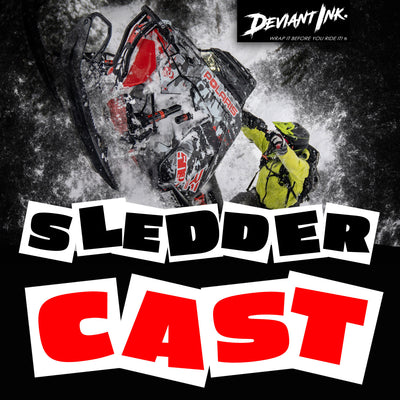
We sit down with our good friends at AMPL, Advocates for Multi-Use of Public Lands, for a conversation every snowmobiler needs to hear. Will Mook and Virginia Dann talk about what it really takes to keep our public riding zones open and accessible, how land access gets taken away, and most importantly, what we can all do to help. Spoiler: it's easier than you think.
If you love riding untouched backcountry and don't want to see more zones shut down, this is a must-listen. We cover what a wilderness study area is and why it matters, best practices for showing recreational responsibility, how riding zones get closed, and three easy ways you can start helping today.
Guests
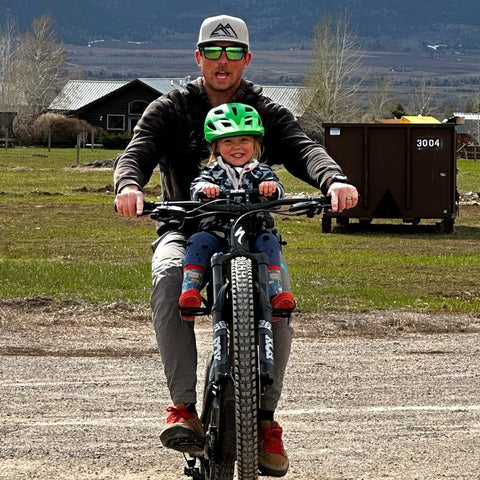
Will Mook
Will is the executive director of AMPL, the Jackson, Wyoming nonprofit founded in 2017 to keep public land open to multiple uses, and has held the role for just over three years. Before that he spent seven or eight years as a backcountry snowmobile guide at Togwotee Mountain Lodge. He studied conservation biology, is an avid hunter, and rides a 2025 Polaris Khaos Boost 155.
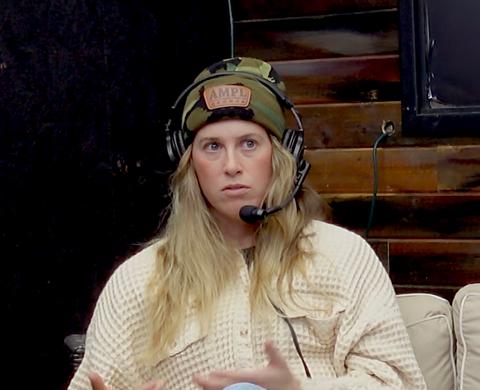
Virginia Dann
Virginia is the programming and outreach director at AMPL, a role she started in May 2024. She runs the summer trail crews, volunteer days, events and social media, and helped launch volunteer grooming at Pole Canyon in Teton Valley, Idaho. She comes from a family of conservationists, started dirt biking on an electric bike about five years ago, and now rides a gas 300.
Show notes
- 2:55How AMPL formed in Jackson in 2017 out of the Wyoming Public Lands Initiative
- 8:20A Polaris grant, a tracked ATV and the Kaufman family's drag: AMPL takes over grooming Pole Canyon
- 11:33Losing the Palisades: what keeps Will up at night
- 12:05Wilderness study areas meant to last 4 to 8 years, still undecided after 30+
- 17:09A skier needs hours to reach a slope you reach in 15 minutes, so leave it for them
- 22:44The top complaints: riding closed areas, speeding past people and parking lot heroes
- 26:35The Bridger-Teton forest plan revision covering 3.4 million acres
- 27:43Why six sentences in your own words beat cussing out the Forest Service
- 32:34Three things to do this week: connect, donate, be an ambassador
- 37:28Teton County's motorized trails: three areas, under 40 miles, not connected
- 45:15Are snowmobiles cheating? A former Togwotee guide answers
- 52:40How a $20 AMPL logo on a Deviant Ink wrap sends $10 to AMPL
Access is no guarantee. We as snowmobilers ride on public land, by and large exclusively.
Win a free custom wrap
Drop your email and what you ride. We draw winners all season and announce them on the show.
It does not have to be some kind of well-written essay. It just has to be from you, saying this is really important to me. It makes a difference.
Questions answered in this episode
What is AMPL (Advocates for Multi-Use of Public Lands)?
AMPL is a nonprofit started in Jackson, Wyoming in 2017, formed by recreationists who came together during the Wyoming Public Lands Initiative over two wilderness study areas in Teton County. It began as an advocacy group (meetings, public comment, work with land managers) and now also runs summer trail crews, puts up beacon check stations and grooms Pole Canyon in Teton Valley, Idaho. Its work centers on Teton County, Wyoming and Teton County, Idaho, and is expanding into Lincoln County, Wyoming. 2:55
What is a wilderness study area?
As Will Mook explains it, wilderness study areas were large tracts of land set aside in the 1980s to study whether they should become congressionally designated wilderness. The studies were meant to take four to eight years, but the Palisades and Shoal Creek wilderness study areas in Teton County, Wyoming have gone more than 30 years without a decision to designate them as wilderness or release them back to regular multi-use Forest Service management. 12:05
Can you ride a snowmobile in a designated wilderness area?
No. Designated wilderness allows no mechanized use, so snowmobiles, dirt bikes and mountain bikes are all out. Will Mook describes it as human power and horse power only. Only the US Congress can designate wilderness, which is why AMPL says the best thing riders can do is not lose an area in the first place. 13:50
How can snowmobilers help keep public land open?
AMPL gave three things anyone can do this week: get connected with your local access group or snowmobile club (newsletter and socials), donate even $5 or $10 and get your riding buddies to do the same, and be an ambassador for the sport by riding only where it is allowed, slowing down around other users and being friendly. They also stress writing public comments in your own words when a land decision is open. 32:34
How does the AMPL logo on a Deviant Ink wrap support AMPL?
Deviant Ink added the AMPL logo to its online wrap customizer. A logo normally adds $10 to a custom wrap. As announced in this episode, the AMPL logo is priced at $20 and Deviant Ink passes the extra $10 on to AMPL. 52:40
That's a you problem right there. That is all your ego getting in the way of you having a good time.
Full transcript65 minutes · 16 sections
Read it
Lightly edited for readability. Click any timestamp to jump the video to that moment.
0:00 Intro
We're back in Rexburg, Idaho, Deviant Ink headquarters, Sledder Cast headquarters, and we're stoked for another Sledder Cast podcast. We've got the team from AMPL here with us, from just across the little hill over in Driggs, right? We're stoked to be talking about what their organization and their program is and does. But before we get into that, make sure you do the things, right? Like, subscribe. We appreciate all the love we get from you guys with the podcast. That helps us keep cranking these things out, because it takes quite a bit of work. It's quite a production here, and we're not a podcast company.
Yeah.
So anything you guys can do in that regard, we appreciate it. Big thank you. So before we get dialed into this episode, we've got a lot on the plate today to talk about. But the question I have for you right off the bat: for that person who is just scrolling through their feed and they see our thumbnail and they're wondering, should I stop and listen? Knowing what we're going to talk about today, what's that one thing you can say to that individual that's going to get them to stop and get into this episode?
I mean, right off the bat, access is no guarantee. We as snowmobilers ride on public land, by and large exclusively. There's groups out there trying to shut snowmobiles off our public land, and AMPL, Advocates for Multi-Use of Public Lands, is one organization that fights to keep access open to everybody.
Yeah, I think I'd add that decisions are being made constantly about how land is used, and it's really important to engage and understand those decisions and get involved. Make your voice heard. If you enjoy snowmobiling, if you enjoy any kind of recreation on public land, just know that there are entities out there, there are people who are making decisions, and it's really important to have your voice heard.
And if you live in the Midwest and come out west to ride, these issues are just as real for you.
Oh yeah. It's everywhere. When you come out here you want to maximize as much of your time as possible on the snow.
2:28 Meet AMPL
So, team AMPL here. Who do we have? We've got Will and Virginia sitting here. Tell us a little bit about AMPL for someone who's hearing about you guys for the first time. You guys have been showing up at shows, I know you've been at the Jackson Hole Hill Climb pretty consistently for the last little while. Maybe just give us a brief background on what AMPL is and who you guys are.
Yeah, sweet. So I'm Will Mook, executive director of AMPL. I've been in that position just over three years now. AMPL is an organization we started in Jackson, Wyoming in 2017, and our formation kind of circled around this thing called the Wyoming Public Lands Initiative. It was a collaborative group of a whole bunch of different stakeholders coming together to figure out what we should do with a couple of wilderness study areas in Teton County, Wyoming. That process is basically what brought a bunch of people together to form AMPL, a bunch of avid recreationists.
We love public land, we all recreate on public land, and we want to make sure future generations can recreate on public land. We really started out as an advocacy group: going to meetings, writing public comment, being engaged with land managers, et cetera. And now we've recently grown to doing a lot of trail work in the summertime, putting up beacon check stations, things like that. And that's kind of Virginia's role at AMPL.
Yeah, I'm Virginia Dann, the programming and outreach director at AMPL. I just started in May. It's a new position for me and I'm really excited. I coordinate our trail crews in the summer, make sure events are happening, volunteers, social media. I'm kind of new to it and excited, and it's really cool to see AMPL come from a real advocacy organization, really being involved in the bureaucracy of it, to being more of a boots-on-the-ground organization.
We've heard from quite a few people this summer, “God, it seems like AMPL is the only one doing anything out on the trails,” which we know isn't true. But we've really wanted to make sure people know that we are out there, making sure that trails are awesome for dirt bikers to ride, for mountain bikers to ride. So it's cool to be growing the boots-on-the-ground part of the organization, because that's really what people see.
It's harder to get people engaged in the deep bureaucratic paperwork stuff. What is a wilderness study area? It's hard to explain these things. So it's really important to have that tangible thing people can see: hey, we're out clearing trail, making sure it's good, putting up beacon check signs in the winter to make sure people are getting access.
5:29 Where AMPL works, and a summer of trail crews
Okay. And as far as your footprint goes geographically right now, paint us a bird's-eye view of what that looks like. My understanding is you guys are all about expanding and growing that footprint as resources become available, but currently, what does that geographical footprint look like?
I mean, the epicenter started right there in Jackson, Wyoming. Since our formation in 2017 we've grown to have trail crews in southeast Idaho, primarily in the Big Holes and then the Palisades on the Idaho side as well as the Wyoming side. We're pretty engaged. I've written public comment for stuff going on down in Moab, with multi-use trails down there at risk of being closed. But for our boots-on-the-ground impact, it's really centered around both Teton Counties, and we're starting to expand down into Lincoln County, Wyoming as well.
Okay, great. Now as far as day-to-day operation, Virginia, you're pretty dialed in on a daily basis. What does your day-to-day look like at AMPL?
I think it's changing season to season, of course. This is going to be my first winter season working at AMPL, so it's going to be exciting to see what that looks like. This summer was a lot of managing our trail crews. We had a full-time trail crew in Wyoming working on our motorized and non-motorized trails in Teton County, Wyoming. So I was checking on them, making sure they have what they need, checking on progress, checking on issues that might be happening. I got to spend some work days out on my dirt bike, which is super fun.
Not a bad way to spend a work day.
Not a bad day. And social media, like I said, making sure people know what we're out there doing. Organizing some volunteer days. And then this fall, closing down the trail work season and doing some of my first grant writing and grant reporting. I hadn't done that before, so that's of course super important, because in order to do all the things we do, we need money.
Yeah, I was going to ask. Talking about your trail crew, who's funding the trail crew?
So trail crew funding comes from Wyoming State Trails grants that we've been lucky enough to get for the last few years to make trail work happen over in Teton County, Wyoming. And then our Idaho trail crew comes out of the AMPL budget. Part of my job is going to be to expand our reach and see if we can get some more grant writing done and get some more money to fund that.
8:20 Grooming Pole Canyon, and the advocacy side
So that was kind of my day-to-day. And then going into the winter we're going to be managing a volunteer crew of groomers. Thanks to a Polaris grant, we got a tracked ATV, and we're going to have a drag, so we're going to be able to groom Pole Canyon, at the south end of the valley in Teton County, Idaho. That's a huge access point. Tons of sledding out there into the Palisades, and people also love walking their dogs out there. I've told a couple of friends that we're going to be grooming it, and they don't sled, and they're like, “Oh, I walk my dog there, that's so great.” So we're super excited to provide that. We're going to have a volunteer gang of groomers, and probably the two of us out there doing some of that.
Might be a little colder than a traditional groomer, right? Instead of being tucked inside a cab with sunflower seeds.
We'll try to get some heated gear. We'll just be bundled up. We're excited about that.
Yeah, Pole Canyon was voluntarily groomed by a local family, the Kaufman family, and they did an amazing job for decades doing that just for the benefit of everybody. They had a coffee can at the tire shop that you could go put money into, just to help put gas in the groomer and keep the parts on the thing. But they're no longer doing that, so we worked with that family. They donated their drag to us, and then we fundraised to get the four-wheeler and the tracks. So we're going to be taking that over.
Oh, sweet. That's going to be awesome.
Be fun. So that's kind of my day-to-day.
And if you want to know my day-to-day, it's a lot less exciting.
It's important.
It's important. It's going to meetings, it's sitting down at the computer writing emails, talking with our attorney about strategizing ways to keep public land open for everybody. A little bit more big picture, less day-to-day boots-on-the-ground stuff. We really started as that advocacy organization, and I think we realized that to have a seat at those tables, meeting with land managers and other user groups, we really needed to be doing things on the ground, giving back to our public land, so that we had a stronger voice.
Yeah. And I hope as we go through this conversation, although we're talking about a specific geographic area in Wyoming and a little bit of Idaho, the things we're going to talk about are just going to be good practices for mingling recreation anywhere you're recreating on public land, right?
This is happening everywhere. There's organizations like AMPL everywhere. There's public land everywhere. We're so lucky in this country to have so much public land. So it's important to recognize that, keep your eyes open, and understand that there are a lot of people and a lot of moving parts behind the scenes when it comes to keeping public land open. It's nonprofit organizations, it's the Forest Service, it's the BLM. There's a lot of people working hard to keep land open for people to use in a myriad of ways.
11:33 What is a wilderness study area
So for you guys, as boots on the ground for AMPL, what's the number one thing that's keeping you up at night about your efforts and the efforts of AMPL?
Losing the Palisades. That's what keeps me up at night.
I think you should explain what a wilderness study area is.
So in the 1980s there were several very large tracts of land, we're talking hundreds of thousands of acres, around the West. We have a couple in Wyoming and Teton County specifically: the Palisades Wilderness Study Area and the Shoal Creek Wilderness Study Area. The whole idea of those was to see if they were eligible to become congressionally designated wilderness, which is one of the most regulated forms of public land you can have. In some ways, almost more than a national park.
The wilderness studies were only supposed to last for a handful of years, like four to eight years. We're going on over 30 years now, and they haven't made a decision whether to make that land wilderness or release it back to multi-use, regular Forest Service management, basically.
So for land to be considered wilderness, is there a short list of items you're looking at, like check, check, check, all right, that's a wilderness study area?
Yeah, there's a checklist. For instance, there can't be roads. It has to be roadless. There can't be developments. There are small exceptions to all of these rules, just like Grand Teton National Park has an airport in the middle of it, but to be eligible for wilderness it does have to meet some characteristics. I would say the Palisades do meet most of those. That being said, especially in our area, we're already surrounded by a ton of wilderness and national park.
So if we were to make the Palisades and Shoal Creek wilderness study areas congressionally designated wilderness, all of us who enjoy things like snowmobiling, dirt biking, mountain biking: not allowed in wilderness. Not everybody knows that, but it's basically no mechanized use. So human power and horse power. Traditional horse power.
Not horsepower. So maybe just throw out a couple of hot spots. Let's say that was shut down. What are a couple of hot spots, specifically for snowmobiles, where you're just like, bye-bye?
Basically the entire mountain range from Teton Pass, the road that connects Teton Valley, Idaho to Jackson, all the way down to Alpine, Wyoming.
From there southward. All of that.
Yeah, thousands of acres. It's a big chunk of land. And at the risk of blowing up spots, I hate doing that. I think as snowmobilers we tend to be pretty secretive, because we don't really want to always broadcast where we go. Those places are super near and dear to our hearts. But I also firmly believe that if we don't stand up and talk about these places, then they are going to go away. We have to show the other side, and we have to show land managers, that these places matter to us. We want to protect them, but also be able to use them. If we're not vocal about that, it's a lot easier to close something.
If not that many people are going, there's not a squeaky wheel there. You talking about it, the fact that you're riding out there and using it.
Yeah, it's important to be vocal and know that there's incredible riding out there.
15:29 How AMPL balances every kind of recreationist
So you guys are advocates for multi-use, right? How do you manage or balance the needs of snowmobilers versus snowshoers versus cross-country versus backcountry skiing? How do you manage working with all those different types of personalities?
I mean, this kind of goes into what keeps me up at night: a lot of misinformation, and a lot of coming at each other's throats, when we all have a lot more in common when it comes to recreating. If you talk to most people, they are multi-use recreationists, right? Will snowmobiles, he hunts, he fishes, he snowboards, he does it all. Same with myself. So I think it's important to recognize that we all do a lot of the same things.
It is hard to operate in a place like Teton County, Wyoming, famous for its backcountry skiing and also famous for having incredible backcountry snowmobiling too. There's a lot of voices at play. I think AMPL really wants to be a voice saying, we hear everybody, and we really want to promote proper etiquette and understanding. We want snowmobilers to understand: hey, you're on an incredibly powerful machine that allows you to get way out in the mountains very quickly. Somebody who chooses to backcountry ski doesn't have that capability. They're choosing to go backcountry skiing, and that takes longer, it's slower, it doesn't get as far.
So just wrapping our minds around that and having a good understanding of it. Say you're heading out on the same trail and you go by a backcountry skier, and you're like, oh, they're probably heading out to ski this, because it's going to take them a couple of hours to get there and it's going to take me 15 minutes. All right, maybe we won't go blast a bunch of tracks up there, because they're probably going to ski that, and we can go blast tracks all over the place in different places.
I think we all need to have that understanding about how we're recreating and how it affects other people. It doesn't mean we need to change everything we're doing, it just means we have a recognition of that. And skiers don't need to be like, “Damn the snowmobilers,” as they go by. It's important to smile and say hi. We are all out enjoying ourselves and having a good time. So hopefully that answers the question.
Yeah. One thing I think does work well in our area is that we do have separated use in places. There is a lot of wilderness where, if people want to go and not hear the sound of motors, they have the ability to go do that.
The majority of the land, actually. You're not going to hear a snowmobile.
Exactly. And so if you choose to go to an area that is multi-use, I think the best thing you can do is just be friendly, be kind, and recognize that however you choose to recreate is not more important than the person who parked next to you. Conflict doesn't happen when everybody smiles.
Yep. Golden rule, right?
Golden rule. It's really hard to be mad at someone if you go by them and you're like, “Hey, how's it going? I hope you're having a great day out here.” I think that really disarms someone. Maybe they're like, “Oh, snowmobiler,” but then that snowmobiler slows down and it's like, “Hey, how you doing? Hope you have a great day, it's a beautiful day out here.” That can really quickly disarm someone who's like, God, I really wanted to be so mad at that person. And all of a sudden, oh, they're just a really nice person out having a good time.
And if you're both accessing at the same points, what's stopping you from just stopping and saying, “Hey, we're going to be out here for the next five hours, we'll be coming back five hours from now. If you guys need anything, we're here and we're more than happy to help out.” And then boom, move on with your day. I know you're a hunter, Trevor. It's the same thing. You get to the trailhead and you run into another hunter, and best practice is to be like, “Hey man, where are you going? Let's work together so we're not fighting each other the whole time.”
Exactly.
So just open communication. It solves so many problems before they even start.
Deviant Ink: Hey guys and gals, if you love the show and want to support us, head on over to deviantink.com and use the code SLEDDERCAST to save some money on your next premium custom wrap. If you've spent any time on deviantink.com, you already know it is the best, easiest custom wrap builder tool out there. Its new interactive design tools make designing and customizing your wrap super slick. We're big fans of the new color mixer tool. It randomizes colors until you land on the perfect combo. The design mixer tool is a game changer when you already know what colors you want and you want to see all of our designs in just your preselected colors. So head on over to deviantink.com, use the code SLEDDERCAST, and save some money on your next wrap purchase. Let's get back to the show.
The Big Hole Mountains right here in Idaho are kind of this mecca, I feel like, of multi-use recreation, and I love using them as an example of what it can be like when you share public land. There's this one intersection up in the Big Holes. You go up Mahogany Creek, you can come up from the North Fork of Horseshoe, the South Fork of Horseshoe, and there's this great little landing where all these trails come together. I'll pop up there on my dirt bike, and there's people out there on their mountain bikes, people on their e-mountain bikes, people running, hiking, horses. I have run into every single kind of person at that point.
It's just a really cool little landing, and everyone's just happy as a clam. “Oh my God, beautiful day out here, this is so epic.” Everyone's having a great time, and everybody knows that everybody's allowed to be there, and everyone just says hi. Personally, I think we share that kind of value, and that's what we're trying to infuse into AMPL and what we project out there: we all just need to have a really good understanding that just because somebody never grew up snowmobiling, or never got into it, or couldn't afford snowmobiling, and maybe they get out in the winter on a horse or they go snowshoeing, that's great. Enjoy your land. This is our public land and we are so lucky to have it. So let's all work together and make sure that we have access.
22:13 Best practices for snowmobilers
Yeah. So specifically talking about snowmobilers, what are some best practices you've seen and would suggest, to help project a more positive spin on our form of winter recreation? Does that question make sense?
Great question.
Yeah. I think you can kind of answer that question with the negatives. The things I hear complaints about from the Forest Service and other user groups: one is people riding in closed areas. That doesn't do anything good for us as ambassadors of this sport. So know where you're riding. Know the season dates and the regulations for that area. Slow down when you're passing people. We don't need to be going 100 miles an hour down the trail. You're just going to kick your lugs off your track anyway.
So slow down, don't be noisy, and really pay attention to those congested areas where people are likely to be, and that's usually the trailhead. Don't be the parking lot hero who unloads off the deck and then goes full pin across the parking lot.
Yeah. If you have an aftermarket can, you know your machine's loud. If you crank up on it, it's going to spit out the tune. Just tone it down a little bit.
Just tone it down. And like we just said, kill them with kindness. Smile, wave. I'm not saying that if you pass somebody snowshoeing down the trail you have to stop, take your helmet off, introduce yourself and have a conversation. That'd be ridiculous, and they probably don't want that either. They want to keep snowshoeing. Everyone's cold. Just slow down, wave, and do what feels right in that situation. In the parking lot, like we talked about, go up and talk to skiers if you want to figure out where they're going so you can avoid them. Communicate.
24:25 What gets riding zones shut down
Love it. Okay, I know we touched on this a little bit, but if there was one thing you could say, “If we do this, we will get our zone shut down,” is there one or two of those things out there? Like, hey, if we keep violating this, we're going to get shut down eventually. Anything ring a bell for you guys?
I mean, I think you touched on it. Riding in areas that are already closed doesn't help at all. It's giving the middle finger to the rules that are in place. It does not help the cause at all to ride where you are not supposed to ride, and that goes for snowmobiling, that goes for dirt biking. It makes everybody look bad. It shows that you haven't done your research and you don't know what you're doing if you're riding in those places. So I think that's a really important thing: understand where you can ride.
Because if historically there's tons of dipping into a wilderness area where you're not supposed to ride, it's really hard for an organization like AMPL to then go to the Forest Service and advocate for, “Hey, can we please have more access to places, because we want people to be able to ride.” They're going to be like, “You guys can't even keep it where it's supposed to be.” It doesn't help.
Responsible users instead of irresponsible.
Yeah. The biggest thing I would also add to that is don't be silent. You've got to speak up. Public land doesn't just get closed without quite a bit of input.
26:12 How public land actually gets closed
That was my next question. How does it actually get closed? I know it takes a long time, but if we were to speed that up for the podcast, what are the things that happen for land to get shut down?
It's not that cut and dry. There's different agencies too. We've got the Forest Service, we've got BLM, we've got state lands. Those are all different, so keep that in mind, and they all have their own processes. But currently the Bridger-Teton National Forest, which is our local national forest, is going through a forest plan revision. That's basically where they look at the entire 3.4 million acres they manage, and it's kind of like a zoning document that comes out of this multi-year process. I think best case, we're looking at four years as quick as it can happen, and they just recently started that analysis.
Coming up on a year now.
Okay. One of the things AMPL does is try to communicate to all of our followers and subscribers, with our email newsletters and stuff, when they need to speak up and write a public comment or fill out a survey. Because we do have to show up in numbers to stand up and keep things open. 2,000 comments in favor of keeping something open is a lot better than three or four people.
Crickets. Nothing.
For sure. And it does make a difference. Public comment, writing in, even if it's six sentences that say, “I ride here, I love this area, I learned to ride here, I rode here with my dad.” Those comments make a difference. I think it's really hard in our day and age, with so much information, we feel like we have no influence on anything. Yes, you do. You writing in, you getting 10 of your friends to write in. It does not have to be some kind of well-written essay. It just has to be from you, saying this is really important to me. It makes a difference.
What doesn't make a difference, though, is writing in and cussing out the Forest Service and saying, “Don't close my zone.” They do want substantive comment, which means giving specific places. Like, I rode to the top of this peak with my dad and my grandfather when I was eight years old, and this has always been a place we're passionate about going.
Oh yeah, and I take my kids there. Just make it about you and what's important to you.
But the person who's reading that, whose eyeballs go over it, the feeling they get from the words that you write matters. That's an awesome point. Because as soon as they read it, if they're just pissed...
Well, they legally have to keep it. They don't throw it away. But it's not helping. You're not changing anybody's mind if you're just yelling through the paper.
29:19 Getting closed land reopened
Cool. So for a piece of land that is closed, and it's an area we're working on to try and open, I know it's different depending on the agency behind the land, but what are some of the big things we can be doing? I know we've got “don't ride in closed stuff” and “write in to the organizations.” Is there anything else we can be doing to help get closed lands reopened?
It's almost impossible, honestly.
Well, it depends on the closure.
Right. Once it's wilderness...
The stakes are incredibly high when it comes to wilderness.
Congress has to vote. The United States Congress has to vote on whether or not something becomes wilderness. It's a big deal.
It's a big deal. And so the best thing we can do is not lose it. It's different when, say, the Forest Service itself is designating motorized versus non-motorized, or certain designations of usage on trails. That can change. But what it takes is an organization, maybe like us, who says, hey, we really want to build a trail here, or there's an old trail here that needs to be revamped and would be a really great opportunity for riding. There's a lot of processes that have to go into that. Again, multiple years. Environmental studies, social studies, wildlife studies. A lot needs to go into it, and there's a lot of hoops to jump through.
Sometimes those do involve public comment as well. So wherever you live, get in touch with an organization like AMPL, follow them, get on their newsletter list. Those are the people you're going to hear from. It's probably somebody like us.
31:29 Three things you can do this week
I love what you guys are saying right now, and we may have to chop this up when we post it, but what I would love for us to come away with from this segment is three things. I consider myself a general snowmobiler. I don't have a ton of pull. I'm not going to meetings, but I spend quite a bit of time on the snow. I may be an out-of-stater driving in, I may be local, but I'm just a normal dude or a normal gal. What are three things I can do immediately? Not, “Hey, become this so that you can do that.” I want three actionable things where, holy crap, I could actually go do those within the next week if I wanted to. Does that make sense? It could be $10, whatever. What are those?
Yeah. So first, I'd say if you're local to this area, sign up for AMPL. Follow the newsletter, Instagram and Facebook.
So newsletter and socials. Stay connected with the group.
And if you're not local to our area, stay connected to your local snowmobile club.
So find out who the AMPL of your area is.
Right. Because they're all over the place.
Okay, that's number one. That's easy. Number two?
Number two, donate. That's a huge deal. Organizations like AMPL rely on donations. If you can donate $5 or $10, it really makes a difference. It shows that there is a constituency of people who really care, and those small donations really help. If more people gave $5 or $10, it would provide organizations like us with the resources to improve parking lots, provide more signage, provide educational information, and add to the culture.
Yeah. So when you donate, copy that link and send it out to your 12 riding buddies and say, “Hey, if you want to ride with me this year, you better freaking donate.”
100%. The anti side of all these fights is very well funded. They're huge, they're established. And I think one of the hardest things is that snowmobilers specifically, there's a lot of individual clubs around the country, but we don't really have that unified voice like some of the organizations on the other side of the issues do.
Okay, so we've got two. One, stay connected, find out who your AMPL is and dive in. Two, donate. What would the third one be?
Be an ambassador for your sport.
100%. Be an ambassador all year round. Consider what you post on social media, because everybody's watching all the time. Just be a good neighbor. When you're out there riding, be respectful, follow the rules, be kind.
Love it. You don't have to have a ton of logos on your machine to be an ambassador.
And it spreads. Say you're out with a crew of five buddies, and they see you whip your helmet off in the parking lot and say, “Hey, how's it going?” to somebody else out there. That spreads. That shows the rest of your friends that it's cool to be friendly. I think people can get vibed out. They're like, “Oh, these guys on their snowmobiles are so cool, they don't want to talk to us back in the backcountry, they think they're so much cooler than us.” But the second you're like, “Hey, how's it going, hope you're having a nice day,” people really are taken aback by that. And it spreads. It shows your buddies, hey, it's cool, we can talk to other people. And that's true if you're a dirt biker, mountain biker, hiker. Everybody just say hi.
Love it. Okay, so the three little goodies we just cooked up right here. Number one was get connected: find out who your AMPL is and be engaged. Follow social media, the website, all of it. Number two is donate, and help others donate as well. Make it easy for them and share it. And three is just be a good ambassador of the sport.
Absolutely.
36:23 Biggest wins and losses
I love that. Thanks. Wins and losses. From your experience being connected with AMPL, what are some of the biggest wins you've seen come through?
This one isn't necessarily snowmobile related, but we have an area over in Teton County, Mosquito Creek. It's a popular snowmobile trailhead, but as far as dirt biking goes, that's one of only three areas in Teton County where you can ride dirt bikes. We've cultivated a really great relationship with the Forest Service there. They trust us and we trust them, and we work together really well. We all recognize that it's limited, but they have worked with us to increase the amount of trails there and continue to work on them. So that's been a big win for us, providing that riding opportunity for dirt bikers and for electric mountain bikers. We're continuing to work with them on that area, because there's really not a lot of opportunities right now in Teton County for dirt biking and motorized trail use.
Super limited. So you said there's three designated areas for that?
Total mileage is less than 40.
What?
And you have to drive between those areas. They're not connected.
Wow. I wouldn't have even thought that.
It's very limited. So it's been a win for us. Albeit it's small, and it might not sound like a big deal to add two miles of trail when we can, but we're taking those opportunities, we're cultivating relationships with the Forest Service, and we're making sure we can provide what we can for riders. The zone up Mosquito Creek, we call it Crankshaft, that trail network is really popular as an after-work ride for people, and it's grown. There's a kids' loop in there now that AMPL put in. It's really awesome. So we're doing what we can with what we've got, and that's been a big win. What do you think, anything else?
TREYL: All right, guys and gals. TREYL is one of our newest program supporters here at the Sledder Cast podcast. You can find them at treyl.com. They are coming in hot with all the goodies, all the backcountry essentials. A few of our favorite must-haves are the Grizzly folding saw, with razor-sharp teeth that plow through those pesky branches with ease, the lightweight ski pole strap, a real back saver when your buddy needs that seventh pull of the day, and of course the TREYL Hot Pot exhaust cooker, because hot meals are way better than cold meals in the backcountry. So head on over to treyl.com, that's T-R-E-Y-L dot com, and grab your exclusive Sledder Cast promo code in the description below. Let's get back to the show.
I mean, we've had a bunch of small wins like that. Even just fundraising and getting that groomer was a big win, seeing that community support, everybody pitching in, watching Polaris pitch in so that we could get that and provide a smooth trail for all the different users who want to enjoy it. As far as losses go, I can't really think of too many. I've only been at the job a little over three years, and so many of these land use decision-making processes take forever. The Forest Service is very slow at making decisions. They do lengthy studies, everything in due process. The WSA has been sitting there for 40 years. So in the three years I've been at the job, we haven't had any major losses like that. We are working on trying to expand some e-mountain bike opportunities in the Teton County area, and we've definitely hit some walls with that subject.
E-bikes are a touchy subject for sure.
I think they're cool. I don't own one, I've got a mountain bike and a dirt bike, but one day I'll probably get an e-bike.
40:44 Is anyone trying to shut down snowmobiling?
So I'm not sure where this question will take us, and maybe it takes us nowhere. There's this quote, and I'm going to butcher it, and maybe I made it up in my head, but I swear I've heard it before. Something like, the enemy you know is better than the enemy you don't know. So for snowmobilers, who are our enemies? Is there a specific group we need to be aware of, where we know, hey, this is who they are, these are their tactics or what they're trying to do, and we need to be minding our p's and q's when we're around them?
It's undeniable there are organizations that don't like snowmobilers. I don't really want to call any of them out individually, just because it feels negative.
Can we get their address and then maybe put a fund together and send them weekly donuts or something from their local friends?
That's a great idea. We could probably get a fund together.
The donut fund.
So there's no doubt there are organizations that are loud about shutting snowmobiles off of public land, and that's a bummer. But I can't really think of a number one enemy.
I didn't have one in mind either. I don't know where this question is going to take us.
Totally. I can't think of anybody where I'd be like, oh, that is the enemy. I think the enemy, to me at least, is misinformation and not understanding each other. For instance, a great example: this wilderness study area we keep talking about in the Palisades. AMPL would love to see that wilderness study area removed, and we'd love to see it go back to regularly regulated national forest, multi-use. And I think one thing other organizations or agencies think, when they hear that AMPL wants to take the WSA away, is, oh, they must want to open every single inch of trail to dirt bikes. They just want it to turn into a big old dirt bike park with dirt bikes everywhere and snowmobiles everywhere.
That is not what we want. That is not our intention. Our intention is to be incredibly thoughtful. Because believe it or not, the term conservationist gets thrown around like it's the bad word. “You're a conservationist, you love the elk more than everybody.” There's so many things to be said, but I am a conservationist. I want to conserve our public land so that it can be used in a myriad of ways sustainably.
So it's really important to recognize that when an organization like AMPL is talking about this, we are talking about thoughtfully opening up land to multi-use. Looking at the trail system and saying, okay, in these thousands of acres of land, what trails could we connect to make a really cool, sustainable dirt bike trail that would let dirt bikers get what they want, which is a long ride out in the mountains with beautiful views? And then what trails can we keep closed to motorized? Maybe we can improve them to be really awesome mountain bike trails, or great horse trails. We can make this happen. But I think the knee-jerk reaction is that anybody who advocates for motorized access just wants to open the whole thing up, and that's not the case. That's a really common misconception.
The enemy is misinformation.
Misunderstanding.
A misunderstanding of what we want to see happen. And like we were talking about with being an ambassador, be proud of what you do, be proud of the sports that you do, talk about it, and be a kind person. Like we say, it's really hard to be pissed off at someone when they're just being kind and talking about what they love to do.
45:15 Are snowmobilers cheating?
One of the biggest misunderstandings I run into in my job all the time is that people just generally think snowmobiles are cheating. That it's easy to get into the mountains on them, and that it's way harder to get there on your own power. People just don't understand that just because it has a motor doesn't mean it instantly gets you to the top of a mountain.
Okay, so I'm going to put you on the spot then, Will. Let's say I am that person. I see you fly past me on your snowmobile, and that's what I believe. I personally feel like you're cheating, because you have a snowmobile and you can go do these things a lot quicker than I can. What can you say to me to get me to calm down a little bit?
Hop on. Want to switch? Here's my tether, get up there yourself. No, I'd probably relate it back to experience. For seven or eight years I was a backcountry snowmobile guide at Togwotee Mountain Lodge, and I have a lot of anecdotes of watching rider progression. So I'd probably use some of that experiential knowledge: it's taken me over a decade to get to the point where I am now as a rider. Sure, with these new sleds it is a lot easier and the learning curve is shorter, but it's still a really challenging sport that takes skill and finesse.
It's not just easy.
Yeah. Just like you put a lot of time into your endurance to get yourself up there, this is also something a snowmobiler has to put a lot of time into, to hone their craft and get better. And I think when people are mad that you're on a snowmobile, or that you're on a dirt bike, or that you're on an electric mountain bike, which is a very common thing with e-mountain bikes, like, how is it fair that you can just get up there faster than me? That's someone's personal thing. That's all about them. That's a you problem right there. That is all your ego getting in the way of you having a good time.
I always think about that. There's always somebody better and faster. And as long as you are passing someone and being kind and smiling, if they're still pissed off that you're out there doing that, then that's a you problem.
Their problem.
As long as you're riding where you're supposed to ride and being kind. You're always going to run into those people, but that's not the majority of the time.
48:07 The AMPL logo on Deviant Ink wraps
Cool. So let's talk about the AMPL and Deviant Ink collaboration. This conversation started in the summertime, I think, when we first started floating around ideas of how we at Deviant Ink can get more involved. From our perspective, if we're going to donate some of the funds from the hard work we put into building and growing a business, where do we want to see that going? Geographically we're right in this corner of Montana, Wyoming and Idaho, and I'm here because I love public land, and I want as much public land for me and my friends and enthusiasts as we can have. So I've always been a little bit quicker to say, hey, let's find some of these organizations like AMPL and help support them.
We've never done this before, so AMPL is the first group we're going to test it out with. First, you guys came to us and said, hey, let's maybe look at an AMPL wrap. If we do the wrap and someone buys the wrap, then we can donate some money. And we started looking at that, and we were like, that could work, but we're in the business of customization. We want that person to purchase and customize the thing that is theirs. That may not be the AMPL wrap, but they still want to support AMPL, right?
So the idea we came up with is: let's add the AMPL logo to our database, to our online wrap customization tool. When a customer comes onto our website and slaps the AMPL logo on their machine, we're going to donate a portion of that logo slap to AMPL. So for those of you who maybe haven't been on deviantink.com, you can customize a wrap like this. If you want to slap a logo on there, you can put an AMPL logo nice and big right here.
We should put the AMPL logo there for the podcast. That'd be perfect.
So you can browse our database, drag and drop these logos, and reposition, resize and recolor them, so you can still customize and get that machine looking like you want, but still show support, knowing that by slapping that logo on your machine, a portion of that logo upgrade gets donated to AMPL.
And one thing I wanted to make sure of, because if your logo is ugly, no one wants to put an ugly logo on their machine. You guys have an awesome logo.
It's such a cool logo.
Right. So that's not going to be a problem at all. It's going to enhance the machine and look cool. And you're taking care of all three of those things we talked about earlier. Getting engaged: you're going to know who AMPL is when you stick the logo on. You're donating to AMPL through Deviant Ink. And you're being an ambassador. Wham, bam, thank you, ma'am. One, two, three, done.
I just designed my wrap last night, and it's got three or four different AMPL logos on it now.
There you go. Obviously, when you're watching this we're going to be well into the season. We've already posted about this, we talked about it before we hit record here, and we're going to get this out as soon as possible, because snow's already dropping and people are already dipping shoulders. We've got a busy production room in there printing wraps.
It's amazing.
The season is the season.
Well, we're super grateful to Deviant Ink for this, and we're super excited. We want to see as many AMPL logos out there as possible. It makes a huge difference. These little donations add up. So no matter where you live, throw an AMPL logo on there. It's a very cool logo, and it helps us out a lot.
For sure. And we can be totally transparent. When you customize a wrap and throw a logo on it, we charge $10 for that, right? That's a production and customization fee on our end. The idea we had that's going to help and benefit everyone is that we're going to charge $20 for an AMPL sticker. So you slap the logo on, it costs you $10 more, and we're simply going to pass that additional $10 on to AMPL, so they can keep fighting the good fight, making sure everybody's got access to high-quality sledding and dirt biking and mountain biking and all of the above.
That helps a ton.
So we're stoked. It'll be fun, and hopefully every wrap we see coming out of the printers over there has a nice little AMPL logo on it.
Exactly. And you don't have to be in Idaho or Wyoming. It doesn't say Idaho or Wyoming on it. It says Advocates for Multi-Use of Public Lands.
There we go. Anybody can be an advocate.
And you can put it on big or small. And you guys do dirt bike wraps, right?
We do dirt bike, side by side. It doesn't have to be a sled.
I'm getting a dirt bike. I can't wait for my new dirt bike plastics and wrap next summer.
There we go. We do electric bikes too.
We've got the four-wheeler too.
Got to look good when you groom. Four-wheelers are on our list.
We can be your test. It's brand new.
That'd be sick. It's high up on our list of the next category we're going to go into.
Sweet. We'll be your test rabbits.
54:21 Lightning round
Heck yeah. Okay, so we're here to the lightning round, the fun part. I don't know if you guys want to answer the first question, on modifications of a snowmobile, together.
I'm not a snowmobiler. This is breaking news.
Okay, so this is breaking news. You can contribute if you want to. We'll direct this question to Will.
I'm here to learn about mods.
So, mods. Will, you get a brand new snowmobile. What are you riding?
A '25 Khaos Boost 155.
So we've got a 155 Khaos Boost. And let's say you only get three modifications you can add to that machine to enhance it. Wraps don't count. What are the three things you're going to do to it? You only get three.
I might not even take the full three. These new sleds are so good these days, they don't really need to be modded that much anymore, in my opinion. My number one mod is the handlebar and control setup. I run aftermarket riser bars, grips and a throttle block. They just came out with a finger throttle that I'm excited to try. I haven't quite jumped on that bandwagon yet, but I saw it in person at the Edmonton show with Eli.
Eli, yeah. I have a son named Eli, that's the connection I made.
He's a great dude. We've done avalanche education together, so I know Eli pretty well. He had his finger throttle up there and we were checking it out. It was cool, it looked sexy. So yeah, that's kind of the number one. I know you can get the bars on the Polaris in three different heights, but I go even lower than stock. And then a new local company just started making tunnel bags and ski racks for sleds, called SNDR. I'm going to put one of the racks on my sled this year, and their tunnel bag looks sweet.
It's funny, I grew up skiing and snowboarding my whole life, and then in the last 12 years or so sledding has been kind of all I do. I go to the ski hill with my kids and that's about it. But I do want to start using my sled to go snowboarding in the mountains. I've done it a couple of times.
As a tool for that sport.
Yeah. And if you do that, you've got to have a good way to get your equipment up into the mountains.
Well, we'll give you a pass, because the whole cockpit, that's a lot of parts right there. You could have gone three right there.
True.
All right, so the last question here.
Okay, I have a question about sleds as a non-sledder. People can comment wherever you're listening to or watching this podcast. As a woman, if you're a snowmobiler, tell me which sled I should get. I'm going to be new at it. My husband would be delighted if I got into snowmobiling, and I have a lot of rad girlfriends who do it. So wherever you are, comment on Instagram.
Will might have an answer for you.
No, I want an answer from women. I don't need an answer from him. I want to hear from the women out there who are riding. I know his opinions, I want to hear it from them.
All right, so if you're a lady shredder out there, let her know.
Tell me what's up.
Okay, cool. Next question. What's one thing none of us know about you? That interesting little factoid where you're like, no one knows this about me.
I'd say, and this helps with my job a lot, I studied conservation biology. If you look at my resume, you might think I'm on the other side, but that's not true. I studied that because I'm an avid hunter and just wanted to be engaged with wildlife and all that.
Cool.
We already know I'm not a snowmobiler yet, so I can't use that one again. I think it's similar to Will, but I come from a huge family of conservationists. Hardcore conservationists who want to protect land, and who often bristle at the idea of motorized sports. So it's been fun for me. I'm actually pretty new to the motorized world. I just started dirt biking four or five years ago. I started on an electric dirt bike, and I just bought my first gas dirt bike this summer.
So you transitioned over, and you're okay?
I am okay. I have come over to the dark side.
And she loves her 300. She rips it.
It's so fun. So I'm from a family of really, really staunch conservationists, and I have that background, it's in my blood. And I believe that it is needed in some places. We need to really protect some pristine pieces of land. But I think it makes for a unique combination, having that background and also loving riding my dirt bike. I have a lot of respect for anybody who recreates, whatever way they do it, as long as they're being nice and know what they're doing. So that's kind of the biggest thing I want people to know about me.
I think it makes us better at our jobs, because we can talk to both sides.
You can be an advocate for both sides, right? It's an “and,” not an “or.”
We can do it all.
Love it.
And I'm easing my family into it. Talking about being a great ambassador, I got some Christmas paper that has Santa riding a dirt bike, and I'm going to wrap everybody's presents in that. It's going to come as a great surprise for everybody.
That's awesome. Cool. Well, hey, I appreciate you guys making the short little trek over here.
Thank you. Beautiful drive for us. Sunny day.
You can see the Tetons from your parking lot.
You can see the tippy tops over there.
They're transitioning to white now. It's happening. There's more in the forecast. It's coming.
All right. Hey, thanks for tuning in to another episode of the Sledder Cast podcast. We appreciate everything you guys do for the program. Be an advocate of the show: like, subscribe, follow team AMPL on Instagram. We'll tag everything up in the description of whatever video or audio platform you're listening and watching on. Just scroll down and you'll see it all there. Cool. All right, thanks guys.